The Rule of Thirds in interior design helps you create balanced and visually appealing spaces by dividing your room with a grid of two vertical and two horizontal lines. You can place furniture, artwork, or color accents along these lines or at their intersections to achieve harmony and flow. This simple principle guides you to arrange your space in a natural, inviting way. Keep exploring to discover how applying this technique can transform your room effortlessly.

Get furniture and decor delivered free with Prime
- Fast, free delivery on millions of items
- Prime Video, Amazon Music and more included
- Member-only deals all year
Key Takeaways
- The Rule of Thirds divides space with gridlines to position key design elements for visual harmony.
- It guides furniture placement, such as sofas along vertical lines and focal points at intersections.
- Color schemes are balanced by accent walls or artwork aligned with gridlines for a cohesive look.
- Arranging accessories and decor at intersections enhances visual interest and prevents clutter.
- Applying this rule creates a natural, inviting flow, making rooms feel balanced and aesthetically pleasing.
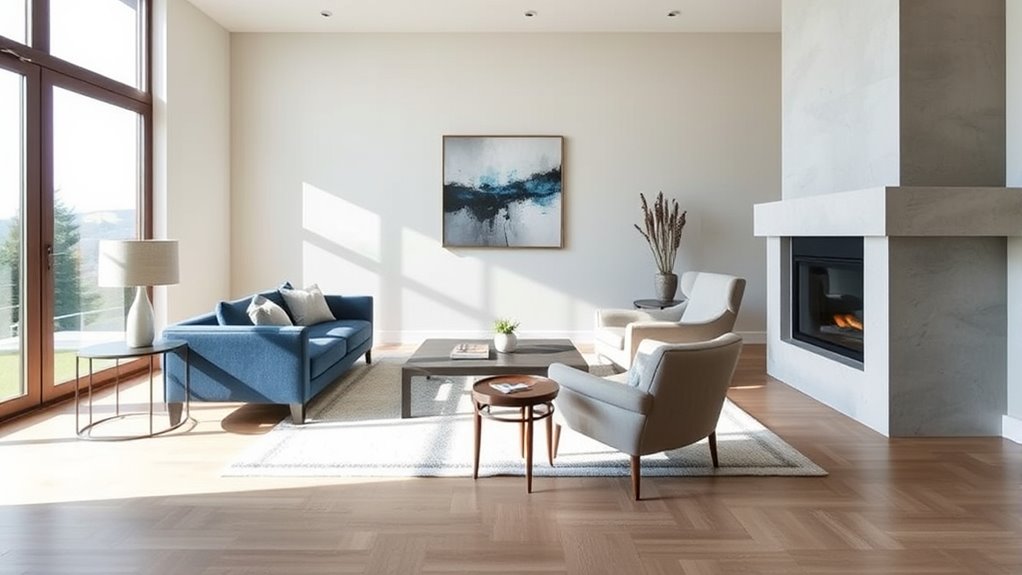
Have you ever wondered how to create a balanced and visually appealing interior? One effective method is applying the rule of thirds, a principle borrowed from photography and art that helps you organize space harmoniously. When you use this rule in interior design, it guides you in achieving a sense of balance, making your room feel naturally inviting and well-proportioned. At its core, the rule of thirds involves dividing your space into nine equal parts with two equally spaced horizontal and vertical lines. By aligning key elements along these lines or at their intersections, you can craft a dynamic yet cohesive environment.
Color balance plays a vital role in this approach. Instead of overwhelming a room with too many competing shades, you strategically distribute colors across the thirds. For example, if your room has a bold accent wall on one third, balance that with softer, neutral tones on the other sections. This prevents visual clutter and creates a smooth flow that guides the eye naturally around the space. You can also use color to emphasize focal points, such as artwork or a statement piece of furniture, placing them at the intersection points of the grid. This technique draws attention to these elements without making the space feel chaotic.
Furniture placement is equally important when applying the rule of thirds. You don’t want your furniture to be randomly scattered; instead, position larger pieces along the gridlines or at their intersections. For instance, a sofa can be placed along one vertical line, with a coffee table positioned at the intersection point nearby. This setup creates a sense of order and encourages conversation, while also maintaining visual interest. Smaller accessories, like lamps or decorative objects, can be arranged to enhance this sense of balance, either directly on the thirds or at points that complement the overall flow. Be mindful of leaving enough negative space around your arrangements, so the room doesn’t feel cluttered or crowded.
Practicing the rule of thirds in interior design helps you create a space that feels both intentional and harmonious. When you pay attention to color balance and thoughtfully plan your furniture placement around these guiding lines, your room becomes more than just functional—it becomes a visually pleasing sanctuary. Additionally, considering the drivetrain components of your bike can help you maintain a smooth and efficient ride, ensuring your space and equipment work together seamlessly. This simple but powerful principle transforms how you view and organize your space, making every element work together to produce an inviting atmosphere that’s both stylish and balanced.
interior design furniture placement guide
As an affiliate, we earn on qualifying purchases.
As an affiliate, we earn on qualifying purchases.
Frequently Asked Questions
How Can I Adapt the Rule of Thirds for Small Spaces?
To adapt the rule of thirds for small spaces, focus on scale balancing by choosing appropriately sized furniture that doesn’t overwhelm the room. Place your focal point, like a artwork or statement piece, along one of the imaginary grid lines to create visual interest without clutter. Use vertical and horizontal lines to guide furniture placement, ensuring a balanced look that feels open and inviting. This technique keeps your space harmonious and visually appealing.
Are There Interior Styles That Do Not Benefit From the Rule of Thirds?
You might find that abstract minimalism and monochromatic schemes don’t benefit much from the rule of thirds. These styles emphasize simplicity and uniformity, so focusing on balance and negative space often works better than grid-based placement. Instead of following strict rules, you can experiment with asymmetry or centered arrangements to create a calming, cohesive look that aligns with these minimalist aesthetics. Trust your eye to find harmony without rigid guidelines.
How Does Lighting Influence the Application of the Rule of Thirds?
Lighting shapes how you apply the rule of thirds by highlighting focal points and creating balance. Natural light emphasizes textures and colors during the day, guiding your eye naturally around the space. Artificial lighting, on the other hand, allows you to sculpt shadows and enhance specific areas at night. Both types influence where you place art, furniture, or decor, helping you craft a cohesive, visually appealing interior.
Can the Rule of Thirds Be Used With Asymmetrical Furniture Arrangements?
Yes, you can use the rule of thirds with asymmetrical furniture arrangements. Focus on creating asymmetrical balance by placing key pieces off-center, which still guides the eye and achieves visual harmony. Use the rule of thirds to position furniture or decor elements along imaginary grid lines, ensuring your space feels intentional and balanced, even if the layout isn’t symmetrical. This approach enhances visual interest while maintaining a cohesive look.
What Are Common Mistakes to Avoid When Applying the Rule of Thirds?
To avoid common mistakes, don’t oversimplify by centering all elements, which can make your space feel static. Avoid overcrowding spaces with too many centered elements, as it loses visual interest and balance. Keep in mind that the rule isn’t a strict guideline; it’s about creating harmony. Use asymmetry thoughtfully, and make certain your arrangement allows for enough breathing room, preventing your space from feeling cluttered or unbalanced.
Conclusion
Now that you understand the rule of thirds, imagine how effortlessly your space can transform. But here’s the twist—there’s one more secret to truly mastering it that most overlook. Are you ready to unleash the full potential of your interior design skills? Keep experimenting, stay curious, and soon, you’ll see your rooms come alive in ways you never thought possible. The next step could change everything—are you prepared to discover what’s next?
Halloween Picks
halloween
As an affiliate, we earn on qualifying purchases.