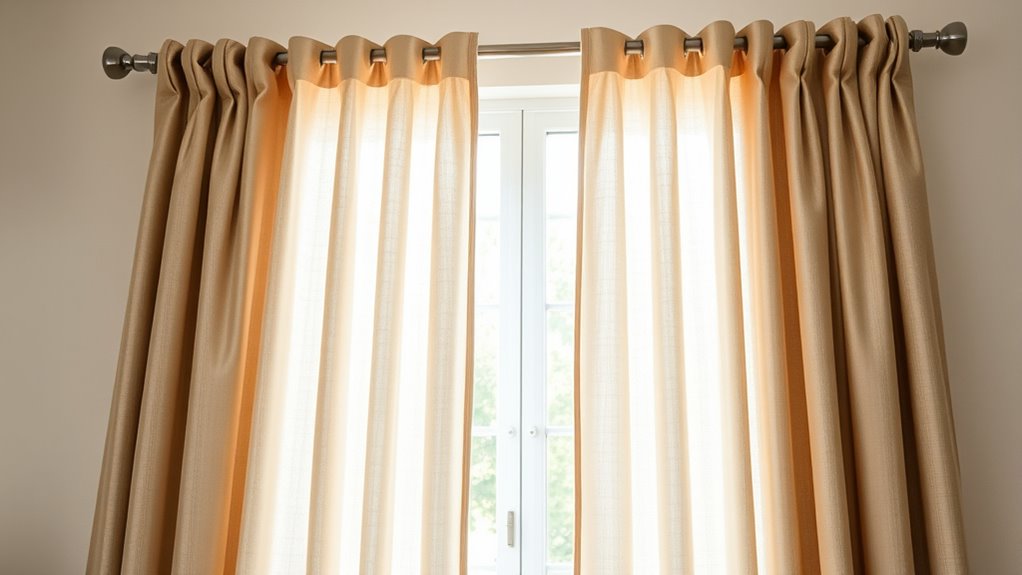

To hang curtains effectively, start by mounting the rod 4-6 inches above the window frame to create the illusion of taller windows. Extend the rod at least 3 inches beyond each side for full coverage. Measure from the rod to your desired endpoint for length, whether just touching the floor or slightly puddled for elegance. Proper height, width, and length enhance your room’s style; keep exploring for more tips on perfecting your window treatments.

Get furniture and decor delivered free with Prime
- Fast, free delivery on millions of items
- Prime Video, Amazon Music and more included
- Member-only deals all year
Key Takeaways
- Mount curtain rods 4-6 inches above the window frame for a taller, more spacious look.
- Extend the rod at least 3 inches beyond each side of the window for full coverage and aesthetic balance.
- Measure from the rod to the desired length, typically just touching the floor or slightly puddled for elegance.
- Choose fabric length accordingly, adding extra inches if puddling, but avoid excessive pooling for a sleek appearance.
- Ensure proper height, width, and length to optimize natural light, create visual balance, and enhance room style.
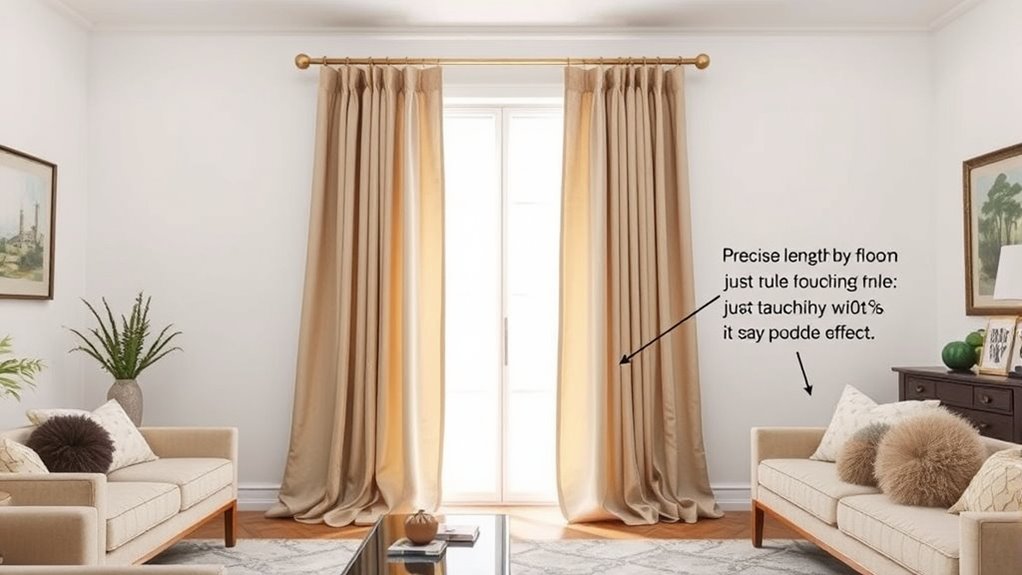
Have you ever wondered how hanging curtains can instantly transform a room? It’s all about the details—especially curtain rod placement, fabric selection, and the right measurements. When you’re choosing where to hang your curtains, the placement of the curtain rod makes a significant difference. Ideally, you want the rod to be mounted slightly above the window frame—about 4 to 6 inches higher—to give the illusion of taller, more expansive windows. If you mount it too low, the room can feel cramped; too high, and windows may seem disconnected from the wall. For wider coverage, extend the rod at least 3 inches beyond each side of the window frame. This guarantees that when the curtains are open, they don’t block any part of the glass, letting in maximum light and creating a more open feel.
Fabric selection plays a vital role in how your curtains look and function. Heavier fabrics like velvet or tapestry add a sense of luxury and block out more light, making them ideal for bedrooms or media rooms. Lighter fabrics, such as linen or sheer voile, create a breezy, airy ambiance perfect for living rooms or kitchens. When choosing fabric, consider the room’s purpose and natural light. Also, keep in mind how much coverage you want—thicker fabrics typically require longer lengths to hang properly, while sheer fabrics can be shorter or layered. The thickness and texture of your fabric influence not only the aesthetic but also how the curtains hang and move. Additionally, understanding fabric properties can help you select the best material for durability and style. Getting the right length is fundamental for a polished look. Generally, curtains should either just touch the floor, puddle slightly for a more elegant vibe, or hit at a specific point depending on your style preference. To determine the length, measure from the curtain rod down to your desired endpoint. For a clean, modern look, keep the curtains just brushing the floor, but if you prefer a more dramatic effect, let them puddle a bit. When measuring, add an extra inch or two if you want the fabric to pool slightly, but avoid excessive pooling if you’re aiming for a sleek appearance.
As an affiliate, we earn on qualifying purchases.
Frequently Asked Questions
How Do I Choose Curtain Styles for Different Room Types?
When choosing curtain styles for different rooms, consider the room’s function and decor. For living rooms, opt for elegant fabrics with curtain rod placement slightly above the window for a spacious feel. In bedrooms, choose blackout curtains with curtain length tips that just touch the floor for a cozy look. In kitchens, go for shorter, easy-to-clean styles, ensuring your curtain rod placement is practical and secure.
Are There Specific Curtain Materials Suited for High Humidity Areas?
For high humidity areas, you should choose moisture-resistant fabrics like polyester, acrylic, or vinyl, which are humidity-friendly materials. These materials resist mold, mildew, and water damage better than natural fibers. Avoid cotton or linen, as they absorb moisture and can develop mold. By selecting these humidity-friendly materials, you guarantee your curtains stay fresh and durable, even in damp environments like bathrooms and kitchens.
How Can I Prevent Curtains From Fading Over Time?
Think of your curtains as an investment—treat them well to keep them looking fresh. To prevent fading, you should regularly rotate and wash your curtains with gentle fabric care. Use UV-protective sprays or hang them away from direct sunlight whenever possible. Choosing durable fabrics also boosts curtain longevity. With proper maintenance, you’ll enjoy vibrant, long-lasting curtains that withstand the test of time.
What Tools Are Recommended for Hanging Curtains Securely?
To hang curtains securely, you need the right tools for curtain rod installation and wall anchoring techniques. Use a drill for precise holes, a level to ensure the rod hangs straight, and a measuring tape for accurate placement. Anchors and screws help stabilize the rod, especially on drywall. Having a pencil to mark spots and a stud finder for extra support makes the process easier and guarantees your curtains stay securely in place over time.
How Do I Maintain and Clean Different Curtain Fabrics Effectively?
Think of curtain fabric care as tending to a living garden. For delicate fabrics, hand wash or dry clean to preserve their beauty, while sturdy materials can handle gentle machine washing. Regularly dust your curtains with a vacuum or lint roller, and spot clean stains promptly. Always follow the manufacturer’s cleaning methods to keep your curtains fresh and vibrant, preventing dirt from settling like unwanted weeds.
Conclusion
Now that you know the rules for hanging curtains—consider them your guiding stars—you can transform any room into a cozy haven. Remember, proper height, width, and length make your windows feel like the eyes of your home, inviting warmth and charm. With a little effort, you’ll create a space that feels thoughtfully crafted, turning simple curtains into a beautiful frame for your life’s story. Let your windows shine as the heart of your decor.
Halloween Picks
halloween
As an affiliate, we earn on qualifying purchases.