
To paint ceramic tiles successfully, start by cleaning the surface thoroughly with a degreaser or mild detergent to remove dirt and grease. Lightly sand the tiles or use a deglosser to enhance adhesion. Apply a high-quality bonding primer suited for ceramic surfaces and let it dry completely. Use thin coats of paint, working in small sections with a roller or brush, and allow each coat to dry fully. Continue with proper technique to achieve a smooth finish that lasts, and discover even more tips ahead.

Get furniture and decor delivered free with Prime
- Fast, free delivery on millions of items
- Prime Video, Amazon Music and more included
- Member-only deals all year
Key Takeaways
- Thoroughly clean tiles with degreaser or mild detergent to remove grease and dirt for proper paint adhesion.
- Lightly sand the surface with fine-grit sandpaper to improve paint grip and surface smoothness.
- Apply a high-quality bonding primer suitable for ceramic tiles to enhance durability and adhesion.
- Use thin coats of paint with foam rollers or brushes, working in small sections for even coverage.
- Allow each coat to dry completely before applying subsequent layers for a smooth, long-lasting finish.

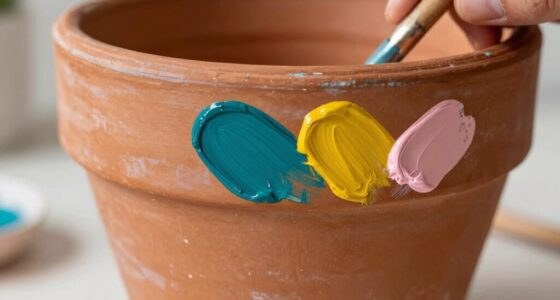
Ever wondered how to update your ceramic tiles without a costly replacement? Painting your tiles is a smart, budget-friendly way to breathe new life into a space, but success depends on proper prep and technique. One of your first considerations is choosing the right color options. With modern tile paints, you have a broad palette—from neutral tones to bold, vibrant hues—so you can match your decor or make a statement. Before diving into color selection, think about the atmosphere you want to create and how the new color will complement other elements in the room. Once you’ve settled on your color, focus on mastering application techniques to guarantee a smooth, durable finish.
The key to a professional-looking result is meticulous preparation. Start by cleaning the tiles thoroughly with a degreaser or a mixture of water and mild detergent. Remove all grease, soap scum, and dirt, as these can prevent paint from adhering properly. After cleaning, rinse with clean water and let the tiles dry completely. Next, lightly sand the surface with fine-grit sandpaper or a scrubbing pad. This step creates a rough texture that helps the primer and paint stick better. For glossy tiles, consider using a deglosser or primer specifically designed to bond with slick surfaces, which greatly improves durability.
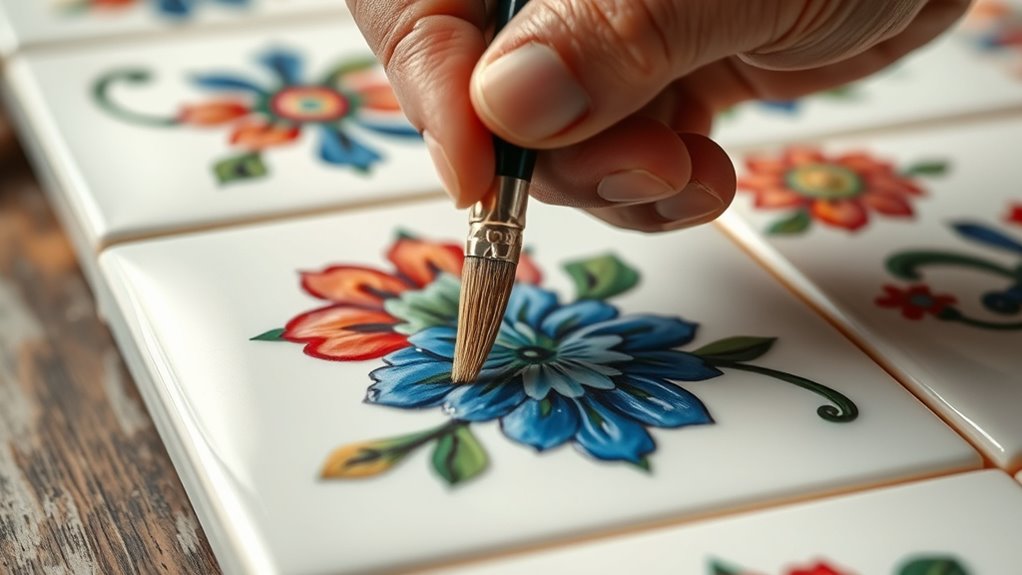
Applying primer is essential for a lasting finish. Use a high-quality bonding primer suitable for ceramic surfaces, and apply it evenly with a brush or roller. Allow it to dry fully, following the manufacturer’s recommended drying time. Once primed, you’re ready to apply the paint. Use application techniques that promote even coverage—thin coats are better than thick ones. A foam roller or a high-quality brush can help achieve a smooth surface, minimizing brush strokes and drips. Work in small sections, maintaining a wet edge to prevent lap marks. Multiple thin coats will give you a more uniform look and guarantee the paint adheres well.
As an affiliate, we earn on qualifying purchases.
Frequently Asked Questions
How Long Does Ceramic Tile Paint Last Before Needing Touch-Ups?
Ceramic tile paint typically lasts around 5 to 10 years before you might need touch-ups, depending on durability concerns and usage. To extend its life, follow maintenance tips like cleaning with gentle products and avoiding abrasive scrubbers. Regular inspections help catch chips or wear early, so you can address issues promptly. Proper prep and quality paint also play vital roles in ensuring your painted tiles stay vibrant longer.
Can I Paint Over Existing Glazed Ceramic Tiles Without Stripping?
Yes, you can paint over glazed ceramic tiles without stripping, but guarantee glaze compatibility for maximum results. Clean the tiles thoroughly to remove grease and dirt, then lightly sand to improve paint adhesion. Use a high-quality, tile-specific primer to promote better adhesion, and select a paint designed for ceramic surfaces. Proper prep and compatible paint will give your project lasting durability and a smooth finish.
What Are the Best Ventilation Practices During and After Painting?
During and after painting, you should guarantee proper ventilation by using ventilation equipment like fans or exhaust systems to circulate fresh air. Keep windows open and use odor control measures such as air purifiers or activated charcoal filters to reduce fumes. This helps protect your health and speeds up drying. Always follow the manufacturer’s instructions for your ventilation equipment, and keep the area well-ventilated until the paint is fully cured.
Is It Safe to Use Ceramic Tiles Painted in Kitchen or Bathroom Areas?
You can safely use painted ceramic tiles in your kitchen or bathroom if you prioritize tile safety and paint durability. Guarantee you choose high-quality, heat- and moisture-resistant paint designed for tiles, and allow proper curing time before use. Regularly clean and inspect the tiles for any signs of wear or peeling. By maintaining these practices, you protect your space and enjoy durable, beautifully painted tiles that withstand daily activities.
How Do I Prevent Paint From Chipping or Peeling Over Time?
To prevent paint from chipping or peeling, you should focus on tile sealing and choosing durable paint. First, make certain you properly clean and prime the tiles, then apply a high-quality, epoxy-based or ceramic-specific paint. Once dry, seal the painted surface with a waterproof sealant to enhance durability. Regularly clean gently and avoid harsh scrubbing to maintain the paint’s integrity and extend its lifespan.
Conclusion
Now that you know how to prep and paint ceramic tiles, you’re all set to give your space a fresh new look. Just remember, a job worth doing is worth doing right—patience and prep make all the difference. Take your time, follow the steps, and enjoy the transformation. With a little effort, your tiles will look stunning and last for years. After all, Rome wasn’t built in a day, and great results don’t happen overnight either.
Halloween Picks
halloween
As an affiliate, we earn on qualifying purchases.