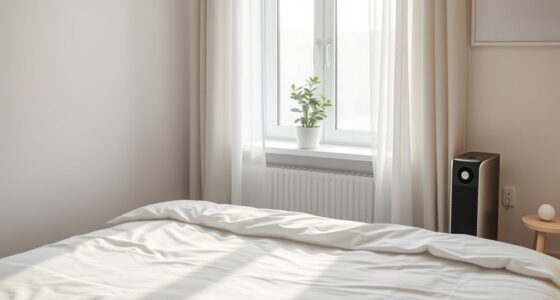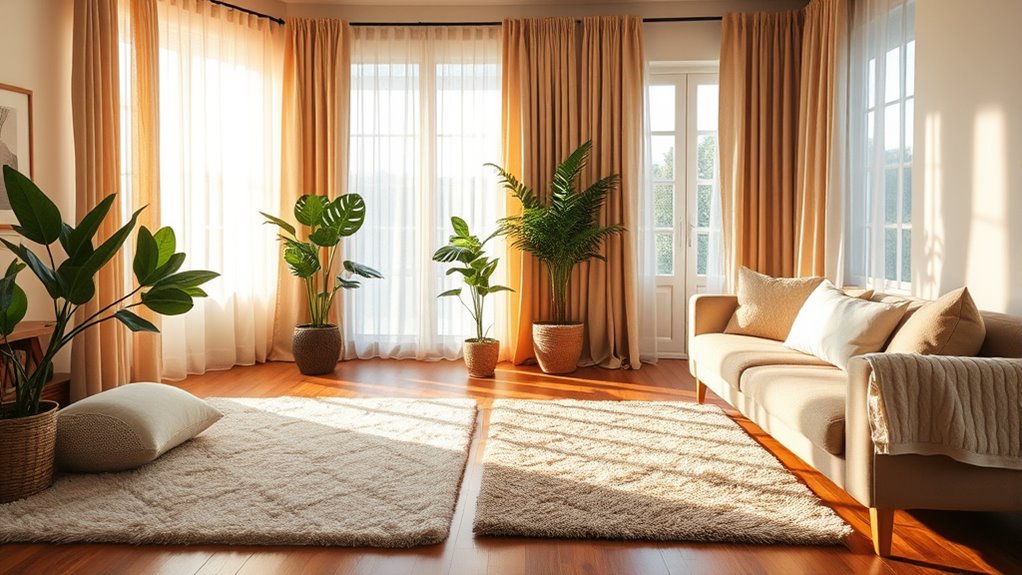

To reduce noise at home easily, start by adding acoustic curtains that absorb sound waves and block noise entry around windows or doorways. Complement these with acoustic panels on walls to minimize echoes and improve sound quality inside. Layering these solutions, sealing gaps, and choosing floor-length curtains further enhances noise control. These simple, cost-effective steps can remarkably increase tranquility, and exploring more ideas will show you how to achieve an even quieter space.
Key Takeaways
- Install soundproof curtains that extend beyond window frames and reach the floor for better noise blocking.
- Use acoustic panels on walls to absorb sound and reduce echoes within rooms.
- Seal gaps around windows and doors to prevent sound leaks and improve insulation.
- Combine curtains and acoustic panels for layered, more effective noise reduction.
- Make small, practical modifications, like adding rugs or soft furnishings, to enhance sound insulation easily.
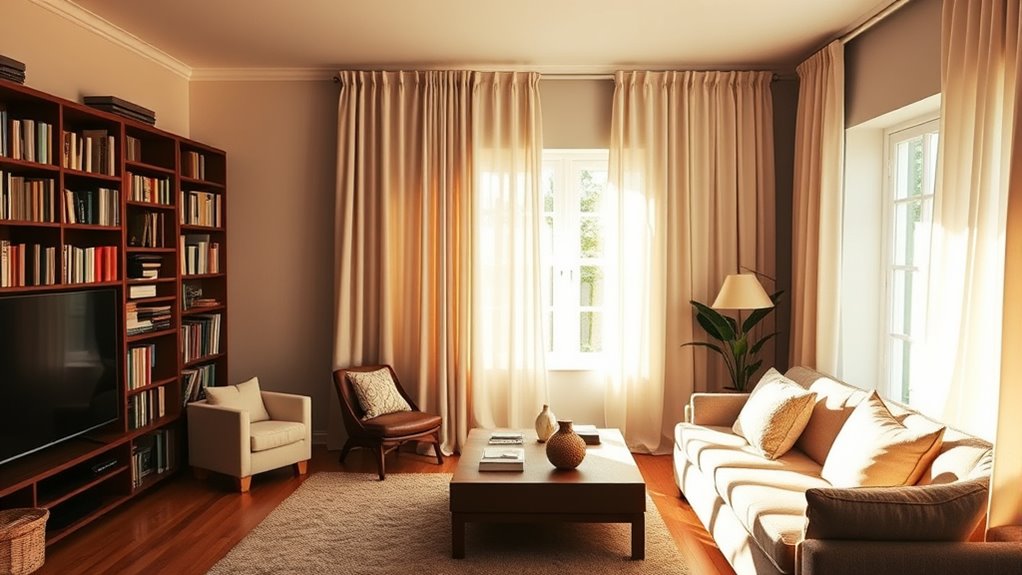
Living in a noisy environment can be stressful and disruptive, but fortunately, there are effective ways to reduce sound at home. One of the simplest and most immediate solutions is investing in soundproof curtains. These thick, dense curtains are designed to absorb sound waves, preventing noise from filtering into your space. They’re easy to install and come in various styles to match your decor, making them a versatile option. When you hang soundproof curtains over windows or doorways, you create an extra layer of insulation that minimizes the noise coming in from outside or neighboring rooms. They’re especially useful in bedrooms or study areas where quiet is essential. Keep in mind that the thicker the curtain, the better it will block sound, so opt for high-quality, acoustic-grade fabrics for ideal results.
Alongside soundproof curtains, acoustic panels are another effective strategy to dampen unwanted noise. These panels are typically made from sound-absorbing materials like foam or fabric-wrapped mineral wool, which help to reduce echo and reverberation within a room. Installing acoustic panels on walls, especially those shared with noisy neighbors or busy streets, can considerably improve your indoor sound environment. They’re straightforward to mount and can be arranged creatively to suit your style while maximizing their acoustic benefits. Besides blocking external sounds, acoustic panels also improve the acoustic quality inside your home, making conversations clearer and reducing harsh echoes. For spaces like home offices, media rooms, or bedrooms, combining acoustic panels with soundproof curtains can create a more peaceful atmosphere. Additionally, soundproofing methods like sealing gaps around windows and doors can further enhance noise reduction efforts.
You don’t need to overhaul your entire home to achieve better sound insulation. Simple modifications like adding a few soundproof curtains and acoustic panels can make a noticeable difference. For windows, choose curtains that extend beyond the frame and reach the floor for maximum coverage. For walls, strategically place acoustic panels in areas where sound tends to bounce or where noise enters most prominently. Besides their functional benefits, these additions can also enhance the aesthetic of your space, especially when you select panels and curtains that complement your decor. Remember, the key is consistency and layering; combining different sound-absorbing elements creates a more effective barrier against noise.
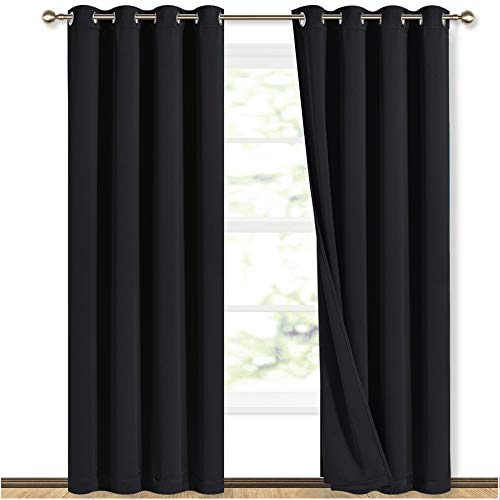
NICETOWN High-End Thermal Curtains, Full Blackout Curtains 84 inches Long for Dining Room, Soundproof Window Treatment Drapes for Hall Room, Black, 52 inches Wide Per Panel, Set of 2 Panels
Complete blackout curtains block light and reduce noise for better sleep – 2 layer construction with blackout lining
As an affiliate, we earn on qualifying purchases.
As an affiliate, we earn on qualifying purchases.
Frequently Asked Questions
Can Plants Help Absorb Household Noise Effectively?
Yes, indoor greenery can help absorb household noise effectively. You should focus on strategic plant placement around your home, especially near noisy areas like windows and walls. Plants with dense foliage and thick leaves are best for dampening sound. By adding various indoor greenery and placing them thoughtfully, you create a natural sound barrier that reduces noise and adds a calming aesthetic to your space.
What Are the Best DIY Soundproofing Materials?
You can effectively DIY soundproof your home using affordable materials like door seals and acoustic panels. Door seals block gaps that let sound in, making a noticeable difference, while acoustic panels absorb echoes and reduce noise transmission. Some people think these aren’t enough, but with proper installation, they markedly improve your space’s quietness. Combining these simple materials is a cost-effective way to enhance your home’s soundproofing without professional help.
How Does Furniture Placement Influence Noise Levels?
Your furniture arrangement directly impacts noise levels by enhancing acoustic optimization. Placing plush sofas, heavy curtains, or bookshelves against shared walls absorbs sound, reducing noise transmission. Positioning furniture strategically around your space creates barriers that block and diffuse sound waves, making rooms quieter. Experiment with different layouts to find the most effective setup. Proper furniture placement is a simple, yet powerful way to improve acoustic comfort at home.
Are There Legal Restrictions on Soundproofing Modifications?
Yes, there are legal restrictions on soundproofing modifications. You should check building codes in your area, as they often set limits on structural changes. Additionally, you need homeowner permissions before making significant alterations, especially if you live in a shared building or community. Failing to comply with these regulations can lead to fines or required removal of modifications, so always verify local rules before proceeding.
How Can I Reduce Noise From Appliances Without Major Renovations?
Your appliances can be as loud as a rocket launch, but you don’t need major renovations to quiet them down. Start by reducing appliance vibration—place foam pads or anti-vibration mats under washers and refrigerators. Hang sound absorbing curtains in the room to dampen noise, especially from appliances near windows. These simple steps can considerably cut down noise, making your home a peaceful sanctuary without breaking the bank.

Focusound 52 Pack Acoustic Foam Panels 1" x 12" x 12" Sound Proof Foam Panles Soundproofing Noise Cancelling Wedge Panels for Home Office Recoding Studio with 300PCS Double-Side Adhesive
Soundproofing – Acoustic foam panels triangular grooves structure for better noise absorption, helps to reduce and absorb unwanted…
As an affiliate, we earn on qualifying purchases.
As an affiliate, we earn on qualifying purchases.
Conclusion
By applying these simple strategies, you can create a quieter, more peaceful home environment. Remember, “A quiet home is a happy home,” so don’t hesitate to take small steps to reduce noise. Whether it’s sealing gaps or adding soft furnishings, every effort counts. Keep in mind that silence isn’t just golden; it’s essential for your well-being. Start today, and enjoy the calm you deserve—because peace begins with a quieter space.

118” Wedge-Shape Foam Window Weather Stripping Door Seal Strip,Soundproofing Frame Winter Insulation Tape for Exterior Front Door,Noise Cancelling Window Inserts,Door Gap Filler Light Blocker,White
Upgraded Wedge Design: This window draft stopper features an upgraded wedge design, tapering from 5/32" to 11/32" (0.16"–0.35")…
As an affiliate, we earn on qualifying purchases.
As an affiliate, we earn on qualifying purchases.
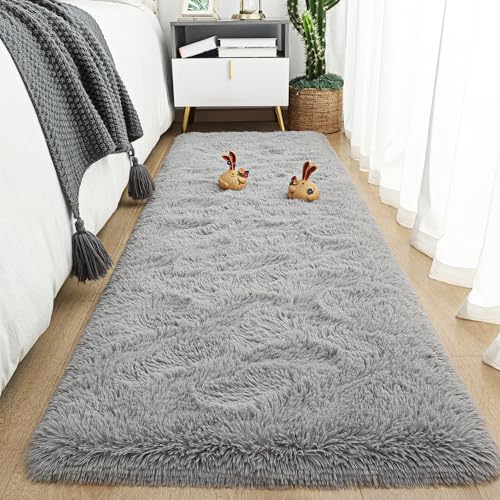
Tepook Soft Runner Rugs for Bedroom 2×6 ft with Rubber Backing, Grey Fluffy Rugs for Living Room, Shag Bedside Rug Fuzzy Plush Carpet for Room, Area Rug for Dorm Nursery Hallway Indoor Home Decor
The softness of runner rugs: Tepook 2×6 runner rugs are made of soft and comfy materials with rubber…
As an affiliate, we earn on qualifying purchases.
As an affiliate, we earn on qualifying purchases.