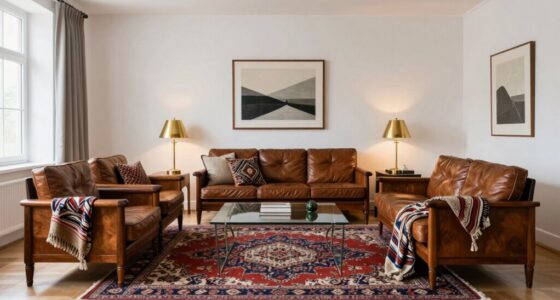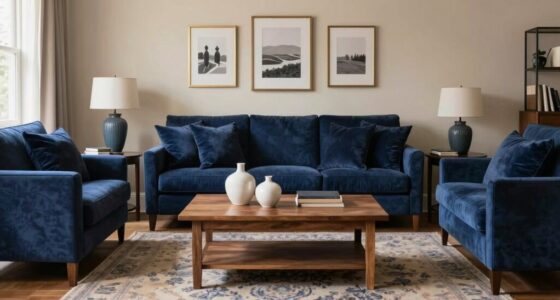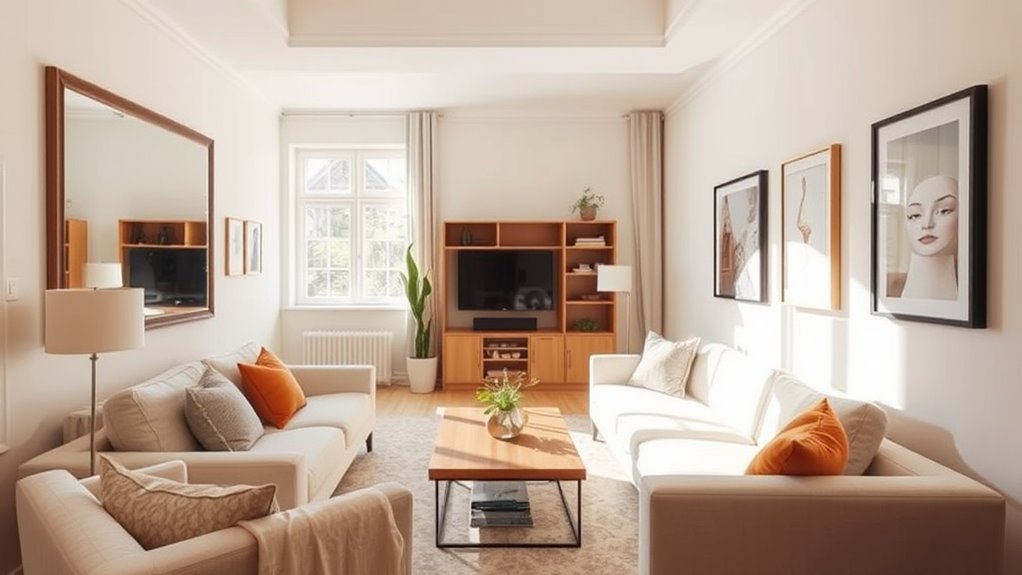

To make small spaces feel larger, use light, reflective colors like whites, creams, and pastels on your walls. Add an accent wall in a bold hue such as navy or emerald to create a focal point without overwhelming the room. Incorporate mirrors and layered lighting to bounce light and enhance the sense of openness. Choosing monochromatic palettes with different shades also helps unify the space. For more smart, space-expanding color tricks, keep exploring these proven techniques.

Get furniture and decor delivered free — and shop member deals
- Fast, free delivery on millions of items
- Access to Prime Big Deal Days deals on October 6–7
- Prime Video, Amazon Music and more included
Key Takeaways
- Use light, neutral colors on walls to reflect natural light and create an airy, spacious feel.
- Incorporate an accent wall with bold or contrasting hues to add depth without overwhelming the space.
- Opt for monochromatic color schemes with varying shades to unify the room and visually enlarge it.
- Enhance lighting with layered ambient, task, and accent lights, and add mirrors to reflect light and expand the space.
- Balance dark hues with lighter furniture and decor to prevent the room from feeling cramped.

Ever wonder how to make a tiny space feel bigger and more inviting? It all comes down to clever use of color. One of the most effective tricks is to incorporate color accent walls. Instead of painting every wall in your small room, pick one wall to stand out with a bold or contrasting hue. This creates a focal point that draws the eye inward, giving the illusion of depth and dimension. For example, a deep navy or emerald accent wall can add richness without overwhelming the space. To maximize the effect, keep the other walls in lighter, neutral tones that reflect light and keep the room feeling open.
Another powerful technique is to embrace monochromatic palettes. By sticking to different shades of the same color, you create a seamless, unified look that visually enlarges the room. When you use variations of a single hue—like soft blush, warm terracotta, and deep coral—you add depth and interest without clutter. Monochromatic schemes also make it easier to select furniture and accessories, since everything blends harmoniously. The key is to choose a light shade for the walls to reflect more natural light, then bring in darker or richer tones through textiles, artwork, or decorative accents. This layered approach adds sophistication and makes the space feel more expansive.
Color choices are essential, but so is how you apply them. Bright, light colors tend to reflect more light, so opting for whites, creams, or pastel shades can make your small room feel airy and open. Darker colors, while cozy, tend to absorb light and can make a space feel smaller, so limit their use to accent walls or small accessories. When you add a bold accent wall, balance it with lighter-colored furniture and decor. This contrast not only emphasizes the accent but also prevents the room from feeling cramped.
Lighting also plays a critical role in how colors perform in a small space. Well-placed lighting enhances your paint choices and accent walls, making colors pop and adding warmth. Use a mix of ambient, task, and accent lighting to create layers that expand the visual space. Mirrors are another smart addition—they bounce light around and reflect your color schemes, amplifying the sense of openness.
Strategic use of color psychology can also influence how spacious a room feels, as certain hues evoke feelings of calm and openness that naturally expand your perception of space. In the end, the secret to making a small space feel bigger lies in strategic color use. Accent walls and monochromatic palettes are your best tools for creating a room that feels both larger and more inviting. Keep your colors light, reflective, and harmonious, and watch your tiny space transform into a more spacious retreat.
white and pastel wall paint for small rooms
As an affiliate, we earn on qualifying purchases.
As an affiliate, we earn on qualifying purchases.
Frequently Asked Questions
How Do Color Choices Affect Room Perceived Size?
Color choices considerably influence how large or small a room feels. Lighter shades, aligned with color psychology, create a sense of openness and reflect more light, making your space seem bigger. Using colors that blend with walls reduces visual boundaries, enhancing the perception of space. Conversely, darker hues can make a room feel cozier but smaller. Select colors carefully to manipulate visual boundaries and achieve your desired room size.
Can Bold Colors Make a Small Room Feel Larger?
Imagine you’re in a vintage speakeasy, where bold hues create striking color illusions. Yes, bold colors can make a small room feel larger by drawing attention and adding depth. Bright, vibrant shades reflect light and open up the space, making it feel airier. Use bold hues on one wall or in accents to create visual interest without overwhelming the room, giving the illusion of more space and a lively atmosphere.
What Are the Best Color Combinations for Small Spaces?
You should choose color combinations that create contrast and highlight your space. Pair light, neutral shades with darker accents to make the room feel larger and more dynamic. Consider an accent wall in a bold color to add depth without overwhelming. Using contrasting colors strategically draws the eye around the room, making it appear bigger. Keep the palette cohesive, and avoid cluttered patterns to maximize the small space’s potential.
How Does Lighting Influence Color Perception in Small Rooms?
Imagine walking into a small room lit with warm lighting; the warm tones make the space feel cozy but can also make colors look softer. Lighting effects, especially color temperature, directly influence how you perceive colors—cooler lighting highlights blues and greens, making a room seem more spacious, while warmer lighting emphasizes reds and yellows, creating intimacy. Proper lighting choices can dramatically enhance your small space’s perception and ambiance.
Are There Specific Color Tricks for Different Small Room Types?
Yes, different small room types benefit from specific color tricks. For bedrooms, use calming shades based on color psychology, like soft blues or greens, to create a relaxing vibe. In kitchens or dining areas, bright accent walls can energize the space. For narrow rooms, opt for light, neutral colors to make them feel more spacious. Incorporate accent walls strategically to add visual interest without overwhelming the room’s size.
Conclusion
Just like a painter uses light and shade to bring a canvas to life, your color choices can transform your small space into a sprawling masterpiece. Think of your room as a tiny garden—each hue planting a seed of openness and harmony. When you choose colors wisely, you’re not just decorating; you’re cultivating an illusion of space that invites you to breathe easier and enjoy your cozy haven even more.
Fall Picks
fall essentials
As an affiliate, we earn on qualifying purchases.