To remove pilling from upholstery fabric, gently use a fabric shaver or a soft brush to lift the pills without damaging the fibers. Work carefully in one direction, applying light pressure to avoid stretching or tearing the fabric. For stubborn pills, a pill remover device works best. Regular maintenance like vacuuming and using a diluted fabric softener spray can help prevent future pilling. If you keep exploring, you’ll discover more tips to keep your furniture looking fresh.
Key Takeaways
- Use a fabric shaver or pill remover device gently across the surface, working in one direction.
- For light pilling, gently brush the fabric with a soft clothing brush or lint roller.
- Test tools on small, inconspicuous areas first to prevent fabric damage.
- Regularly vacuum upholstery with a soft brush attachment to remove loose fibers.
- Maintain fabric by using diluted fabric softener sprays and avoiding harsh chemicals.

Pilling on upholstery can make your furniture look worn and untidy, but luckily, it’s a problem you can fix. Pilling occurs when loose fibers tangle and form small balls on the surface of your fabric. While it might seem like a tough issue, understanding the cause and applying simple techniques can restore your furniture’s appearance. One effective way to prevent pilling is through proper upholstery maintenance, which includes regular cleaning and mindful use of products like fabric softeners. Although fabric softeners are often used in laundry, they can also help keep fibers smooth and reduce friction that leads to pilling, especially on certain fabrics.
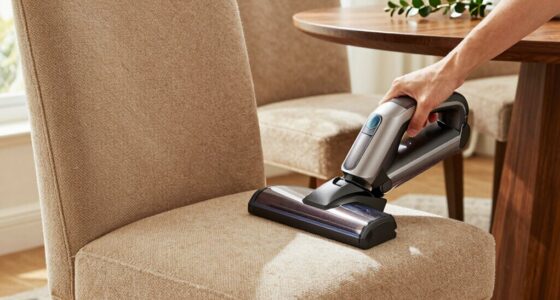
To remove pilling, start by gently brushing the surface with a soft clothing brush or a lint roller. This helps lift off loose pills without damaging the fabric. Be gentle and work in one direction to avoid pulling or stretching the material. For more stubborn pills, a fabric shaver or a specialized upholstery pill remover can be your best tools. These devices are designed to safely trim away pills without harming the fabric. When using a fabric shaver, move it carefully across the surface, and avoid pressing too hard to prevent damage. Always test it on a small, inconspicuous area first to ensure it won’t affect the fabric’s color or texture.
Gently brush or use a fabric shaver to remove pills without damaging your upholstery.
In addition to manual removal, you can incorporate some cleaning tips that help prevent future pilling. Regularly vacuum your upholstery with a soft brush attachment to remove dust and loose fibers. This simple step supports overall upholstery maintenance and minimizes fiber breakage. If your fabric tends to pill frequently, consider using a fabric softener diluted with water in a spray bottle. Lightly misting the fabric can make fibers less prone to friction and pilling. Just be sure to check the manufacturer’s cleaning instructions first, as some fabrics may not respond well to certain liquids.
Avoid rubbing the fabric aggressively or using harsh chemicals, as these can cause more fiber damage and worsen pilling. When cleaning or maintaining your upholstery, always follow the manufacturer’s recommendations to preserve the fabric’s integrity. Remember, consistent upkeep combined with gentle handling can greatly extend the life of your furniture and keep it looking fresh. With these simple steps—using fabric softeners wisely, regularly maintaining your upholstery, and carefully removing pills—you can keep your furniture smooth, clean, and inviting, making your space look polished and well cared for.
As an affiliate, we earn on qualifying purchases.
Frequently Asked Questions
Can Pilling Be Prevented Before It Starts?
Yes, you can prevent pilling before it starts by practicing regular maintenance and using fabric conditioning products. Keep your upholstery clean and vacuum it often to remove loose fibers that could cause pills. Avoid rubbing or excessive friction on the fabric, and consider applying fabric conditioners designed to strengthen fibers. These steps help maintain the fabric’s integrity, reducing the likelihood of pilling and keeping your furniture looking fresh longer.
Are There Specific Fabrics More Prone to Pilling?
Some fabrics are more prone to pilling due to their fiber types and durability. For example, softer fibers like wool and polyester tend to pill more easily, especially if they have lower fabric durability. On the other hand, tightly woven fabrics such as nylon or certain blends resist pilling better. Knowing your fabric’s fiber types helps you choose upholstery that’s less likely to pill, saving you maintenance time later.
How Long Does the Pilling Removal Process Typically Take?
Pilling removal usually takes about 10 to 30 minutes, depending on pilling causes and fabric durability. Imagine a gentle breeze clearing away tiny fuzz balls, revealing smooth fabric underneath. Your patience pays off as you carefully work through the pilling, knowing that some fabrics resist pilling longer due to their durability. With consistent effort, you’ll restore your upholstery’s appearance, making it look fresh and well-maintained in just a short amount of time.
Is It Safe to Use Commercial Pilling Removers?
Using commercial pilling removers can be safe if you check the fabric safety labels first. Always follow the manufacturer’s instructions and test a small, hidden area to verify there’s no damage. While chemical removal options are effective, they might risk damaging delicate fabrics, so proceed cautiously. If you’re unsure, consider manual methods, as they reduce the chance of harming your upholstery and still get rid of those pesky pills efficiently.
Can I Use DIY Methods to Prevent Pilling?
You can definitely use DIY solutions to prevent pilling, keeping your fabric care on point. Regularly brushing or using a lint roller keeps loose fibers at bay, acting like a shield against pilling. Applying a fabric protector spray can also help, but be sure to test it first. Staying proactive with simple maintenance tricks is the best way to keep your upholstery looking fresh and pill-free in the long run.
Conclusion
Now that you know how to remove pilling from your upholstery, you’re well-equipped to keep your furniture looking fresh. Just remember, the key is to act quickly before the pills set in deeper. Don’t let the problem snowball—tackle it head-on with these simple tricks. When you stay proactive, your furniture will stay beautiful longer. Keep up the effort, and you’ll find that a stitch in time truly saves nine.