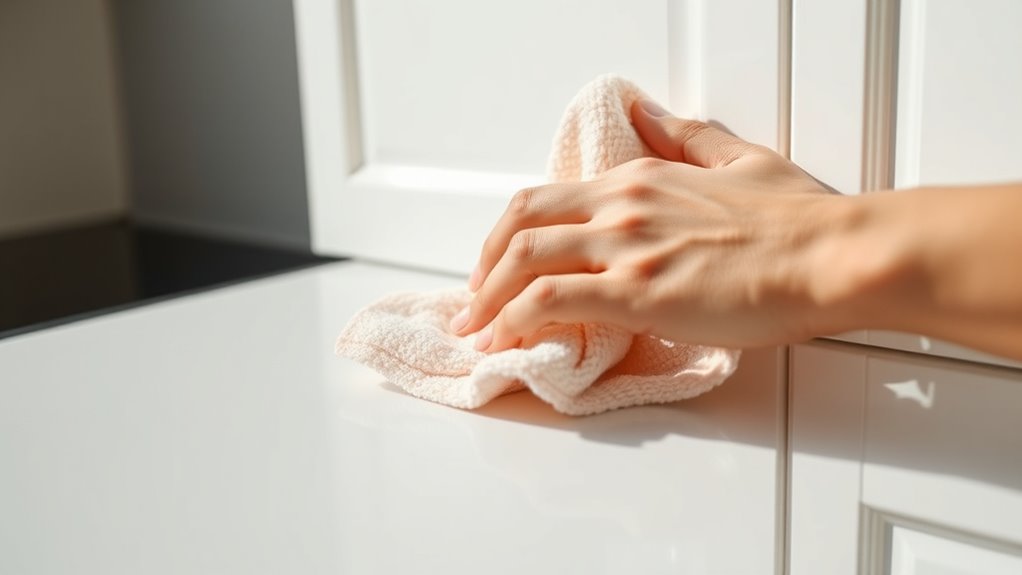

To degrease your kitchen cabinets without damaging the finish, use a gentle solution like warm water mixed with a few drops of dish soap or a vinegar and water mixture. Apply it with a soft cloth, wiping in the direction of the wood grain to prevent scratches. For stubborn grease, try a baking soda paste on a soft cloth, then wipe clean. Keeping proper techniques in mind helps preserve your cabinets—continue to learn effective methods.
Key Takeaways
- Use gentle cleaning solutions like warm water with dish soap or vinegar-water mixes to prevent finish damage.
- Apply cleaners with soft cloths or sponges, wiping in the direction of the wood grain.
- Avoid harsh chemicals, abrasive scrubbers, and soaking cabinets to protect the finish.
- Test cleaning methods on small, inconspicuous areas before full application.
- Follow up with a dry microfiber cloth to remove moisture and prevent water damage.
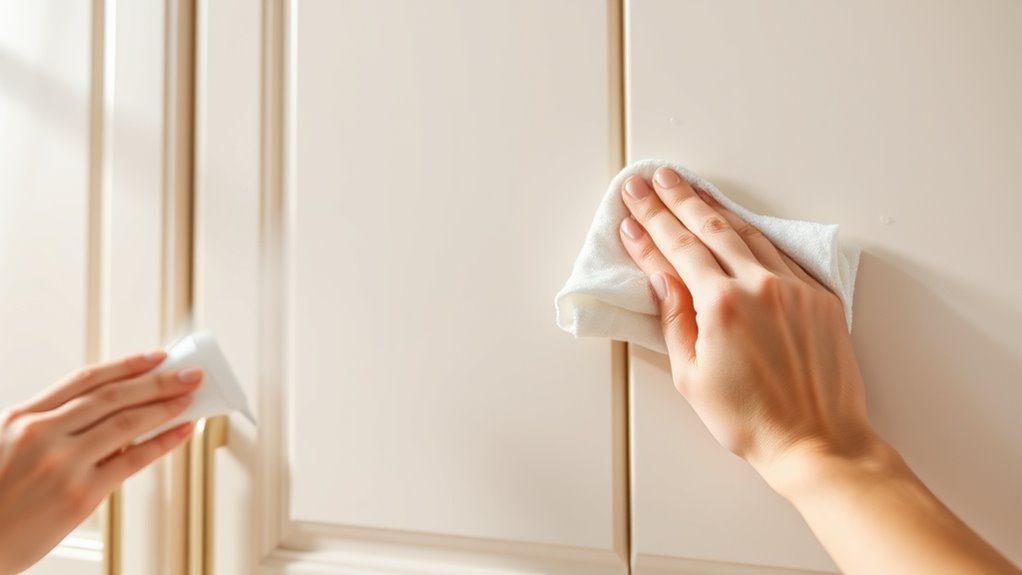
Over time, kitchen cabinets can accumulate grease and grime that not only look unsightly but also attract dirt and bacteria. Regular cleaning is vital to keep your cabinets looking fresh and to maintain a healthy kitchen environment. However, it’s important to choose the right cleaning solutions and follow safety precautions to avoid damaging the finish. Using harsh chemicals or abrasive scrubbers can strip away the protective coating, leaving your cabinets dull and vulnerable to future stains.
Start by gathering gentle cleaning solutions designed specifically for kitchen surfaces. A mixture of warm water and a few drops of dish soap works well for routine cleaning. For tougher grease, you might consider a mixture of vinegar and water, which effectively cuts through grime without the harshness of commercial degreasers. Always test your cleaning solution on a small, inconspicuous area first to ensure it doesn’t harm the finish. When applying your chosen solution, use a soft cloth or sponge rather than abrasive scrub brushes that can scratch or remove the veneer.
Use gentle solutions like warm water and dish soap for safe cabinet cleaning.
Safety precautions are vital when cleaning kitchen cabinets, especially when using stronger solutions. Wear gloves to protect your skin from potential irritation, and ensure proper ventilation by opening windows or turning on the exhaust fan. If you decide to use commercial degreasers, carefully read the manufacturer’s instructions and avoid mixing different chemicals, as this can produce dangerous fumes. Keep cleaning products out of reach of children and pets to prevent accidental ingestion or contact.
When cleaning, avoid soaking the cabinets or letting excess liquid drip into gaps or hardware. Instead, dampen your cloth slightly and wipe gently in the direction of the wood grain. After cleaning, use a dry microfiber cloth to remove any remaining moisture, which helps prevent warping or water damage. For stubborn grease spots, apply a small amount of baking soda paste directly to the area, then gently scrub with a soft cloth. This natural method is safe and effective without risking damage to your finish.
Regular maintenance is key to preventing heavy buildup of grease. Wipe down your cabinets weekly, especially near cooking areas, to keep grime at bay. Additionally, understanding proper cleaning techniques can help you maintain your cabinets’ finish more effectively. With careful selection of cleaning solutions and adherence to safety precautions, you can effectively degrease your kitchen cabinets without damaging the finish. This approach not only preserves their appearance but also extends their lifespan, helping your kitchen stay clean, safe, and inviting.
Frequently Asked Questions
Can I Use Vinegar to Degrease Painted Cabinets?
Yes, you can use vinegar to degrease painted cabinets, but make sure it’s diluted with water to avoid damage. Vinegar safety is key—undiluted vinegar may harm the finish over time, so always mix it properly. As an alternative degreasers, consider gentle options like dish soap or commercial cleaners designed for painted surfaces. Test a small, hidden area first to prevent any unintended damage before cleaning the entire cabinet.
How Often Should I Clean Kitchen Cabinets to Prevent Grease Buildup?
You should clean your kitchen cabinets at least once every one to two weeks to prevent grease buildup. Regular cleaning helps with grease prevention and keeps your cabinets looking fresh. If you cook often or notice grease spots, increase cleaning frequency. Use gentle, non-abrasive cleaners like a mild vinegar solution to avoid damaging the finish. Consistent cleaning not only maintains your cabinets’ appearance but also prolongs their lifespan.
Are Natural Oils Safe for Degreasing Kitchen Cabinet Finishes?
Natural oils can be safe for degreasing kitchen cabinet finishes if used correctly, but their safety depends on the type and application. For effective degreasing, natural oils like lemon or vegetable oil can cut through grease, but they may leave residues if not wiped properly. Always test a small area first to guarantee natural oil safety and avoid damage, and use sparingly for maximum degreasing effectiveness.
Will Degreasing Damage Laminate or Veneer Cabinet Surfaces?
Degreasing won’t damage laminate or veneer surfaces if you use gentle, non-abrasive cleaners. For laminate care, avoid harsh chemicals that can cause discoloration or peeling. With veneer maintenance, steer clear of excessive moisture and abrasive scrubbers, which can lift or damage the thin layers. Always test a small area first, and use soft cloths or sponges to keep your cabinets looking fresh without risking harm.
What Should I Do if the Finish Becomes Dull After Cleaning?
If your cabinet finish looks dull after cleaning, don’t worry—it’s a common coincidence. You should add a finishing touch with a gentle polish to restore its shine. Use a product designed for your cabinet material, and apply it with a soft cloth, buffing in circular motions. This simple step works wonders for polish restoration, bringing back that fresh, glossy look without risking damage to your beautiful finish.
Conclusion
Now that you know how to safely degrease your kitchen cabinets without harming their finish, you can enjoy a gleaming, like-new look with just a few simple steps. Remember, patience and gentle cleaning are your best allies—think of it as restoring a vintage masterpiece in your own home. With these tips, your cabinets will shine brighter than a polished silver spoon in a sunlit Victorian parlor, making your kitchen feel fresh and inviting once more.