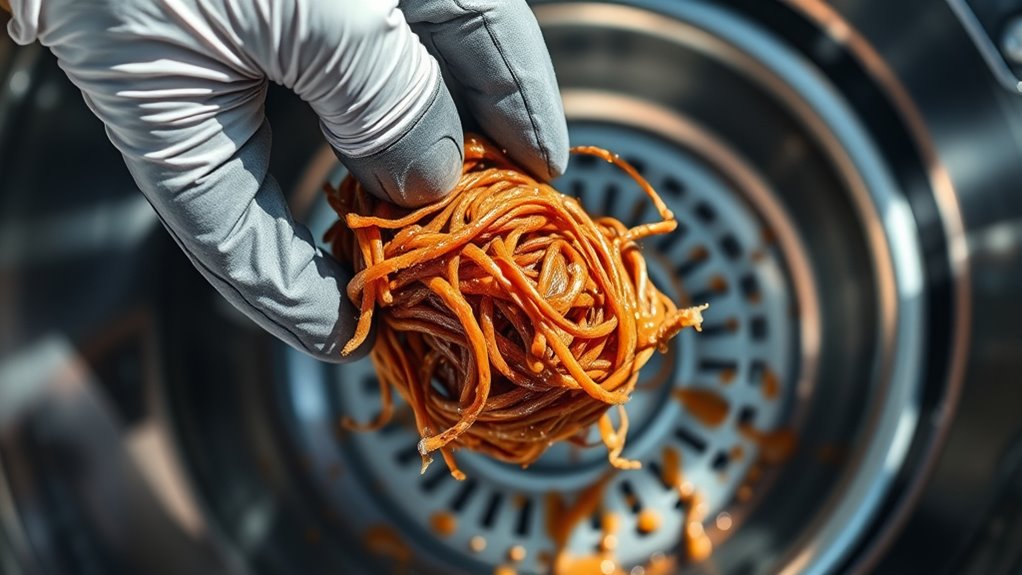

To unclog and deep clean your dishwasher, start by unplugging the appliance for safety. Remove the racks and inspect the filter and drain area for food debris, grease, or soap scum, rinsing and scrubbing any buildup. Check the drain hose for kinks or blockages, flushing it with water if needed. Run a cycle with vinegar and baking soda or a commercial cleaner to eliminate odors and residues. For detailed steps, keep exploring to keep your dishwasher running smoothly.

Get furniture and decor delivered free with Prime
- Fast, free delivery on millions of items
- Prime Video, Amazon Music and more included
- Member-only deals all year
Key Takeaways
- Unplug the dishwasher, remove racks, and access the filter and drain area to inspect for debris or buildup.
- Detach and flush the drain hose with water to clear any obstructions.
- Clean the filter thoroughly with warm water and scrub with an old toothbrush for stubborn grime.
- Run a cleaning cycle using dishwasher cleaner, or pour vinegar and baking soda for natural deep cleaning.
- Regularly inspect and maintain hoses and filters to prevent future clogs and ensure optimal performance.
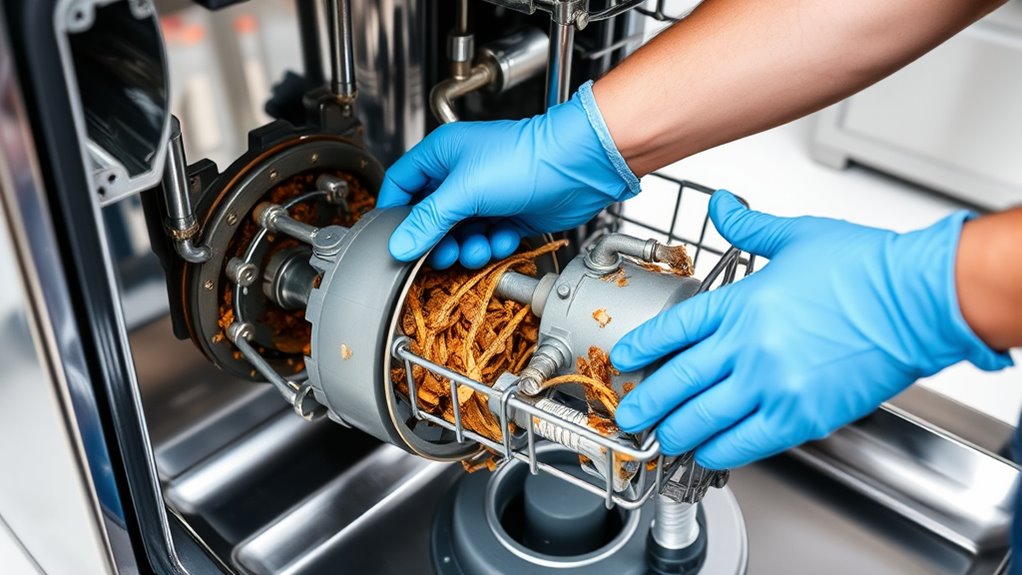
If your dishwasher isn’t cleaning dishes properly or has standing water, it’s likely time for a deep clean and unclogging. Regular dishwasher maintenance is essential to keep your appliance running smoothly and to prevent clogs that can cause poor performance. The first step involves identifying the signs of a blocked drain or buildup, such as lingering food particles, foul odors, or water pooling at the bottom. Once you notice these issues, you can tackle the problem with the right cleaning solutions and a thorough approach.
Start by unplugging the dishwasher and removing the racks to give yourself clear access to the drain area and filter. Many clogs originate from accumulated debris, grease, or soap scum that build up over time. To clear this, you’ll need to clean the filter, which often sits at the bottom of the appliance. Rinse it under warm water, scrubbing away any stubborn grime with an old toothbrush. This simple step can markedly improve water flow and overall dishwashing performance. After cleaning the filter, check the drain hose for kinks or obstructions, as these can impede drainage and cause standing water. Detach the hose carefully and flush it with water if needed.
Next, you should focus on using cleaning solutions designed specifically for dishwasher maintenance. Regularly running a cleaning cycle with a dishwasher cleaner helps dissolve grease, mineral deposits, and soap scum that can cause clogs. Alternatively, you can use a mixture of white vinegar and baking soda—pour a cup of vinegar into the bottom of the dishwasher and sprinkle a cup of baking soda over the racks, then run a hot water cycle. This natural cleaning solution is effective at eliminating odors and breaking down buildup without harsh chemicals. For stubborn blockages, consider manually clearing the drain area with a flexible brush or a plumbing snake, being careful not to damage any components.
Maintaining your dishwasher with routine cleaning solutions and inspections prevents future clogs and keeps your appliance functioning efficiently. Regular waterpark maintenance practices, like checking hoses and filters, help ensure optimal performance and avoid costly repairs. Remember, consistent dishwasher maintenance not only prolongs its lifespan but also ensures your dishes come out spotless every time. By taking these steps, you’ll stay ahead of potential problems, save money on repairs, and enjoy a well-performing dishwasher for years to come. Properly unclogging and deep cleaning your dishwasher may seem like a chore, but with a few simple tools and regular attention, it becomes a straightforward task that keeps your kitchen running smoothly.
dishwasher filter cleaning brush
As an affiliate, we earn on qualifying purchases.
As an affiliate, we earn on qualifying purchases.
Frequently Asked Questions
How Often Should I Deep Clean My Dishwasher?
You should deep clean your dishwasher at least once every three to six months. Regular dishwasher maintenance includes a thorough cleaning schedule to prevent buildup of soap scum, food particles, and mold. By doing this, you keep your appliance running efficiently and extend its lifespan. Don’t forget to check the filter and spray arms during your deep clean to guarantee peak performance and prevent future clogs or malfunctions.
Can I Use Vinegar or Bleach for Cleaning?
You can use vinegar for cleaning your dishwasher, but be cautious about vinegar safety—avoid prolonged use to prevent damage. Instead of bleach, consider safer bleach alternatives like baking soda or hydrogen peroxide. These options effectively clean and deodorize without harming your appliance. Always run an empty cycle with vinegar or these alternatives, and do not mix vinegar with bleach to prevent dangerous fumes.
What Are Signs My Dishwasher Needs Unclogging?
Think of your dishwasher as a river that needs clear channels to flow smoothly. If you notice standing water, bad odors, or dishes not coming out clean, it’s a sign of drain clogs or dirty filters. You should regularly check and maintain the filter, and if water isn’t draining properly, it’s time to unclog. Ignoring these signs can cause buildup, making your dishwasher less efficient over time.
Is It Safe to Use Commercial Dishwasher Cleaners?
Using commercial dishwasher cleaners is generally safe if you follow the manufacturer’s instructions carefully. These cleaners are formulated to be effective at removing grime and buildup, ensuring good dishwasher safety. However, misuse or overuse can cause damage or residue buildup. To maximize commercial cleaner efficacy and protect your appliance, always read labels, use the recommended amount, and rinse thoroughly if needed. This way, you keep your dishwasher running smoothly and safely.
How Can I Prevent Future Clogs and Buildup?
To prevent future clogs and buildup, you should regularly clean your dishwasher’s filter and check for debris. Use water softening agents if you have hard water, as mineral deposits cause buildup. Make it a habit to run a cleaning cycle once a month, and avoid overloading the dishwasher. Proper filter maintenance and water softening keep your dishwasher running smoothly and extend its lifespan, preventing costly repairs.
Conclusion
Think of your dishwasher like a busy highway; when it’s clogged, traffic gets stuck, and everything slows down. I once ignored a small clog, and soon my dishes came out grimy—just like a traffic jam causes delays. Regularly unclogging and deep cleaning keeps things flowing smoothly, ensuring your dishwasher runs efficiently and your dishes come out sparkling. Stay on top of maintenance, and you’ll avoid costly repairs—keeping your kitchen running like a well-oiled machine.
Fall Picks
fall essentials
As an affiliate, we earn on qualifying purchases.