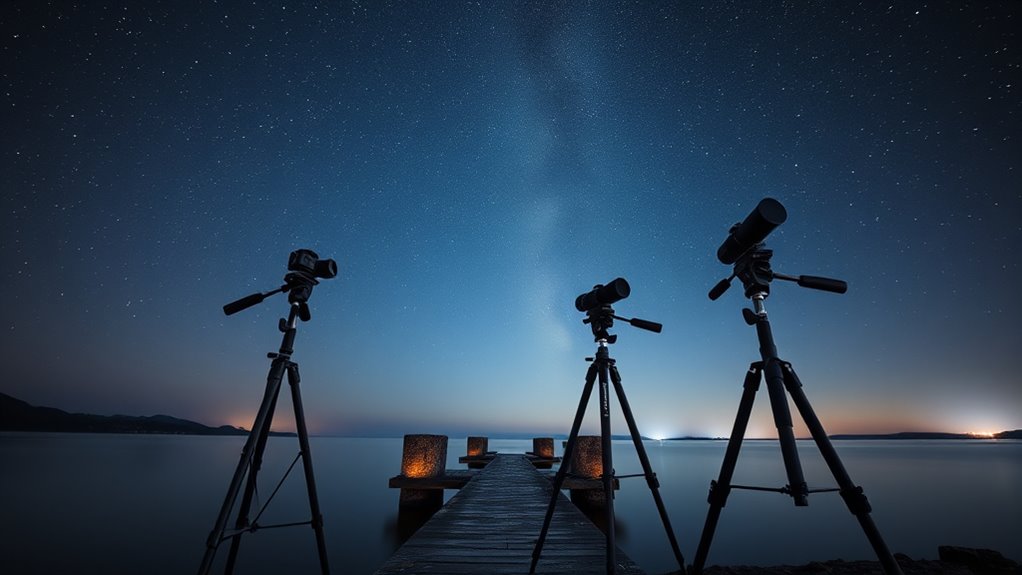
When selecting tripods and pier mounts for astrophotography, stability and precision are paramount. The Sky-Watcher Star Adventurer GTI Mount Kit stands out as the best overall for its versatility and ease of use. For high-load capacity and durability, the Carbon Fiber Telescope Equatorial Base Mount Tripod offers impressive strength, while the MiniPier for iOptron provides a compact solution for portable setups. These choices reflect the tradeoffs between cost, stability, portability, and load capacity that every astrophotographer faces. Continue reading for a detailed breakdown of each option and what makes them unique.

Get furniture and decor delivered free — and shop member deals
- Fast, free delivery on millions of items
- Access to Prime Big Deal Days deals on October 6–7
- Prime Video, Amazon Music and more included
Complete the kit


Key Takeaways
- Stability is the most critical factor, with carbon fiber and heavy-duty materials providing superior steadiness.
- Compatibility with different mounts and telescopes varies; choose a system that fits your gear now and in the future.
- Portability often involves balancing weight against stability; lighter tripods may compromise steadiness for travel ease.
- Ease of setup and control features like WiFi or Bluetooth can streamline astrophotography sessions but may add cost.
- Higher load capacities are essential for heavier telescopes but often come with increased weight and size.
| Sky-Watcher AL-EQ55i Pier Extension Mount Accessory |  | Best for All-Latitude Flexibility | Compatibility: Sky-Watcher AL-EQ55i | Extension Height: 8.5 inches | Color: White | VIEW ON AMAZON | See Our Full Breakdown |
| Carbon Fiber Telescope Equatorial Base Mount Tripod 50kg/110lb High Load Capacity |  | Best for Heavy Equipment, Lightweight Design | Load Capacity: 50kg / 110lb | Material: 10-layer diamond-shaped carbon fiber | Storage Height: 51.5cm / 20.28in | VIEW ON AMAZON | See Our Full Breakdown |
| PMC-Eight Equatorial Tracker System Tripod and Mount for Astrophotography with WiFi and Bluetooth Compatibility |  | Best for High-Tech Automated Tracking | Mount Type: Equatorial | Focus Type: No Focuser | Compatible Devices: Tablet | VIEW ON AMAZON | See Our Full Breakdown |
| Sky-Watcher Wave Carbon Fiber Tripod |  | Best Lightweight Support for Outreach and Imaging | Maximum Extended Length: 29 inches | Minimum Retracted Length: 19.7 inches | Payload Capacity: 44 pounds | VIEW ON AMAZON | See Our Full Breakdown |
| MiniPier for iOptron Small to Medium Mount |  | Best for Compact, Precise Setup | Height: 178 mm (7 inches) | Top plate diameter: 124 mm | Bottom plate diameter: 134 mm | VIEW ON AMAZON | See Our Full Breakdown |
| Sky-Watcher Star Adventurer GTI Mount Kit with Counterweight, Tripod, and Pier Extension |  | Best for Portable Astrophotography with Advanced Features | Mount Type: GoTo EQ tracking mount | Includes: Counterweight, CW bar, tripod, pier extension | Features: Built-in polar scope with illuminator, built-in WiFi | VIEW ON AMAZON | See Our Full Breakdown |
| tripods and pier mounts for astrophotography | Weight |
|---|---|
| Sky-Watcher AL-EQ55i Pier Exte | — |
| Carbon Fiber Telescope Equator | 1.9kg / 4.19lb |
| PMC-Eight Equatorial Tracker S | — |
| Sky-Watcher Wave Carbon Fiber | 5.3 pounds |
| MiniPier for iOptron Small to | 4 lbs |
| Sky-Watcher Star Adventurer GT | — |
More Details on Our Top Picks
Sky-Watcher AL-EQ55i Pier Extension Mount Accessory
This pier extension is a straightforward addition for the AL-EQ55i mount, offering an extra 8.5 inches of clearance that can be crucial for larger telescopes or to improve visibility. Unlike the Carbon Fiber Telescope Equatorial Base Mount Tripod, which provides a stable foundation supporting heavy gear, this accessory focuses solely on height adjustment and compatibility. Its simplicity makes it easy to install, but being limited to the AL-EQ55i model and only raising the mount by 8.5 inches means it’s less versatile for other setups. It’s a practical choice for those already invested in the AL-EQ55i system needing just a height boost.
Pros:- Provides additional clearance for large or obstructed views
- Supports all-latitude operation for flexible positioning
- Simple and quick to install
Cons:- Limited to AL-EQ55i models, reducing compatibility
- Only raises the mount by 8.5 inches, which may be insufficient for some setups
Best for: Owners of AL-EQ55i mounts seeking extra clearance for better sky access.
Not ideal for: Users with different mounts or those needing a more substantial elevation change, as this only adds 8.5 inches.
- Compatibility:Sky-Watcher AL-EQ55i
- Extension Height:8.5 inches
- Color:White
Our verdict“This accessory is ideal for AL-EQ55i users needing a modest height increase with minimal fuss.”
Carbon Fiber Telescope Equatorial Base Mount Tripod 50kg/110lb High Load Capacity
This carbon fiber tripod stands out for supporting heavy astrophotography gear up to 50kg, making it suitable for large telescopes and advanced setups. Compared to the Sky-Watcher Wave Carbon Fiber Tripod, which extends only up to 29 inches, this model offers a higher, more stable platform with a remarkable load capacity. Its 10-layer diamond-shaped carbon fiber construction delivers excellent stability while remaining lightweight at just over 4 pounds, ideal for outdoor use. However, its higher cost and the need for careful handling due to the heavy load capacity are tradeoffs. This tripod makes the most sense for serious astrophotographers who prioritize stability and portability over budget.
Pros:- Supports up to 50kg, accommodating large telescopes
- Lightweight for its capacity, easy to carry outdoors
- High stability with durable carbon fiber construction
- Quick assembly for efficient setup
Cons:- Higher price point compared to traditional tripods
- Requires careful handling due to high load capacity
Best for: Experienced astrophotographers needing a durable, high-capacity tripod for large instruments.
Not ideal for: Beginners or casual stargazers who won’t utilize the full load capacity or need a budget-friendly option.
- Load Capacity:50kg / 110lb
- Material:10-layer diamond-shaped carbon fiber
- Storage Height:51.5cm / 20.28in
- Working Height:77cm / 30.32in
- Folded Length:51.5cm / 20.28in
- Leg Tube Diameter:4.0cm / 1.57in
- Weight:1.9kg / 4.19lb
Our verdict“This tripod is best suited for seasoned astrophotographers demanding high stability with portable convenience.”
PMC-Eight Equatorial Tracker System Tripod and Mount for Astrophotography with WiFi and Bluetooth Compatibility
The PMC-Eight system is a high-end solution for astrophotographers seeking precise, automated star tracking. Its eight independent CPUs enable rapid responsiveness, surpassing simpler systems like the Sky-Watcher AL-EQ55i Pier Extension in tracking accuracy and responsiveness. Equipped with smooth dual-axis worm gears and an intuitive app, it simplifies alignment and star navigation, ideal for long-exposure astrophotography. The main tradeoff is its complexity; beginners may find its setup daunting, and the price reflects its advanced capabilities. This system makes sense for those who prioritize cutting-edge technology and are comfortable with more involved setup procedures.
Pros:- Eight CPUs for unmatched responsiveness and reliability
- Smooth, precise dual-axis worm gears for accurate tracking
- Wireless control via WiFi and Bluetooth for ease of use
- Intuitive app simplifies star alignment
Cons:- No built-in focuser, requiring extra accessories
- Complex setup may challenge beginners
- Higher cost compared to basic mounts and tripods
Best for: Experienced astrophotographers or tech-savvy amateurs seeking precise, automated tracking with WiFi/Bluetooth control.
Not ideal for: Beginners or casual users who prefer simpler, plug-and-play mount options without the need for additional accessories.
- Mount Type:Equatorial
- Focus Type:No Focuser
- Compatible Devices:Tablet
- Additional Features:WiFi and Bluetooth, 8 CPUs
- Gears:Clutched dual-axis worm gears with belt drives
Our verdict“This system is perfect for advanced astrophotographers seeking automated precision and technological sophistication.”
Sky-Watcher Wave Carbon Fiber Tripod
The Wave Carbon Fiber Tripod provides a lightweight yet robust platform supporting up to 44 pounds, making it suitable for outreach sessions, visual observing, or imaging with smaller telescopes. Its maximum height of 29 inches caters well to seated or adjustable setups, but it might feel limiting for taller users or those needing a higher vantage point. Compared with larger tripods, its portability and ease of transport stand out, but the limited maximum height and lack of included mounting hardware mean it’s best paired with existing equipment. This tripod offers a practical balance of strength and weight for portable astrophotography but isn’t designed for heavy or tall setups.
Pros:- Lightweight and easy to carry
- Supports up to 44 pounds, accommodating various instruments
- Durable carbon fiber construction resists environmental stress
Cons:- Limited maximum height for taller users
- No included accessories or mounting hardware
Best for: Amateur astronomers and outreach teams needing a portable, high-strength tripod for small to medium gear.
Not ideal for: Tall users or those requiring extended height for comfortable viewing or imaging, as it maxes out at 29 inches.
- Maximum Extended Length:29 inches
- Minimum Retracted Length:19.7 inches
- Payload Capacity:44 pounds
- Weight:5.3 pounds
Our verdict“This tripod is a solid choice for portable astrophotography and outreach, especially with smaller equipment.”
MiniPier for iOptron Small to Medium Mount
The MiniPier offers a compact, highly adjustable extension for small to medium iOptron mounts, featuring leveling bolts and multiple mounting holes for precise setup. Compared to the Sky-Watcher AL-EQ55i Pier Extension, which is more of an add-on, the MiniPier provides a more adaptable platform with adjustable height and leveling capabilities, making it ideal for portable or field use. Its limitations include compatibility mainly with iOptron mounts, and it might require modifications for other supports. For users who prioritize compactness and setup accuracy, this pier excels, but it’s less suitable for larger, heavier mounts or non-iOptron gear.
Pros:- Compatible with a wide range of iOptron mounts and tripods
- Includes leveling bolts for precise adjustments
- Compact, lightweight, easy to transport
Cons:- Limited to iOptron mounts, reducing versatility
- May require additional tools or modifications for non-iOptron supports
Best for: Owners of small to medium iOptron mounts needing a portable, adjustable pier for precise leveling.
Not ideal for: Users with unsupported mounts or larger telescopes, as it’s designed specifically for small to medium iOptron gear.
- Height:178 mm (7 inches)
- Top plate diameter:124 mm
- Bottom plate diameter:134 mm
- Weight:4 lbs
- Included:3 leveling bolts
Our verdict“This MiniPier is perfect for portable, precise setup with compatible iOptron mounts and tripods.”
Sky-Watcher Star Adventurer GTI Mount Kit with Counterweight, Tripod, and Pier Extension
The Sky-Watcher Star Adventurer GTI stands out for its combination of portability and smart features, making it ideal for astrophotographers who need a lightweight yet capable mount. Compared to the PMC-Eight, which offers WiFi and Bluetooth but is bulkier and designed for more advanced setups, the GTI provides a more compact solution without sacrificing precise tracking. Its built-in WiFi enables remote control, reducing the need for physical access during long exposures, while the full GoTo functionality simplifies target acquisition. However, beginners might find the initial polar scope setup challenging, and its payload capacity isn’t specified, which could limit use with larger telescopes. Overall, this kit offers an excellent balance of features for those who prioritize portability and connectivity, but it’s less suited for very heavy or complex systems.
Pros:- Full GoTo tracking capabilities for precise astrophotography
- Built-in WiFi for remote operation without additional accessories
- Lightweight and easy to transport
Cons:- Setup can be time-consuming for beginners unfamiliar with polar alignment
- Limited payload capacity may restrict larger telescope use
- Polar scope setup might be tricky for some users
Best for: Astrophotographers who want a portable, feature-rich mount for travel or field use without carrying heavy equipment
Not ideal for: Beginners seeking a quick setup with minimal adjustments or those with heavier, more complex telescope setups
- Mount Type:GoTo EQ tracking mount
- Includes:Counterweight, CW bar, tripod, pier extension
- Features:Built-in polar scope with illuminator, built-in WiFi
- Portability:Lightweight and portable
- Payload Capacity:Not specified
- Control:WiFi, remote control
- Tracking:Full GoTo
- Setup:Moderate, requires polar alignment
Our verdict“This mount is best suited for astrophotographers who need a portable, connected, and reliable tracking solution for lighter setups.”

How We Picked
These products were evaluated based on their stability, load capacity, build quality, ease of use, and compatibility with common astrophotography equipment. We prioritized options that are well-reviewed for durability and precision, as astrophotography demands minimal vibration and high stability. Cost-effectiveness was also considered, ensuring that each choice offers good value for different budget levels. The ranking reflects a balance between performance, versatility, and user-friendliness, with the top picks excelling across these areas.Factors to Consider When Choosing Tripods And Pier Mounts For Astrophotography
Choosing the right tripod or pier mount involves considering several factors beyond just price. Stability is fundamental, especially for long exposures, but it must be balanced with portability if you plan to travel. Compatibility with your current astrophotography gear can prevent future upgrades or adjustments. Material quality influences weight and vibration damping. Additionally, features like quick setup, height adjustability, and control options can significantly improve your shooting experience. Understanding these broader considerations will help you select a mount that suits your specific needs and budget.Stability and Load Capacity
For astrophotography, stability ensures sharp images, especially during long exposures. Heavy-duty materials like carbon fiber or reinforced aluminum reduce vibrations and maintain alignment. Load capacity is equally important; your mount must support the weight of your telescope, camera, and accessories without flexing or shifting. Overloading a tripod or pier can lead to blurry images or equipment damage, so always choose a model with a comfortable margin above your gear’s weight.
Portability and Ease of Setup
If you frequently travel to dark sky sites, portability becomes a priority. Lightweight tripods and compact pier mounts are easier to carry but may sacrifice some stability. Features like quick-release clamps and intuitive adjustment mechanisms can save setup time and reduce frustration during late-night sessions. Consider your typical usage environment to find a balance between portability and robustness that works for you.
Compatibility and Flexibility
Ensure your chosen mount supports your specific telescope mount type and weight. Many astrophotographers prefer systems that can adapt to different gear over time, providing flexibility as their setup evolves. Some mounts include built-in features like WiFi or Bluetooth for remote control, which can streamline operation and improve accuracy during imaging sessions. Compatibility considerations help avoid costly upgrades or modifications later.
Material and Durability
Materials like carbon fiber or high-grade aluminum significantly influence the mount’s durability and weight. Carbon fiber, in particular, offers excellent vibration damping and strength for its weight but often comes at a higher price. Cheaper materials may be more prone to flexing or wear over time, especially in harsh outdoor conditions. Investing in quality materials can extend the lifespan of your equipment and improve image quality.
Additional Features and Controls
Features such as motorized tracking, remote control, and adjustable height can enhance your astrophotography experience. These additions can reduce manual effort and improve alignment accuracy, especially during long exposures. However, they often increase cost and complexity. Evaluate whether these features align with your skill level and typical shooting conditions before making a choice.
Frequently Asked Questions
How do I know if a tripod can support my telescope and camera setup?
To determine if a tripod supports your gear, check its maximum load capacity and compare it to the combined weight of your telescope, camera, and accessories. It’s wise to select a tripod with a load rating at least 25-50% higher than your total gear weight to account for stability and future upgrades. Also, consider the size and dimensions of the mount head and whether it is compatible with your equipment’s mounting interfaces. Proper support ensures stable imaging and reduces vibrations that can blur your photos.
Should I prioritize lightweight tripods or heavier, more stable options?
This depends on your primary use case. If you often travel to remote dark sky sites, a lightweight tripod is more convenient, but it may compromise stability during long exposures. Heavier mounts, especially those made from carbon fiber or reinforced materials, tend to offer better vibration damping and precision but are less portable. For stationary setups or specialized astrophotography, investing in a heavier, more stable tripod pays off in image sharpness and equipment safety.
Can I use a regular photography tripod for astrophotography?
While some high-quality photography tripods can support astrophotography gear, they often lack the precision, stability, and load capacity required for long exposures. Tripods designed specifically for astrophotography typically include features like adjustable legs, vibration damping, and mounting compatibility for telescopes and mounts. Using a dedicated astrophotography tripod or pier ensures better stability, leading to sharper images and a more enjoyable shooting experience.
How important is material choice in the durability of a pier or tripod?
Material choice directly impacts the durability, weight, and vibration damping of your mount. Carbon fiber, for example, offers excellent strength-to-weight ratio and vibration absorption, making it ideal for high-precision astrophotography. Aluminum is generally more affordable and durable but heavier, which affects portability. Investing in quality materials can prevent flexing, wear, and environmental damage, ensuring your equipment remains reliable over time.
Are motorized or remote-controlled mounts worth the extra cost?
Motorized and remote-controlled mounts can significantly improve your astrophotography setup by providing precise tracking and reducing manual adjustments. They are especially valuable for long-exposure imaging where even slight shifts can ruin the shot. However, they come with higher prices and a steeper learning curve. If you frequently shoot deep-sky objects or want to automate your imaging sessions, investing in such features can be well worth the expense.
Conclusion
For most users, the Sky-Watcher Star Adventurer GTI Mount Kit offers the best overall balance of features, ease of use, and portability, making it ideal for beginner and intermediate astrophotographers. If your priority is supporting heavy gear or professional-grade imaging, the Carbon Fiber Telescope Equatorial Base Mount Tripod provides unmatched stability and load capacity. Budget-conscious enthusiasts will find the MiniPier for iOptron a capable, compact choice, while those seeking a high-tech setup may prefer systems with remote control and motorized features. Ultimately, selecting the right mount depends on your specific needs, gear, and shooting environment.
Halloween Picks
halloween
As an affiliate, we earn on qualifying purchases.