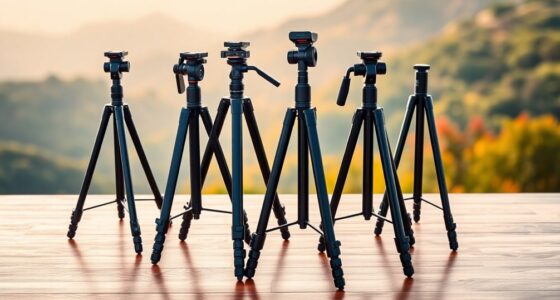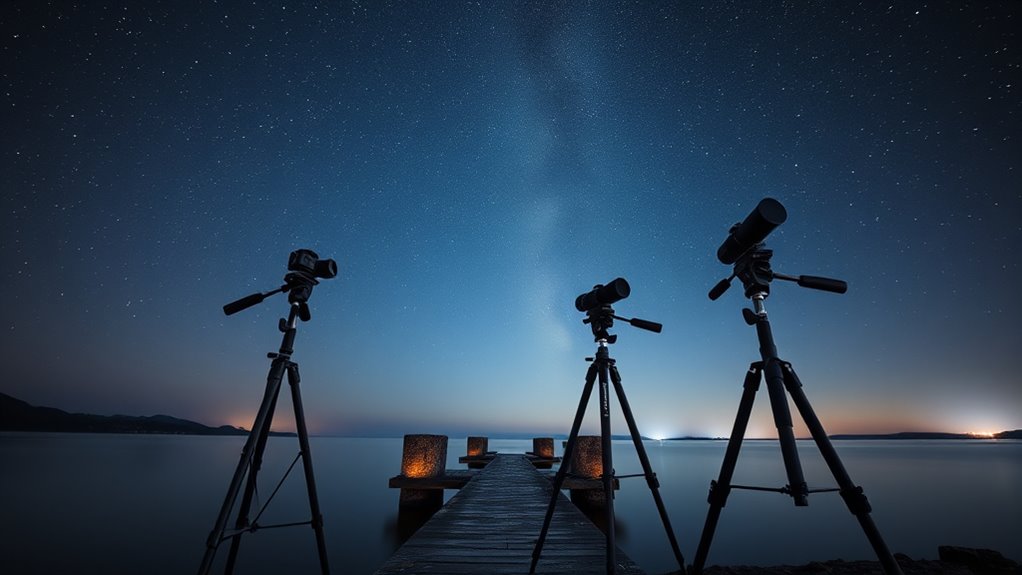

If you’re looking to improve your astrophotography, I recommend exploring a range of tripods and pier mounts like the Sky-Watcher Star Adventurer GTI Mount Kit, iOptron Tri-Pier, and Vortex Mountain Pass Tripod. These options offer stability, portability, and versatile mounting capabilities perfect for capturing sharp night sky images. Whether you prefer lightweight travel setups or heavy-duty mounts, there’s something here for your needs. Keep exploring, and you’ll find the perfect gear to elevate your astrophotography game.
Key Takeaways
- Durable, vibration-reducing tripods and pier mounts support heavy astrophotography equipment for sharp, clear night sky images.
- Adjustable heights and stable bases optimize sky access and accommodate various telescopes and cameras.
- Portable options like lightweight tripods and foldable mounts ensure easy transport for field astrophotography.
- Compatibility with high-precision mounts and quick-release mechanisms simplifies setup and tracking accuracy.
- Heavy-duty materials and terrain adaptability enhance stability during long exposures in outdoor environments.
Sky-Watcher Star Adventurer GTI Mount Kit with Counterweight and Tripod


If you’re looking for a lightweight, portable mount that offers reliable tracking and easy smartphone control, the Sky-Watcher Star Adventurer GTI Mount Kit with Counterweight and Tripod is an excellent choice. It features full GoTo functionality in a compact design, perfect for astrophotography on the go. The built-in illuminated polar scope simplifies polar alignment, while Wi-Fi connectivity allows you to control it remotely via your smartphone. Supporting payloads up to 11 pounds, it handles DSLR or small telescope setups with ease. The kit includes a sturdy tripod, counterweight, and pier extension, making it versatile for various locations and setups. Overall, it’s a reliable, portable solution for serious night sky imaging.
Best For: amateur and semi-professional astrophotographers seeking a portable, easy-to-use mount with reliable tracking and smartphone control for capturing night sky images.
Pros:
- Compact and lightweight design ideal for travel and outdoor setups
- Full GoTo functionality with Wi-Fi control via smartphone app for easy targeting and alignment
- Supports payloads up to 11 pounds, suitable for DSLR, mirrorless cameras, and small telescopes
Cons:
- Internal covers and battery compartment may be fragile and prone to wear or damage
- Balancing heavier payloads near the limit can require additional counterweights and adjustments
- Some users report occasional issues with polar alignment consistency and software database downloads
iEXOS-100-2 PMC-Eight Equatorial Tracker System for Astrophotography

The iEXOS-100-2 PMC-Eight Equatorial Tracker System stands out for astrophotographers who demand exceptional precision and reliability. Its integrated PMC-Eight system uses eight independent CPUs, delivering faster responsiveness and more reliable tracking than single-processor models. The mechanical design features quiet, precise worm gears with clutched axes for smooth, balanced operation. Designed specifically for astrophotography, it supports accurate celestial tracking with easy polar alignment via sight hole and altitude control. The intuitive ExploreStars app simplifies setup and star navigation, while WiFi and Bluetooth ensure seamless wireless control. This system elevates any astrophotography setup with robust performance and user-friendly features.
Best For: astrophotographers seeking high-precision, reliable tracking and easy setup for capturing celestial objects with advanced control features.
Pros:
- Utilizes eight independent CPUs for superior responsiveness and accuracy
- Quiet, precise worm gears and clutched axes ensure smooth operation and balance
- Intuitive ExploreStars app supports quick alignment, star navigation, and device control
Cons:
- May require some technical familiarity to maximize system capabilities
- Higher complexity and cost compared to standard single-processor mounts
- Dependence on wireless connections (WiFi/Bluetooth) could pose issues in areas with limited signal
Sky Watcher Star Adventurer Tripod

Looking for a reliable tripod that combines portability with stability for astrophotography? The Sky Watcher Star Adventurer Tripod (S20555) checks those boxes. It’s lightweight at just under five pounds but still sturdy enough to support small to medium telescopes like the Seestar S50. Its adjustable height and easy setup make it perfect for travel and quick observations. The accessory tray, designed with a twist-lock feature, enhances stability, even if some tabs are slightly misaligned—it’s intentional. With a solid build and positive user feedback, this tripod offers excellent value and performance for both casual and serious astronomers.
Best For: amateur and serious astronomers seeking a portable, stable tripod for astrophotography and small to medium telescopes.
Pros:
- Lightweight and easy to transport, weighing just under five pounds
- Highly stable and rigid, capable of supporting various telescopes and payloads
- Adjustable height and quick setup make it ideal for travel and quick observations
Cons:
- Some users note that the accessory tray tabs are slightly misaligned, though this is intentional for stability
- Limited compatibility with larger or heavier telescopes without additional support accessories
- May require additional accessories like a leveling base or clamps for enhanced stability
iOptron Mini Pier Tripod Extension

For astrophotographers seeking stability and precise alignment, the iOptron Mini Pier Tripod Extension offers an excellent solution. Compatible with various mounts like the MiniTower series, CEM60, iEQ45, and iEQ30, it features a 5.7-inch pier diameter and 6-inch flange plates for seamless integration. It enhances stability, minimizes vibrations, and provides a sturdy foundation for clear, sharp images. The extension adds 8 inches of height, improving viewing angles and preventing ground obstructions. With durable materials, multiple hex screws, and an M12 center bolt, it guarantees secure support and accurate polar alignment, elevating your astrophotography setup.
Best For: astrophotographers and amateur astronomers seeking enhanced stability, precise alignment, and improved viewing angles for their mounts during observational and imaging sessions.
Pros:
- Compatible with a wide range of mounts including MiniTower series, CEM60, iEQ45, and iEQ30, ensuring versatile use
- Provides an 8-inch height extension that improves viewing angles and prevents ground obstructions
- Constructed with durable materials and multiple secure fasteners for maximum stability and vibration minimization
Cons:
- May require additional tools and setup time during installation and alignment
- Heavier than standard tripods, which could affect portability and ease of transport
- Compatibility limited to specific mounts; not suitable for all types of telescopes or mounts outside the listed models
Sky-Watcher AZ-GTI Portable GoTo Alt-Az Mount

If portability and ease of use matter most, the Sky-Watcher AZ-GTI Portable GoTo Alt-Az Mount is an excellent choice. Weighing just 8.6 pounds, it’s perfect for taking on the go. Its adjustable aluminum tripod extends from 28 to 53 inches, making setup comfortable for any user. Supporting payloads up to 11 pounds, it can handle most telescopes and cameras. The WiFi-enabled control via the Sky-Watcher SynScan Pro app allows remote operation with smartphones or tablets. Plus, its dual-encoder technology guarantees precise tracking and smooth manual slewing, making it versatile for both observation and astrophotography.
Best For: portable astronomy enthusiasts and amateur astronomers seeking a lightweight, easy-to-use mount for observing or astrophotography.
Pros:
- Lightweight and compact at only 8.6 pounds, ideal for portability and travel.
- Supports up to 11 pounds payload, accommodating most telescopes and DSLR cameras.
- WiFi-enabled with app control and dual-encoder technology for precise tracking and manual slewing.
Cons:
- May have limited payload capacity for larger, heavy-duty telescopes.
- Requires a compatible smartphone or tablet for operation, which may not suit all users.
- External power options are necessary for extended use, as it relies on AA batteries or external 12V power sources.
iOptron SkyHunter Extension Pier and Tripod

The iOptron SkyHunter Extension Pier and Tripod is an excellent choice for astrophotographers seeking stability and versatility in their setups. The durable 1.25-inch stainless steel tripod provides a solid foundation, compatible with SkyHunter, SkyGuider Pro, and other mounts with 3/8-16 threads. The lightweight aluminum extension pier adds 7.5 inches of height, helping to elevate your camera or telescope for better sky access. With multiple mounting options, including 3/8-16 and M6 holes, this setup adapts to various configurations. It’s perfect for expanding your astrophotography system without sacrificing stability or portability.
Best For: astrophotographers and amateur astronomers looking to enhance stability and elevation in their skywatching or imaging setups.
Pros:
- Durable stainless steel tripod ensures a stable foundation.
- Lightweight aluminum extension pier adds 7.5 inches of height for better sky access.
- Compatible with multiple mounts and cameras, thanks to versatile mounting hole options.
Cons:
- Assembly may require some effort due to multiple components.
- The extension pier adds height but may reduce portability slightly.
- Limited to mounts with 3/8-16 or M6 mounting holes, restricting some configurations.
iOptron Tri-Pier for GoTo Mounts

When selecting a tripod for astrophotography with GoTo mounts, stability is paramount, and the iOptron Tri-Pier delivers exceptional support. Its robust design minimizes vibrations, ensuring sharper images and clearer views. Supporting up to 220 lbs, it accommodates a wide range of telescope setups. Despite its sturdiness, it’s portable, weighing only 25.8 pounds and folding down to 12.8 x 26 inches for easy transport and storage. The adjustable height from 31.5 to 42.5 inches and its ability to handle uneven terrain make setup flexible. With a 5.7-inch pier diameter and broad compatibility, it’s a versatile, reliable choice for outdoor astrophotography.
Best For: Amateur and professional astronomers seeking a stable, portable, and versatile tripod for outdoor astrophotography with GoTo mounts.
Pros:
- Ensures superior stability with a robust, vibration-minimizing design supporting up to 220 lbs.
- Lightweight and foldable for easy transport and storage, weighing only 25.8 lbs.
- Adjustable height from 31.5 to 42.5 inches and terrain adaptability for comfortable setup in various outdoor environments.
Cons:
- The large pier diameter may require additional space or setup considerations.
- Assembly and setup may take time due to its sturdy construction.
- The wider dimensions when folded (12.8 x 26 inches) might be cumbersome for some transport cases.
Celestron Heavy Duty Alt-Azimuth Tripod

Looking for a sturdy, portable tripod that handles small telescopes and camera setups with ease? The Celestron Heavy Duty Alt-Azimuth Tripod is perfect. Its robust aluminum construction offers excellent stability and minimizes vibrations, supporting up to 11 lbs. It features adjustable legs from 30.9 to 49.2 inches, a center brace for added stability, and a lightweight design weighing just 7.8 lbs. The metal tripod head includes friction clutch and azimuth lock controls, with slow-motion handles for precise adjustments. Its compact folded length makes transport simple. Ideal for casual astronomy, terrestrial viewing, or photography, it’s a reliable, user-friendly choice for both beginners and experienced enthusiasts.
Best For: amateur astronomers, outdoor enthusiasts, and photographers seeking a portable, stable tripod for small telescopes, binoculars, or camera setups.
Pros:
- Robust aluminum construction provides excellent stability and minimizes vibrations.
- Fully adjustable legs from 30.9 to 49.2 inches for versatile viewing heights.
- Lightweight design (7.8 lbs) with a compact folded length for easy transport and setup.
Cons:
- Limited altitude adjustment, requiring manual pushing or pulling for vertical movements.
- Short height range may necessitate sitting or kneeling for certain targets.
- Absence of a bubble level and limited leg tip options can affect stability on uneven surfaces.
Sky-Watcher AZ5 Telescope Mount

For amateur astronomers seeking a portable and reliable mount, the Sky-Watcher AZ5 stands out as an excellent choice, especially for those working with small to medium-sized optical tubes. Made from cast aluminum with adjustable steel tripod legs, it offers a sturdy, vibration-free platform supporting up to 15 pounds. Its smooth slow-motion controls allow precise manual tracking, and features like a pier extension and accessory tray enhance stability and convenience. Compatible with Vixen-style dovetails, it suits refractors, SCTs, and Mak telescopes. While some users report threading issues with the extension shaft, overall, the AZ5 provides dependable performance for casual and intermediate astronomers.
Best For: amateur astronomers seeking a portable, stable, and reliable mount for small to medium-sized telescopes, ideal for both beginners and intermediate users.
Pros:
- Sturdy all-metal construction with vibration-free operation
- Smooth slow-motion controls for precise manual adjustments
- Supports a variety of optical tubes up to 15 pounds with Vixen-style dovetails
Cons:
- Reports of threading issues with the extension locking shaft, affecting safety and stability
- Limited payload capacity may not accommodate larger or heavier telescopes
- Ongoing manufacturing delays and backorders due to production issues
DaVoice 44mm Tripod Quick Release Plate for Camera Mounting

The DaVoice 44mm Tripod Quick Release Plate is an excellent choice for astrophotographers who need a reliable and versatile mounting solution. Its 44mm square base fits securely into tripod heads with a compatible 1 3/4” opening, making it suitable for brands like Amazon Basics, Velbon, Sony, and more. Made of durable plastic with a rubber top, it guarantees a sturdy grip without tools. The high-quality metal thumb screw allows quick, tool-free attachment and detachment of cameras or phone adapters. Having extra plates on hand means you can easily swap devices, streamlining your setup process during night sky shoots.
Best For: astrophotographers and outdoor enthusiasts seeking a durable, quick-release mounting solution compatible with various tripod brands and models.
Pros:
- Compatible with a wide range of tripods featuring a 1 3/4” square opening, including popular brands like Amazon Basics, Sony, Velbon, and more.
- Made of durable plastic with a rubber top for a secure grip and high-quality metal thumb screw for easy, tool-free attachment and detachment.
- Allows quick swapping of cameras or phone adapters, streamlining setup during night sky photography sessions.
Cons:
- Compatibility depends on precise measurement of your tripod head’s opening; may not fit all tripod models.
- Made primarily of plastic, which may be less durable over time compared to metal alternatives.
- Limited to tripods with a specific 44mm square mounting opening; not suitable for non-standard mounts.
NEEWER 72 inch Camera Tripod with Monopod, Ball Head, and Carrying Bag
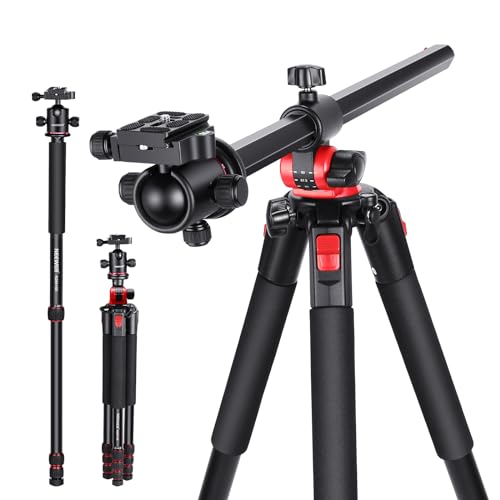
If you’re serious about astrophotography, the NEEWER 72 inch Camera Tripod with Monopod is an excellent choice because it offers exceptional stability and versatility. Made from durable aluminum alloy, it supports cameras up to 33 pounds and includes a carabiner to hang sandbags for added stability. Its adjustable center column tilts to multiple angles and can be reversed for macro shots, while the legs extend from 26.4 to 72.4 inches. The panoramic ball head allows quick camera adjustments, and the quick-release plate ensures easy setup. It’s compatible with most DSLR cameras and camcorders, making it perfect for capturing stunning night sky images.
Best For: Amateur and professional astrophotographers seeking a stable, versatile tripod for capturing stunning night sky images and macro shots.
Pros:
- Made of durable aluminum alloy supporting cameras up to 33 pounds for reliable stability.
- Adjustable center column with multiple angles and reversible design for macro photography.
- Includes a panoramic ball head with quick-release plate for fast, precise camera adjustments.
Cons:
- Height may be limited for tall users when fully extended.
- Heavier and bulkier compared to smaller tripods, which may affect portability.
- Requires careful setup to maximize stability, especially in windy conditions.
Sky Watcher Star Adventurer GTI Mount Kit

When portability and precise tracking are priorities, the Sky Watcher Star Adventurer GTI Mount Kit stands out as an excellent choice for amateur astrophotographers on the go. Its lightweight, compact design makes setup easy in the field, while full GoTo equatorial tracking guarantees accurate object placement. Features like built-in Wi-Fi, a polar scope with illuminator, and smartphone app control simplify operation. Supporting payloads up to 11 pounds, it’s perfect for DSLR cameras, small astrographs, or compact telescopes. Despite some quality concerns, users praise its tracking precision and versatility for short exposures. Overall, the GTI kit offers a reliable, portable solution for capturing stunning night sky images.
Best For: amateur astrophotographers seeking a portable, easy-to-use mount with precise tracking capabilities for short-exposure astrophotography.
Pros:
- Lightweight, compact design ideal for travel and field use
- Full GoTo equatorial tracking with smartphone app control for ease of operation
- Supports payloads up to 11 pounds, suitable for DSLR cameras and small telescopes
Cons:
- Occasional quality control issues such as loose parts or defective components
- Built-in illuminator and polar scope may have reliability or brightness problems
- Limited payload capacity restricts use with larger or heavier telescopes
EQ6 Tripod to Wave Steel by Sky-Watcher

For astrophotographers seeking a stable and durable support, the EQ6 Tripod to Wave Steel by Sky-Watcher stands out as an excellent choice. Its robust 2-inch rolled steel legs provide exceptional stability, reducing vibrations and ensuring smooth tracking during long exposures. Compatible with Sky-Watcher Wave mounts and several other models like NEQ6 and EQ6-R, it’s versatile and reliable. The sleek black finish looks professional and pairs well with various accessories. Weighing about 21.3 pounds, it’s sturdy yet manageable. Designed for both visual and astrophotography use, it offers the stability needed for clear, sharp night sky shots under different conditions.
Best For: amateur and professional astrophotographers seeking a stable, durable tripod for large optical tubes and long-exposure imaging.
Pros:
- Constructed with 2-inch rolled steel legs for exceptional stability and vibration reduction
- Compatible with Sky-Watcher Wave mounts and multiple other models like NEQ6 and EQ6-R
- Sleek black finish offers a professional appearance suitable for various settings
Cons:
- Heavy at approximately 21.3 pounds, which may affect portability
- Availability and pricing may vary, potentially impacting accessibility upon release
- Requires a Wave Pier Adapter (S30916) for attaching a Wave Mount, adding an extra component to setup
Vortex Optics Mountain Pass Tripod Kit
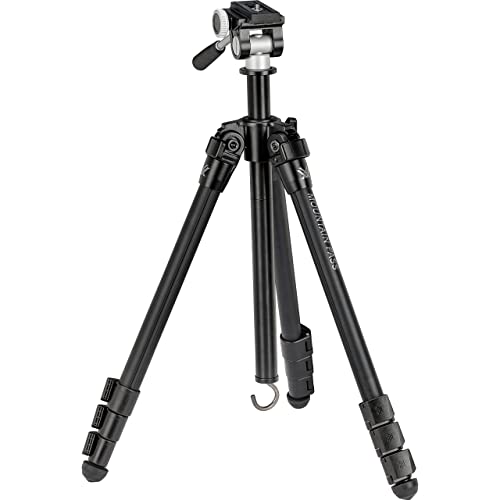
The Vortex Optics Mountain Pass Tripod Kit stands out as a reliable choice for outdoor enthusiasts who need a stable, lightweight support system for spotting scopes, binoculars, and cameras, especially during extended sessions outdoors. Made from machined aluminum, it’s durable yet easy to carry, weighing just 3.6 pounds. Its telescoping legs lock with quick flip levers, providing stability on various terrains. The two-way pan and tilt head supports up to 22 pounds and is compatible with Arca-Swiss quick-release systems. With adjustable height from 9 inches to full extension, it’s versatile, compact, and perfect for wildlife watching, birding, or astrophotography.
Best For: outdoor enthusiasts seeking a durable, lightweight tripod for wildlife observation, birding, hunting, or astrophotography.
Pros:
- Made from machined aluminum for durability and lightweight portability
- Supports up to 22 pounds with a smooth, two-way pan and tilt head
- Adjustable telescoping legs with quick flip locking levers for stability on various terrains
Cons:
- Higher price point compared to some carbon fiber models
- Slightly heavier than some competing lightweight tripods
- Quick-release mechanism may have room for minor improvements in ease of use
NEEWER Basic 74 Video Tripod Monopod with 3-Way Pan Tilt Head

If you’re looking for a versatile and budget-friendly tripod to support astrophotography sessions, the NEEWER Basic 74 Video Tripod Monopod with 3-Way Pan Tilt Head is a solid choice. Made from durable aluminum alloy, it supports cameras up to 8kg and weighs just 1.75kg. Its adjustable height ranges from 60cm to 189cm, perfect for different sky-gazing angles. The 3-way pan tilt head offers smooth vertical and horizontal movement, while the bubble level guarantees precise framing. With nonslip rubber feet and a detachable central axis, it works well on uneven terrain and transforms into a monopod for dynamic shots, making it ideal for night sky photography.
Best For: amateur photographers and videographers seeking an affordable, versatile tripod for everyday use, vlogging, or astrophotography.
Pros:
- Made from durable aluminum alloy supporting up to 8kg (17.6lb), suitable for various cameras and smartphones
- Adjustable height range from 60cm to 189cm for versatile shooting angles, including night sky photography
- Detachable central axis allows conversion into a monopod, increasing shooting flexibility
Cons:
- Lacks advanced features such as built-in Wi-Fi or motorized controls found in high-end tripods
- May be heavier than compact travel tripods, impacting portability for some users
- The included adapter for action cameras is not provided, requiring separate purchase for those devices
Factors to Consider When Choosing Tripods and Pier Mounts for Astrophotography

When choosing a tripod or pier mount for astrophotography, I focus on stability and vibration control to ensure sharp images. I also consider weight and portability so I can carry my gear easily, along with height and adjustability for comfortable setup. Finally, I check for compatibility, durability, and build quality to guarantee my equipment lasts and performs reliably.
Stability and Vibration Control
Choosing a stable tripod or pier mount is essential for capturing sharp astrophotos, especially during long exposures. A high load capacity relative to your equipment prevents sagging and vibrations that blur images. Materials like steel or high-quality aluminum are ideal because they’re rigid and offer excellent vibration damping. Adjustable leg locks and independent extensions help level the mount on uneven terrain, reducing imbalance-induced vibrations. Incorporating vibration suppression features like rubber feet or dampening pads considerably minimizes residual shake after focusing or adjustments. Additionally, a broad, heavy base and low center of gravity improve overall stability, resisting wind and user movement. These design elements work together to keep your camera steady, ensuring crisp, clear astrophotos even in challenging conditions.
Weight and Portability
Weight and portability are essential factors when selecting tripods or pier mounts for astrophotography, especially for fieldwork. Lighter tripods are much easier to transport and set up in the field, making them ideal for outdoor shoots. Many compact tripods weigh under 10 pounds, simplifying carrying and packing. Tripods with collapsible or adjustable legs enhance portability, allowing for quick storage and transport. Pier mounts designed for portability often use lightweight materials like aluminum or carbon fiber, reducing weight without sacrificing strength. Finding a balance between weight capacity and portability ensures your gear remains secure while staying manageable during outdoor adventures. Ultimately, choosing a lightweight, portable setup allows you to focus on capturing stunning night sky images without being weighed down by bulky equipment.
Height and Adjustability
Adjustability in tripods and pier mounts is essential for achieving the perfect viewing or imaging angle in astrophotography. A good tripod should offer a height range from about 30 inches to over 60 inches, ensuring you can find a comfortable position whether sitting or standing. Features like telescoping legs or center columns make it easy to quickly change height to suit different terrains or preferences. Locking mechanisms are crucial—they keep your setup stable and prevent drift during long exposures. Fine-tuning height adjustments help align your equipment precisely with celestial targets and maintain comfortable viewing angles. For pier mounts, adjustable designs allow for precise elevation control, maximizing sky clearance and minimizing vibrations, which are fundamental for capturing sharp astrophotos.
Mount Compatibility
When selecting a tripod or pier mount for astrophotography, verifying compatibility with your mount’s attachment points is vital. First, check that the mounting holes, like 3/8-16 or Vixen-style dovetails, match your telescope or mount. It’s also important to confirm the weight capacity to support your equipment safely, especially during long exposures. Make sure that the mounting interface aligns with your mount’s attachment point to avoid needing adapters or modifications. A secure, stable connection is essential to minimize vibrations that can blur your images. Additionally, consider features like clutches, quick-release plates, or locking mechanisms that make setup easier and precise. Proper mount compatibility ensures your astrophotography gear stays steady, safe, and ready for those perfect night sky shots.
Durability and Build Quality
Choosing a durable tripod or pier mount is essential for successful astrophotography, as it directly impacts stability and image quality during long exposures. High-quality materials like stainless steel, aircraft-grade aluminum, or reinforced steel guarantee longevity and reliability. Robust construction with thick, well-welded joints and reinforced stress points prevents flexure, maintaining stability during extended imaging sessions. Weather-resistant coatings and corrosion-resistant finishes shield the equipment from moisture, dust, and environmental damage, prolonging its lifespan. Features such as durable clutch mechanisms, locking systems, and tightening screws ensure secure positioning and resist wear over time. Additionally, a sturdy, vibration-minimizing design reduces image shake, helping you capture sharp, clear astrophotos even in outdoor conditions. Durability truly underpins consistent performance in astrophotography gear.
Cost and Budgeting
Budget plays a significant role in selecting the right tripod or pier mount for astrophotography. Prices vary widely, from under $100 for basic models to over $1000 for professional-grade gear. Higher-cost options generally offer better stability, durability, and load capacity—key factors for long-exposure shots. It’s important to balance cost with features like material quality, weight, and ease of setup, as cheaper models may lack stability or precision. Investing a bit more can improve vibration dampening and extend the equipment’s lifespan, reducing the need for frequent replacements. Setting a clear budget helps you focus on essential features without overspending, ensuring you get equipment that meets your astrophotography needs while staying within your financial comfort zone.
Ease of Setup
Ease of setup is essential because it directly impacts how efficiently you can start your astrophotography session. A tripod or pier mount with quick-release mechanisms speeds up assembly and teardown, giving you more time to capture the night sky. Adjustable legs and center columns help with precise leveling and height adjustments, especially on uneven terrain, making setup smoother. Features like built-in leveling bubbles or electronic systems eliminate the need for extra tools and simplify alignment. Lightweight yet sturdy designs let you transport and position your equipment easily without sacrificing stability. Intuitive locking systems and minimal components also help you assemble and disassemble quickly and correctly, reducing setup errors. Overall, these features save time and frustration, so you can focus more on capturing stunning images.
Weather Resistance
When selecting tripods and pier mounts for astrophotography, considering weather resistance is crucial because outdoor conditions can be unpredictable and harsh. I look for equipment made from weather-resistant materials like stainless steel, aluminum, or coated alloys, which can handle rain, snow, and humidity without corroding. Features such as sealed joints, corrosion-resistant hardware, and protective coatings are essential to prevent deterioration caused by moisture and environmental contaminants. Equipment with UV-resistant plastics and rubber seals maintains integrity over time, even in extreme conditions. Proper drainage channels or venting in mounts and tripods help prevent water buildup, reducing rust and mechanical failures. Choosing weather-resistant gear ensures my setup stays stable, reliable, and ready for any outdoor astrophotography session.
Frequently Asked Questions
How Do I Stabilize My Tripod for Long Exposure Astrophotography?
To stabilize my tripod for long exposure astrophotography, I make sure it’s on a level surface, extend the legs partially, and tighten all locks securely. I also use a remote shutter release or timer to avoid camera shake. Additionally, I weigh down the tripod with extra weights or place it in a wind-protected spot. These steps help me get sharp, clear night sky shots.
What Is the Ideal Weight Capacity for Astrophotography Tripods?
Think of your tripod as the backbone of your night sky adventures. For astrophotography, I recommend a weight capacity of at least 20 to 30 pounds. This guarantees it can handle your camera, lens, and accessories without wobbling. Anything less, and you’ll risk instability. A sturdy tripod keeps your shots sharp and clear, even when the stars are dancing overhead. Trust me, it’s worth investing in one that can support your passion.
How Do Pier Mounts Improve Telescope Stability During Astrophotography?
Pier mounts critically improve telescope stability because they anchor your setup directly to the ground, reducing vibrations and movement. I’ve found that they provide a solid, wobble-free platform, especially for long exposures. Unlike tripods, which can shake with wind or movement, pier mounts keep your telescope steady. This stability is essential for capturing clear, sharp images of the night sky, making your astrophotography sessions much more successful.
Can I Use a Standard Camera Tripod for Astrophotography?
You can technically use a standard camera tripod for astrophotography, but it’s not ideal. I’ve found that most tripods lack the stability and weight capacity needed to keep your camera steady during long exposures. Plus, they often wobble or shake with even a slight breeze. Investing in a sturdy, astrophotography-specific tripod makes a huge difference, helping you capture sharp, clear night sky images without frustration.
What Are the Best Materials for Durable, Vibration-Free Tripods?
I recommend aluminum and carbon fiber for durable, vibration-free tripods. Aluminum offers strength and affordability, but can be heavier. Carbon fiber is lightweight, yet incredibly sturdy, reducing vibrations during long exposures. I personally prefer carbon fiber for astrophotography because it handles weight well and minimizes shake, helping me capture crisp, clear images of the night sky. Both materials are excellent, but your choice depends on your budget and portability needs.
Conclusion
Choosing the right tripod or pier mount transforms your astrophotography, elevating your night sky shots and inspiring your passion. Whether it’s stability, portability, or precision you seek, the perfect gear supports your vision and fuels your creativity. When you invest in quality, you invest in unforgettable moments under the stars. Because the right equipment doesn’t just hold your camera—it holds your dreams, your curiosity, and your desire to explore the universe.