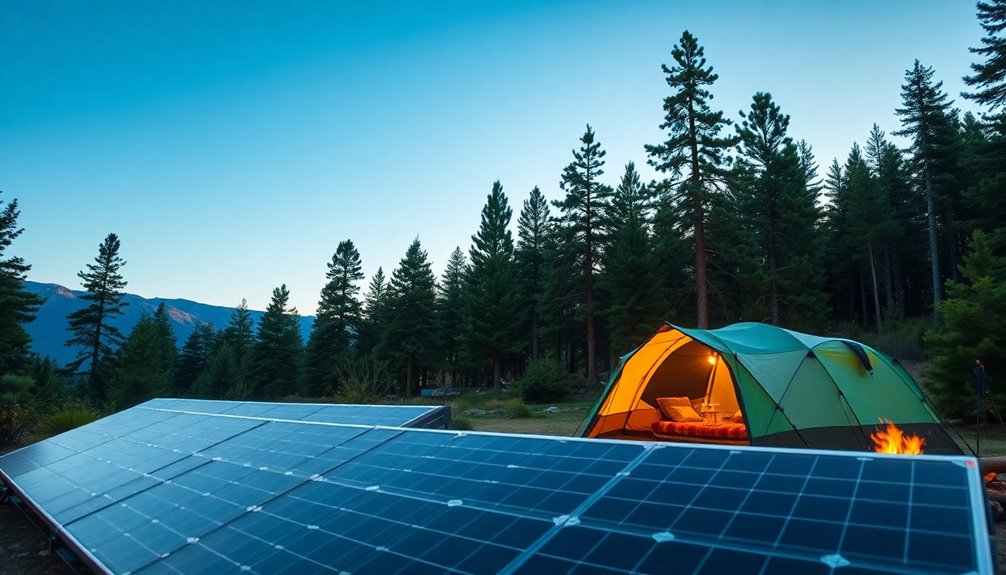

Solar panels for camping range from small USB chargers for phones to larger folding panels that can recharge a portable power station. My best overall pick is the Renogy 200W Portable Solar Panel for campers who need substantial output, while the Jackery Explorer 300 with 40W Solar Panel is a practical bundled option for beginners who want a battery included. For a lighter setup, the FlexSolar 40W suits basic device charging without the bulk of a 200W panel. The main tradeoff is between portability and the power needed for larger devices, with compatibility and usable sunlight also shaping real-world results. Read on for the full breakdown and advice on choosing a setup that fits your trip.

Get furniture and decor delivered free — and shop member deals
- Fast, free delivery on millions of items
- Access to Prime Big Deal Days deals on October 6–7
- Prime Video, Amazon Music and more included
Complete the kit


Key Takeaways
Output changes the job each panel can do: The 10W BLAVOR and 30W SOLUPUP suit small device charging, while the 200W and 220W panels are aimed at recharging power stations or supporting more demanding setups.
A solar panel alone is not a complete power system: The Jackery Explorer 300 and ZeroKor 300W include a power station, which gives campers stored energy after the sun drops; standalone panels need a compatible battery or device.
Connector flexibility matters at camp: The ZOUPW 100W includes five connector types, while other panels may need an adapter or a compatible power station input to work with existing gear.
Weather protection is not the same across the lineup: The FlexSolar 100W carries an IP67 rating and the SOKIOVOLA 200W an IP68 rating, but campers should still protect connections and follow each product’s care instructions.
The ranking favors practical fit over headline wattage: A compact 40W or 45W charger can be a better camp companion for phones than a heavier 200W panel, while higher output makes more sense when the trip includes a power station.
| Twelseavan 200W Foldable Portable Solar Panel |  | Best for Larger Power Stations | Maximum output: 200W | Conversion efficiency: 24% | USB-C output: Up to 60W | VIEW ON AMAZON | See Our Full Breakdown |
| SOLUPUP 30W Foldable Portable Solar Charger |  | Best for Lightweight Device Charging | Power: 30W | Conversion efficiency: 23%+ | Outputs: USB-A and USB-C | VIEW ON AMAZON | See Our Full Breakdown |
| MHPOWOS 110W Portable Foldable Solar Panel |  | Best Midrange Power Station Panel | Maximum power: 110W | Conversion efficiency: 23.5% | Maximum voltage: 20V | VIEW ON AMAZON | See Our Full Breakdown |
| ZOUPW 100W Foldable Portable Solar Panel with 5-in-1 Connectors |  | Best for Flexible Camp Charging | Power output: 100W | Cell efficiency: 23.5% | Cell type: A+ monocrystalline | VIEW ON AMAZON | See Our Full Breakdown |
| ABOK ASP45 45W Foldable USB Solar Charger |  | Best for Hanging at Camp | Maximum power: 45W | Conversion efficiency: At least 23% | USB-C output: Up to 30W | VIEW ON AMAZON | See Our Full Breakdown |
| MHPOWOS 220W Portable Folding Solar Panel, 40V |  | Best for High-Capacity Power Stations | Power: 220W | Voltage: 40V | Cell type: Monocrystalline silicon | VIEW ON AMAZON | See Our Full Breakdown |
| DOKIO 100W Portable Foldable Solar Panel Kit |  | Best for 12V Battery Setups | Power: 100W | System voltage: 12V | Weight: 6 lb | VIEW ON AMAZON | See Our Full Breakdown |
| FlexSolar 40W Foldable Solar Panel Charger |  | Best Compact Multi-Device Panel | Power output: 40W | USB-A output: QC3.0, up to 18W | USB-C output: PD2.0, up to 18W | VIEW ON AMAZON | See Our Full Breakdown |
| BLAVOR 10W Portable Foldable Solar Charger |  | Best for Backpack Phone Top-Ups | Power output: 10W | Maximum output: 5V/2A | Conversion efficiency: Up to 24% | VIEW ON AMAZON | See Our Full Breakdown |
| Jackery Explorer 300 Portable Power Station with 40W Solar Panel |  | Best Complete Starter Kit | Battery capacity: 292Wh | Peak output: 600W | Weight: 7.5 lb | VIEW ON AMAZON | See Our Full Breakdown |
| FlexSolar 100W Foldable Portable Solar Panel Charger, IP67 Waterproof |  | Best Compact Panel for Direct Device Charging | Maximum power: 100W | Weight: 4.1 lbs (1.85 kg) | Folded dimensions: 12.99 × 10.43 × 2.17 in | VIEW ON AMAZON | See Our Full Breakdown |
| ZeroKor 300W Portable Power Station with 60W Solar Panel | 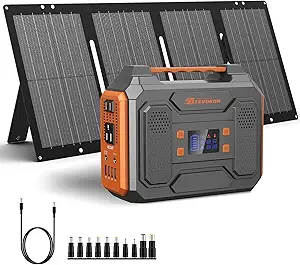 | Best Beginner Solar Power Bundle | Power station output: 300W | Solar panel output: 60W | Solar panel type: Monocrystalline | VIEW ON AMAZON | See Our Full Breakdown |
| Renogy 200W Portable Solar Panel |  | Best for Higher-Output Camp Setups | Maximum power: 200W | Efficiency: 25% | Cell type: 16BB N-Type monocrystalline silicon | VIEW ON AMAZON | See Our Full Breakdown |
| SOKIOVOLA 200W Foldable Portable Solar Panel, 25% Efficiency, IP68 Waterproof |  | Best for Wet-Weather Car Camping | Power: 200W | Conversion efficiency: Up to 25% | Maximum voltage: 18V | VIEW ON AMAZON | See Our Full Breakdown |
| solar panels for camping | Weight | Conversion efficiency |
|---|---|---|
| Twelseavan 200W Foldable Porta | 15.7 lb | 24% |
| SOLUPUP 30W Foldable Portable | 2.4 lb | 23%+ |
| MHPOWOS 110W Portable Foldable | 8.5 lb | 23.5% |
| ZOUPW 100W Foldable Portable S | 9.48 lb | — |
| ABOK ASP45 45W Foldable USB So | 2.5 lb | At least 23% |
| MHPOWOS 220W Portable Folding | 8.5 kg | Up to 23.5% |
| DOKIO 100W Portable Foldable S | 6 lb | — |
| FlexSolar 40W Foldable Solar P | 1.76 lb (0.8 kg) | Up to 24% |
| BLAVOR 10W Portable Foldable S | 0.81 lb | Up to 24% |
| Jackery Explorer 300 Portable | 7.5 lb | — |
| FlexSolar 100W Foldable Portab | 4.1 lbs (1.85 kg) | — |
| ZeroKor 300W Portable Power St | — | — |
| Renogy 200W Portable Solar Pan | 13.9 lbs | — |
| SOKIOVOLA 200W Foldable Portab | 16.3 lbs | Up to 25% |
More Details on Our Top Picks
Twelseavan 200W Foldable Portable Solar Panel
The 200W rating gives this panel more headroom for replenishing a compatible power station at camp than the ZOUPW 100W, while USB-C, USB-A, and MC4 connections let you charge small devices or connect to a station. Four kickstands make it easier to angle the panel as the sun moves, and its IP65 rating and ETFE construction suit outdoor trips where gear may encounter splashes or dust. That output comes with a portability tradeoff: at 15.7 pounds, it is a better fit for a car campsite than a pack-in hike. The 200W maximum also depends on strong sunlight and a power station that accepts the input, so the rating alone does not guarantee faster charging.
Pros:- Up to 200W output offers more charging headroom than the 100W ZOUPW panel.
- USB-C, QC3.0, USB-A, and MC4 connections support devices and compatible power stations.
- Four kickstands help adjust the panel toward available sunlight.
- IP65 rating and ETFE construction suit outdoor use.
Cons:- Weighs 15.7 pounds, making it cumbersome for trips where gear must be carried far.
- Reaching its maximum output requires ample sunlight and a compatible power station.
- IP65 protection does not indicate the same level of water resistance as the IP67-rated options in this roundup.
Best for: Car campers with a compatible power station who want a higher-output panel and direct USB charging.
Not ideal for: Backpackers and campers with small power stations whose input limits or carrying capacity make a 15.7-pound panel impractical.
- Maximum output:200W
- Conversion efficiency:24%
- USB-C output:Up to 60W
- QC3.0 output:Up to 18W
- USB output:5V/3A
- Weight:15.7 lb
- Folded size:23 × 22 in
- Water resistance:IP65
Our verdict“Choose the Twelseavan if you camp by car with a compatible higher-input power station; skip it if low carry weight is a priority.”
SOLUPUP 30W Foldable Portable Solar Charger
For campers who mainly need to top up phones or other small devices, the 2.4-pound SOLUPUP is easier to carry than the power-station-oriented MHPOWOS 110W. Its USB-A and USB-C outputs can serve two devices at once when sunlight is strong, while the adjustable stand and included carabiners provide practical ways to position or hang it around camp. The tradeoff is capacity: at 30W, it is not a substitute for the 100W and 200W panels when the goal is to recharge a compatible power station. Its compact folded length also does not remove the need for direct sun; clouds, heat, or a poor angle can slow charging. This suits a light device-charging kit better than a camp power setup.
Pros:- At 2.4 pounds, it is much easier to carry than the larger power-station panels.
- USB-A and USB-C allow charging two small devices simultaneously in suitable sunlight.
- Adjustable stand and carabiners offer flexible placement at camp.
- Built-in safety chip helps protect against overcurrent, overvoltage, and short circuits.
Cons:- 30W output is limited for replenishing power stations compared with the MHPOWOS 110W.
- Charging speed varies with sunlight, temperature, panel angle, and cloud cover.
Best for: Day hikers and minimalist campers who want a small panel for phones and other USB devices.
Not ideal for: Campers relying on a power station for larger loads or who need dependable charging through variable sunlight.
- Power:30W
- Conversion efficiency:23%+
- Outputs:USB-A and USB-C
- Simultaneous charging:Up to 2 devices
- Weight:2.4 lb
- Folded size:10.63 in
- Included accessories:USB-to-USB-C cable, 2 carabiners, user manual
Our verdict“Pick the SOLUPUP for lightweight USB charging on foot-powered trips, not for running a power-station setup.”
MHPOWOS 110W Portable Foldable Solar Panel
The 110W MHPOWOS sits between the lightweight SOLUPUP 30W charger and the higher-output Twelseavan 200W: it can serve a compatible power station without asking you to carry the heaviest panel in this batch. Its cable includes Anderson, XT60, DC7909, and DC5521 connectors, which can spare campers from hunting for an adapter for many common station inputs. The two kickstands help with positioning, and the IP67 rating offers more water protection than the Twelseavan’s IP65 rating. At 8.5 pounds, though, it is still substantial for hiking, and the station’s own input limit can prevent the panel from delivering its full rated output. It also lacks the listed direct USB ports found on the ZOUPW 100W.
Pros:- 110W output offers more capacity than the SOLUPUP for a compatible power station.
- Includes Anderson, XT60, DC7909, and DC5521 connectors for broad compatibility.
- IP67 rating provides stronger water protection than the Twelseavan’s IP65 rating.
- Two kickstands support positioning toward sunlight.
Cons:- At 8.5 pounds, it is heavier than a practical phone-charging panel for many hikers.
- A power station’s input limit can restrict the panel’s actual output.
- No direct USB outputs are listed, unlike the ZOUPW 100W.
Best for: Car campers with a compatible power station who want moderate panel output, multiple connector options, and IP67 protection.
Not ideal for: Backpackers seeking a very light charger or campers who need listed USB ports for direct device charging.
- Maximum power:110W
- Conversion efficiency:23.5%
- Maximum voltage:20V
- Amperage capacity:5.5A
- Cell type:Monocrystalline silicon
- Weight:8.5 lb
- Folded dimensions:23.46 × 21.25 × 1.57 in
- Connectors:Anderson, XT60, DC7909, DC5521
- Water resistance:IP67
Our verdict“Choose the MHPOWOS for a compatible station when you want a middle ground between a small device charger and a heavier high-output panel.”
ZOUPW 100W Foldable Portable Solar Panel with 5-in-1 Connectors
The ZOUPW pairs 100W panel output with direct USB-C and USB-A ports, making it a flexible camp option for people charging both a power station and personal devices. Its five connector types give it broader listed power-station compatibility than the MHPOWOS 110W, while the IP67 rating and ETFE coating suit exposed outdoor setups. Two USB-A ports join the USB-C connection, so devices can draw power without using a station as an intermediary. In exchange, this panel weighs 9.48 pounds, more than the MHPOWOS despite its lower rated output. Station input limits and sunlight still determine real charging speed, and this model offers less rated capacity than the Twelseavan 200W. Its appeal is connection flexibility, not maximum output per carried pound.
Pros:- Five connector types support a wide range of compatible power stations.
- USB-C and two USB-A ports allow direct device charging.
- IP67 water resistance and ETFE coating suit outdoor camp use.
- Adjustable kickstands and a carry handle aid setup and handling.
Cons:- At 9.48 pounds, it is heavier than the MHPOWOS 110W despite its lower rated output.
- Actual charging speed depends on sunlight and the connected station’s input limit.
Best for: Car campers with mixed devices and a power station who value multiple connection options and direct USB charging.
Not ideal for: Campers prioritizing the lightest panel or the highest rated output for a large power station.
- Power output:100W
- Cell efficiency:23.5%
- Cell type:A+ monocrystalline
- Water resistance:IP67
- Weight:9.48 lb
- Folded dimensions:24.13 × 21.06 × 1.77 in
- USB-C output:PD 15V/3A
- USB-A outputs:2 ports; QC3.0 12V/1.5A
- Connector types:DC8020, XT60, Anderson, DC7909/8mm, DC5521
Our verdict“Choose the ZOUPW if your camp setup mixes USB devices with a power station and benefits from its varied connectors.”
ABOK ASP45 45W Foldable USB Solar Charger
The ABOK ASP45 is a direct-device charger with a useful camp-specific detail: its included hooks let you hang the panel where sunlight reaches, rather than relying only on the kickstands used by the ZOUPW 100W and MHPOWOS 110W. At 2.5 pounds, it is far easier to carry than those power-station panels, and its USB-C and USB-A ports cover common small-device charging needs. The 45W rating offers more headroom than the SOLUPUP 30W, though neither is aimed at powering a station-heavy camp. Its long, narrow unfolded shape may suit hanging from a tent or pack, but it needs a suitable attachment point and clear sun. IP67 protection covers dust and splashes; the panel is not designed for submersion or prolonged heavy rain.
Pros:- 45W output offers more rated capacity than the SOLUPUP 30W charger.
- USB-C up to 30W and USB-A up to 18W support direct device charging.
- Included hooks allow hanging where a kickstand setup may not fit.
- At 2.5 pounds, it is portable for trips where the 100W and 110W panels are too heavy.
Cons:- Its 45W output is limited for recharging power stations compared with the ZOUPW 100W.
- Charging performance depends on available sunlight.
- IP67 protection does not mean it can be submerged or left in prolonged heavy rain.
Best for: Campers who want a lightweight USB charger they can hang from a pack, tent, or other suitable sunny spot.
Not ideal for: Campers seeking a power-station panel or expecting to leave solar gear exposed to prolonged heavy rain.
- Maximum power:45W
- Conversion efficiency:At least 23%
- USB-C output:Up to 30W
- USB-A output:Up to 18W
- Maximum voltage:16.3V
- Dimensions:35 × 12.8 × 1.2 in
- Weight:2.5 lb
- Protection:IP67 dust and splash protection
- Included accessories:2 hanging hooks
Our verdict“Pick the ABOK if you want a light panel for direct USB charging and have a good place to hang it in the sun.”
MHPOWOS 220W Portable Folding Solar Panel, 40V
For campers bringing a compatible power station, the 220W output offers more charging headroom than the DOKIO 100W kit or the small device-focused FlexSolar 40W panel. That can make it a better match for replenishing a larger battery while camped, though the panel itself does not store energy. Its four kickstands help you angle the folded panel toward the sun, and the IP67 rating adds protection from dust and water exposure outdoors. The main fit check is electrical: its 40V output may not suit every station, and a station’s input limit can cap the power it accepts. At 8.5 kg, it also asks more of the person carrying it than the lighter DOKIO or FlexSolar options.
Pros:- 220W output offers more charging capacity than the DOKIO 100W kit
- Four kickstands support adjustable sun-facing placement
- IP67 rating provides water and dust resistance
- Folds for transport and storage
Cons:- 40V output may not match a power station’s input requirements
- A station’s maximum input can limit usable panel output
- 8.5 kg weight is cumbersome for carrying between campsites
Best for: Campers with a power station confirmed to accept 40V input and enough room to carry an 8.5 kg panel.
Not ideal for: Backpackers or owners of power stations with lower voltage or input limits, since the panel is heavy and may not be compatible.
- Power:220W
- Voltage:40V
- Cell type:Monocrystalline silicon
- Conversion efficiency:Up to 23.5%
- Weight:8.5 kg
- Ingress protection:IP67
- Kickstands:4
Our verdict“Choose this panel for a compatible high-capacity power station when charging output matters more than carry weight.”
DOKIO 100W Portable Foldable Solar Panel Kit
The DOKIO suits campers who want a 100W panel and separate PWM controller for a 12V battery setup, such as a van or RV. Its 9.84-foot cable gives you room to place the panel in sun while keeping the battery or charging gear in a shaded spot. The controller’s protections against reverse polarity, overcharging, overload, and short circuits add practical safeguards for a straightforward system. Compared with the MHPOWOS 220W, this kit is less suited to replenishing a large power station quickly, but its 6 lb weight is easier to manage. USB ports can charge small devices, though USB current may vary without a battery, and power station input limits still affect how much energy it can deliver.
Pros:- 100W panel folds for easier transport
- 9.84 ft cable allows flexible placement in sunlight
- PWM controller includes several charging protections
- USB ports support small-device charging
Cons:- Lower output than the MHPOWOS 220W panel
- Power station input limits may restrict the panel’s output
- USB current may vary when used without a battery
Best for: Van and RV campers charging a 12V battery who want a portable panel with a separate protected controller.
Not ideal for: Campers seeking fast charging for a large power station or dependable USB charging without a battery in the system.
- Power:100W
- System voltage:12V
- Weight:6 lb
- Folded dimensions:19 × 26 × 0.5 in
- Cable length:9.84 ft (3 m)
- Controller:Standalone PWM controller
- USB ports:Included
Our verdict“Pick the DOKIO for a portable 12V battery system with controller protections and flexible panel placement.”
FlexSolar 40W Foldable Solar Panel Charger
At 1.76 lb and about the size of a small bag when folded, this FlexSolar is a more packable choice than the DOKIO 100W kit for campers who mainly need to top up phones and other small devices. Its USB-A, USB-C, and DC outputs cover several charging needs, while the 19V DC output can serve a small compatible station. The stated efficiency reaches up to 24%, but that does not remove the need for direct sunlight: shade or partial coverage can cut performance, and there is no battery to save energy for later. The BLAVOR 10W charger is lighter and simpler for backpack charging, while this 40W model offers more output and connection options at the cost of extra bulk. Its junction box is not fully waterproof.
Pros:- USB-A, USB-C, and DC outputs support varied devices
- Lightweight and compact when folded
- IP67 rating and ETFE laminate suit outdoor use
- Built-in protections cover overcurrent, overheating, and short circuits
Cons:- Direct sunlight is needed for useful charging and there is no energy storage
- Shade or partial coverage can reduce performance
- Junction box is not fully waterproof
Best for: Campers who want a light, multi-output panel for phones, USB devices, or a compatible small power station.
Not ideal for: Campers who need stored power overnight, dependable charging in shade, or a fully waterproof junction box.
- Power output:40W
- USB-A output:QC3.0, up to 18W
- USB-C output:PD2.0, up to 18W
- DC output:19V, up to 40W
- Solar cell type:Monocrystalline
- Conversion efficiency:Up to 24%
- Water and dust resistance:IP67
- Folded dimensions:8.0 × 11.1 × 1.8 in
- Weight:1.76 lb (0.8 kg)
Our verdict“Choose this compact panel for daytime charging of several device types when you can keep it in direct sun.”
BLAVOR 10W Portable Foldable Solar Charger
The BLAVOR is the easiest panel here to justify for a backpacker who wants a little direct-sun charging without carrying a power station. At 0.81 lb, it is lighter than the FlexSolar 40W and folds to a compact 7.4 × 7.5-inch package. Two USB outputs can serve compatible devices, and the included carabiners make it possible to attach the panel to a pack while hiking or at camp. The tradeoff is its 10W maximum output: compared with FlexSolar’s 40W model, it offers less charging headroom and no DC output for a small station. Sunlight also dictates when it can charge, so it is best treated as a supplemental phone charger rather than a dependable source for a multi-device camp setup.
Pros:- Lightweight at 0.81 lb
- Compact folded size suits backpack storage
- Two USB outputs can charge compatible devices
- Carabiners support attachment to a backpack
Cons:- 10W maximum output limits charging capacity
- Charging depends on available sunlight
- No DC output for a power station
Best for: Backpackers who want a light, foldable way to supplement phone charging during sunny hikes and camp stops.
Not ideal for: Campers charging power stations, multiple high-demand devices, or electronics when sunlight is limited.
- Power output:10W
- Maximum output:5V/2A
- Conversion efficiency:Up to 24%
- USB outputs:2
- Weight:0.81 lb
- Folded size:7.4 × 7.5 × 1 in
- Materials:ETFE polymer surface, oxford cloth
- Included accessories:USB-A to USB-C cable, 2 carabiners, user manual
Our verdict“Choose the BLAVOR as a lightweight supplemental phone charger when low carry weight matters more than charging speed.”
Jackery Explorer 300 Portable Power Station with 40W Solar Panel
This bundle is the most self-contained option in this group: the 292Wh power station stores energy for later, while its included 40W panel can replenish it off-grid. That makes it a better fit for campers who need to run several devices than the direct-to-USB BLAVOR 10W or FlexSolar 40W panels, which have no onboard storage. The Explorer weighs 7.5 lb and offers AC, USB, and car ports, including a 100W USB-C PD port. Its LiFePO4 battery is rated for over 4,000 charge cycles before reaching 70% capacity. The tradeoff is solar speed: the supplied 40W panel takes about 7.5 hours to charge the station to 80%, so energy planning matters on short trips. The station and panel may also ship separately.
Pros:- 292Wh battery stores energy for use after sundown
- Ports support charging up to six devices
- LiFePO4 battery rated for over 4,000 charge cycles before reaching 70% capacity
- Includes a portable 40W solar panel
Cons:- Included 40W panel takes about 7.5 hours to charge the station to 80%
- Station and solar panel may ship separately
- Heavier and more involved to pack than a panel-only charger
Best for: Car campers who want stored power for several devices and an included panel for topping up between outings.
Not ideal for: Campers who need rapid solar replenishment during a short stop or want a minimal, panel-only backpacking setup.
- Battery capacity:292Wh
- Peak output:600W
- Weight:7.5 lb
- Battery chemistry:LiFePO4
- Charge cycles:Over 4,000 cycles before reaching 70% capacity
- AC outlets:2
- USB-C port:100W USB-C PD
- Included solar panel:40W
Our verdict“Choose this kit if you want stored camp power and can plan around the included panel’s slow recharge.”
FlexSolar 100W Foldable Portable Solar Panel Charger, IP67 Waterproof
The FlexSolar 100W suits campers who want a panel that packs down small and can charge devices directly. Its USB-C, USB-A, and DC outputs cover phones and other compatible gear, while the included four-in-one cable gives it several routes to a portable power station. At 4.1 pounds and folded dimensions of 12.99 × 10.43 inches, it is easier to stow than the larger Renogy 200W, though its lower rated output means slower replenishment for a power station. The IP67 rating adds protection from dust and water, but sunlight still determines real-world charging, and the adapters may not match every station. I’d choose it for compact car-camping kits, not for buyers prioritizing the fastest recharge.
Pros:- Folds to 12.99 × 10.43 inches for easier storage
- USB-C, USB-A, and DC outputs support direct device and power station charging
- Included adapters cover several common power station connector types
- IP67 water and dust resistance suits changing outdoor conditions
Cons:- Its 100W rating provides less charging capacity than the Renogy 200W
- Actual output varies with sunlight and conditions
- Included adapters may not fit every device or power station
Best for: Car campers who need a packable panel for phones and compatible small power stations
Not ideal for: Campers running high-capacity power stations who need more than 100W of rated panel output
- Maximum power:100W
- Weight:4.1 lbs (1.85 kg)
- Folded dimensions:12.99 × 10.43 × 2.17 in
- USB-C output:PD 3.0, 45W
- USB-A output:18W
- DC output:100W
- Cell type:Monocrystalline silicon
- Water and dust resistance:IP67
- Included adapters:DC5521, DC7909, Anderson, XT60
Our verdict“Choose the FlexSolar for compact car-camping setups that value direct device charging and weather protection over higher panel output.”
ZeroKor 300W Portable Power Station with 60W Solar Panel
The ZeroKor bundle removes a common first-trip complication: it pairs a small power station with a 60W panel and includes cables for AC, car, and solar recharging. For campers who want to run phones, tablets, or a laptop within the station’s limits, the 300W output and mix of AC, USB, and DC ports make setup straightforward. Its flashlight also adds reading and SOS modes for camp use. Compared with the standalone FlexSolar 100W, this is a ready-to-use power system, but the smaller panel is rated at only 60W and replenishes the station more slowly. The 300W ceiling rules out higher-draw appliances, and the panel junction box is not waterproof, so placement deserves care around rain.
Pros:- Includes both a power station and a 60W solar panel
- AC, USB, DC, and car charging options cover common camp devices
- Flashlight offers reading and SOS modes
- Built-in protections cover short circuit, over-current, over-voltage, overload, and overheating
Cons:- Devices rated above 300W are unsupported
- The 60W panel offers less rated output than the FlexSolar 100W
- Solar panel junction box is not waterproof
Best for: New car campers seeking an all-in-one starter setup for phones, tablets, and other modest loads
Not ideal for: Campers powering appliances above 300W or leaving the panel exposed to rain at its junction box
- Power station output:300W
- Solar panel output:60W
- Solar panel type:Monocrystalline
- AC outlets:2, 300W maximum
- USB ports:3 USB-A ports and 1 quick-charge USB port
- DC port:9V–12.6V, 10A maximum
- Recharge options:AC outlet, compatible solar panel, or 12V car port
- Panel conversion efficiency:20.5%
- Battery protections:Short circuit, over-current, over-voltage, overload, and overheating
Our verdict“Pick the ZeroKor if you want one beginner-friendly bundle for small electronics and can work within its 300W limit.”
Renogy 200W Portable Solar Panel
When a camping setup needs more panel capacity, the Renogy 200W offers twice the rated output of the FlexSolar 100W and includes MC4 leads for compatible battery systems alongside USB charging. Its 16BB N-Type cells are rated up to 25% efficiency, while three kickstand angles help aim the panel as the sun moves. That higher output comes with a real portability cost: at 13.9 pounds and nearly 24 × 23 inches folded, it takes more room and effort to carry than the FlexSolar. The IP65 rating covers dust and water splashes, not the stronger water protection claimed for the SOKIOVOLA 200W. I’d favor Renogy for car camping with a compatible power station, rather than a hike-in campsite.
Pros:- 200W rated output is double the FlexSolar 100W
- Up to 25% efficiency from 16BB N-Type monocrystalline cells
- MC4 and direct USB outputs support several charging setups
- Adjustable kickstands offer 40°, 50°, and 60° positions
Cons:- At 13.9 pounds, it is substantially heavier than the FlexSolar 100W
- IP65 protection is limited to dust and water splashes
- Ground studs are an add-on
Best for: Car campers with compatible power stations or battery systems who want more panel capacity
Not ideal for: Backpackers and campers with tight storage limits who would rather carry a smaller, lighter panel
- Maximum power:200W
- Efficiency:25%
- Cell type:16BB N-Type monocrystalline silicon
- Amperage capacity:11.3A
- Maximum voltage:21.6V
- Connectors:MC4, USB-C PD up to 45W, 2 USB-A ports up to 18W and 15W
- Weight:13.9 lbs
- Folded dimensions:23.72 × 22.99 × 1.97 in
- Ingress protection:IP65
Our verdict“Choose Renogy for car camping when higher rated output and adjustable positioning matter more than carry weight.”
SOKIOVOLA 200W Foldable Portable Solar Panel, 25% Efficiency, IP68 Waterproof
The SOKIOVOLA 200W combines substantial rated output with an IP68 rating and ETFE coating, making it the more weather-protected pick beside the Renogy 200W, which is rated IP65 for dust and splashes. Its multi-connector cable includes XT60, DC5521, DC7909, DC8020, and Anderson options, so it can suit a range of compatible power stations without a separate adapter hunt. The tradeoff is carry weight: at 16.3 pounds, it is heavier than Renogy and far too much panel for most backpacking kits. A magnetic handle and mounting holes help with transport and RV placement, but actual charging still depends on sun and the connected station’s input limits. I’d pick it for vehicle-based trips where rugged protection matters more than lighter handling.
Pros:- IP68 rating and ETFE coating are suited to outdoor exposure
- Multi-connector cable covers several common power station inputs
- Magnetic handle and mounting holes aid carrying and RV placement
- 200W rated output and up to 25% conversion efficiency
Cons:- At 16.3 pounds, it weighs more than the Renogy 200W
- Connected power station input limits can restrict usable output
- 12-month warranty is shorter than Renogy’s stated 2-year warranty
Best for: RV and car campers who need a 200W panel with broad connectors and stronger stated water protection
Not ideal for: Backpackers or campers prioritizing the lightest 200W panel for frequent carrying
- Power:200W
- Conversion efficiency:Up to 25%
- Maximum voltage:18V
- Output voltage:20V
- Connector type:MC4
- Included connectors:XT60, DC5521, DC7909, DC8020, Anderson
- Folded size:21 × 23 in
- Weight:16.3 lbs
- Coating and protection:ETFE coating, IP68
Our verdict“Choose the SOKIOVOLA for vehicle-based camping where water protection and connector flexibility outweigh its heavier carry.”

How We Picked
I compared these 14 options by the job they can reasonably serve at camp: charging small USB devices, replenishing a portable power station, or supplying a bundled battery system. Output, included connectors, portability, weather protection, and whether a storage battery comes in the package all affect how useful a panel is away from an outlet. A higher wattage rating can help with larger power needs, but it does not make a panel the right choice if its size, connections, or lack of energy storage do not fit the trip.
The ranking gives priority to versatility and a clear camping use case, then considers convenience and specialization. The Renogy 200W sits near the top for campers seeking substantial panel output, while the Jackery bundle earns a distinct place for providing both generation and storage in one package. Compact USB-focused models rank better for light packing and phones, not for running larger appliances. Waterproof ratings, connector variety, and included components distinguish options within similar wattage ranges; buyers should check the product’s current specifications and compatibility before purchase.
Factors to Consider When Choosing Solar Panels For Camping
Choosing a camping solar setup starts with the devices you need to keep charged and when you need that power. These broader checks can help avoid buying a panel that has impressive output on paper but does not suit your campsite, battery, or packing limits.
Match panel output to your daily power needs
List the devices you expect to charge and how often, separating phones and lights from coolers, laptops, or camera batteries. Small USB panels are suited to modest charging needs, while power-hungry gear usually calls for a larger panel paired with a battery. A panel’s advertised wattage is a peak figure, and shade, clouds, panel angle, and season can reduce the energy it collects. Avoid sizing a setup around ideal midday sun if you will camp under trees or travel during short winter days. A little extra capacity can help with variable conditions, but it also adds weight and takes up more space. Decide which devices are essential before paying for output you may not use.
Decide whether you need stored energy
A solar panel produces energy when conditions allow; it does not automatically keep devices powered overnight. A power station or compatible battery stores energy for evening use and can smooth out breaks in sunlight. Bundles such as the Jackery Explorer 300 with a 40W panel include both generation and storage, while standalone panels require the buyer to provide a compatible power source or charge a device directly. Check the battery’s input limits and the panel’s output type before combining separate products. A larger battery can be helpful on cloudy days, but it may take longer to recharge from a small panel. Think about when you need electricity, not just how much a panel can generate at its peak.
Check connectors and charging compatibility
Panel connectors are easy to overlook until the gear is unpacked at camp. Match the panel’s output and included cables to the input on your power station, battery, or device, and verify voltage requirements where relevant. A multi-connector option such as the ZOUPW 100W may suit campers with varied equipment, but connector count alone does not guarantee compatibility. Some devices also limit how much power they accept, so a higher-output panel may not charge them faster. If you rely on USB charging, check which ports are included and whether the panel can charge devices directly. Keep a suitable adapter in the kit if your setup needs one, and confirm it is rated for the intended connection.
Balance packed size against useful panel area
Foldable construction makes a panel easier to carry than a rigid array, but a high-output panel still needs enough surface area to collect sunlight. Compare packed dimensions and weight with your vehicle space, backpack, and campsite layout rather than relying on the folded label alone. Compact models such as 10W to 45W chargers can be easier to bring along for phones and small devices. Larger panels are more suited to base camps where you can set them out and reposition them during the day. A panel that is awkward to place may deliver less practical value than a smaller one you can keep angled toward the sun. Also check whether the panel has a stand or requires a separate way to prop it up.
Treat weather ratings as one part of care
Water-resistance ratings can offer useful guidance, but they do not make every part of a solar setup safe in every storm. Ratings may apply to the panel itself rather than cables, ports, connectors, or a connected power station. The FlexSolar 100W’s IP67 and SOKIOVOLA 200W’s IP68 claims are useful points of comparison, but check the maker’s specific instructions for exposure and cleaning. Keep connections dry and avoid leaving gear out in conditions beyond its stated limits. Dust, grit, and repeated folding can also affect long-term condition, so clean and pack panels as directed. For trips with uncertain weather, a sheltered placement plan matters alongside the rating.
Pay for features that solve a trip-specific problem
Extra wattage, multiple connectors, higher weather protection, and an included power station each solve different problems. They are worth prioritizing when your trip has a clear need for them, such as running larger electronics, charging varied gear, or storing power for after sunset. For a phone-only weekend, a small USB charger may be easier to pack and set up. For an extended stay, the ability to recharge a battery can matter more than direct USB ports. Avoid assuming that a premium build or high efficiency claim will overcome poor sun exposure or a mismatched battery input. Choose the feature that removes your biggest limitation, then keep the rest of the kit simple.
Frequently Asked Questions
Can a camping solar panel charge devices when the sun is behind clouds?
Panels can still produce some power in cloudy conditions, but output can fall substantially and vary as the cloud cover changes. That makes direct charging less predictable, especially for devices that need steady input. A power station or battery helps by storing energy collected during brighter periods for later use. If your itinerary includes shaded campsites or unsettled weather, plan for lower solar production and bring another charging option for essential devices. Do not assume the panel’s rated wattage will be available throughout the day.
Should I buy a panel with a power station or choose them separately?
A bundle is convenient when you want a matched starting setup and do not already own a battery. The Jackery Explorer 300 bundle, for example, combines a storage unit with a 40W panel, while a standalone panel lets you choose a battery separately. Separate components can offer more flexibility, but you need to verify connector, voltage, and input compatibility yourself. Consider how much energy you need stored and whether the bundled panel can recharge the battery at a useful pace for your trip. The best choice depends on convenience, existing gear, and how much power you expect to use.
Is a 200W panel necessary for a weekend camping trip?
Not usually if your only needs are a phone, headlamp, and small USB devices; a compact charger can be easier to carry. A 200W panel makes more sense when you plan to recharge a power station or support several devices with higher energy demands. Its output rating does not guarantee that it will collect enough energy in shade or poor weather, and the larger panel takes more room to transport and place. Estimate your daily energy use and the sunlight available at camp before choosing. If you are unsure, prioritize the devices you cannot do without rather than buying by wattage alone.
Can I connect any folding solar panel to my portable power station?
No; the panel must match the power station’s supported input range and connection type. Check the station’s manual for accepted voltage, maximum solar input, and connector details, then compare those limits with the panel specifications. A multi-connector panel can make connection easier, but it does not override electrical limits. Some high-voltage panels may be unsuitable for a particular station even if a plug appears to fit. If the specifications are unclear, contact the manufacturers before connecting the equipment.
How should I plan solar charging if my campsite is shaded?
Look for a sunny clearing where you can place the panel while keeping your tent and sleeping area in shade. Since the panel may need repositioning as the sun moves, account for the time and space this takes at your site. A longer cable can help place the panel in sun while leaving a power station under cover, provided the cable is compatible and suitable for the setup. If direct sunlight will be limited, bring a charged battery or another charging method for essential gear. A larger panel may help during short sunny windows, but it cannot collect much energy when fully shaded.
Conclusion
For a flexible camp setup with substantial panel output, I recommend the Renogy 200W Portable Solar Panel as my best overall pick. The DOKIO 100W kit is a practical value choice for campers seeking a panel kit, while the Jackery Explorer 300 with 40W panel is my pick for beginners who want storage included. For a premium weather-protection feature, consider the SOKIOVOLA 200W and its IP68 rating, checking the maker’s instructions for the full setup. Phone-focused campers can keep their load smaller with the FlexSolar 40W or BLAVOR 10W; choose the 10W model when compactness matters most. If you need connector variety, the ZOUPW 100W stands apart, while campers prioritizing a bundled battery can compare it with the ZeroKor 300W power station and 60W panel. Match the pick to your devices, storage needs, and campsite sunlight before deciding.
Halloween Picks
halloween
As an affiliate, we earn on qualifying purchases.