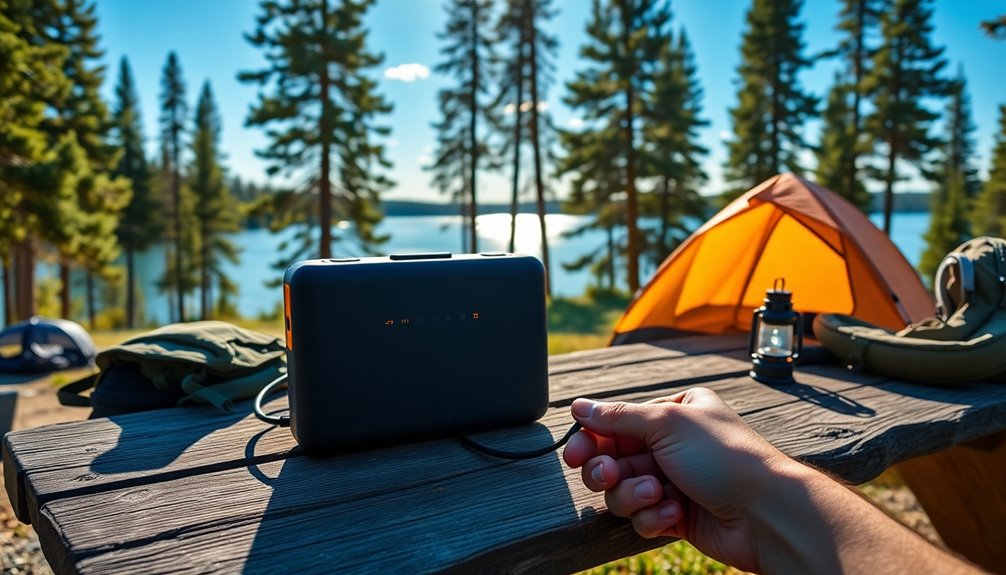

When it comes to portable power stations, the key factors are power capacity, portability, and versatility. The Anker SOLIX C1000 stands out as the overall top pick for its balanced performance and reliable battery tech. The Jackery Explorer 2000 v2 is a strong contender for those needing high output for camping or emergency use, while the Jackery HomePower 3600 Plus offers massive capacity ideal for home backup. However, buyers face tradeoffs: larger capacities tend to be heavier and more expensive, while smaller units sacrifice power for portability. Continue reading for a detailed breakdown of the best options tailored to different needs and budgets.

Get furniture and decor delivered free — and shop member deals
- Fast, free delivery on millions of items
- Access to Prime Big Deal Days deals on October 6–7
- Prime Video, Amazon Music and more included
Complete the kit


Key Takeaways
- High-capacity units like the Jackery HomePower 3600 Plus excel for home backup but are less portable.
- The Anker SOLIX C1000 offers a balanced mix of power, portability, and battery longevity with LiFePO4 technology.
- Size and weight vary widely; smaller models are easier to carry but offer limited power, suitable for camping or emergencies.
- Fast charging and solar compatibility are common features but vary in implementation, affecting recharging times and versatility.
- Price ranges significantly; investing in a higher-capacity or premium model can provide long-term value through durability and performance.






| portable power station | Capacity | Weight | Battery Type |
|---|---|---|---|
| Anker SOLIX C1000 Portable Pow | — | — | LiFePO4 |
| Jackery HomePower 3600 Plus Po | 3584Wh | Lightweight for its capacity | — |
| Jackery Explorer 2000 v2 Porta | 2042Wh | 39.5 lbs | — |
| Jackery Explorer 1000 v2 Porta | 1070Wh | 23.8 lbs | LiFePO4 |
| 1000W Portable Power Station 1 | 1024Wh | 27.73 lbs | — |
| Anker SOLIX C1000 Gen 2 Portab | 1024Wh | — | LiFePO4 |
| Anker SOLIX S2000 Portable Pow | — | — | LiFePO4 |
| Daran Portable Power Station 8 | 89.6Wh | 2.54 pounds | LiFePO4 |
| Portable Solar Generator 300W | — | — | — |
| Jackery Explorer 300 Portable | — | 7.5 lbs | — |
| Anker Portable Power Station S | 288Wh | — | LiFePO4 |
| EnginStar Portable Power Stati | 296Wh | — | — |
| EF ECOFLOW Portable Power Stat | 1024Wh | Approx. 27 lbs | LiFePO4 |
| BLUETTI Elite 30 V2 Portable P | 288Wh | 9.4 lbs | LFP |
| Jackery Solar Generator 300 wi | 292Wh | 7.5 lbs | — |
More Details on Our Top Picks
Anker SOLIX C1000 Portable Power Station, 1800W (Peak 2400W), 1056Wh LiFePO4 Battery, Solar Generator for Home Backup and Camping
The Anker SOLIX C1000 stands out for its combination of high surge capacity, rapid recharge, and long-lasting LiFePO4 battery. Unlike the Jackery Explorer 2000 v2, which offers a comparable capacity but slower recharge times, the C1000 can be back up and ready in under an hour, making it ideal for quick turnarounds during emergencies or outdoor trips. Its versatile ports cater to a wide range of devices, but it does require a smartphone app to set up UltraFast recharging, which might be a hurdle for some users. The compact size—15% smaller than similar units—adds to its portability, though details about solar panel compatibility are limited, potentially complicating off-grid use. Overall, this model makes the most sense for users who need reliable, fast-charging power with long cycle life, willing to invest in a premium option.
Pros:- Fast recharge in under an hour, minimizing downtime
- High surge capacity of 2400W to handle demanding appliances
- Long-lasting LiFePO4 battery with 3,000 cycles ensures durability
- Versatile ports for multiple device types
Cons:- Requires smartphone app for UltraFast setup, which may be inconvenient
- Limited information on solar panel compatibility could limit off-grid use
Best for: Advanced campers and emergency prepper households seeking fast, reliable backup power with long lifespan
Not ideal for: Budget-conscious users or those unfamiliar with app-based setup who prefer plug-and-play simplicity
- Battery Capacity:1056Wh
- Peak Power:2400W
- Recharge Time:Under 1 hour
- Recharge Method:AC, Solar
- Battery Type:LiFePO4
- Cycle Life:3,000 cycles
- Size:15% smaller than comparable units
Our verdict“This pick is best for users who prioritize rapid recharge and long-term durability in a portable power station.”
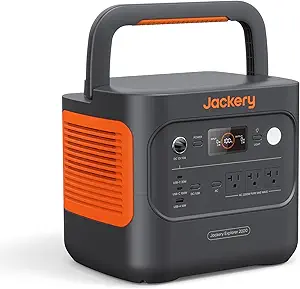
Jackery HomePower 3600 Plus Portable Power Station, 3600W AC Output, 3584Wh LFP Solar Generator, Expandable up to 21kWh, Home Backup for Emergencies and RV
The Jackery HomePower 3600 Plus excels in providing high capacity and expandability, making it suitable for whole-home backup and RV power. Its 3584Wh capacity surpasses the Jackery Explorer 2000 v2, and the ability to expand up to 21kWh with multiple units offers flexibility for large power demands. The unit supports multiple charging methods, including AC in 2.5 hours and solar in 4 hours, but this higher capacity and expandability come at a premium price. While it is lightweight for its size and features a luggage-style design, detailed info on solar panel compatibility remains limited, which could impact off-grid planning. This model is ideal for those who need scalable power solutions for prolonged outages or large outdoor setups, though it might be overkill for casual users.
Pros:- High-capacity 3584Wh battery with scalable expansion to 21kWh
- Multiple charging options, including AC, solar, and hybrid modes
- Lighter and more portable than similar large systems with luggage-style design
- Reliable, long lifespan with 6,000 cycles and 10-year durability
Cons:- Higher price point may be prohibitive for some buyers
- Requires multiple units for full home expansion, increasing overall cost and complexity
Best for: Homeowners or RV owners seeking scalable, high-capacity backup power with expansion options
Not ideal for: Budget shoppers or users with minimal power needs, as it carries a higher price point and complexity
- Power Output:3600W (7200W in parallel)
- Capacity:3584Wh
- Expandable Capacity:up to 21kWh
- Charging Time:AC in 2.5 hours, Solar in 4 hours
- Lifespan:6,000 cycles
- Weight:Lightweight for its capacity
Our verdict“This system suits users who need a scalable, powerful backup solution with flexible expansion capabilities.”
Jackery Explorer 2000 v2 Portable Power Station, 2042Wh, 2200W AC Output, LiFePO4 Battery, USB-C PD 100W Fast Charging, Solar Generator for Emergencies and Camping
The Jackery Explorer 2000 v2 offers a compelling balance of capacity, portability, and fast charging, making it a versatile choice for emergency preparedness and outdoor adventures. Its 2042Wh capacity rivals the Anker SOLIX C1000, but with a weight of just 39.5 lbs, it remains manageable for most users. The inclusion of a 100W USB-C PD port and quiet operation (<30dB) makes it practical for powering sensitive electronics and camping gear. While it doesn’t include solar panels, it supports solar charging with 400W panels, though the full charging time of 6 hours might limit rapid turnaround during prolonged outages. Its long lifespan of up to 10 years makes it a dependable long-term backup. This unit is perfect for those who need a reliable, portable power source for emergency and outdoor use, though the absence of included solar panels could be a drawback.
Pros:- High-capacity 2042Wh battery suitable for emergencies and outdoor use
- Lightweight and portable at 39.5 lbs with a compact form factor
- Fast AC charging in just 66 minutes and solar compatible
- Quiet operation with noise levels under 30dB
Cons:- Requires compatible solar panels, which are not included
- Price not specified, possibly higher due to advanced features
Best for: Campers and emergency prepper households needing reliable, portable power with quick recharge
Not ideal for: Users seeking an all-in-one system with included solar panels or those on a tight budget
- Capacity:2042Wh
- AC Output:2200W
- Weight:39.5 lbs
- USB-C PD:100W
- Charging Time (AC):66 minutes
- Lifespan:Up to 10 years
Our verdict“This model is ideal for outdoor lovers and emergency users who prioritize portability and reliable power without bulk.”
Jackery Explorer 1000 v2 Portable Power Station, 1070Wh, 1500W, Fast Charge, LiFePO4 Battery, USB-C Output, Solar Generator for Camping and Emergency
The Jackery Explorer 1000 v2 provides a solid balance of capacity and portability, making it well-suited for camping trips and small emergency setups. Its 1070Wh battery offers enough juice for lights, small appliances, and devices, and its 1500W continuous power output handles most camping needs. Fast charging in just one hour ensures quick setup and pack-up, and multiple ports—including USB-C with PD—cover a wide range of device types. Compared to larger units like the HomePower 3600 Plus, it sacrifices some capacity but gains in weight (just 23.8 lbs), making it easier to carry. However, it doesn’t include solar panels, requiring compatible accessories, and its solar charging is limited without specific panels. This makes it a practical choice for outdoor enthusiasts who need reliable power on the go, but less so for heavy-duty backup needs.
Pros:- High-capacity 1070Wh battery with over 10 years lifespan
- Fast charging from 0% to 100% in just one hour
- Multiple ports, including USB-C PD and AC outlets
- Lightweight at 23.8 lbs with a foldable handle
Cons:- No included solar panels, requiring additional purchase
- Limited capacity compared to larger models like the HomePower 3600 Plus
Best for: Campers and outdoor adventurers needing lightweight, fast-charging power for small devices
Not ideal for: Users seeking large-scale, extended backup power or those unwilling to purchase additional solar panels
- Capacity:1070Wh
- AC Output:1500W
- Surge Peak:3000W
- Weight:23.8 lbs
- Charging Time:1 hour (fast charge)
- Battery Type:LiFePO4
Our verdict“This unit is best for outdoor users who want quick, reliable power without the bulk of larger systems.”
1000W Portable Power Station 1024Wh LiFePO4 Solar Generator for Camping and Emergency
The 1000W Portable Power Station offers a balanced mix of capacity and portability, with a 1024Wh LiFePO4 battery that’s suitable for camping and emergency use. Its 1000W continuous output is sufficient for powering lights, small appliances, and devices, although it may not handle larger appliances over extended periods. It supports fast multi-port charging, including USB-C PD, and is solar compatible up to 300W—ideal for off-grid situations. Weighing just 27.73 lbs, it’s lighter than some larger units like the Jackery Explorer 2000 v2 but offers similar capacity. Its peak power of 2000W may limit use with larger appliances, but for most camping or emergency needs, it’s a practical, lightweight option. The limited solar input capacity could slow down recharging when off-grid, which is worth considering.
Pros:- High-capacity 1024Wh LiFePO4 battery with long lifespan
- Supports fast multi-port charging including USB-C PD
- Solar compatible with up to 300W input for off-grid use
- Lightweight and portable at 27.73 lbs
Cons:- Limited to 300W solar input, requiring multiple panels for faster recharge
- Peak power of 2000W may restrict larger appliance use
Best for: Travelers and campers looking for a portable, reliable power source with fast charging and solar compatibility
Not ideal for: Users needing to run larger appliances or seeking ultra-fast solar recharging, due to input limitations
- Capacity:1024Wh
- Power Output:1000W
- Peak Power:2000W
- Weight:27.73 lbs
- Charging Ports:2×110V AC, 1×60W PD USB-C, 2×USB-A
- Solar Input:up to 300W
Our verdict“This model is well-suited for travel and outdoor enthusiasts who need a compact, reliable power option with solar support.”
Anker SOLIX C1000 Gen 2 Portable Power Station, 1024Wh, 2000W, Camping, Emergency Backup
The Anker SOLIX C1000 Gen 2 stands out for its impressive balance of power, portability, and rapid recharging, making it a strong choice for both camping and emergency backup. Compared with the Jackery Explorer 300, it offers a much higher capacity and faster recharge times, though at a likely higher price point. Its 1024Wh LiFePO4 battery supports up to 2000W continuous output, enabling it to power multiple devices simultaneously, which is a significant advantage over smaller models. The compact design, being 14% smaller and 11% lighter, enhances portability, but it still offers only 10 device ports—less than larger models like the Jackery Explorer 2000, limiting large setups. The quick 49-minute recharge and solar compatibility make it ideal for off-grid living, but the app-dependent features might challenge less tech-savvy users. Overall, this pick makes the most sense for those needing reliable, high-capacity power in a portable package, willing to invest for speed and versatility.
Pros:- Fast recharge in just 49 minutes, saving time during critical moments
- High power output supports multiple devices simultaneously
- Lightweight and compact for ease of transport
- Supports solar recharging for off-grid independence
Cons:- Limited to 10 device ports, which may restrict larger setups
- Price may be high for budget buyers
- Requires app for some features, which could be less user-friendly
Best for: Advanced campers and emergency preparedness enthusiasts seeking high power and fast recharge in a portable form
Not ideal for: Budget-conscious users or those with larger device arrays requiring many ports, due to limited port count and high cost
- Capacity:1024Wh
- Power Output:2000W (3000W peak)
- Recharge Time:49 minutes
- Solar Recharging:1.8 hours
- Battery Type:LiFePO4
- Portability:Lightweight, compact, 14% smaller than similar models
Our verdict“This option is ideal for users needing high-capacity, fast-charging power in a portable form, ready for camping or emergencies.”
Anker SOLIX S2000 Portable Power Station, 2010Wh, 1500W, Home Backup, UPS
The Anker SOLIX S2000 offers a massive 2010Wh capacity with a 1500W continuous output, making it ideal for home backup or extended off-grid use. Unlike the Jackery Explorer 300, which is more suited for portable outdoor tasks, the S2000 is designed for sustained power supply, supporting most home essentials with ease. Its 10,000 cycle lifespan guarantees long-term durability, and multiple recharging options including AC, solar, generator, and car outlet provide flexible energy sources. However, it lacks a 12V DC port, limiting some device compatibility, and its 35.7-pound weight makes it less portable than smaller options. The 10,000 cycles can justify the higher upfront cost, but it may be overkill for casual camping. This model is best suited for those needing dependable, long-term backup power at home or in remote locations, willing to handle its size.
Pros:- Massive 2010Wh capacity for extended power supply
- Long 10,000 cycle lifespan ensures durability
- Multiple recharging options for flexibility
- Supports most home devices with 1500W continuous output
Cons:- Heavy weight at 35.7 pounds reduces portability
- Limited to 1500W continuous power, restricting high-wattage devices
- No 12V DC port for some appliances
Best for: Homeowners or off-grid residents seeking reliable backup with long cycle life
Not ideal for: Travelers or campers needing ultra-light, portable options, due to weight and size
- Battery Capacity:2010Wh
- Battery Type:LiFePO4
- Continuous Power:1500W
- Peak Power:3000W
- Cycle Life:10,000 cycles
- Dimensions:8.2 × 11.1 × 12.7 inches
Our verdict“This pick excels for those needing a durable, high-capacity backup solution for long-term or home use.”
Daran Portable Power Station 89.6Wh LiFePO4 Battery with 100W Output
The Daran Portable Power Station offers a highly portable, lightweight solution with just 89.6Wh capacity and a 100W (200W peak) output. Compared to larger models like the Anker SOLIX C1000, it sacrifices capacity for size, making it perfect for quick emergency power or small device charging during outdoor adventures. Its multiple output ports, including AC, USB-C, and DC, support a range of small devices, and fast charging options ensure convenience. The compact size at 2.54 pounds makes it easy to carry, but the limited capacity restricts use to low-power devices only. It lacks solar charging capabilities, unlike some larger models. This device is best suited for users seeking a lightweight backup to power smartphones, tablets, or small gadgets, but not suitable for larger appliances or extended use.
Pros:- Extremely portable and lightweight at only 2.54 pounds
- Supports fast charging via multiple methods
- Quiet operation with built-in LED flashlight
- Long-lasting LiFePO4 battery with over 3500 cycles
Cons:- Limited capacity restricts use to small devices
- No solar charging support, reducing off-grid flexibility
- Not suitable for high-wattage or multiple simultaneous devices
Best for: Outdoor enthusiasts or emergency kit users needing a small, reliable backup for essential devices
Not ideal for: Those looking to power larger appliances or needing longer off-grid durations, because of limited capacity
- Capacity:89.6Wh
- Battery Type:LiFePO4
- Output Power:100W (200W peak)
- Weight:2.54 pounds
- Dimensions:6.5×3.3×4 inches
- Cycle Life:3500+ cycles
Our verdict“This compact power station is perfect for emergency kits or short outdoor trips where portability and quick charging matter most.”
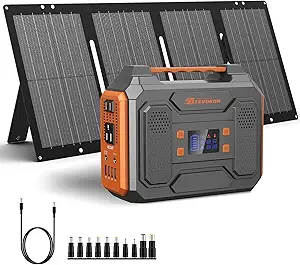
Portable Solar Generator 300W with 60W Solar Panel – 110V Pure Sine Wave, 280Wh Battery, USB QC3.0, DC, AC Outlets for Camping and Outdoor Use
The Portable Solar Generator 300W with a 60W foldable solar panel offers a balanced solution for outdoor enthusiasts needing renewable energy. Its 280Wh battery and 300W pure sine wave inverter support small devices with clean power, and the 60W solar panel enables eco-friendly recharging in sunny conditions. Compared to the Daran Power Station, it benefits from solar input but has a smaller battery and lower wattage capacity, limiting runtime. Its multiple ports, including USB, DC, and AC, provide versatility, and safety features like overload protection add peace of mind. However, performance diminishes if not used regularly, and the junction box isn’t waterproof, requiring careful storage. This device makes sense for campers or RV travelers seeking portable solar power for small devices, but not for high-demand or continuous use.
Pros:- High solar conversion efficiency of 20.5% for quick charging
- Multiple charging options including AC, DC, and USB
- Built-in safety protections and cooling system for durability
- Compact, foldable solar panel for easy transport
Cons:- Performance can decline without regular use, risking protection mode
- Not suitable for devices over 300W or high power consumption
- Junction box not waterproof, requiring careful handling
Best for: Camping or outdoor travelers seeking solar recharging for small devices and eco-friendly power
Not ideal for: Users needing to power larger appliances or requiring constant high wattage, due to limited capacity and output
- Wattage:300W
- Battery Capacity:280Wh
- Solar Panel Power:60W
- Output Voltage:110V
- Protection Features:Over-current, over-voltage, overload
- Conversion Efficiency:20.5%
Our verdict“This solar generator is tailored for outdoor users prioritizing renewable power for small devices in sunny conditions.”
Jackery Explorer 300 Portable Power Station, 292Wh, LiFePO4 Battery, Solar Generator for Outdoors, Camping, Travel, Hunting, Blackout
The Jackery Explorer 300 combines portability with reliable power, featuring a 292Wh LiFePO4 battery in a lightweight 7.5-pound package. It offers a good balance of capacity and weight, making it suitable for camping, travel, or emergency backup. Compared to the Daran Power Station, it has a slightly higher capacity and is easier to carry, but it lacks the same rapid recharge capabilities. Its multiple output ports—including USB-C, USB-A, and AC—support a variety of devices, and its robust battery provides over 4,000 cycles, ensuring long-term durability. It doesn’t include a solar panel, which can be a drawback for off-grid use without extra accessories. This model is best for outdoor enthusiasts wanting a dependable, portable power source for small to medium devices but not for powering larger appliances.
Pros:- Lightweight at only 7.5 pounds for easy portability
- High cycle life with over 4,000 cycles for durability
- Multiple versatile charging ports including USB-C and AC
- Reliable, clean power with LiFePO4 chemistry
Cons:- No included solar panel, requiring additional purchase
- Limited to 292Wh, less suitable for large appliances
- Requires external solar panel for solar recharging
Best for: Travelers and campers needing a lightweight, reliable portable power source with long cycle life
Not ideal for: Users seeking high-capacity or high-wattage power for large appliances, or those who want an all-in-one solar kit
- Weight:7.5 lbs
- Battery Capacity:292Wh
- Battery Chemistry:LiFePO4
- Output Power:300W
- Peak Surge:600W
- Charge Time:4 hours
Our verdict“This compact power station is ideal for outdoor lovers needing dependable, lightweight power for small to medium devices during trips or emergencies.”
Anker Portable Power Station SOLIX C300, 288Wh LiFePO4 Battery, 300W Solar Generator, 140W Fast Charging, for Camping, Travel, Emergencies
This option stands out for its combination of portability and reliable performance, making it a strong choice compared with larger models like the Jackery Explorer 2000 v2. Its 288Wh LiFePO4 battery offers a long cycle life, and the multiple charging ports—including USB-C, USB-A, and AC outlets—cover most device needs. The fast 140W recharging capability and solar input support sustainable energy, though the 300W continuous output limits high-wattage device operation. It’s ideal for those needing a lightweight, all-around solution, but users expecting to power larger appliances should consider bigger units.
Pros:- Compact and lightweight for easy transport
- Multiple versatile charging ports including USB-C and AC
- Supports fast recharging and solar input
- Long cycle life of 3,000+ cycles
Cons:- Limited to 300W continuous power, restricting high-wattage device use
- Requires separate purchase of carrying straps
- Not compatible with some solar panels like Anker SOLIX PS30
Best for: Campers and travelers who want a portable, versatile power station with long-lasting batteries.
Not ideal for: Users needing to run high-wattage appliances like refrigerators or power tools for extended periods.
- Capacity:288Wh
- Power Output:300W (600W surge)
- Charging Ports:3x AC outlets, 1x car socket, 2x USB-C, 1x USB-A
- Fast Charging:140W two-way USB-C
- Recharging Options:Wall outlet, solar panel, car
- Battery Type:LiFePO4
- Cycle Life:3,000 cycles
- Noise Level:25dB
Our verdict“This power station suits outdoor enthusiasts and emergency preppers seeking reliable, portable energy without high power demands.”
EnginStar Portable Power Station 300W 296Wh Battery Bank with 110V Pure Sine Wave AC Outlet for Outdoors Camping and Emergency
This model makes sense for users who prioritize straightforward, safe power delivery, especially compared with the BLUETTI Elite 30 V2’s higher capacity. Its 296Wh capacity and 300W AC output make it suitable for charging phones, laptops, or CPAP machines. The pure sine wave output ensures safe operation for sensitive electronics, and multiple charging options—including solar, AC, and car—offer flexibility. However, it lacks the larger capacity of the EcoFlow Delta 3 and doesn’t include a solar panel, limiting off-grid endurance. It’s a good pick for casual outdoor use with modest power needs, but not for powering multiple high-demand devices simultaneously over long periods.
Pros:- Lightweight and compact for portability
- Pure sine wave AC outlets for device safety
- Multiple input options including solar and car
- Advanced battery management system ensures safety
Cons:- Solar panel not included, adding extra cost
- Limited to 300W output, not suitable for high-wattage devices
- Recharge time from 0% to 80% takes about 2 hours
Best for: Outdoor hobbyists or emergency users requiring dependable, safe power for small devices.
Not ideal for: Those needing to run high-wattage appliances or support extended off-grid living.
- Capacity:296Wh
- Power Output:300W
- AC Outlets:2 pure sine wave 110V
- DC Outputs:12V/24V regulated
- USB:5V/3.1A Max
- USB-C:18W
- Charge Cycles:Over 1000
- Dimensions:9 x 5.5 x 7.5 inches
Our verdict“This power station is ideal for casual outdoor use and emergency backup of small electronics, but not for high-power or long-duration needs.”
EF ECOFLOW Portable Power Station Delta 3 Classic, 1024Wh, 1800W AC, LiFePO4 Battery, Fast Charge, Solar Compatible
This pick makes the most sense for users who need substantial power, especially compared with smaller units like the Jackery Solar Generator 300. Its 1024Wh capacity and 1800W continuous output make it suitable for running appliances, power tools, or as a home backup during outages. The fast charging feature allows 0-80% recharge in just 45 minutes, and the LiFePO4 battery promises a lifespan over a decade. While it lacks compatibility with certain smart batteries and has a higher price point, its ability to support large devices and quick recharge times makes it a strong choice for more demanding scenarios. It’s less suitable for those with tight budgets or minimal power needs.
Pros:- High capacity suitable for appliances and power tools
- Fast recharge capability in under an hour
- Long-lasting LiFePO4 battery with 10+ year lifespan
- Supports solar charging for off-grid use
Cons:- Not compatible with some smart batteries like Delta 2 or Delta 3 series
- Capacity may be insufficient for very high-wattage, extended use
- Bulkier than smaller portable options
Best for: Homeowners or campers needing reliable, high-capacity power for appliances and tools.
Not ideal for: Users seeking ultra-portable solutions or those with limited budgets, as it is larger and costlier than smaller units.
- Capacity:1024Wh
- AC Output:1800W
- Surge Power:3600W
- Fast Charge:0-80% in 45 mins
- Recharge Time with Solar:2.5 hours
- Battery Type:LiFePO4
- Battery Lifespan:10+ years
- Weight:Approx. 27 lbs
Our verdict“This station is best for users who need high power output and fast recharging, especially for emergency or home backup scenarios.”
BLUETTI Elite 30 V2 Portable Power Station 288Wh 600W LFP Solar Generator
This model distinguishes itself through its lightweight build—only 9.4 lbs—compared with bulkier options like the EcoFlow Delta 3. Its 288Wh capacity and 600W continuous power make it suitable for quick, emergency power or outdoor activities. The high surge capacity and fast charging (45 mins to 80%) add to its appeal for users who need rapid energy replenishment. The built-in UPS function provides added security for critical devices. However, its limited capacity restricts long-term or high-demand use, and it doesn’t include a solar panel, so off-grid recharging requires additional gear. This pick is ideal for users who prioritize portability over extended power capacity.
Pros:- Extremely portable at just 9.4 lbs
- High surge capacity up to 1500W
- Fast charging with 0-80% in 45 mins
- Reliable UPS for critical devices
Cons:- Limited capacity for prolonged off-grid use
- No included solar panel, increasing total cost
- Not suitable for high-power appliances over extended periods
Best for: Outdoor adventurers or emergency responders needing a lightweight, quick-charging power source for small to medium devices.
Not ideal for: Those requiring extended power for multiple devices or running high-wattage appliances over long periods.
- Capacity:288Wh
- Continuous Power:600W
- Surge Power:1500W
- Charging Time (0-80%):45 mins
- Charging Modes:AC wall, solar, car
- Standby Power:4.5W
- Battery Type:LFP
- Weight:9.4 lbs
Our verdict“This lightweight power station excels in emergency or short-term outdoor scenarios where portability and quick recharge are priorities.”
Jackery Solar Generator 300 with 40W Solar Panel, 292Wh, 300W AC, Pure Sine Wave Outlet for RV, Outdoors, Camping, Travel
This model makes sense for casual campers and travelers who want an affordable, lightweight power source, especially when compared to the higher-capacity Anker SOLIX C300. Its 292Wh capacity and 300W continuous output are suitable for charging phones, tablets, and small laptops, but might fall short for larger appliances or longer off-grid stays. The inclusion of a 40W solar panel simplifies setup, although the overall charging time from solar can be slow. Its ultra-light 7.5 lbs weight enhances portability, but the limited power output and capacity mean it’s best suited for light-duty tasks rather than sustained use or high-wattage devices.
Pros:- Very lightweight at only 7.5 lbs
- Includes a 40W solar panel for easy solar charging
- Multiple outlets including USB-C and USB-A
- Long-lasting LiFePO4 battery with over 4,000 cycles
Cons:- Limited to 300W output, restricting larger device use
- Requires additional solar panels for fast charging
- Capacity may not support extended use over several days
Best for: Budget-minded campers and outdoor travelers seeking a lightweight, easy-to-use power station for small devices.
Not ideal for: Users who need to run high-wattage appliances or plan longer off-grid trips with multiple devices demanding sustained power.
- Weight:7.5 lbs
- Capacity:292Wh
- AC Outlets:2
- USB-C Port:100W PD
- USB-A Ports:2
- Charge Cycles:Over 4,000
- Charge Time (80%) with 100W panel:2.8 hours
- Charge Time (80%) with 40W panel:7.5 hours
Our verdict“This generator is a good fit for casual outdoor users who prioritize portability and affordability for small electronics.”

How We Picked
Our evaluation focused on key factors that influence real-world usability: power output, battery capacity, build quality, and recharging options. We prioritized models with reliable battery chemistry like LiFePO4 for longevity, and we considered portability by examining size and weight. Additional features such as solar compatibility, fast charging, and multiple outlets were also assessed, as they add to versatility. The ranking reflects a combination of performance, value for money, and suitability for different user needs—from casual campers to emergency preparedness. Tradeoffs like weight versus capacity helped us identify which units strike the best balance for various scenarios.
Factors to Consider When Choosing Portable Power Stations
Choosing the right portable power station involves understanding your specific needs and balancing key factors. First, consider your power requirements—do you need to run small devices or power larger appliances? Next, evaluate portability: how heavy and bulky can you comfortably carry? Battery chemistry impacts longevity and safety, with LiFePO4 offering durability over many charge cycles. Recharging options, including solar compatibility and fast charging, can extend usability in off-grid scenarios. Finally, assess the total cost relative to features and capacity to avoid overspending on unnecessary extras or sacrificing essential power. Being aware of common misconceptions, such as equating capacity with runtime, will help you make smarter choices.Power Output and Capacity
Understanding the difference between wattage and capacity is essential. Power output determines what devices you can run simultaneously, while capacity (measured in watt-hours) indicates how long you can sustain that power. Larger capacities allow for longer use or running bigger appliances, but they typically add weight and cost. For regular camping, a unit with 300-600Wh might suffice, whereas home backup or emergency systems benefit from units exceeding 1000Wh. Matching your power needs with capacity prevents under- or over-investing in features you’ll rarely use.
Portability and Size
Size and weight are often overlooked but critically impact usability. Smaller models are more portable, ideal for outdoor adventures or quick emergency prep. Larger units with higher capacity tend to be heavier and less convenient to carry, though they provide more power. Consider how you’ll transport your station—whether in a backpack, vehicle, or stored at home—and choose accordingly. Some units feature foldable handles or compact designs that maximize portability without sacrificing too much capacity, making them better suited for frequent movement.
Battery Chemistry and Durability
The type of battery chemistry affects both safety and longevity. LiFePO4 batteries, used in many high-end models, offer more charge cycles and thermal stability, translating into longer lifespan and safer operation. Cheaper lithium-ion batteries may degrade faster, leading to reduced capacity over time. For those planning long-term use or frequent recharging, investing in a unit with LiFePO4 technology can save money and hassle in the long run. Skipping this consideration risks early battery failure and increased replacement costs.
Recharging Options and Solar Compatibility
Fast recharging features allow your station to be ready quickly after use, which is valuable during emergencies or outdoor trips. Solar compatibility extends usability off-grid, but not all units are equally efficient with solar panels. Look for models with high solar input ratings and easy connection options to maximize sunlight-to-battery conversion. Some units support daisy-chaining multiple solar panels, ideal for prolonged off-grid use. Keep in mind that actual recharging times depend on panel wattage and sunlight conditions, so plan accordingly.
Price and Value
Prices range widely based on capacity, features, and brand reputation. Cheaper units may lack durability or sufficient power for your needs, leading to replacements sooner. Conversely, premium models with extensive features and high capacity can deliver better long-term value, especially for frequent or critical use. Consider how often you’ll use the station and for what purposes—spending more upfront can pay off if it means greater reliability and versatility over years of use. Make sure to compare warranty coverage and customer support as part of your value assessment.
Frequently Asked Questions
How long can a portable power station run my devices?
The runtime of a portable power station depends on its capacity and the load of your devices. For example, a 1000Wh unit running a 50W device could theoretically last around 20 hours, but real-world factors like efficiency and battery aging can affect this. Always check the rated capacity and compare it to your total power draw to estimate runtime more accurately. If you need long-lasting power for multiple devices or large appliances, opting for a higher capacity model makes sense. Remember, capacity isn’t the only factor—outlet type and power output also impact performance.
Is solar charging worth it for a portable power station?
Solar charging can significantly extend the usability of your portable station, especially during outdoor activities or emergencies without access to grid power. If you frequently camp or live in an area with abundant sunlight, solar compatibility might justify a higher initial investment. However, efficiency depends on panel wattage and sunlight conditions—solar panels take time to recharge large capacities. For quick recharges or backup power, AC or car charging may be faster and more practical. Combining solar with other recharging methods offers the most flexibility, but ensure your station supports this feature before buying.
Should I prioritize capacity or portability?
It depends on your primary use case. If you need a power source for outdoor adventures or quick emergencies, prioritizing portability makes sense. Smaller, lighter units are easier to carry but may not power larger appliances or run for extended periods. Conversely, if your goal is home backup or emergency preparedness, larger capacities are more important, even if that means increased weight and size. Balancing these factors based on how often and where you’ll use your station will help you select the best model for your needs.
How long does a typical portable power station last before needing replacement?
The lifespan of a portable power station is primarily determined by its battery chemistry and usage patterns. LiFePO4 batteries generally offer over 2000-3000 charge cycles, translating into many years of reliable service. Cheaper lithium-ion batteries might last only 500-1000 cycles, degrading faster over time. Proper maintenance—like avoiding deep discharges and storing in cool environments—can extend battery life. When evaluating options, consider warranty periods and the manufacturer’s reputation for battery longevity, especially if you plan to rely on your station for critical needs.
What safety features should I look for in a portable power station?
Safety features are essential to prevent damage and ensure user protection. Look for units with over-voltage, over-current, and short-circuit protection. Thermal management systems help prevent overheating during operation or recharging. Some models include surge protection to handle sudden power spikes, especially when powering sensitive electronics. Battery chemistry also impacts safety; LiFePO4 batteries are more thermally stable, reducing fire risk. Confirm that the device has certifications from recognized safety authorities to guarantee compliance with safety standards.
Conclusion
For general outdoor users and casual campers, the Jackery Explorer 1000 v2 offers a solid mix of power and portability. Those seeking maximum capacity for home backup or emergency preparedness should consider the Jackery HomePower 3600 Plus, despite its heft. Buyers new to portable power may prefer compact models like the Daran or Anker SOLIX C300, which are easier to handle but still provide reliable power. For anyone prioritizing durability and long-term value, units with LiFePO4 batteries like the Jackery Explorer 2000 v2 or Anker SOLIX C1000 make the most sense. Ultimately, matching the right features to your specific needs will ensure you get the best return on your investment.
As an affiliate, we earn on qualifying purchases.Fall Picks
fall essentials