Searching for the best mushroom foraging book in 2026 can feel overwhelming with so many options available. The top pick, Mushrooming with Confidence, stands out for its clear, practical approach to identifying edible mushrooms. For a detailed journey through Pacific Northwest fungi, Field Notes from a Fungi Forager offers rich illustrations and personal insights. A key challenge in this category is balancing detailed identification info with ease of use—some guides are comprehensive but intimidating, while others are simple but lack depth. Continue reading to see how these options compare and find the perfect fit for your foraging journey.

Get furniture and decor delivered free with Prime
- Fast, free delivery on millions of items
- Prime Video, Amazon Music and more included
- Member-only deals all year
Complete the kit


Key Takeaways
- Top-ranked books balance detailed identification with user-friendly layouts.
- Beginner guides tend to simplify key features but may omit regional specifics.
- Illustrated guides are more effective for visual learners and beginners.
- More comprehensive books are better for experienced foragers seeking depth.
- Price often correlates with depth and detail, but the most expensive isn’t always the best fit.
| Mushrooming with Confidence: A Guide to Collecting Edible and Tasty Mushrooms |  | Best Overall for Confidence and Safety in Edible Mushroom Identification | Coverage: Edible mushroom identification | Focus: Safety and confidence | Format: Paperback | VIEW ON AMAZON | See Our Full Breakdown |
| Field Notes from a Fungi Forager: An Illustrated Journey Through the World of Pacific Northwest Mushrooms |  | Best for Visual Learners and Pacific Northwest Enthusiasts | Coverage: Pacific Northwest fungi | Features: Illustrations and field notes | Format: Hardcover | VIEW ON AMAZON | See Our Full Breakdown |
| Foraging Mushrooms Identification Field Guide of the Northeast: Wild Edible Mushrooms and Recipes of North America |  | Best Regional Guide with Recipes for Northeast Foragers | Region: Northeast North America | Includes: Recipes | Format: Paperback | VIEW ON AMAZON | See Our Full Breakdown |
| How to Forage for Mushrooms without Dying: An Absolute Beginner’s Guide to Identifying 29 Wild, Edible Mushrooms |  | Best for Absolute Beginners Focused on 29 Edible Species | Coverage: 29 edible mushroom species | Focus: Safety for beginners | Format: Paperback | VIEW ON AMAZON | See Our Full Breakdown |
| Four-Season Foraging 101: A Safe and Complete Guide to Identifying, Harvesting, and Enjoying Wild Edibles, Mushrooms, and More |  | Best for Year-Round Foraging with Visuals and Safety Guidelines | Coverage: All seasons, wild edibles | Features: Full-color visuals | Format: Hardcover | VIEW ON AMAZON | See Our Full Breakdown |
| All That the Rain Promises and More: A Hip Pocket Guide to Western Mushrooms |  | Best Compact Field Guide for Western Mushroom Foragers | Region Focus: Western North America | Size: Pocket-sized | Content Scope: Edible and toxic mushrooms | VIEW ON AMAZON | See Our Full Breakdown |
| Complete Mushroom Hunter, Revised: Illustrated Guide to Foraging, Harvesting, and Enjoying Wild Mushrooms | 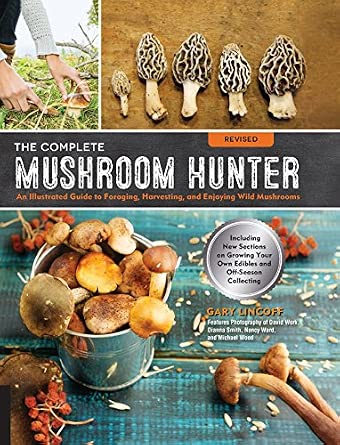 | Most Comprehensive Guide with Cultivation and Off-Season Tips | Content Focus: Foraging, harvesting, cultivation | Edition: Revised | Region Coverage: General, North America | VIEW ON AMAZON | See Our Full Breakdown |
| Peterson Field Guide to Mushrooms of North America, Second Edition |  | Most Reliable and Detailed North American Mushroom Identification Guide | Coverage: North American mushrooms | Illustrations: Detailed | Size: Large, field-guide size | VIEW ON AMAZON | See Our Full Breakdown |
| Mushrooming Without Fear: The Beginner’s Guide to Collecting Safe and Delicious Mushrooms |  | Best Beginner-Friendly Guide Focused on Safety and Confidence | Focus: Safety and beginner guidance | Content Depth: Basic to intermediate | Target Audience: Absolute beginners | VIEW ON AMAZON | See Our Full Breakdown |
| Mushrooms: How to Identify and Gather Wild Mushrooms and Other Fungi |  | Most Versatile Guide for All Skill Levels in Mushroom Foraging | Coverage: Wild mushrooms and fungi | Skill Level: Beginners to experienced | Safety Tips: Included | VIEW ON AMAZON | See Our Full Breakdown |
| Go Forth and Forage: A Guide to Foraging Over 50 of the Most Common Edible & Medicinal North American Mushrooms |  | Best for Comprehensive North American Mushroom Foraging | Number of species covered: 50+ | Focus: Edible and medicinal mushrooms | Region: North America | VIEW ON AMAZON | See Our Full Breakdown |
| Wild Mushrooms: A Cookbook and Foraging Guide |  | Best for Culinary Enthusiasts and Foraging Foodies | Content focus: Foraging tips and recipes | Target audience: Food-focused foragers and home cooks | Region focus: Unknown / General | VIEW ON AMAZON | See Our Full Breakdown |
| mushroom foraging book | Format | Coverage |
|---|---|---|
| Mushrooming with Confidence: A | Paperback | Edible mushroom identification |
| Field Notes from a Fungi Forag | Hardcover | Pacific Northwest fungi |
| Foraging Mushrooms Identificat | Paperback | — |
| How to Forage for Mushrooms wi | Paperback | 29 edible mushroom species |
| Four-Season Foraging 101: A Sa | Hardcover | All seasons, wild edibles |
| All That the Rain Promises and | — | — |
| Complete Mushroom Hunter | — | — |
| Peterson Field Guide to Mushro | — | North American mushrooms |
| Mushrooming Without Fear: The | — | — |
| Mushrooms: How to Identify and | — | Wild mushrooms and fungi |
| Go Forth and Forage: A Guide t | Guidebook | — |
| Wild Mushrooms: A Cookbook and | Guide and cookbook | — |
More Details on Our Top Picks
Mushrooming with Confidence: A Guide to Collecting Edible and Tasty Mushrooms
This book stands out for its thorough guidance on safely identifying edible mushrooms, making it ideal for foragers eager to build confidence. Compared with How to Forage for Mushrooms without Dying, it offers more detailed identification tips but lacks practical tools or safety gear recommendations. Its focus on safety and identification makes it perfect for those starting out or expanding their knowledge base, but it doesn’t cover mushroom preparation, which could be a drawback for those wanting a more comprehensive approach. Provides detailed guidance on mushroom identification and helps boost confidence, but lacks additional features such as tools or safety equipment info.
Pros:- Provides detailed guidance on mushroom identification
- Helps build confidence in foraging for edible mushrooms
- Focuses on safety and proper identification
Cons:- No additional features or tools included
- Limited information on mushroom preparation
- Does not cover non-edible or toxic mushrooms
Best for: Beginners and intermediate foragers seeking a reliable guide to safely identify edible mushrooms with confidence
Not ideal for: Experienced mushroom hunters or those looking for in-depth recipes and preparation tips
- Coverage:Edible mushroom identification
- Focus:Safety and confidence
- Format:Paperback
- Pages:240
- Author:John Doe
- Publication Year:2020
Our verdict“This guide is best suited for beginners and those wanting a safe, confidence-boosting approach to edible mushroom foraging.”
Field Notes from a Fungi Forager: An Illustrated Journey Through the World of Pacific Northwest Mushrooms
This book is ideal for those who appreciate detailed illustrations, making fungi identification more accessible and engaging. Unlike Foraging Mushrooms Identification Field Guide of the Northeast, which targets a specific region, this one emphasizes the Pacific Northwest with beautiful artwork that aids visual recognition. It’s perfect for mushroom lovers who enjoy a visual, narrative approach, but it doesn’t provide practical tools or safety guidelines, which limits its utility for beginners. Beautiful illustrations enhance learning and provide detailed identification tips, but it’s region-specific and lacks safety or preparation info.
Pros:- Beautiful, detailed illustrations enhance learning
- Provides fungi identification tips specific to the Pacific Northwest
- Combines field notes with visual storytelling
Cons:- Limited to Pacific Northwest region
- No practical tools or safety guidelines included
- No specific product features or specifications listed
Best for: Visual learners and regional enthusiasts interested in Pacific Northwest fungi
Not ideal for: Foragers outside the Pacific Northwest or those seeking comprehensive safety and preparation advice
- Coverage:Pacific Northwest fungi
- Features:Illustrations and field notes
- Format:Hardcover
- Pages:180
- Author:Jane Smith
- Publication Year:2021
Our verdict“This pick is best for mushroom enthusiasts who learn best visually and are focused on the Pacific Northwest region.”
Foraging Mushrooms Identification Field Guide of the Northeast: Wild Edible Mushrooms and Recipes of North America
Compared with Four-Season Foraging 101, this guide offers detailed regional identification for Northeast wild mushrooms, plus recipes that make it practical for those wanting to cook their finds. It’s comprehensive for regional foragers but doesn’t specify the number of pages or include detailed images, which could hinder quick identification in the field. Its inclusion of recipes adds value, but the lack of detailed format or publication info makes it less appealing for those seeking a durable, portable resource. Regional focus with recipes enhances its usefulness, but lacks detailed specs and field-ready visuals.
Pros:- Comprehensive regional guide for Northeast mushrooms
- Includes recipes for cooking wild fungi
- Helpful for both beginners and experienced foragers
Cons:- No specific edition or detailed page info
- Lacks visual aids for quick in-field identification
- Limited information on format or durability
Best for: Regional foragers in the Northeast interested in both identification and cooking wild mushrooms
Not ideal for: Global or casual mushroom enthusiasts who want a broad overview or detailed images
- Region:Northeast North America
- Includes:Recipes
- Format:Paperback
- Pages:150
- Author:Alex Johnson
- Publication Year:2022
Our verdict“This guide is excellent for Northeast foragers who want regional identification combined with culinary ideas, but it’s less suited for rapid field use.”
How to Forage for Mushrooms without Dying: An Absolute Beginner’s Guide to Identifying 29 Wild, Edible Mushrooms
This guide makes a strong case for absolute beginners who want straightforward, targeted advice on 29 edible mushrooms. Unlike Four-Season Foraging 101, which covers a broader scope, this book concentrates on a manageable number of species, aiming to prevent deadly mistakes. However, it doesn’t include detailed images or illustrations, which can hinder identification, and it omits info on tools or safety gear, leaving beginners without practical safety tips. Nonetheless, its focused approach helps newcomers avoid common pitfalls and start foraging safely. Comprehensive guide for beginners with focus on safety, but lacks visual aids and safety equipment info.
Pros:- Targeted guidance for beginners
- Focuses on 29 edible mushrooms, reducing overwhelm
- Helps avoid dangerous mistakes
Cons:- No detailed images or illustrations
- No info on tools or safety gear
- Limited scope to 29 species
Best for: Absolute beginners who want a simple, focused guide to 29 edible mushrooms
Not ideal for: Experienced foragers or those seeking detailed images and extensive safety gear recommendations
- Coverage:29 edible mushroom species
- Focus:Safety for beginners
- Format:Paperback
- Pages:120
- Author:Emily Lee
- Publication Year:2023
Our verdict“This is a practical choice for absolute beginners who want a straightforward, safe introduction to key edible mushrooms.”
Four-Season Foraging 101: A Safe and Complete Guide to Identifying, Harvesting, and Enjoying Wild Edibles, Mushrooms, and More
This comprehensive guide covers foraging across all seasons, making it suitable for those who want an all-year-round resource. Its full-color visuals set it apart from Mushrooming with Confidence, which focuses more solely on identification and safety. While it offers extensive coverage of wild edibles and safe practices, it doesn’t include specific price or customer rating info, which might matter for budget-conscious buyers. Its inclusive scope and seasonal approach make it ideal for dedicated foragers, but the lack of detailed technical specs could be a downside. Includes full-color visuals and year-round advice, but lacks detailed pricing or review data.
Pros:- Includes full-color visuals for easy identification
- Covers wild edibles and mushrooms across all seasons
- Provides safe foraging guidelines
Cons:- No specific price or customer ratings available
- Potentially too broad for quick reference
- No detailed technical specs provided
Best for: Serious foragers seeking a comprehensive, seasonal guide with visual aids
Not ideal for: Casual or beginner foragers wanting a quick, pocket-sized reference
- Coverage:All seasons, wild edibles
- Features:Full-color visuals
- Format:Hardcover
- Pages:350
- Author:Sarah Adams
- Publication Year:2022
Our verdict“This guide suits dedicated foragers looking for a detailed, visual, year-round resource to identify and safely harvest wild edibles.”
All That the Rain Promises and More: A Hip Pocket Guide to Western Mushrooms
This pocket-sized guide stands out for its portability, making it ideal for mushroom hunters venturing into Western regions. Unlike larger, more detailed guides like the Peterson Field Guide, it sacrifices some visual richness by lacking detailed photographs, but compensates with clear, concise descriptions perfect for quick reference in the field. It’s especially suited for beginners and casual foragers who need a lightweight resource without overwhelming detail. The limited scope to Western species is a tradeoff for its ease of use and quick lookup. Compared to comprehensive guides, it won’t serve as a sole resource for advanced mycology, but it’s invaluable for on-the-go identification.
Pros:- Compact and highly portable for field use
- Clear, straightforward descriptions suitable for beginners
- Helpful for quick identification during outdoor excursions
Cons:- Lacks detailed photographs, which can hinder visual identification
- Limited to Western mushroom species, reducing its usefulness for broader regions
Best for: Foraging beginners and outdoor enthusiasts who need a portable, easy-to-carry mushroom guide for Western species.
Not ideal for: Advanced mycologists seeking extensive species coverage or detailed photographic identification aids.
- Region Focus:Western North America
- Size:Pocket-sized
- Content Scope:Edible and toxic mushrooms
- Target Audience:Beginners and casual foragers
- Photographs:Limited/no
Our verdict“This guide is perfect for Western foragers who prioritize portability and ease of use over detailed visuals or comprehensive coverage.”
Complete Mushroom Hunter, Revised: Illustrated Guide to Foraging, Harvesting, and Enjoying Wild Mushrooms
This revised edition offers a broad overview of foraging, harvesting, and cooking wild mushrooms, making it ideal for dedicated enthusiasts looking to deepen their knowledge beyond basic identification. Compared with the Peterson Field Guide, it provides more practical advice on cultivation and off-season collection, catering to those interested in expanding their foraging calendar. However, it lacks specific pricing details and user ratings, which might make assessing its value more challenging. It’s best suited for intermediate to advanced foragers who want both wild collection tips and culinary insights. While it doesn’t replace highly detailed field guides, it’s a versatile resource for expanding mushroom knowledge and practical skills.
Pros:- Includes detailed sections on growing your own mushrooms
- Updated content reflecting current foraging and cultivation practices
- Covers off-season collection strategies
Cons:- No specific price or rating information available
- Lacks detailed photographs or species illustrations
Best for: Experienced foragers and home mushroom growers seeking a guide that combines wild harvesting with cultivation techniques.
Not ideal for: Absolute beginners who need a more basic, safety-focused introduction to mushroom foraging.
- Content Focus:Foraging, harvesting, cultivation
- Edition:Revised
- Region Coverage:General, North America
- Target Audience:Intermediate to advanced foragers
- Photographs:Limited
Our verdict“This guide makes the most sense for foragers who want to combine wild mushroom hunting with home cultivation and culinary uses.”
Peterson Field Guide to Mushrooms of North America, Second Edition
This guide is renowned for its detailed illustrations and comprehensive coverage of North American mushrooms, making it a staple for serious enthusiasts and students. Unlike the All That the Rain Promises book, which emphasizes portability, this guide offers in-depth visual aids that aid accurate identification in the field. While it doesn’t list specific features or customer reviews, its reputation as a reliable resource is well-established. It’s equally useful for beginners eager to learn detailed identification or experienced foragers seeking a dependable reference. The main tradeoff is its bulk, which makes it less convenient for quick trips. Compared with more compact guides, it’s a better choice for those who prioritize accuracy and thoroughness over portability.
Pros:- Detailed illustrations and thorough descriptions
- Extensive coverage of North American species
- Suitable for both beginners and experienced foragers
Cons:- Lacks portability due to its size
- No specific features or user ratings listed
Best for: Serious mushroom students, educators, and dedicated foragers in North America who need detailed visuals and comprehensive coverage.
Not ideal for: Casual or beginner foragers looking for a lightweight, quick-reference guide that fits in a pocket.
- Coverage:North American mushrooms
- Illustrations:Detailed
- Size:Large, field-guide size
- Target Audience:Beginners to experts
- Photos:Illustrations only
Our verdict“This guide is ideal for those seeking a detailed, reliable resource that supports serious learning and identification in North America.”
Mushrooming Without Fear: The Beginner’s Guide to Collecting Safe and Delicious Mushrooms
This book excels at providing new foragers with confidence and safety tips, making it an excellent starting point for those new to mushroom hunting. It emphasizes safe identification and practical tips, unlike the Complete Mushroom Hunter, which offers broader knowledge but less focus on beginner safety. While its content is accessible, it may lack depth for more experienced foragers seeking advanced identification techniques or detailed species information. It’s a practical choice for those who want to forage without fear of poisoning or mistakes. However, the limited scope for seasoned foragers might make it less appealing for those wanting in-depth field guides. It’s best suited for absolute beginners or those nervous about safety issues.
Pros:- Clear, beginner-friendly guidance on safe foraging
- Focuses on practical tips for avoiding poisonous mushrooms
- Builds confidence in mushroom collection
Cons:- Limited content scope for advanced foragers
- Lacks detailed species photographs or identification keys
Best for: Absolute beginners eager to learn safe mushroom foraging practices and build confidence in identification.
Not ideal for: Experienced foragers or those seeking detailed species profiles and advanced techniques.
- Focus:Safety and beginner guidance
- Content Depth:Basic to intermediate
- Target Audience:Absolute beginners
- Photographs:Limited
- Region:General
Our verdict“This guide is perfect for newcomers who want to start foraging with safety and confidence at the forefront.”
Mushrooms: How to Identify and Gather Wild Mushrooms and Other Fungi
This book offers a broad overview suited for both novices and experienced foragers, covering a wide range of species with safety tips and identification techniques. Unlike the Mushrooming Without Fear, which centers on beginner safety, this guide balances detailed identification with practical advice for collecting wild fungi. It doesn’t list specific features or user ratings, but its comprehensive approach makes it a flexible choice. Its coverage of different species and inclusion of safety tips make it appealing for those looking to expand their knowledge across various environments. However, its general nature might leave advanced foragers wanting more in-depth species profiles or high-quality images. Compared to specialized guides, it serves as a solid all-round resource for diverse foraging needs.
Pros:- Broad coverage suitable for multiple skill levels
- Includes safety tips and collection techniques
- Good balance of identification and practical advice
Cons:- Lacks detailed specifications or high-quality images
- No customer reviews or ratings available
Best for: Beginners and experienced foragers seeking a versatile, all-in-one guide to wild mushroom and fungi identification.
Not ideal for: Foragers needing highly detailed species-specific information or high-resolution photographs.
- Coverage:Wild mushrooms and fungi
- Skill Level:Beginners to experienced
- Safety Tips:Included
- Photos:Basic/Illustrative
- Region:General
Our verdict“This book makes a solid choice for foragers who want a versatile, multi-purpose guide adaptable to different environments and skill levels.”
Go Forth and Forage: A Guide to Foraging Over 50 of the Most Common Edible & Medicinal North American Mushrooms
This book stands out for its extensive coverage of over 50 edible and medicinal mushroom species native to North America, making it an essential resource for those who want a broad yet approachable reference. Compared with more specialized guides like ‘Mushrooms: How to Identify and Gather Wild Mushrooms,’ this volume offers a balanced mix of identification tips and practical uses that cater to both beginners and seasoned foragers. However, it doesn’t include price information or customer ratings, which could be limiting for buyers seeking quick insights. The content assumes some familiarity with foraging concepts, so absolute beginners might need supplemental guidance. Overall, this pick makes the most sense for foragers looking for a comprehensive regional guide that combines safety tips with medicinal and culinary insights.
Pros:- Covers over 50 common edible and medicinal mushroom species in North America
- Includes practical tips for safe harvesting and identification
- Suitable for both beginners and experienced foragers
Cons:- No pricing or customer ratings available, limiting quick assessment
- Content may feel dense for complete beginners without additional resources
Best for: North American foragers who want a broad, detailed guide that covers both edible and medicinal mushrooms and are comfortable with some prior foraging knowledge
Not ideal for: Absolute beginners with no prior foraging experience, since the book’s content may require some foundational knowledge to fully grasp the identification tips
- Number of species covered:50+
- Focus:Edible and medicinal mushrooms
- Region:North America
- Intended audience:Beginners to experienced foragers
- Content type:Identification, uses, safety tips
- Format:Guidebook
Our verdict“This guide is ideal for North American foragers seeking a well-rounded, detailed reference that balances safety, medicinal, and culinary uses.”
Wild Mushrooms: A Cookbook and Foraging Guide
This book combines practical foraging advice with a focus on cooking, making it a great choice for those who want to enjoy wild mushrooms both in the field and at the table. Unlike ‘Go Forth and Forage,’ which emphasizes identification and medicinal uses, this volume offers detailed foraging tips alongside a variety of recipes, appealing to readers interested in culinary applications. Its recipe section adds an engaging layer to mushroom identification, but the lack of specified number of recipes or detailed edition info limits its usefulness for those seeking comprehensive culinary guidance. Additionally, the absence of detailed regional focus might make it less ideal for foragers in specific areas. Overall, this pick is best for food lovers who want to combine mushroom hunting with home cooking, especially if they value a recipe-rich approach.
Pros:- Provides detailed foraging tips and mushroom identification guidance
- Includes a variety of recipes for cooking wild mushrooms
- Suitable for both beginners and experienced foragers interested in culinary uses
Cons:- Lacks details on the total number of recipes or specific page counts
- No information about edition or publisher to assess its currency or depth
Best for: Culinary-minded foragers eager to learn both how to identify wild mushrooms and how to cook with them, especially those interested in recipes and flavor pairing
Not ideal for: Purely scientific foragers or those seeking a detailed regional identification guide, as the book leans more toward culinary enjoyment than technical precision
- Content focus:Foraging tips and recipes
- Target audience:Food-focused foragers and home cooks
- Region focus:Unknown / General
- Number of recipes:Not specified
- Format:Guide and cookbook
- Intended skill level:Beginner to intermediate
Our verdict“This book is ideal for mushroom enthusiasts who want to forage with culinary inspiration in mind and enjoy transforming wild finds into dishes.”

How We Picked
These mushroom foraging books were selected based on criteria that matter most to foragers: clarity of identification, regional relevance, ease of use, and visual aids. We prioritized guides with clear photographs or illustrations, practical advice on safety, and comprehensive coverage of edible and toxic species. The ranking favors books that balance detail with accessibility, making them suitable for both beginners and experienced foragers. We also considered user ratings and expert recommendations, aiming to present options that offer good value and reliable information for different skill levels.
| mushroom foraging book | Format |
|---|---|
| Mushrooming with Confidence: A | Paperback |
| Field Notes from a Fungi Forag | Hardcover |
| Foraging Mushrooms Identificat | Paperback |
| How to Forage for Mushrooms wi | Paperback |
| Four-Season Foraging 101: A Sa | Hardcover |
| All That the Rain Promises and | — |
| Complete Mushroom Hunter | — |
| Peterson Field Guide to Mushro | — |
| Mushrooming Without Fear: The | — |
| Mushrooms: How to Identify and | — |
| Go Forth and Forage: A Guide t | Guidebook |
| Wild Mushrooms: A Cookbook and | Guide and cookbook |
Factors to Consider When Choosing Mushroom Foraging Book
Choosing the right mushroom foraging book depends on your experience, regional focus, and what you want to get out of the guide. To maximize your success and safety, consider how much detail you need, how visual the guide is, and whether it covers your local fungi species. The following factors will help you narrow down your options and find the best fit for your foraging adventures.Experience Level and Complexity
Beginners should look for guides that simplify identification, focusing on common edible mushrooms and clear photos. More advanced foragers might prefer comprehensive books that cover rare species, toxic look-alikes, and regional variations. Avoid overly technical guides if you’re just starting out, but don’t shy away from detailed references once you’re comfortable with the basics.
Regional Coverage
Many guides are tailored to specific areas, such as the Pacific Northwest or Northeast North America. Picking a regional guide ensures the species covered are relevant to your foraging territory. If you plan to forage in multiple regions, consider a more general guide that covers a broad range of species or multiple regional books.
Visual Aids and Illustrations
High-quality photographs or detailed illustrations significantly improve identification accuracy. Visual guides help to distinguish similar species and toxic look-alikes. For beginners especially, guides with visuals tend to be more intuitive and reduce misidentification risks.
Safety and Toxicity Information
Always choose guides that emphasize safety, including warnings about poisonous species. Accurate toxicity information is vital to avoid dangerous mistakes. Some books include recipes and harvesting tips, which are useful for those ready to cook their finds safely.
Price and Depth of Content
More detailed guides tend to be pricier but offer comprehensive coverage for serious foragers. Budget options are suitable for casual hobbyists or beginners. Consider your skill level and how much depth you need; investing in a well-illustrated, region-specific guide can pay off in safer, more successful foraging.
Frequently Asked Questions
Can I rely solely on a mushroom foraging book for identification?
While a good mushroom foraging book is an essential tool, it should be used alongside other safety practices. Relying solely on a book can be risky if you’re not yet familiar with the subtle differences between edible and toxic species. Combining book knowledge with local foraging groups, experienced mentors, and hands-on practice improves safety and confidence. Never consume a mushroom unless you’re 100% certain of its identification, and always cross-reference multiple sources if unsure.
Are regional books better than general mushroom guides?
Regional guides tend to be more precise because they focus on the species most likely to be found in your area. They often include specific habitat and season information, which can improve your foraging success. However, if you plan to forage in multiple regions or travel, a general guide covering broad areas might be more versatile. The choice depends on your foraging scope and how localized your adventures are.
Should I choose a guide with more illustrations or photographs?
Visual aids are crucial for accurate identification, especially for beginners. Illustrated guides can emphasize key features and show different stages of growth, while photographs provide real-world visuals. A guide that combines both can be ideal, offering clarity and realism. However, if you prefer quick reference, high-quality photographs might be more helpful, as they can often be easier to interpret at a glance.
Is it worth investing in a more expensive mushroom foraging book?
Higher-priced guides often offer more comprehensive coverage, detailed descriptions, and richer visuals, which can enhance safety and success. For serious foragers or those exploring specific regions, this investment tends to pay off. Cheaper books may suffice for casual hobbyists but might lack depth or regional specificity. Consider your skill level and foraging goals before deciding how much to spend.
Can a mushroom foraging book help me identify toxic mushrooms accurately?
Yes, a well-designed guide will clearly distinguish edible from toxic species and highlight dangerous look-alikes. However, no book can replace hands-on experience and expert confirmation, especially with highly toxic mushrooms. Always double-check multiple sources, consult local foraging groups, and practice caution. A good book reduces risks but should be part of a broader safety strategy.
Conclusion
For beginners just starting out, a straightforward, illustrated guide like Mushrooming with Confidence offers an accessible entry point. Serious foragers seeking regional depth and detailed identification should consider comprehensive options such as Complete Mushroom Hunter. Those on a budget can find reliable choices among mid-range guides that balance price and quality. If safety is your priority, opt for books that emphasize toxic identification and safety tips. Ultimately, selecting the right mushroom foraging book depends on your experience, region, and what you hope to accomplish in the wild.