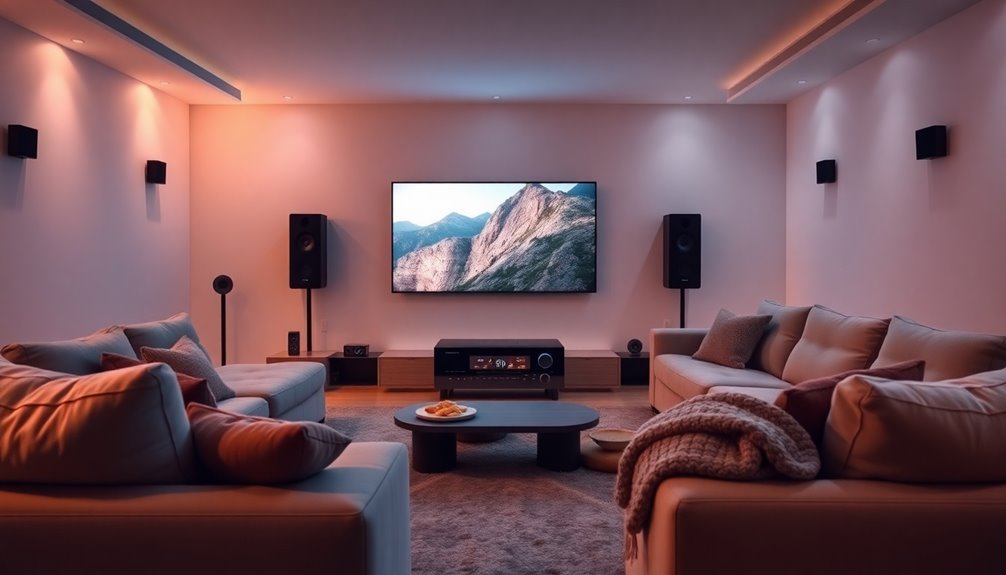

Home theater receivers are the centerpiece of any serious entertainment setup, handling audio and video processing for immersive sound and crisp visuals. The best models balance power, connectivity, and ease of use, but choosing the right one depends on your specific needs and budget. The Denon AVR-X1700H stands out as the best overall for its feature set and future-proofing, while the Yamaha R-S202BL offers a straightforward, budget-friendly option. Readers often face tradeoffs between power, complexity, and price, making it important to understand what features truly matter for your setup. Keep reading for a detailed breakdown of each option and how to find the perfect fit for your home theater.

Get furniture and decor delivered free with Prime
- Fast, free delivery on millions of items
- Prime Video, Amazon Music and more included
- Member-only deals all year
Complete the kit



Key Takeaways
- Power and room size compatibility are critical; larger rooms require more robust receivers with higher wattage.
- Connectivity options, including HDMI 2.1 and wireless streaming, significantly impact future-proofing and ease of use.
- Built-in voice control and smart features are increasingly common but can add to the cost and complexity.
- Many mid-range receivers now support Dolby Atmos and DTS:X, but not all deliver the same sound quality or ease of setup.
- Budget models often sacrifice some features like multi-room audio or advanced calibration, which matter for more refined setups.
| Denon AVR-X1700H 7.2 Channel AV Receiver with 8K HDMI, Dolby Atmos, DTS:X, and Voice Control |  | Best Overall Home Theater Receiver | Channels: 7.2 | Power per Channel: 80W | HDMI Inputs: 3 | VIEW ON AMAZON | See Our Full Breakdown |
| Yamaha R-S202BL Stereo Receiver |  | Best for Simplicity and Classic Stereo Sound | Input Sensitivity (CD): 500 mV/47k ohms | Frequency Response: 10Hz – 100kHz | Speaker Selector: Yes | VIEW ON AMAZON | See Our Full Breakdown |
| Denon AVR-S570BT 5.2 Channel AV Receiver – 8K Ultra HD, Wireless Streaming, HDMI 2.1 | 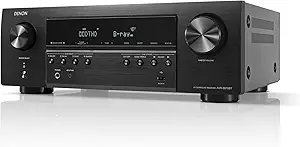 | Best for Versatile Home Theater and Gaming | Channels: 5.2 | Power: 70W x 5 | HDMI Inputs: 4 (8K HDMI 2.1) | VIEW ON AMAZON | See Our Full Breakdown |
| Onkyo TX-NR6100 7.2 Channel THX Certified Network AV Receiver – Black |  | Best for Power and Future-Proofing | Power: 210 W/Ch | Channels: 7.2 | Certification: THX Certified | VIEW ON AMAZON | See Our Full Breakdown |
| Yamaha RX300A 5.2-Channel Home Theater AV Receiver with Dolby Atmos, 4K120/8K HDMI, Bluetooth Multipoint |  | Best for Advanced Features and Room Correction | Channels: 5.2 | Power Output: 70W | HDMI Support: 4K120/8K60, HDMI eARC/ARC | VIEW ON AMAZON | See Our Full Breakdown |
| Yamaha RX-V385 5.1-Channel 4K Ultra HD AV Receiver with Bluetooth |  | Best for Entry-Level 4K Home Theater Setups | Channels: 5.1 | Video Support: 4K Ultra HD, HDR10, Dolby Vision | Connectivity: Bluetooth, HDMI 2.1 with HDCP 2.2 | VIEW ON AMAZON | See Our Full Breakdown |
| Sony STRDH590 5.2 Channel Surround Sound Home Theater Receiver with 4K HDR and Bluetooth |  | Best for Immersive 5.2 Channel Cinematic Sound | Channels: 5.2 | Power: 725W total | Video Support: 4K HDR | VIEW ON AMAZON | See Our Full Breakdown |
| Yamaha RX-V6A 7.2-Channel AV Receiver with MusicCast |  | Best for Advanced Home Theater with Multi-Room Audio | Channels: 7.2 | HDMI Ports: 8 | Video Support: 8K, Dolby Vision | VIEW ON AMAZON | See Our Full Breakdown |
| Marantz NR1510 UHD AV Receiver – Slim 5.2 Channel Home Theater Amplifier with Dolby TrueHD and DTS-HD Master Audio |  | Best for Space-Conscious High-Quality Audio and Streaming | Channels: 5.2 | Power per channel: 50W | Video Support: 4K Ultra HD, HDR, Dolby Vision, eARC | VIEW ON AMAZON | See Our Full Breakdown |
More Details on Our Top Picks
Denon AVR-X1700H 7.2 Channel AV Receiver with 8K HDMI, Dolby Atmos, DTS:X, and Voice Control
This model stands out for combining advanced 8K HDMI support with immersive audio formats like Dolby Atmos and DTS:X, making it a versatile centerpiece for a premium home theater. Compared with the Onkyo TX-NR6100, it offers a more approachable setup with excellent connectivity options, though it has fewer HDMI inputs and slightly less powerful processing. The Denon excels in multi-room streaming and voice control compatibility, but the setup can be complex for newcomers, and its power consumption is relatively high. This pick is ideal for users seeking a balanced, feature-rich receiver that supports cutting-edge video and audio standards.
Pros:- Supports 8K HDMI and high-quality audio formats like Dolby Atmos and DTS:X
- Multi-room streaming via Wi-Fi, AirPlay 2, and Bluetooth
- Full voice control compatibility with Alexa, Siri, and Google Assistant
Cons:- Setup may be challenging for users unfamiliar with AV receivers
- Relatively high power consumption compared to simpler models
- Limited HDMI inputs for extensive device connections
Best for: Homeowners who want a future-proof receiver with multi-room streaming and voice control, and are comfortable with a more involved setup
Not ideal for: Beginners or users with limited space who need a straightforward, plug-and-play solution
- Channels:7.2
- Power per Channel:80W
- HDMI Inputs:3
- HDMI Outputs:1
- Supports:8K/60Hz, 4K/120Hz, HDR10, Dolby Vision, HLG
- Voice Control:Alexa, Siri, Google Assistant
Our verdict“This receiver is best suited for tech-savvy users seeking a high-performance, future-ready home theater hub.”
Yamaha R-S202BL Stereo Receiver
This receiver makes the list for its straightforward design and reliable Bluetooth streaming, ideal for those who want decent stereo sound without complex features. Compared with the Denon AVR-X1700H, it offers fewer audio and video options but simplifies connectivity with a sleek brushed aluminum finish and basic FM/AM radio. It supports two speakers and includes a speaker selector, making it suitable for basic stereo setups. However, it provides no detailed power output or advanced smart features, which limits its appeal for dedicated home theater use. This model suits users who prioritize ease of use and classic stereo quality over modern multi-channel surround sound.
Pros:- Bluetooth connectivity for wireless music streaming
- Supports two speaker systems with selector for versatility
- Sleek brushed aluminum finish adds aesthetic appeal
Cons:- Limited to 2 speakers, not suitable for surround sound setups
- No detailed power output or advanced features
- Basic display and control interface
Best for: Music lovers seeking a simple, stylish receiver for stereo listening with Bluetooth
Not ideal for: Those looking for a full home theater experience with surround sound and multiple HDMI inputs
- Input Sensitivity (CD):500 mV/47k ohms
- Frequency Response:10Hz – 100kHz
- Speaker Selector:Yes
- Auto Power Standby:Yes
- FM/AM Presets:40
- Finish:Brushed aluminum
Our verdict“This receiver is perfect for users who want a stylish, easy-to-use stereo amplifier for casual listening.”
Denon AVR-S570BT 5.2 Channel AV Receiver – 8K Ultra HD, Wireless Streaming, HDMI 2.1
This receiver makes the list thanks to its support for 8K HDMI inputs and enhanced gaming features like VRR and low latency, making it an excellent choice for gaming and movie enthusiasts. Compared with the Onkyo TX-NR6100, it offers a slightly lower power output but emphasizes ease of setup with an on-screen guide and Bluetooth for streaming. Its 70W per channel might fall short for large, demanding spaces, but it covers core home theater needs effectively. It lacks built-in Wi-Fi for multi-room audio, which might be a limitation for some users. This receiver is well-suited for those wanting advanced video features and a straightforward setup, especially for gaming and streaming.
Pros:- Supports 8K HDMI 2.1 and latest HDR formats for high-quality video
- Built-in Bluetooth for wireless streaming from various services
- Easy setup with on-screen HD guide and remote control options
Cons:- Limited to 70W per channel, potentially insufficient for large rooms
- No built-in Wi-Fi for multi-room audio
- Requires additional components for a complete home theater system
Best for: Mid-sized home theater setups with an emphasis on 8K video and gaming features
Not ideal for: Large rooms requiring high power or users seeking multi-room Wi-Fi audio features
- Channels:5.2
- Power:70W x 5
- HDMI Inputs:4 (8K HDMI 2.1)
- HDMI Output:1
- eARC Support:Yes
- Bluetooth:Built-in
Our verdict“This receiver is best for users wanting a versatile, gaming-ready home theater with high-resolution video support.”
Onkyo TX-NR6100 7.2 Channel THX Certified Network AV Receiver – Black
This model earns its place for its exceptional 210W per channel power output and THX Certification, offering a high-performance experience for large rooms or demanding setups. Compared to the Yamaha RX300A, it provides a more powerful audio experience and supports 8K HDMI 2.1 with 40Gbps bandwidth for advanced video needs. Its support for Dolby Atmos and DTS:X ensures immersive sound, but the setup complexity may be a barrier for beginners. The lack of specific pricing info makes it difficult to gauge value, yet its raw power and future-ready features make it a top choice for high-end home theaters that prioritize sound quality and expandability.
Pros:- High power output of 210W per channel for demanding audio
- Supports Dolby Atmos and DTS:X for immersive sound
- 8K HDMI 2.1 with 40Gbps bandwidth for high-end video processing
Cons:- Setup may be complex for less experienced users
- No specific price information available
- Potential overkill for small rooms or basic setups
Best for: Large room setups or audiophiles demanding maximum power and future-proofed features
Not ideal for: Casual users or those with limited technical skills due to complex setup requirements
- Power:210 W/Ch
- Channels:7.2
- Certification:THX Certified
- Supports:Dolby Atmos, DTS:X
- HDMI:8K with HDMI 2.1, 40Gbps
- Zones:Discrete Zone 2 Audio and Video
Our verdict“This receiver is ideal for audiophiles and large-room users who need maximum power and cutting-edge video support.”
Yamaha RX300A 5.2-Channel Home Theater AV Receiver with Dolby Atmos, 4K120/8K HDMI, Bluetooth Multipoint
This receiver earns recognition for supporting Dolby Atmos and DTS Virtual:X, with an emphasis on high-quality video at 4K and 8K resolutions, plus Bluetooth Multipoint for flexible streaming. Compared with the Denon AVR-X1700H, it offers more advanced HDMI features, including 8K support, but has a lower power output of 70W per channel, which may limit performance in larger spaces. Its room correction and easy setup features make it accessible for tech-savvy users seeking optimal sound and video calibration. The limited number of HDMI inputs can be a constraint depending on the number of connected devices. This model works well for those prioritizing immersive audio and high-resolution video in medium-sized rooms.
Pros:- Supports Dolby Atmos and DTS Virtual:X for immersive sound
- High-resolution 4K/8K HDMI support with advanced HDR formats
- Includes room correction for optimal sound calibration
Cons:- Limited power output may be insufficient for large rooms
- Complex features require some technical knowledge
- Number of HDMI inputs may be limiting for extensive setups
Best for: Home theater enthusiasts wanting advanced HDMI features with easy room calibration
Not ideal for: Large rooms or users requiring high power output for demanding audio needs
- Channels:5.2
- Power Output:70W
- HDMI Support:4K120/8K60, HDMI eARC/ARC
- HDR Support:Dolby Vision, HDR10+
- Bluetooth:Multipoint
- Room Correction:Yes
Our verdict“This receiver suits users seeking immersive audio with high-quality video and straightforward setup in medium-sized spaces.”
Yamaha RX-V385 5.1-Channel 4K Ultra HD AV Receiver with Bluetooth
The Yamaha RX-V385 offers a compelling balance of modern video support and straightforward audio calibration, making it ideal for newcomers building a 4K home theater. Compared with the Yamaha RX300A, it supports more advanced HDR formats like Dolby Vision, providing a noticeable upgrade in picture quality. Its support for Bluetooth makes wireless music streaming simple, but it lacks detailed information on power output, which could impact larger rooms or demanding speakers. The auto-calibration feature, YPAO, takes the guesswork out of setup for most users, though some might find the interface a bit complex initially. This receiver is perfect for those who want reliable video and sound support without overcomplicating the setup process, but it may feel limited for audiophiles seeking high power or advanced audio formats.
Pros:- Supports 4K Ultra HD, HDR10, and Dolby Vision, ensuring high-quality video
- Bluetooth connectivity for easy wireless music streaming
- YPAO auto-calibration simplifies setup and optimizes sound
Cons:- Limited information on power output, which may affect larger or demanding speakers
- No support for additional advanced audio formats like Dolby Atmos or DTS:X
- Potentially complex for complete beginners unfamiliar with AV setup
Best for: Beginners or casual enthusiasts seeking straightforward 4K compatibility and auto-calibration
Not ideal for: Advanced users who want detailed control over audio settings or high power output for large rooms
- Channels:5.1
- Video Support:4K Ultra HD, HDR10, Dolby Vision
- Connectivity:Bluetooth, HDMI 2.1 with HDCP 2.2
- Auto-calibration:YPAO
- Audio Delay:0-500 ms
- Power Output:Not specified
Our verdict“This receiver suits entry-level buyers prioritizing quality video support and simple calibration over high-end audio features.”
Sony STRDH590 5.2 Channel Surround Sound Home Theater Receiver with 4K HDR and Bluetooth
The Sony STRDH590 stands out for its support of Dolby Atmos and DTS:X, providing an immersive surround sound experience compared to simpler 5.1 models like the Yamaha RX-V385. Its 5.2 channel configuration offers an extra layer of sound depth, though it doesn’t match the 7.2 setups of higher-end models. The 4K HDR passthrough ensures video quality remains pristine during playback, and Bluetooth allows wireless streaming, but it lacks Wi-Fi for streaming services directly, which could be limiting for some users. The setup may require some technical patience, especially to optimize virtual surround sound, but it’s a good choice for those wanting cinematic audio without the complexity of more advanced systems. This receiver is aimed at movie lovers who want immersive sound on a budget without sacrificing 4K video quality.
Pros:- Supports Dolby Atmos and DTS:X for cinematic surround sound
- 4K HDR passthrough maintains high-quality video signals
- Bluetooth connectivity for wireless music streaming
Cons:- Limited to 5.2 channels, missing the extra surround speakers of higher configurations
- Requires some technical setup for optimal virtual surround effects
- No built-in Wi-Fi, limiting direct streaming from internet services
Best for: Movie enthusiasts seeking immersive sound with straightforward 4K support and wireless streaming
Not ideal for: Users wanting 7.1 or higher channel configurations or built-in Wi-Fi for streaming apps
- Channels:5.2
- Power:725W total
- Video Support:4K HDR
- Audio Formats:Dolby Atmos, DTS:X
- Connectivity:Bluetooth, HDMI, Optical, Coaxial
- HDMI Inputs:4
Our verdict“This model is perfect for home theater fans wanting immersive surround sound within a manageable setup, but it isn’t designed for multi-channel expandability or built-in streaming apps.”
Yamaha RX-V6A 7.2-Channel AV Receiver with MusicCast
The Yamaha RX-V6A offers a significant upgrade with 7.2 channels, 8K HDMI support, and MusicCast multi-room capabilities, making it ideal for those who want a more flexible and future-proof system. Compared to the Marantz NR1510, it provides higher power (100W per channel vs. 50W), more HDMI inputs (8 vs. 6), and support for 8K video, which appeals to users planning to upgrade their displays soon. Its comprehensive connectivity—including Wi-Fi, Bluetooth, AirPlay 2, and voice control—offers seamless integration with smart home setups. However, its complexity can be daunting for beginners, and the higher power and feature set come with a larger footprint and cost. It’s best suited for users who want a robust, versatile receiver that supports multiple rooms and high-quality audio/video formats.
Pros:- Supports 8K HDMI and Dolby Atmos for cutting-edge video and audio quality
- Multiple connectivity options including Wi-Fi, Bluetooth, and AirPlay 2
- MusicCast multi-room audio for flexible listening zones
Cons:- Complex setup may overwhelm less experienced users
- Heavier and larger footprint, requiring dedicated space
- Higher price point reflects its advanced feature set
Best for: Aficionados building a multi-room, multi-format home theater with future upgrade plans
Not ideal for: Casual users or those with limited space who prefer simple setups or don’t need 8K support
- Channels:7.2
- HDMI Ports:8
- Video Support:8K, Dolby Vision
- Connectivity:Wi-Fi, Bluetooth, AirPlay 2
- Power per channel:100W
- Supported Services:Spotify, Pandora, TIDAL, more
Our verdict“This receiver is well-suited for tech-savvy users wanting a versatile, future-ready multi-room home theater system with excellent audio and video support.”
Marantz NR1510 UHD AV Receiver – Slim 5.2 Channel Home Theater Amplifier with Dolby TrueHD and DTS-HD Master Audio
The Marantz NR1510 impresses with its slim profile, fitting into tight spaces while still delivering solid 5.2 channel sound. It supports 4K Ultra HD, HDR, Dolby Vision, and eARC, ensuring compatibility with modern high-quality content. Its built-in HEOS multi-room audio and support for voice control via Alexa, Google Assistant, and Siri make it a strong choice for smart home integration. Compared with the Yamaha RX-V385, the Marantz offers a more refined sound and multi-room options, though its 50W per channel output may fall short for larger rooms or demanding speakers. Its compact design is excellent for smaller setups, but the lack of Dolby Atmos or DTS:X may disappoint those seeking immersive overhead sound. It’s ideal for space-constrained environments wanting high-quality audio and streaming capabilities.
Pros:- Slim design easily fits into tight spaces
- Supports high-quality 4K HDR with eARC
- Built-in HEOS multi-room audio and voice control
Cons:- Limited to 50W per channel, not ideal for large spaces
- No support for Dolby Atmos or DTS:X for immersive overhead sound
- Complex setup for full smart home integration
Best for: Homeowners with limited space seeking high-quality sound and multi-room streaming
Not ideal for: Large rooms or users seeking immersive overhead audio like Dolby Atmos
- Channels:5.2
- Power per channel:50W
- Video Support:4K Ultra HD, HDR, Dolby Vision, eARC
- Connectivity:Wi-Fi, Bluetooth, HEOS
- HDMI Inputs:6
- Voice Control:Alexa, Google Assistant, Siri
Our verdict“This receiver is perfect for space-conscious users wanting high-quality streaming and multi-room audio without the complexity of larger systems.”
How We Picked
This lineup was curated based on a combination of performance, usability, build quality, and value. Priority was given to models that offer a good balance of power, audio processing features, and connectivity options, especially HDMI 2.1 and wireless streaming. We prioritized products with solid reputations for reliability and ease of setup, considering both entry-level and premium choices. The ranking reflects how well these receivers meet typical user needs—whether for large rooms, smart integrations, or high-fidelity audio—while also weighing their price points and future-proofing features.Factors to Consider When Choosing Home Theater Receivers
Choosing the right home theater receiver involves more than just picking the most powerful model. Think about your room size, existing equipment, and what features matter most—like 8K support, smart integrations, or multi-channel audio. Understanding these factors helps you avoid common pitfalls, such as overpaying for unnecessary features or buying a model that won’t support your setup’s growth. The following sections explore key considerations to guide your decision and help you maximize value and performance.Room Size and Power Output
Matching your receiver’s wattage to your room size influences overall sound quality. Larger rooms demand higher wattage and more channels to fill the space evenly without distortion. Underpowered receivers can leave you with weak sound or the need to increase volume excessively, which may cause distortion or fatigue. Conversely, overly powerful units might be unnecessary if your room is small, resulting in wasted investment. Consider your space and choose a receiver rated appropriately for your setup to get immersive sound without overspending.
Connectivity and Compatibility
Modern receivers should support HDMI 2.1, especially for 8K video and high frame rates, ensuring your setup remains compatible with the latest sources. Wireless streaming options like Bluetooth, Wi-Fi, and multi-room audio are increasingly important for flexibility. Be mindful of the number of HDMI inputs and outputs you need—more inputs accommodate multiple devices like game consoles, streaming boxes, and Blu-ray players. Compatibility with your existing equipment is a key factor to avoid needing costly upgrades or adapters later.
Audio Formats and Processing
Support for Dolby Atmos and DTS:X is now standard in mid-range models, but quality varies. These formats add height channels and immersive effects, but not all receivers deliver the same clarity or ease of setup. Consider whether you want a simple stereo experience or a full multi-dimensional sound setup, and choose accordingly. Also, look into calibration tools that help optimize speaker placement and audio quality—an often overlooked step that can significantly improve your listening experience.
Ease of Use and Smart Features
User interface, remote control, and app integration matter more than many realize. Smart features like voice control, Alexa or Google Assistant compatibility, and automatic room calibration simplify operation and setup. However, these features can add complexity or introduce security concerns, so weigh their importance against your comfort with technology. A straightforward interface and reliable app support can save time and frustration in daily use.
Budget vs. Future-Proofing
While budget models can satisfy basic needs, investing in a receiver with future-proof features like HDMI 2.1, eARC, and Wi-Fi 6 ensures compatibility with upcoming devices. Skimping on features might save money now but could lead to costly upgrades later. Conversely, overspending on features you won’t use can be wasteful. Balance your current needs with potential growth, focusing on versatile models that can adapt as your technology ecosystem evolves.
Frequently Asked Questions
Do I need a 7.2 channel receiver if I only have a 5.1 setup?
Not necessarily. A 5.1 channel receiver can adequately power your setup, especially if you’re on a budget or have limited space. However, opting for a 7.2 channel unit provides more flexibility for future expansion—such as adding ceiling speakers or upgrading to Dolby Atmos. Keep in mind that larger receivers often cost more and may be more complex to set up, so consider your current and future needs when choosing.
Is HDMI 2.1 really necessary for home theater receivers now?
HDMI 2.1 offers benefits like higher bandwidth for 8K video, variable refresh rates, and enhanced gaming features. If you plan to use the latest gaming consoles or upgrade to 8K sources soon, it’s worth prioritizing HDMI 2.1 support. However, if your current setup is primarily 4K or HD, HDMI 2.0 or earlier models can still deliver excellent performance. Think about your future plans and the compatibility of your existing devices when making this choice.
How important is built-in voice control in a home theater receiver?
Voice control can greatly simplify daily operations, allowing you to adjust volume, switch inputs, or turn on the system hands-free. However, not all voice assistants are equally reliable or compatible, and some users may prefer manual controls for simplicity. Consider how often you’ll use voice commands and whether the added complexity justifies the convenience. For tech-savvy users, it can be a valuable feature, but others might find it unnecessary.
Should I prioritize a receiver with multi-room audio capabilities?
If you want to distribute audio throughout multiple zones in your home, then yes, a receiver with multi-room support is essential. This feature allows different areas to listen to different sources simultaneously. However, if your setup is limited to a single room, focusing on sound quality and connectivity for that space makes more sense. Balance your needs with your budget, as multi-room functionality often adds to the cost.
When is it worth paying extra for a premium home theater receiver?
Investing in a premium receiver makes sense if you have a large or acoustically challenging room, a high-end speaker system, or plan to incorporate advanced features like 8K support, multiple zones, or extensive smart integrations. Higher-end models often offer better build quality, more precise audio processing, and longer software support. For casual or smaller setups, a mid-range or budget model can deliver excellent value without the added expense.
Conclusion
For most buyers, the Denon AVR-X1700H represents the best overall choice, thanks to its balance of features, power, and future-proofing. Yamaha R-S202BL offers a simple, budget-friendly alternative perfect for entry-level setups. Those seeking a premium experience with extensive smart features and multi-room support should consider the Marantz NR1510. Beginners or smaller rooms benefit from models like the Yamaha RX-V385 for ease of setup, while dedicated audiophiles or large spaces might prioritize higher-wattage options like the Onkyo TX-NR6100. Matching your specific needs with these categories will help ensure your home theater is both enjoyable and future-ready.
As an affiliate, we earn on qualifying purchases.Fall Picks
fall essentials