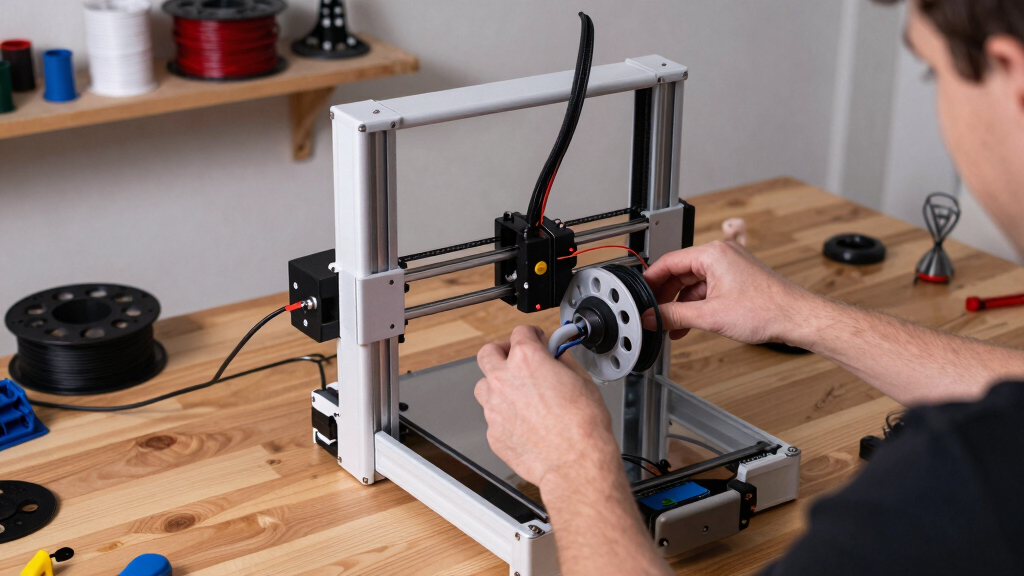

Finding the best 3D printer for home projects involves balancing ease of use, print quality, speed, and affordability. The Entina Tina2 Plus stands out as the best overall choice thanks to its fast printing and user-friendly WiFi control, making it ideal for both kids and beginners. For those prioritizing speed, the ELEGOO Centauri Carbon offers high-performance printing at up to 500mm/s, though it comes with a higher price tag. If simplicity and plug-and-play setup matter most, models like the Flashforge Adventurer 5M deliver auto-leveling and compact design with minimal fuss. Keep reading for a detailed comparison to help you select the perfect fit for your home projects.
Key Takeaways
- Speed varies significantly, with some models offering over 400mm/s, which benefits rapid prototyping but may compromise detail.
- Auto-leveling and WiFi control greatly simplify setup and ongoing use, especially for beginners or casual users.
- Build volume ranges from small desktop sizes to larger areas, so consider your typical project size before choosing.
- Price points vary from budget-friendly options to premium models, with higher costs often reflecting faster speeds and more features.
- Most top picks include pre-assembled units, reducing the setup time and complexity for home use.



More Details on Our Top Picks
Entina Tina2 Plus 3D Printer, 250mm/s Fast Printing, Fully Assembled, WiFi App Control for Kids & Beginners
The Entina Tina2 Plus stands out for its combination of high-speed printing up to 250 mm/s and user-friendly features like auto-leveling and WiFi app control. Compared to the Flashforge Adventurer 5M, it offers faster print speeds, which significantly cuts down project time, though it sacrifices some build volume flexibility. Its fully assembled design and straightforward interface make it ideal for newcomers, especially kids or parents wanting quick results. The main tradeoff is its limited build volume, restricting larger projects, and occasional WiFi connectivity hiccups can occur. Still, its simplicity and speed make it an excellent choice for beginners who prioritize quick, small-scale creations.
Pros:- Supports high-speed printing up to 250 mm/s, reducing project turnaround
- Fully assembled and ready to use out of the box, ideal for beginners
- Auto-leveling and dual Z-axis for stable, consistent results
- WiFi and app control for remote operation
Cons:- Limited build volume for larger projects
- Occasional connectivity issues with WiFi
Best for: Beginners, families, and educators seeking a ready-to-use, fast, and simple 3D printer for small projects.
Not ideal for: Advanced users or those needing larger build volumes for complex, bigger models.
- Print Speed:250 mm/s
- Build Volume:3.9 x 4.7 x 3.9 inches
- Dimensions:11.4 x 8.6 x 8.6 inches
- Weight:9.93 pounds
- Connectivity:WiFi, USB, TF card
- Hotend Heating Time:40 seconds
Bottom line: This model is perfect for beginners and kids who want quick, reliable prints without fuss.
Flashforge Adventurer 5M 3D Printer for Beginners, 600mm/s Fast Printing, Direct Drive, Auto-Leveling, 8.7″x8.7″ PEI Build Plate
The Flashforge Adventurer 5M offers impressive 600 mm/s printing speeds and a durable industrial-grade frame, making it suitable for users who need quick turnaround times. Unlike the Entina Tina2 Plus, which emphasizes simplicity, the 5M’s robust build and auto bed leveling ensure reliable first layers, even at high speeds. While setup can be complex for beginners, its quiet operation and easy maintenance make it a favorite for more experienced hobbyists or small studios. Its larger build volume supports bigger projects, but the optional enclosure is sold separately, adding to the overall cost. Overall, it’s a solid choice for those wanting high-speed production with industrial stability at home.
Pros:- Extremely high-speed printing reduces production time
- Auto bed leveling ensures consistent first-layer success
- Industrial-grade frame for stability and durability
- Removable PEI build plate for easy print removal
Cons:- Complex setup may challenge beginners
- Build volume limits larger projects
- Enclosure sold separately increases cost
Best for: Intermediate hobbyists or small workshops needing fast, stable, and reliable print performance.
Not ideal for: Complete beginners or those with limited space, since setup and enclosure purchase may be necessary.
- Print Speed:600 mm/s
- Build Volume:8.7″ x 8.7″ x 8.7″
- Max Nozzle Temperature:280°C
- Auto-Leveling:Yes
- Frame:Industrial-Grade CoreXY
- Connectivity:Remote monitoring via app
Bottom line: This printer is ideal for users wanting high-speed, industrial-grade reliability in a home setting.
Entina TINA2S 3D Printer with WiFi Cloud Printing, Auto Leveling, and Compact Design
The Entina TINA2S stands out for its compact size and quiet operation, making it suitable for small spaces like classrooms or home offices. It offers WiFi cloud printing, auto leveling, and a heated build plate, similar to the Tina2 Plus but in a smaller footprint. Compared to the AOSEED X-MAKER, which emphasizes AI features and speed, the TINA2S focuses on ease of use and quiet performance, though its smaller build volume limits larger projects. Its simple setup and low noise level make it a good choice for environments where space and noise are concerns, but it might require some calibration for perfect results and isn’t suited for complex or large-scale prints.
Pros:- Compact and lightweight, fits easily into small spaces
- Quiet operation ideal for shared environments
- WiFi cloud printing adds convenience
- Auto leveling and heated bed improve print quality
Cons:- Limited build volume for bigger models
- May need calibration for best results
- Basic features may not satisfy advanced users
Best for: Home users or educators needing a quiet, space-efficient printer for small projects and learning.
Not ideal for: Users wanting larger build sizes or more advanced customization, as its scope is limited.
- Print Size:3.9 x 4.7 x 3.9 inches
- Print Speed:Up to 200 mm/s
- Precision:0.04 mm
- Connectivity:WiFi, USB, TF card
- Auto Leveling:Yes
- Build Plate:Removable spring steel
Bottom line: This model makes the most sense for users prioritizing space-saving design and silent operation for small, simple projects.
AOSEED 3D Printer for Kids & Beginners, AI-Powered Fully Assembled 3D Printer with Up to 400mm/s Speed, Auto Leveling, 15 Mini Apps, Includes 8 PLA Filaments for Home and School Use, X-Maker AI+
The AOSEED X-MAKER AI+ offers a compelling blend of high-speed printing up to 400 mm/s, AI-powered creative tools, and safety features like an enclosed design. Compared with the Tina models, it emphasizes creative flexibility with mini apps and an intuitive interface, making it especially appealing for children and beginner makers. Its auto leveling and included filaments simplify setup, but the larger build volume isn’t specified, which may limit some projects. Its higher price point reflects its focus on creativity and speed, making it less suitable for users who only need basic printing. This printer is best for families or schools demanding engaging, fast, and safe 3D printing experiences.
Pros:- Supports high-speed printing with up to 400 mm/s
- AI-powered mini apps inspire creativity and learning
- Fully assembled and user-friendly interface
- Safety features like enclosure and fume isolation
Cons:- Build volume details are not clearly defined
- Higher price for a beginner printer
- Limited compatibility info for other filament types
Best for: Parents, educators, and young makers seeking a creative, fast, and safe 3D printer with AI features.
Not ideal for: Advanced hobbyists or users needing large, detailed models, as build size details are limited.
- Max Speed:400 mm/s
- Layer Resolution:0.1/0.05 mm
- Filament Type:PLA
- Included Filaments:8 rolls
- Display:3.5-inch color touchscreen
- Safety Features:Enclosed structure
Bottom line: This printer excels for creative, fast projects in educational or family settings, especially where safety and engagement are priorities.
Mini 3D Printer for Kids & Beginners – Fully Assembled, Auto Leveling, High-Speed, High Precision
The Mini 3D Printer for Kids & Beginners offers a combination of high speed at 250 mm/s and remarkable 0.01 mm precision, making it ideal for small projects requiring detail. Its fully assembled design, auto-leveling, and auto nozzle cleaning provide a hassle-free experience comparable to the Tina2 models but with a focus on tiny, detailed prints. Unlike the larger, speed-focused AOSEED, this printer emphasizes precision and ease of use for small-scale work. Its limited build size restricts larger projects, but the included starter kit and automatic features make it accessible for newcomers and children. It’s best suited for those who want quick, detailed models without complexity.
Pros:- Fast printing with speeds up to 250 mm/s
- High precision of 0.01 mm for detailed models
- Auto-leveling and auto nozzle cleaning simplify operation
- Complete starter kit included
Cons:- Small build volume limits project size
- Requires extra filament for larger or ongoing projects
- Auto-leveling setup may be challenging initially
Best for: Beginners and kids focusing on small, high-precision models and educational projects.
Not ideal for: Users needing to print larger objects or working on big-scale prototypes, as its size is quite limited.
- Print Speed:250 mm/s
- Print Precision:0.01 mm
- Bed Type:PEI heated bed
- Extruder:Direct drive
- Assembly:Fully assembled
- Features:Auto-leveling, auto nozzle cleaning
Bottom line: This printer delivers quick, detailed results perfect for beginners and kids focusing on small, high-quality models.
FlashForge Adventurer 5M 3D Printer
The FlashForge Adventurer 5M stands out for its combination of high-speed capabilities and ease of use, making it ideal for home projects that demand quick turnaround. Its automatic leveling and mobile app control simplify setup and monitoring, unlike some competitors like the ELEGOO Centauri, which, while faster and more precise, requires a bit more technical knowledge to operate. The 5M’s ability to support multiple filament types adds versatility, but its maximum speed of 600mm/s can sometimes compromise print quality if not carefully managed. The printer’s weight and size may also restrict placement options in smaller spaces. Overall, this model caters well to hobbyists and educators seeking efficiency without sacrificing functionality.
Pros:- High-speed printing up to 600mm/s improves productivity
- Automatic bed leveling simplifies setup
- Supports multiple filament types for diverse projects
- Remote control via mobile app enhances convenience
Cons:- Maximum speed may reduce print detail if not managed carefully
- Relatively heavy and large, requiring ample space
Best for: Hobbyists and educators who want fast, reliable printing with minimal setup effort
Not ideal for: Users with very limited space or those prioritizing ultra-high precision over speed
- Max Travel Speed:600mm/s
- Acceleration:20,000mm/s²
- Build Volume:14.2 x 14.8 x 16.2 inches
- Item Weight:22 pounds
- Extruder Temperature:280°C
- Nozzle Options:0.25/0.4/0.6/0.8mm
- Filament Compatibility:PLA, PETG, ABS, ASA, and more
- Automatic Leveling:Yes
- Connectivity:Remote app control via Flash Maker
Bottom line: This printer suits those who need fast, versatile home printing with straightforward operation.
ELEGOO Centauri Carbon 3D Printer, CoreXY 500mm/s High Speed with Auto Calibration, 320°C Nozzle, Built-in Camera, 256x256x256mm Build Volume
The ELEGOO Centauri Carbon is designed for users who want rapid, high-quality prints with professional features. Its high speed of 500 mm/s and auto bed calibration put it ahead of simpler, slower models like the AOSEED X-MAKER JOY, especially for projects where time and precision matter. The built-in camera allows real-time monitoring, which is a plus for those who prefer remote supervision. Its die-cast aluminum frame and support for high-temp filaments like carbon fiber reinforce its stability and durability, making it suitable for advanced users or serious hobbyists. The main tradeoff lies in its weight and higher price, which could be limiting for casual users or those with space constraints.
Pros:- Supports high-performance materials like carbon fiber
- Fast printing speed up to 500 mm/s for efficiency
- Built-in camera for monitoring
- Pre-calibrated and fully assembled for immediate use
Cons:- Relatively heavy and bulky, requiring ample space
- Higher price point compared to entry-level printers
Best for: Experienced hobbyists and professionals seeking fast, detailed printing with advanced material support
Not ideal for: Beginners or those with limited space and budget who need a more straightforward, entry-level machine
- Build Volume:256x256x256 mm
- Max Nozzle Temperature:320°C
- Print Speed:up to 500 mm/s
- Frame Material:Die-cast aluminum
- Item Dimensions:15.67 x 15.9 x 19.29 inches
- Item Weight:38.5 pounds
- Connectivity:Built-in camera, touchscreen controls
Bottom line: Ideal for serious users prioritizing speed, precision, and material versatility over simplicity and affordability.
FlashForge Adventurer 5M 3D Printer with Auto Leveling and High-Speed Printing
The FlashForge Adventurer 5M with auto leveling and high-speed printing offers a compelling package for creative projects and rapid prototyping. Its speed capability of 600mm/s surpasses many competitors, though such velocity can sometimes compromise fine detail unless carefully managed. The auto bed leveling feature reduces setup time and potential errors, a feature that makes it especially appealing for busy makers or schools. Its compact size and support for multiple nozzle sizes make it flexible for diverse project needs. However, its slightly limited build volume and weight may pose challenges for users with space restrictions or those requiring larger models. This model is best suited for users who prioritize speed and ease of use over maximum build size.
Pros:- High-speed printing up to 600mm/s for fast results
- Automatic bed leveling for quick setup
- Versatile nozzle size options for different detail levels
- Remote monitoring via mobile app
Cons:- Limited build volume at 220x220x220mm
- Heavy at nearly 24 pounds, requiring stable placement
Best for: Artists, educators, and hobbyists who need quick, reliable prototypes and creative projects
Not ideal for: Users requiring large-scale printing or working in tight spaces
- Print Size:220x220x220mm
- Max Speed:600mm/s
- Extruder Temperature:280°C
- Nozzle Diameter:0.25-0.8mm
- Weight:23.8 pounds
- Dimensions:15.83 x 14.29 x 17.64 inches
Bottom line: Great for those who need rapid, versatile printing in a compact home setup, accepting some size limitations.
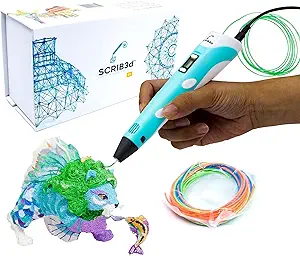
SCRIB3D P1 3D Printing Pen with Display, Includes 3 Colors of PLA Filament, Stencil Book, and Power Adapter
The SCRIB3D P1 3D printing pen provides an accessible way to create 3D art, making it ideal for artists and hobbyists wanting hands-on control. Its adjustable temperature and speed allow for nuanced work, unlike bulkier printers like the AOSEED X-MAKER JOY. The included filament, stencils, and display make it a comprehensive kit for creative projects. While it’s easy for beginners to pick up, mastering precise control can take some practice, and filament consumption can become high with larger projects. Its portability is limited by the need for a power outlet, but it excels for quick, detailed art and small repairs rather than large-scale printing.
Pros:- Adjustable temperature and speed for precision
- Includes multiple filament colors and accessories
- Safe and anti-clogging features
- Easy to use for creative projects
Cons:- Requires a power source, limiting portability
- Learning curve for achieving detailed control
Best for: Artists, educators, and DIY enthusiasts seeking portable, detailed creative tools
Not ideal for: Those wanting to produce large or complex models, or needing high-volume output
- Brand:SCRIB3D
- Model:SCRIB_PEN_P1
- Type:3D Printing Pen
- Color options:Includes 3 starter colors of PLA filament
- Filament Length:30 feet
- Temperature Range:160-210°C (PLA), 210-235°C (ABS)
- Power:Included power adapter
- Auto-sleep:2-minute auto-sleep
Bottom line: Perfect for artistic projects and small-scale crafts, especially when portability and detail matter.
AOSEED 3D Printer for Kids, AI-Powered Fully Assembled with Auto Leveling and 8 PLA Filaments
The AOSEED X-MAKER JOY AI+ is tailored for young creators with its AI integration, voice control, and large model library. Its fast printing speeds of 220–250 mm/s, peaking at 400 mm/s, allow kids to see results quickly, although the build volume details are unspecified, which could limit larger projects. Its fully enclosed design promotes safety, and the included kit with 8 filaments simplifies initial use. Compared to simpler educational models, the AI features and real-time monitoring make this a more engaging choice. However, the high cost of the starter kit and limited technical info might deter some, especially those on a tight budget or with space constraints.
Pros:- User-friendly with one-tap printing and voice control
- Fast print speeds for quick projects
- Large library of models and customization options
- Real-time monitoring and sharing features
Cons:- Specific build volume not provided, which may limit some projects
- High cost for the full kit and features
Best for: Parents and educators seeking a safe, engaging, and fast 3D printing experience for children
Not ideal for: Older children or advanced hobbyists who need larger build volumes or more technical control
- Printing Speed:220–250 mm/s, peaks up to 400 mm/s
- Layer Resolution:0.05 mm
- Filament:8 rolls of PLA
- Connectivity:Wi-Fi, compatible with iOS, Android, Windows
- Auto Leveling:Yes
- Enclosure:Fully enclosed design
- Model Library:Over 1,500 models
- Included Tools:Tools, magnetic build plate, DIY stickers
Bottom line: Excellent for introducing children to 3D printing with speed, safety, and creative flexibility.
How We Picked
These products were evaluated based on a combination of performance, ease of use, build quality, maintenance needs, and value for money. Priority was given to models that balance beginner friendliness with reliable print quality, as well as those offering features like auto-leveling and WiFi control. We also considered speed and build volume to match the diverse needs of home users, from hobbyists to families. Each product was ranked to reflect its overall versatility, affordability, and suitability for different types of home projects, ensuring practical options for a wide audience.Factors to Consider When Choosing Best 3D Printer For Home Projects
Choosing the best 3D printer for home projects requires understanding several key factors that influence usability, print quality, and value. It’s easy to get overwhelmed by features, so focusing on what truly impacts your specific needs makes the process smoother. Considering your experience level, typical project size, and budget helps narrow down the options. Additionally, understanding common tradeoffs, such as speed versus detail, can prevent mismatched expectations and improve satisfaction with your purchase.Ease of Use and Setup
For home users, especially beginners or casual hobbyists, a printer that is simple to set up and operate saves time and frustration. Features like auto-leveling, pre-assembled units, and WiFi connectivity make daily use more straightforward. While some advanced models offer higher speeds and larger build volumes, they often come with complicated interfaces or setup procedures that can be daunting for new users. Prioritize models with clear instructions and minimal calibration requirements to ensure a smooth experience from the start.
Print Quality and Resolution
Print quality is a key consideration, especially if you plan to create detailed prototypes or artistic projects. Resolution, typically measured in microns, indicates the level of detail a printer can achieve. Lower micron ratings (like 50-100 microns) generally produce finer details but may require more careful calibration and longer print times. For most home projects, a balance between speed and quality is wise; models with adjustable layer heights can help tailor results to your needs.
Speed and Volume
Speed is often a tradeoff: faster printers can complete projects quickly but may sacrifice some detail or consistency. High-speed models like the ELEGOO Centauri Carbon excel for rapid prototyping or larger, less detailed items. Build volume also matters—consider the maximum size of your typical projects. Smaller printers are more space-efficient and easier to manage but limit larger creations. Matching your project size with the right volume ensures you won’t need to upgrade prematurely.
Material Compatibility and Maintenance
Most home 3D printers work with common filaments like PLA, but some support more advanced materials such as ABS or PETG, expanding your creative options. Think about filament cost and availability—more versatile printers might incur higher ongoing expenses. Maintenance requirements, such as nozzles cleaning or bed leveling, vary. Choosing a model with features like auto-calibration reduces upkeep and ensures consistent results over time.
Price and Overall Value
Budget can be a deciding factor, but spending more often yields better reliability, speed, and features. Lower-cost options might be suitable for simple projects or occasional use, but they often lack advanced features or durability. Conversely, investing in a higher-end model can provide faster printing, larger build volume, and more precise results, making it worthwhile if you plan consistent use or complex designs. Balance your budget against the features most important to your projects to find the best value.
Frequently Asked Questions
Can a beginner effectively use any 3D printer for home projects?
Yes, many modern 3D printers are designed with beginners in mind. Features like auto-leveling, pre-assembled units, and user-friendly interfaces make it easier for newcomers to start printing without extensive technical knowledge. While initial setup may require some learning, these models typically include guides or community support that help new users get started quickly. Investing in a beginner-friendly printer ensures you can focus on your projects rather than troubleshooting complex issues.
Is it worth paying more for a faster 3D printer?
Paying more for a faster 3D printer can be beneficial if you frequently work on larger or multiple projects, as it reduces wait times significantly. However, higher speeds often come with tradeoffs, such as reduced detail or increased maintenance. For casual or hobbyist use, a moderately priced printer offering a good balance of speed and quality may be more practical. Consider your typical project size and frequency before investing in the fastest model available.
What build volume should I look for in a home 3D printer?
The ideal build volume depends on your typical project size. For small to medium projects, a build area of around 150x150x150mm is usually sufficient. If you plan to create larger models or multiple parts at once, look for printers with at least 200x200x200mm or bigger. Keep in mind that larger build volumes may mean a bigger footprint and higher cost, so choose a size that aligns with your project needs and available space.
Are auto-leveling features essential for home 3D printers?
Auto-leveling greatly simplifies setup and helps ensure consistent print quality, making it highly valuable for home use. Manual leveling can be time-consuming and prone to errors, especially for beginners. While some high-end models omit auto-leveling, most affordable and mid-range printers include this feature, which reduces the learning curve and maintenance effort. If you want hassle-free printing and reliable results, prioritizing auto-leveling is a smart choice.
How important is filament compatibility for home projects?
Filament compatibility is vital because it determines the range of materials you can use for your projects. Most entry-level printers support PLA, which is easy to print and widely available. If you want to experiment with more advanced materials like ABS or PETG, ensure your printer can handle higher temperatures and has a compatible extruder. Considering filament costs and availability also ensures your projects remain affordable and hassle-free over time.
Conclusion
For most home users, the Entina Tina2 Plus offers the best overall experience, combining speed, ease of use, and affordability. If you prioritize high-speed printing for prototyping, the ELEGOO Centauri Carbon justifies its higher price with impressive performance. Beginners or casual hobbyists should consider the Flashforge Adventurer 5M for its simple setup and auto-leveling. Families or kids might find the AOSEED 3D Printer a safe, fun option, especially with included filaments and easy controls. Your choice should align with your specific project needs and experience level to get the most satisfying results.