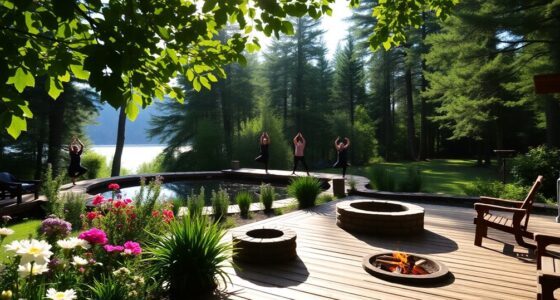
A 24-hour solo retreat at home helps you reset your mind and body by creating a calming environment, setting clear intentions, and engaging in mindful activities like meditation, gentle stretching, and creative expression. Focus on decluttering your space, disconnecting from devices, nourishing yourself with healthy snacks, and reflecting through journaling. Consistently incorporating these practices into your day can boost your well-being and clarity—discover more ways to customize your retreat to fit your self-care goals.
Key Takeaways
- Prepare a calm, clutter-free environment with soothing lighting, scents, and minimal distractions for a peaceful retreat.
- Set clear intentions and select mindful activities like meditation, journaling, or artistic expression to focus your reset.
- Incorporate gentle movement, breathing exercises, and self-care routines to promote relaxation and emotional balance.
- Use reflection prompts and creative practices to gain insight and clarify personal goals during your retreat.
- Integrate self-care habits into daily life post-retreat to sustain mental clarity, emotional well-being, and ongoing self-awareness.
Why a 24-Hour Solo Retreat at Home Can Recharge Your Mind and Body

Taking a 24-hour solo retreat at home gives you the chance to step away from daily demands and reconnect with yourself. This time allows you to clear your mind and gain mental clarity, helping you see situations more objectively. Without constant distractions, you can focus on your thoughts and feelings, fostering emotional balance. This intentional pause supports practical mindfulness by encouraging present-moment awareness. Engaging in simple safety tips during your retreat can help you create a secure environment and reduce unnecessary worries. Incorporating techniques like controlled breathing or gentle meditation can further enhance your home environment for a more peaceful experience. Additionally, including food as a self-care tool can nourish your body and promote relaxation during your time alone. Being mindful of sleep hygiene practices can improve your overall rest and recovery during this reset. This reset enables you to release stress and recharge your energy. By dedicating a full day to self-care, you create space to prioritize your well-being. The quiet moments help you gain perspective, feel more centered, and restore your mental and emotional health. Ultimately, this retreat offers a powerful opportunity to refresh your mind and body, making you better equipped to handle everyday challenges.
Prepare Your Space: Create a Calm Environment for Your Retreat

Start by clearing clutter to make your space feel peaceful and inviting. Then, set a soothing ambiance with soft lighting, calming scents, or gentle music. This simple setup helps you fully relax and focus during your retreat. Incorporating smart appliances can also enhance your environment by automating lighting and temperature controls to create the perfect atmosphere. Additionally, choosing calming scents like lavender or chamomile can promote relaxation and mental clarity. To further elevate your retreat, consider integrating natural landscaping elements that promote tranquility and a connection to nature. Incorporating ventilation considerations ensures fresh air flows properly, enhancing your overall comfort and well-being during your 24-hour reset, especially when selecting portable power options to keep your devices running smoothly.
Declutter Your Space
Creating a calm environment for your retreat begins with decluttering your space. Start by organizing clutter into categories: essentials, items to donate, and discard. Clear surfaces and put away unnecessary objects to create a sense of openness. Embrace minimalism strategies by simplifying your environment—keep only what brings you peace or serves a purpose. Removing excess items reduces visual noise and mental clutter, helping you focus inward. Take a moment to evaluate each item and ask yourself if it contributes to your retreat’s calming atmosphere. As you declutter, you’ll notice your space becoming more inviting and serene. Incorporating safety glasses can protect your eyes if you’re handling cleaning or DIY tasks during your decluttering process. Additionally, adopting minimalist design principles can further enhance the tranquility of your space. Using tool organization techniques, you can efficiently sort and store your supplies, making the space even more accessible and calming. Developing space optimization strategies can maximize your environment’s functionality and serenity. A tidy environment sets the foundation for a peaceful, distraction-free experience, allowing you to fully immerse yourself in your solo reset.
Set Soothing Ambiance
To set a soothing ambiance, focus on lighting and sounds that promote relaxation. Use ambient lighting, such as soft lamps or candles, to create a gentle glow that calms your mind. Dim the lights to soften the space and eliminate harsh brightness. Incorporate calming scents like lavender, chamomile, or eucalyptus through diffusers or candles to enhance tranquility. These scents trigger relaxation and help you unwind more easily. Play gentle background sounds, like nature noises or soft music, to drown out distractions and deepen your sense of calm. Keep your environment simple and clutter-free, allowing these elements to work together for a peaceful retreat. When your space feels inviting and serene, you’ll find it easier to relax and fully immerse yourself in your solo reset. Vintage design elements can also add a timeless touch that promotes a cozy, nostalgic atmosphere conducive to relaxation. Additionally, using the right air purifier can improve indoor air quality and support your overall sense of well-being, especially if it features HEPA filters to remove airborne particles. Incorporating air quality awareness can further enhance your calming environment, making your retreat even more restorative.
Plan Your Day: Set Intentions and Choose Activities for Reflection

Before diving into your retreat, take a moment to set clear intentions for the day. Intentional planning helps you focus on what truly matters, guiding your activity selection and reflection. Decide what you want to gain from this time—calm, clarity, or self-discovery—and let that shape your day. To deepen your experience, consider these steps:
Set clear intentions to focus, deepen your retreat, and guide meaningful reflection throughout your day.
- Clarify your core purpose for the retreat
- Choose meaningful activities aligned with your intentions
- Schedule moments for mindful reflection
- Be flexible to adapt as needed
- Incorporate artistic elements into your environment to enhance your mood and motivation. Engaging in creative activities can also foster inner wisdom and support your personal growth. Additionally, selecting meaningful symbols can reinforce your intentions and inspire your journey. Remember that understanding the wave and wind can help you better appreciate natural rhythms and incorporate calming elements into your retreat.
Disconnect From Devices: Minimize Distractions During Your Retreat

To fully enjoy your retreat, it is crucial to limit your social media use and turn off notifications. These distractions can interrupt your focus and break your connection with yourself. By minimizing device interruptions, you create a peaceful space for reflection and renewal.
Limit Social Media Use
Limiting social media use is essential for creating a distraction-free environment during your retreat. A social media detox helps you reconnect with yourself by reducing constant notifications and mindless scrolling. To maximize your digital detox, consider these strategies:
- Turn off app notifications to prevent interruptions
- Set specific times to check social media, if necessary
- Keep your devices out of reach or in another room
- Avoid opening social media apps altogether during your retreat
- Remember that a digital detox can enhance your mental clarity and emotional well-being, allowing for deeper reflection and relaxation during your retreat. Additionally, understanding how cookies track your online activity can motivate you to disconnect and enjoy a more mindful experience. Incorporating mindful technology use can further support your retreat goals by fostering intentional engagement with your digital environment.
Turn Off Notifications
Turning off notifications is one of the most effective ways to minimize distractions during your retreat. Managing notifications allows you to create a focused environment, making it easier to engage in your digital detox. By disabling alerts from apps, emails, and messaging platforms, you prevent constant interruptions that pull you away from your intentions. This simple step helps you stay present and fully immersed in your solo reset. Notification management reduces the urge to check your devices repeatedly, fostering mental clarity and relaxation. Remember, the goal is to disconnect intentionally, so turning off notifications is key to maintaining this boundary. With fewer distractions, you’ll find it easier to enjoy the quiet and reflection that your retreat aims to provide. Additionally, understanding how to manage digital distractions effectively can enhance your overall focus and well-being during your retreat.
Practice Mindfulness and Meditation to Deepen Relaxation

Practicing mindfulness and meditation during your solo retreat can considerably enhance your sense of calm and presence. By focusing on your breath and observing your body, you create space for relaxation. Start with simple breathing exercises to anchor yourself in the moment. A body scan helps you notice tension and release it intentionally. To deepen your practice, try these techniques:
- Focus on each inhale and exhale to cultivate awareness
- Scan your body from head to toe, noting sensations without judgment
- Use guided meditations to stay engaged and focused
- Incorporate gentle stretches between sessions for physical and mental ease
These practices foster a calm mind and a relaxed body, making your retreat a truly restorative experience.
Engage in Creative or Reflective Activities to Gain Clarity

After settling into a mindful state, engaging in creative or reflective activities can help you gain deeper insights and clarity. Try art therapy by sketching or painting your feelings, which allows subconscious thoughts to surface naturally. Alternatively, use creative journaling to explore your thoughts and emotions through writing, helping you process experiences and identify patterns. These activities encourage self-expression without judgment, fostering self-awareness. Focus on the process rather than perfection, letting your mind free associate as you create. As you reflect through art or journaling, you’ll uncover underlying motivations and clarify your priorities. This step deepens your self-understanding, making it easier to set intentions and move forward with renewed focus in your solo retreat.
Nourish Your Body: Eat Simple, Healthy Snacks and Self-Care

Choosing simple, healthy snacks like fresh fruit or nuts can boost your energy without feeling heavy. Incorporating mindful self-care practices, such as gentle stretching or breathing exercises, helps you stay present and relaxed. When you prioritize nourishing your body, your solo retreat becomes even more restorative.
Healthy Snack Options
Snacking can be a simple yet powerful way to nourish your body during a solo retreat. Choosing nutritious snacks keeps your energy steady and supports overall well-being. Opt for healthy munchies that satisfy your cravings without guilt. Keep these in mind:
- Fresh fruit slices or berries for natural sweetness
- Raw nuts and seeds for healthy fats and protein
- Veggie sticks with hummus for fiber and flavor
- Greek yogurt with honey or nuts for a creamy, protein-packed treat
These options are easy to prepare, portable, and provide essential nutrients. By selecting wholesome snacks, you fuel your body thoughtfully and stay mindful of your self-care goals. Remember, nourishing yourself with simple, healthy munchies enhances your retreat experience and helps you feel balanced throughout the day.
Mindful Self-Care Practices
Practicing mindful self-care means paying close attention to how you nourish your body and mind throughout your retreat. Start by incorporating mindful breathing exercises, taking slow, deep breaths to center yourself and reduce stress. As you eat simple, healthy snacks, pay attention to the flavors, textures, and sensations, savoring each bite without distraction. Engage in self-compassion exercises, speaking kindly to yourself and acknowledging your efforts. This awareness helps you stay present and connected to your needs. By intentionally practicing these self-care techniques, you create a nurturing environment for your body and mind, fostering peace and clarity. Small moments of mindfulness, like focused breathing or gentle self-talk, can profoundly enhance your overall sense of well-being during your retreat.
Reflect on Your Experience: Journaling and Gaining Insights

Reflecting on your solo retreat experience through journaling allows you to process your thoughts and emotions deeply. Journaling benefits include clarifying feelings, tracking progress, and uncovering new perspectives. As you write, focus on insight reflection to identify patterns and lessons learned. Consider these prompts to deepen your reflection:
Journaling your retreat insights deepens understanding and reveals new perspectives.
- What moments sparked joy or clarity?
- Which challenges revealed personal strengths?
- How do you feel now compared to before the retreat?
- What intentions will you carry forward?
Customize Your Retreat: Adjust Activities for Your Self-Care Goals

After journaling about your retreat experience, it’s helpful to tailor your activities to align with your evolving self-care goals. Personalization options allow you to modify your plan, ensuring each activity supports your needs. For example, if relaxation is a priority, you might replace a brisk walk with gentle yoga or meditation. Adjustments can also mean adding creative outlets like journaling or quiet reflection. Use this table to inspire your activity adjustments:
| Self-Care Goal | Activity Adjustment |
|---|---|
| Stress reduction | Swap loud music for calming sounds |
| Increased energy | Incorporate a brisk outdoor walk |
| Mindfulness and calm | Add a guided meditation session |
Customizing your retreat keeps it meaningful and aligned with your self-care journey.
Incorporate Retreat Practices Into Daily Life to Sustain Benefits

To maintain the benefits of your retreat, integrating its practices into your daily routine is essential. Consistently engaging in mindful journaling helps you reflect and stay centered, while regular nature walks reconnect you with your surroundings. These habits reinforce the calm and clarity gained during your solo retreat. To make this sustainable, consider these strategies:
- Schedule daily mindful journaling sessions to process emotions and insights
- Take short nature walks during breaks to refresh your mind
- Set reminders to pause and practice deep breathing or meditation
- Incorporate mindful moments into routine activities like cooking or commuting
Frequently Asked Questions
How Often Should I Schedule a Solo Retreat at Home?
You should plan a solo retreat at home every 4 to 6 weeks to maintain balance and recharge effectively. This frequency helps you prioritize retreat longevity, preventing burnout and fostering ongoing self-care. By scheduling regular intervals, you create a sustainable habit that supports your mental clarity and emotional well-being. Keep it consistent, and you’ll find it easier to stay grounded, energized, and ready to tackle life’s challenges.
What if I Can’t Complete All Planned Activities?
If you can’t complete all your planned activities, don’t worry—think of it as a gentle flexibility adjustment rather than a setback. You can reframe your expectations and prioritize what feels most restorative. Allow yourself to adapt the plan, focusing on what truly refreshes you. Remember, the goal is relaxation and renewal, not perfection. Embrace the process, and trust that even partial completion offers valuable benefits.
Can Children or Pets Interrupt My Retreat?
Yes, children and pets can interrupt your retreat with family interruptions and pet distractions. To minimize this, set clear boundaries and communicate your needs beforehand. Create a cozy space where they feel safe, and offer activities or treats to keep them engaged. Consider scheduling quiet times or involving them in short, relaxing activities so your retreat remains peaceful and restorative despite inevitable interruptions.
Is a 24-Hour Retreat Suitable for Beginners?
Yes, a 24-hour retreat is perfect for beginners. You can ease into mindfulness exercises and try journaling techniques to center yourself without feeling overwhelmed. Keep it simple—start with short meditation sessions and jot down your thoughts. The key is to focus on your well-being. This manageable timeframe helps you build a routine and gain clarity, making it a great first step toward regular self-care.
How Do I Handle Feelings of Loneliness During My Retreat?
Imagine loneliness as a gentle tide washing in; you can ride it rather than fight it. During your retreat, embrace feelings with self-compassion and see them as part of your emotional resilience. Remind yourself that solitude is an opportunity to reconnect with your inner self, not a void. By nurturing kindness toward your emotions, you transform loneliness into a nourishing space for growth and self-discovery.
Conclusion
A 24-hour solo retreat isn’t just a pause; it’s a renewal, a chance to reconnect with yourself amidst the chaos. As you step back into daily life, carry this sense of calm like a gentle wave—ready to ebb and flow, grounding you whenever life feels overwhelming. Embrace these moments of solitude as your secret sanctuary, a reminder that sometimes, the best way to recharge is simply to pause, breathe, and return stronger.