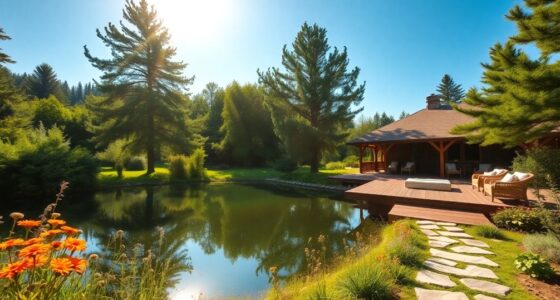
To create a solo retreat at home, start by setting clear intentions and preparing your space with calming items like candles and plants. Turn off distractions and inform loved ones you’d like uninterrupted time. Choose a cozy spot, practice mindfulness through breathing or body scans, and engage in creative journaling to explore your inner thoughts. This mindful retreat helps recharge your spirit and foster self-discovery—continue to discover how to set up your perfect sanctuary.
Key Takeaways
- Set clear intentions and prepare your space by minimizing disruptions and informing loved ones.
- Create a calming environment with cozy items like candles and plants to promote relaxation.
- Practice mindfulness through breathing exercises, body scans, and observing your surroundings without judgment.
- Engage in creative journaling to explore thoughts, feelings, and environmental observations freely.
- Use the retreat to disconnect from daily stresses, recharge your mind, and transform your home into a personal sanctuary.
Ever wondered how to recharge your mind and spirit without leaving home? A solo retreat at home offers the perfect opportunity to disconnect from daily stresses and reconnect with yourself. It’s all about creating a peaceful environment where you can focus inward, practice mindfulness practices, and explore your thoughts creatively. You don’t need to go far or spend a lot; with a little planning, your home transforms into a sanctuary for renewal.
Start by setting a clear intention for your retreat. Decide what you want to achieve—whether it’s clarity, relaxation, or a boost in creativity. Clear your schedule as much as possible so you won’t be interrupted. Turn off notifications, silence your phone, and let your loved ones know you’re dedicating this time just for yourself. This mental boundary signals that your retreat is a priority, helping you fully immerse in the experience.
Set a clear intention, free your schedule, and silence distractions to fully embrace your at-home retreat.
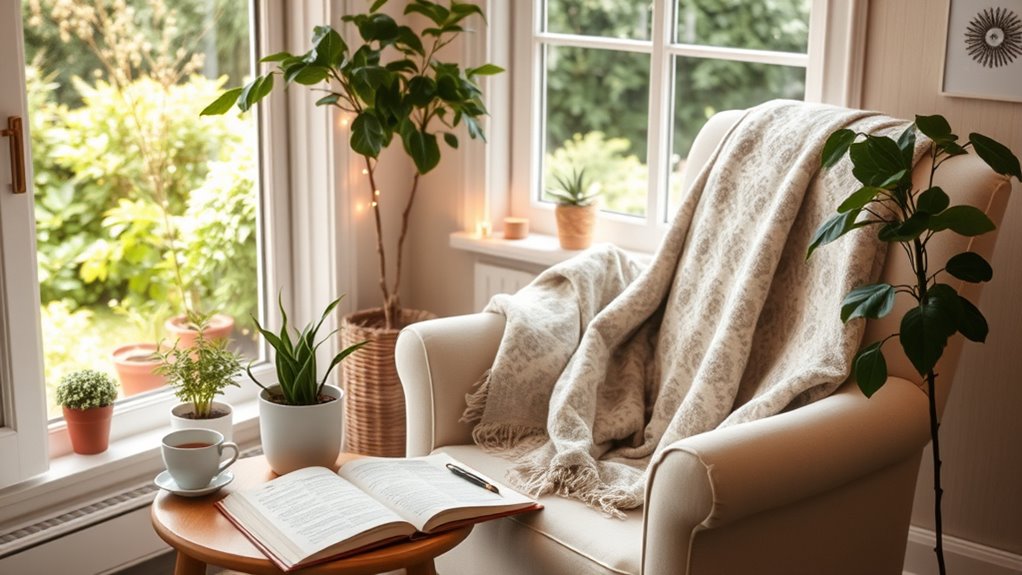
Create a dedicated space that feels calming and inviting. It could be a cozy corner with cushions, a corner of your living room, or even a spot in your garden if the weather permits. Surround yourself with items that promote peace—candles, essential oils, soft blankets, or plants. This environment sets the tone for your retreat, encouraging relaxation and mindfulness from the start.
One effective way to deepen your experience is through mindfulness practices. Focus on your breath, observe your surroundings without judgment, or practice body scans to release tension. These techniques help quiet your mind, increase awareness, and foster a sense of presence. Incorporate moments of silence or gentle meditation, allowing yourself to simply be in the moment. Mindfulness practices aren’t about achieving perfection but about cultivating a gentle awareness that nurtures your well-being.
Another powerful tool is creative journaling. Bring a journal and some pens, and let your thoughts flow freely. Write about your feelings, your hopes, or simply record what you observe in your environment. Use this time to explore your inner landscape, unfiltered and honest. Creative journaling encourages self-expression and can reveal insights that might otherwise stay hidden. Don’t worry about grammar or style—just let your thoughts spill onto the page. Over time, this practice can become a valuable part of your self-care routine, helping you process emotions and discover new perspectives.
Frequently Asked Questions
How Do I Choose the Perfect Location for My Retreat?
Choose a location that offers peaceful nature settings, like a quiet forest or lakeside spot, to enhance relaxation. Prioritize privacy considerations, ensuring you’re away from distractions and interruptions. Think about accessibility and comfort, so you feel at ease. Trust your instincts—pick a place that feels right for your retreat goals, allowing you to disconnect fully and reconnect with yourself in a serene environment.
What Are Essential Supplies for a Successful Solo Retreat?
Think of your retreat as a cozy sanctuary; essential supplies are the keys to open peace. You’ll want meditation tools like cushions and incense to create calm, plus journaling supplies—pens, notebooks—to capture your thoughts. Pack some calming teas and a blanket for comfort. These simple yet crucial items help you dive deep into self-discovery, transforming your space into a haven where clarity and relaxation flourish.
How Long Should a Solo Retreat Typically Last?
You should plan for a solo retreat duration of at least two to three days, allowing enough time for meaningful reflection and relaxation. During your retreat scheduling, consider your personal needs and commitments, and set a clear duration that aligns with your goals. Longer retreats can deepen your experience, but even a single day can offer valuable mental clarity. Adjust the length based on your energy levels and availability for a truly restorative experience.
How Can I Disconnect Digitally During My Retreat?
Ready to truly disconnect? Start your digital detox by turning off all devices and creating a device-free zone. Notify friends and family you’re taking time for yourself, so no interruptions. Use this time to reconnect with nature, meditate, or journal. Keep your phone out of reach, and resist the urge to check notifications. Embrace the silence—this is your moment to recharge without digital distractions.
What Activities Are Best for Self-Reflection During the Retreat?
You should focus on mindfulness exercises and journaling prompts to enhance self-reflection during your retreat. Practice deep breathing or meditation to center yourself, then use journaling prompts to explore your thoughts and feelings honestly. These activities encourage clarity and self-awareness, helping you connect with your inner self. Dedicate quiet time each day for these practices, allowing insights to emerge naturally and fostering a deeper understanding of your personal growth.
Conclusion
Remember, carving out your solo retreat is like tending a delicate garden—you nurture it patiently, and it flourishes. I once spent a weekend unplugged, and by Sunday, I felt renewed, just like a tree revitalized after a gentle rain. Taking this time for yourself isn’t selfish; it’s essential. So, go ahead, create your sanctuary. Your mind and spirit will thank you, blossoming with clarity and peace, ready to face anything that comes next.