When planning meals for a retreat, focus on creating menus that are flexible, inclusive, and encourage community. Gather dietary needs upfront and offer diverse options like vegetarian, gluten-free, and allergy-friendly dishes. Use family-style or buffet setups to foster connection and simplify serving, ensuring everyone feels welcomed. Maintain clear labels and communicate menus clearly to manage expectations. To discover more ways to balance deliciousness with dietary needs and build a nourishing environment, keep exploring these strategies.
Key Takeaways
- Gather dietary restrictions and preferences from participants in advance to tailor menus accordingly.
- Offer diverse meal options, including vegetarian, vegan, gluten-free, and allergy-friendly choices.
- Use clear labeling on dishes to inform guests and accommodate dietary needs easily.
- Plan balanced menus for all meals, with hearty breakfasts, light lunches, and satisfying dinners.
- Communicate menu plans and dietary accommodations clearly to set expectations and promote inclusivity.
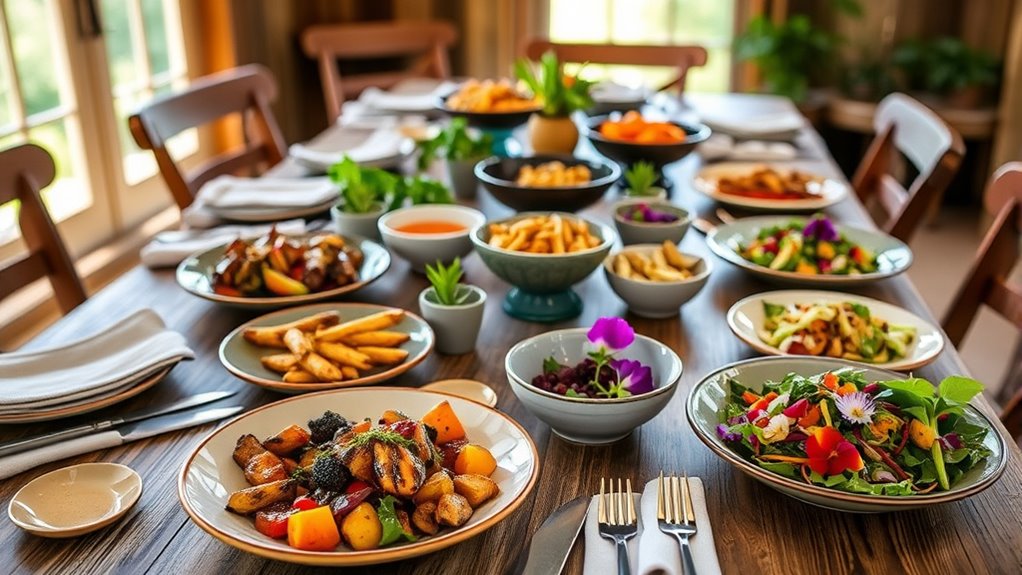
Planning meals for a retreat can be both rewarding and challenging, especially when you want to guarantee everyone stays energized and satisfied. One of the key aspects to consider is how you’ll manage group dining, which involves coordinating meals for diverse tastes and preferences while fostering a sense of community. To do this effectively, you need to think about the logistics of serving large groups, balancing variety with simplicity, and ensuring everyone feels included. When designing menus, aim for dishes that can be easily scaled up and served family-style or buffet-style, encouraging interaction and shared experiences. This approach not only simplifies serving but also creates a warm, communal atmosphere that enhances the retreat experience.
Another vital element is addressing dietary restrictions. People come with different needs—some may be vegetarian or vegan, others might have food allergies or intolerances, and some may require gluten-free options. You should gather this information well in advance to prevent last-minute surprises. Incorporating a variety of menu options ensures that everyone’s dietary needs are met without singling anyone out. For example, if you’re preparing a pasta dish, consider offering a gluten-free version alongside the regular one, and include plenty of fresh vegetables and plant-based proteins. Labeling dishes clearly can also help guests make informed choices and feel comfortable during group dining.
When planning, think about the flow of meals throughout the day. Breakfasts should be hearty enough to fuel active mornings, with options like scrambled eggs, fresh fruit, yogurt, and wholesome grains. Lunches can be lighter but still satisfying, such as salads, wraps, and soups that accommodate different dietary needs. Dinners are an excellent opportunity to introduce more elaborate dishes, but always keep a few simple, universally appealing options on hand. Remember, flexibility is key—having a few backup or customizable options can prevent any issues if someone’s dietary restrictions change or are overlooked initially.
It’s also wise to communicate with your group about meal options beforehand. Providing a menu or asking for preferences helps manage expectations and reduces confusion. When guests feel their dietary restrictions are acknowledged and accommodated, they’re more likely to enjoy the experience fully. Additionally, considering the cost of ingredients and preparation can help in planning a sustainable menu that fits your budget. When guests feel their dietary restrictions are acknowledged and accommodated, they’re more likely to enjoy the experience fully. Ultimately, successful retreat meal planning hinges on thoughtful preparation, clear communication, and a focus on inclusivity. By carefully considering group dining dynamics and dietary restrictions, you’ll create a nourishing environment that energizes everyone and fosters a sense of community throughout the retreat.
Frequently Asked Questions
How Do I Accommodate Guests With Food Allergies?
To accommodate guests with food allergies, you should create allergy-friendly recipes and clearly label all dishes. Always ask for specific allergy information beforehand. Use ingredient substitutions to avoid common allergens like nuts, dairy, or gluten. Keep separate prep areas to prevent cross-contamination, and communicate openly with your guests about ingredients. This approach guarantees everyone feels safe and included while enjoying delicious, allergy-conscious meals.
What Are Budget-Friendly Meal Planning Tips?
Ever find yourself surprised by last-minute guests or dietary restrictions? To save money, plan simple meals that use versatile ingredients, and incorporate meal prep strategies to reduce waste. Focus on budget-friendly staples like grains and seasonal produce. For dietary restriction solutions, prepare flexible dishes that can easily be modified, such as salads or stir-fries. This approach keeps costs down while ensuring everyone’s needs are met effortlessly.
How Can I Incorporate Local or Seasonal Ingredients?
You can incorporate local sourcing and seasonal recipes by visiting farmers’ markets and supporting nearby producers. Choose ingredients that are in season to guarantee freshness and cost savings. Plan menus around local produce like squash or berries, which add flavor and variety. Incorporate seasonal herbs and vegetables into your dishes, and consider preserving or freezing excess for later use. This approach boosts flavor, supports local communities, and keeps meals fresh and exciting.
What Are Some Quick Meal Options for Large Groups?
Think of serving quick meals like a well-orchestrated symphony, where you hit every note smoothly. Opt for buffet style setups with diverse finger foods—think sliders, fruit skewers, and veggie trays—that let guests serve themselves. This approach speeds up service, keeps everyone satisfied, and caters to large groups effortlessly. Keep it simple, colorful, and plentiful, so your guests stay energized and happy without long waits.
How Do I Plan Meals for Different Age Groups?
You should plan family-friendly meals that appeal to all ages, ensuring you include familiar flavors and simple presentation. Focus on maintaining nutritional balance by incorporating a variety of fruits, vegetables, lean proteins, and whole grains. Adjust portion sizes and spice levels for different age groups, and consider kid-friendly options alongside more sophisticated dishes for adults. This approach keeps everyone satisfied and healthy during your retreat.
Conclusion
Now that you’ve got a solid plan for your retreat meals, you’re all set to create a welcoming, nourishing environment for everyone. By considering diverse menus and dietary needs, you guarantee no one feels left out. Are you ready to turn your retreat into a memorable experience where everyone leaves feeling refreshed and satisfied? With thoughtful planning, you can make your retreat not just a getaway, but a nourishing journey for mind and body.