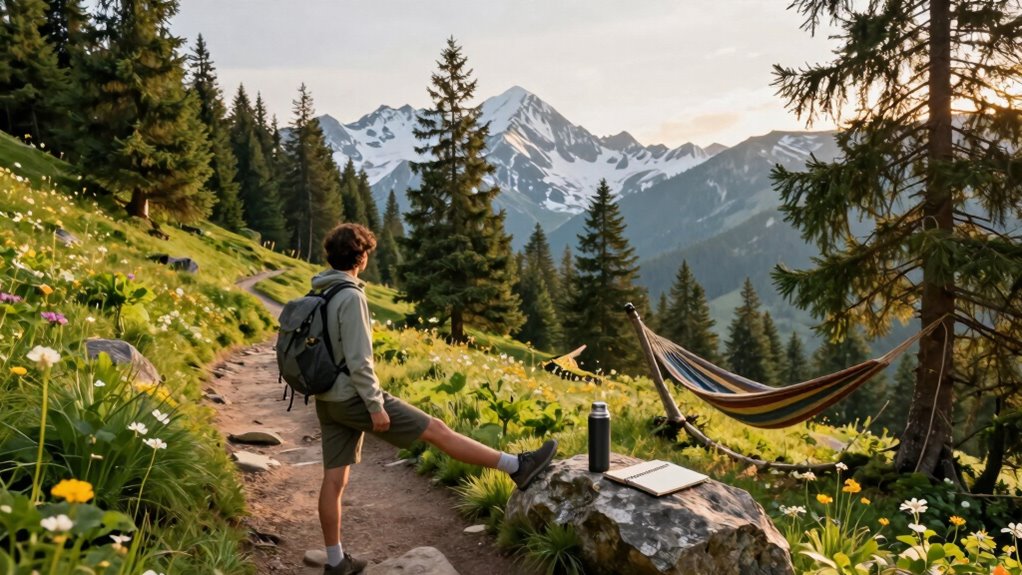

To plan active trips around recovery and rest, focus on balancing energizing activities with downtime that suits your energy levels. Choose gentle pursuits like scenic walks or restorative yoga, and incorporate plenty of rest periods into your schedule. Select accommodations with wellness amenities and create flexible plans that allow spontaneous adjustments. Pay attention to your body signals, and swap strenuous activities for relaxing alternatives as needed. If you want to discover more ways to stay energized and refreshed, keep exploring these helpful tips.

Get furniture and decor delivered free — and shop member deals
- Fast, free delivery on millions of items
- Access to Prime Big Deal Days deals on October 6–7
- Prime Video, Amazon Music and more included
Key Takeaways
- Prioritize flexible itineraries that allow spontaneous adjustments based on energy levels and physical signals.
- Incorporate gentle activities like scenic walks, yoga, or leisurely cycling to promote recovery and mental clarity.
- Schedule regular rest periods and downtime to support physical relaxation and mental unwinding.
- Choose accommodations with wellness amenities such as spas, gardens, or hot springs to enhance rejuvenation.
- Communicate needs with travel companions and remain adaptable to modify plans as needed for optimal recovery.

Balancing activity and rest is vital when planning trips focused on recovery and rejuvenation. When you’re designing an active trip centered on recovery, it’s essential to approach adventure planning with a mindset that prioritizes well-being without sacrificing the thrill of exploration. This mindful approach can significantly enhance the overall experience and outcomes of your trip. This involves selecting activities that energize rather than exhaust, and making certain your itinerary remains flexible enough to adapt to how your body feels each day. You don’t want to push yourself too hard or miss out on rest, so craft an itinerary that allows for spontaneous adjustments, whether that’s taking an extra break or skipping a planned activity if you’re feeling fatigued.
Prioritize well-being and flexibility to create a restorative, energizing travel experience.
Adventure planning for recovery trips involves choosing activities that promote healing and mental clarity. Think gentle hikes through scenic landscapes, restorative yoga sessions, or leisurely cycling routes. These options can boost circulation, reduce stress, and elevate your mood without overtaxing your body. It’s important to listen to your signals; if you’re feeling tired, don’t hesitate to swap a strenuous activity for something more relaxing. Incorporate downtime into your schedule, perhaps with quiet mornings sipping tea or afternoons spent in nature, soaking in the scenery and allowing your body to recover. Additionally, selecting wellness-focused environments can enhance your overall experience and support your recovery goals.
Flexibility in your itinerary becomes your best tool for balancing activity and rest. Avoid overloading each day with back-to-back excursions. Instead, space out activities to give yourself ample recovery time between exertions. Keep some open slots for spontaneous rest or unplanned exploration, which can often be the most rewarding parts of your trip. If you’re traveling with others, communicate your needs clearly so they can support your pacing. This flexibility not only helps prevent burnout but also fosters a more mindful experience, letting you savor each moment without feeling rushed or guilty for taking it slow. Incorporating adaptive planning techniques can help ensure your trip remains aligned with your recovery needs.
Planning with recovery in mind also means choosing accommodations and locations designed for comfort and rejuvenation. Look for places with wellness amenities like spas, hot springs, or quiet gardens. These environments can serve as perfect retreats after active pursuits, helping your body relax and your mind unwind. Remember, the goal is to return from your trip feeling refreshed, not drained. By combining thoughtful adventure planning with itinerary flexibility, you make certain your active trip becomes a true journey of recovery, allowing you to enjoy new experiences while honoring your need for rest and rejuvenation.
wellness travel accommodations with spa
As an affiliate, we earn on qualifying purchases.
As an affiliate, we earn on qualifying purchases.
Frequently Asked Questions
How Can I Prevent Overexertion During Active Trips?
To prevent overexertion during active trips, focus on travel pacing and activity moderation. Listen to your body, taking regular breaks and staying hydrated. Limit intense activities and incorporate rest periods between exertions. Plan your itinerary to include lighter days, ensuring you don’t push too hard. By pacing yourself and moderating activities, you can enjoy your trip without risking setbacks, maintaining a healthy balance of activity and recovery.
What Signs Indicate I Need More Rest During Travel?
Imagine your energy waning like a flickering candle—this is your sign you need more rest. If you feel dizzy, overly fatigued, or your muscles ache intensely, it’s time to pause. Prioritize travel safety by listening to your body. Hydration tips become essential; sip water regularly to prevent dehydration, which can mask exhaustion. Rest when needed, stay attentive to signals, and balance activity with recovery to enjoy your trip fully.
How Do I Balance Sightseeing With Recovery Needs?
You balance sightseeing with recovery by listening to your body and planning rest periods. Incorporate hydration strategies, like carrying water and electrolyte drinks, to stay energized. Focus on nutrition planning by packing healthy snacks and balanced meals to maintain your strength. Schedule lighter activities between sightseeing to prevent fatigue, and prioritize restful sleep. This approach helps you enjoy your trip while respecting your recovery needs.
Are There Specific Activities Best for Post-Recovery Travel?
Imagine strolling through lush gardens or gentle park trails, where your body feels light and energized. Post-recovery, opt for activities like leisurely walks, gentle yoga, or swimming — these boost your fitness routines without overexertion. Pair these with nutritional planning, focusing on nourishing foods that support your healing. These activities help you stay active, enjoy your trip, and respect your body’s need for rest and recovery.
How Can I Customize Trips for Different Recovery Stages?
You can customize trips for different recovery stages by creating personalized itineraries that match your energy levels and needs. Focus on adaptive pacing, adjusting activities to avoid overexertion, and include plenty of rest periods. Choose gentle activities like nature walks or sightseeing at a relaxed pace. Listen to your body, and modify plans as needed, ensuring your trip supports your healing while still allowing you to enjoy new experiences safely.
Conclusion
Remember, balancing activity and rest is key to a fulfilling trip. Imagine you’re planning a week-long adventure—on the third day, you take a gentle hike and then spend the afternoon relaxing by the lake. This way, you stay energized without overdoing it. By listening to your body and scheduling restful moments, you’ll return home feeling refreshed and accomplished. Keep this rhythm, and your trips will always leave you rejuvenated and enthusiastic for the next adventure.
Evergreen bestsellers Picks
bestsellers
As an affiliate, we earn on qualifying purchases.