
To practice eco-friendly retreats, choose sustainable transportation options like carpooling, biking, or public transit, and offset your carbon emissions. Support venues that use green building materials, renewable energy, and energy-efficient systems. Bring reusable items to cut waste and opt for locally sourced, organic food. Prioritize locations with natural light, ventilation, and eco-conscious infrastructure. Want to discover more ways to make your retreat greener? Keep exploring for ideas to reduce your environmental footprint.
Key Takeaways
- Choose sustainable transportation options like trains, buses, or carpooling to reduce carbon emissions.
- Support retreats built with eco-friendly materials such as reclaimed wood and low-VOC paints.
- Utilize renewable energy sources like solar or wind power and improve energy efficiency with natural lighting.
- Minimize waste by bringing reusable items and sourcing locally produced, organic foods.
- Promote eco-conscious infrastructure with natural ventilation, green building practices, and pollution reduction measures.
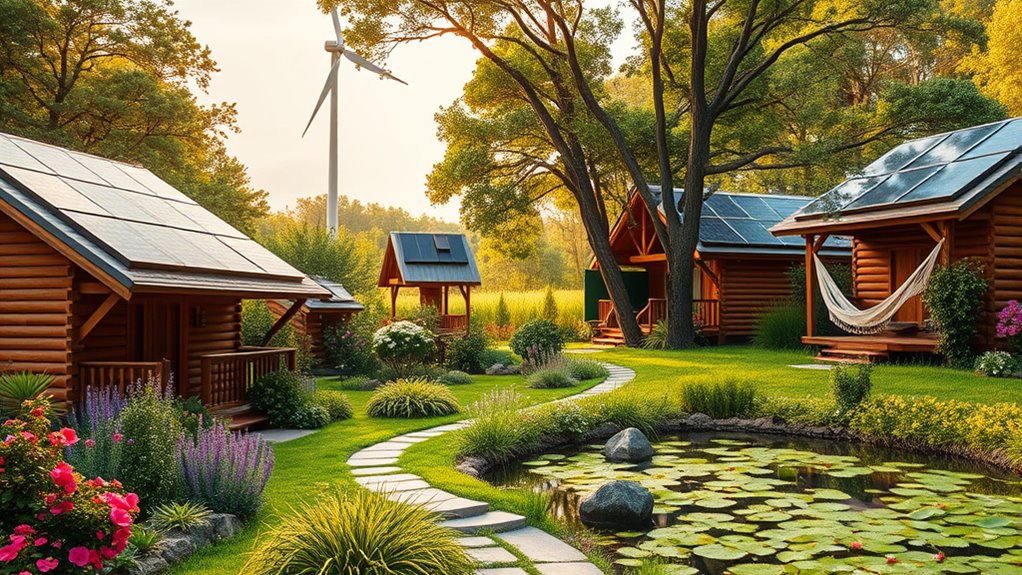
Ever wondered how your retreat experience can be both rejuvenating and environmentally responsible? It’s easier than you might think to make eco-friendly choices that benefit the planet while enhancing your overall experience. One of the most impactful steps you can take is paying attention to transportation. Opting for sustainable transportation options reduces your carbon footprint considerably. Whenever possible, choose to arrive by train, bus, or carpool with fellow attendees. If you’re traveling long distances, consider offsetting your emissions through verified programs that invest in renewable energy or reforestation projects. These small adjustments ensure that your journey to relaxation doesn’t come at the planet’s expense. Incorporating carbon offsetting into your travel plans can further diminish your environmental impact.
Once you arrive, the focus shifts to the retreat’s infrastructure. Many eco-conscious retreats now prioritize green building materials, which are designed to minimize environmental impact. These materials include reclaimed wood, bamboo, recycled metal, and low-VOC (volatile organic compound) paints that improve indoor air quality. These choices not only reduce waste and conserve natural resources but also create a healthier, more welcoming space for your stay. By supporting retreats that incorporate green building materials, you’re endorsing sustainable construction practices that lessen pollution and promote energy efficiency.
Choosing retreats with green building materials supports sustainable, healthier, and eco-friendly accommodations.
In addition, look for retreats that utilize renewable energy sources such as solar or wind power. These sources help cut down reliance on fossil fuels and decrease greenhouse gas emissions. Energy-efficient lighting and appliances further reduce power consumption, making your stay more sustainable without sacrificing comfort. Many retreats also design their buildings to maximize natural light and airflow, which naturally lowers the need for artificial lighting and air conditioning. This thoughtful design makes your retreat more eco-friendly and often enhances your connection with nature.
Another way to incorporate sustainability into your retreat is through mindful planning. Carpooling, using public transportation, or even biking to the location can make a big difference. If the retreat offers shuttle services, choose options that run on clean energy. Bringing reusable water bottles, containers, and bags reduces waste, and choosing locally sourced, organic food options supports nearby farmers and minimizes food miles. These small but meaningful actions collectively create a more sustainable retreat experience.
Frequently Asked Questions
How Can Guests Reduce Their Carbon Footprint During Their Stay?
You can reduce your carbon footprint during your stay by using solar energy whenever possible, like turning off lights and appliances when not in use. Practice water conservation by taking shorter showers and reusing towels. Avoid wasting electricity and water, and embrace eco-friendly habits. These small actions help lower your impact, support renewable energy, and promote sustainability, making your stay more environmentally responsible and enjoyable.
Are Eco-Friendly Retreats Suitable for People With Disabilities?
Think of eco-friendly retreats as a garden in full bloom—they can be welcoming to all. Yes, they’re suitable for people with disabilities if they include accessibility improvements and specialized accommodations. Many retreats now prioritize inclusive design, ensuring pathways, rooms, and facilities accommodate diverse needs. With thoughtful planning, you’ll find these retreats not only environmentally conscious but also accessible, making everyone feel like they belong in this vibrant, sustainable space.
What Are the Costs Associated With Eco-Friendly Retreat Options?
You’ll find that eco-friendly retreat costs vary based on pricing considerations like location, amenities, and activities offered. Typically, you might pay more upfront for sustainable accommodations or organic meals, but some hidden fees could include eco-surcharges or additional wellness classes. Be sure to read the fine print and ask about all charges to avoid surprises, and compare options to find a retreat that fits your budget and eco-conscious values.
How Do Retreats Ensure Their Supplies Are Sustainably Sourced?
You can guarantee retreats use sustainably sourced supplies by checking their commitment to ethical procurement and sustainable sourcing policies. Many retreats partner with local, certified suppliers who prioritize eco-friendly materials and fair labor practices. Ask about their sourcing standards and look for certifications like Fair Trade or Organic. This way, you guarantee that the products used are environmentally responsible and ethically obtained, supporting both the planet and local communities.
Can Eco-Retreats Accommodate Dietary Restrictions and Special Diets?
Yes, eco-retreats can accommodate dietary restrictions and special diets. They often offer plant-based menus and prioritize locally sourced, organic ingredients to meet diverse needs. Staff are trained to handle allergen accommodations, ensuring guests with allergies or specific dietary requirements feel safe and cared for. By communicating your needs in advance, you help the retreat personalize your experience, making it both enjoyable and sustainable.
Conclusion
By embracing eco-friendly retreat practices, you create a conscious, caring corner of the earth. Your mindful methods minimize messes, maximize meaningful moments, and illuminate a sustainable spirit. When you choose composting, conserve resources, and celebrate nature’s nuances, you foster a future filled with freshness and fulfillment. So, step softly, stay sustainable, and set a shining example—because every small step you take can truly transform the terrain into a thriving, truthful sanctuary.