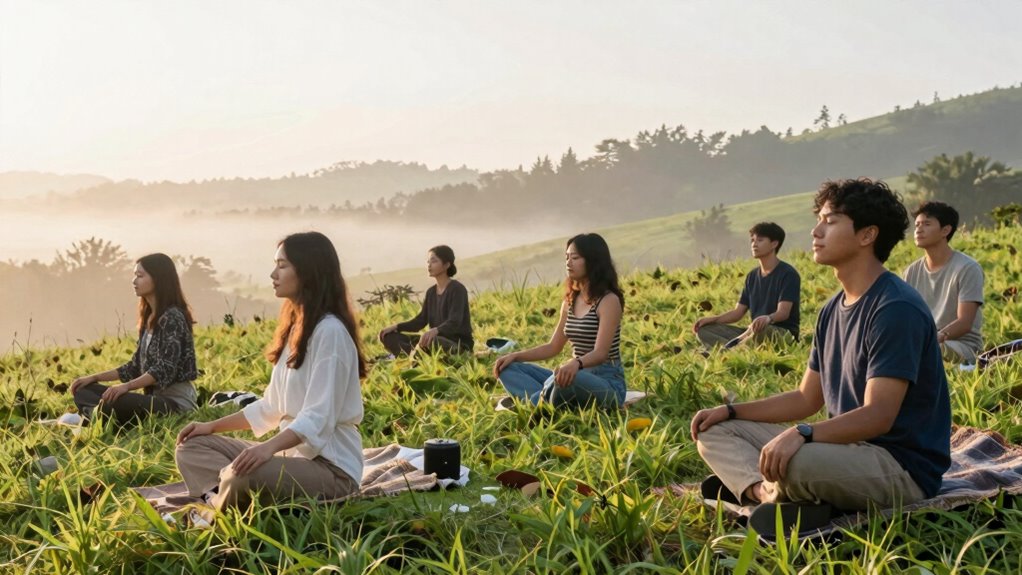

To build quiet time into group trips, schedule moments for personal reflection after busy activities, like short walks or scenic stops. Encourage everyone to bring journaling supplies or practice mindfulness, such as breathing exercises or meditation. Create cozy corners or scenic lookouts where individuals can enjoy solitude. Emphasize that quiet moments help recharge and deepen the travel experience. Keep exploring to discover more practical ways to incorporate peaceful pauses that benefit your group’s well-being.

Get furniture and decor delivered free with Prime
- Fast, free delivery on millions of items
- Prime Video, Amazon Music and more included
- Member-only deals all year
Key Takeaways
- Schedule designated quiet periods after busy activities to allow individual reflection and relaxation.
- Offer optional mindfulness activities like journaling, meditation, or gentle stretching during breaks.
- Create cozy, scenic spots for solitude, encouraging personal pacing without pressure.
- Communicate the benefits of quiet time to the group, emphasizing its role in enhancing overall experience.
- Incorporate short mindfulness exercises to foster presence and balance active exploration with tranquility.
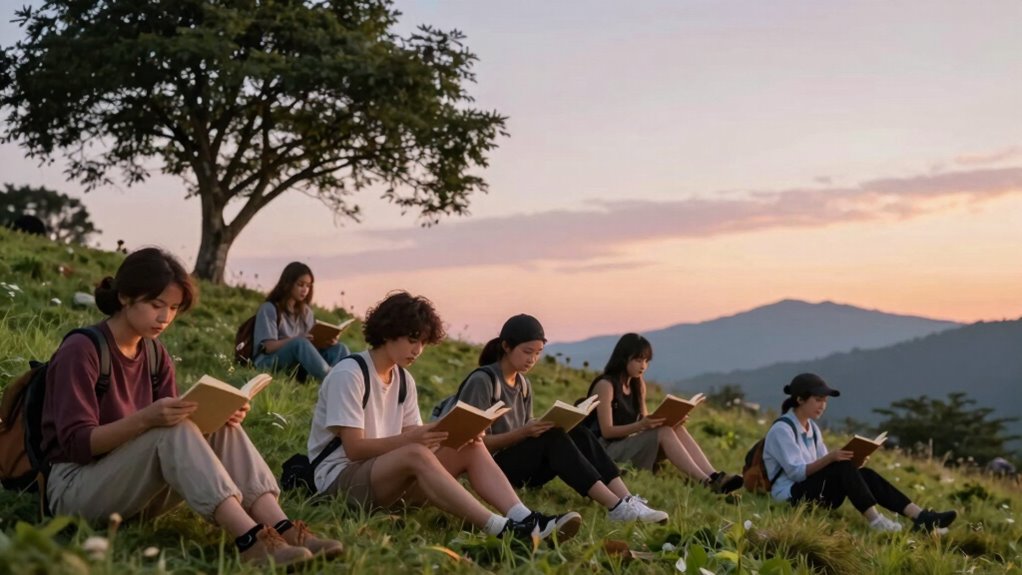
When planning group trips, finding moments of quiet can be just as important as the activities and sightseeing. These peaceful interludes give everyone a chance to recharge, reflect, and truly enjoy the experience without feeling overwhelmed. One effective way to incorporate quiet time is through travel journaling. Encourage your group to carry small notebooks or digital devices to jot down thoughts, impressions, or sketches during breaks. This simple activity helps individuals process their surroundings and feelings, creating a mindful connection to the trip. It also provides a shared experience, as members can exchange insights or favorite moments later, deepening the group’s bond.
Embrace quiet moments with travel journaling to deepen connections and reflect on your journey.
Another excellent quiet activity is nature meditation. Find tranquil spots—perhaps a quiet forest clearing, a lakeside, or a solitary park bench—where the group can sit in silence and focus on their breath, sounds, and surroundings. Guide everyone to close their eyes for a few minutes, listen to the rustling leaves or distant birdcalls, and simply be present. Nature meditation helps reduce stress, improves mental clarity, and fosters a sense of calm that can last well beyond the trip. It’s especially effective when done early in the morning or at sunset, times when the natural world feels most peaceful.
To seamlessly integrate these quiet moments, plan designated times during the day for individual reflection. For example, after a busy activity or sightseeing tour, suggest a short walk or a break where everyone can engage in travel journaling or sit quietly in nature meditation. Make it optional but inviting—frame it as a chance to soak in the environment at your own pace. You might also set up a cozy corner or a scenic lookout spot where people can retreat for some solitude without feeling pressured to participate in group activities. Including mindfulness practices can deepen the sense of calm and presence during these moments. Incorporating intentional pauses not only enhances the experience but also supports mental well-being during travel.
Encouraging mindful breathing exercises or gentle stretching can also serve as quick resets, helping everyone reconnect with their inner calm. Remember, the goal isn’t to eliminate activity but to balance it with moments of quietude that allow for personal reflection. These pauses foster mindfulness, enrich the travel experience, and help prevent burnout. Incorporating mindful travel practices can enhance the overall trip by emphasizing intentionality and presence. Being aware of mental clarity and the importance of quiet moments can make the journey more meaningful and restorative for everyone involved.
As an affiliate, we earn on qualifying purchases.
Frequently Asked Questions
How Do I Handle Different Quiet Time Preferences Among Group Members?
You should respect each person’s personal space and group boundaries by openly discussing quiet time preferences early on. Encourage everyone to share their needs and find common ground, such as designated quiet periods or spaces. Be adaptable and considerate, allowing those who need quiet to have it without feeling guilty. This approach helps maintain harmony and ensures everyone feels comfortable, fostering a positive group dynamic during your trip.
What Activities Are Best During Quiet Time?
During quiet time, you can engage in mindfulness exercises to center yourself and foster calmness. Nature journaling offers a creative escape, allowing you to observe and reflect quietly amidst the surroundings. These activities balance stillness with engagement, helping you reconnect with nature and your inner self. By incorporating mindfulness and journaling, you create meaningful moments of tranquility, enriching your group trip experience with peaceful, introspective activities.
How Do I Introduce Quiet Time to a Group Unfamiliar With It?
You introduce quiet time by explaining its benefits, like promoting mindfulness practices and providing sensory breaks. Encourage the group to see it as a chance to relax and recharge, not as a punishment. Suggest simple activities like deep breathing or listening to calming sounds. Start with a brief, inclusive session, emphasizing that everyone can participate at their comfort level, helping them feel more comfortable and open to embracing quiet time.
What if Some Members Feel Excluded During Quiet Time?
If some members feel excluded during quiet time, you can implement inclusion strategies by encouraging optional participation and emphasizing respect for individual preferences. Communicate that quiet time is a personal choice, and respect respectful boundaries by allowing those who want to engage in quiet activities to do so without pressure. Make sure everyone understands the purpose, fostering a supportive environment where all feel comfortable, whether they participate or not.
How Can Technology Be Managed During Quiet Time?
You can manage technology during quiet time by setting clear digital boundaries and designating specific tech-free zones. Encourage everyone to turn off devices or put them away in these zones, fostering genuine connection and relaxation. Communicate expectations beforehand, and remind the group that quiet time is for recharging emotionally and mentally. By establishing these boundaries, you help everyone enjoy uninterrupted moments together without distractions from screens.
Conclusion
Incorporating quiet time into your group trips isn’t just a luxury—it’s essential for everyone’s well-being. Studies show that 60% of travelers feel more refreshed and connected when they have moments of solitude amid busy itineraries. By intentionally carving out quiet moments, you help prevent burnout and foster deeper connections within your group. Remember, a little quiet time can transform a hectic trip into a truly memorable and rejuvenating experience for all.
Halloween Picks
halloween
As an affiliate, we earn on qualifying purchases.