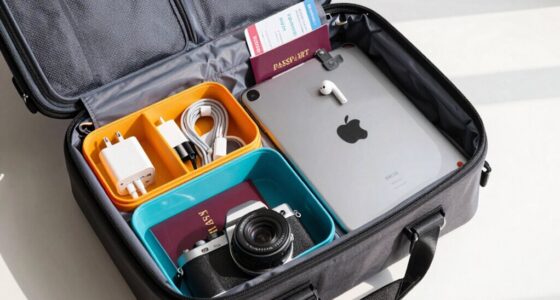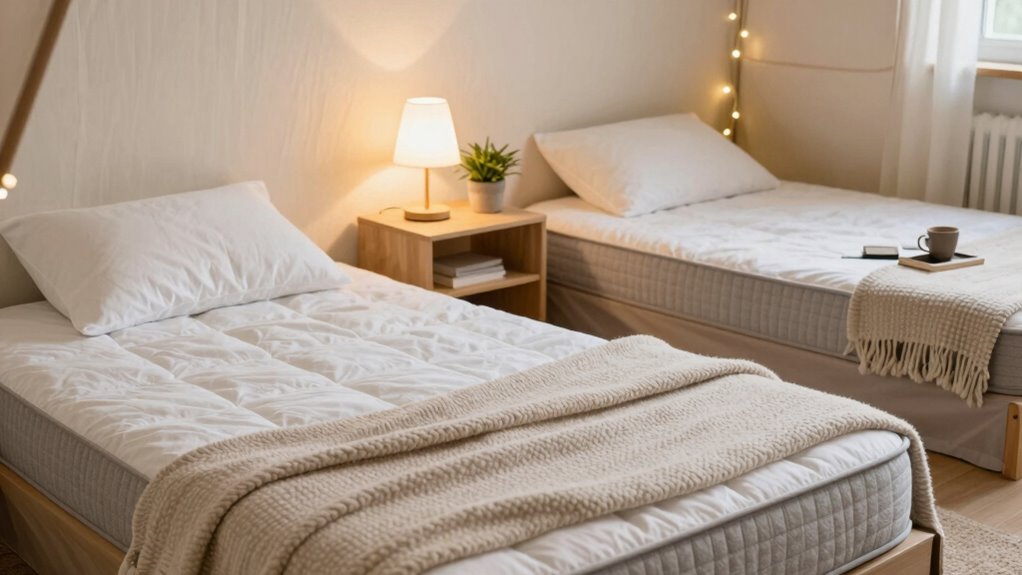

To build a better sleep setup away from home, focus on creating a familiar, comfortable environment with portable accessories like a sleep mask, noise-canceling headphones, and a supportive pillow. Stick to your usual sleep schedule, avoid caffeine, and establish calming routines. Control the room’s temperature and darkness, using portable devices or curtains, and choose quiet, peaceful spots. To discover more strategies for restful travel sleep, keep exploring effective tips and tricks.

Get furniture and decor delivered free — and shop member deals
- Fast, free delivery on millions of items
- Access to Prime Big Deal Days deals on October 6–7
- Prime Video, Amazon Music and more included
Key Takeaways
- Use portable accessories like sleep masks, earplugs, and travel pillows to mimic home comfort.
- Maintain your regular sleep schedule and pre-sleep routines to promote consistency.
- Control room lighting and temperature with portable devices for a cozy sleep environment.
- Choose quiet, dark, and comfortable spots in your accommodation to minimize disruptions.
- Limit screen time and blue light exposure before bed to enhance sleep quality.

Traveling or staying away from home can disrupt your sleep, but with a few simple adjustments, you can create a comfortable and restful sleep setup wherever you go. The key lies in preparing with the right travel accessories and maintaining good sleep hygiene, even on the go. Packing essentials like a lightweight sleep mask, noise-canceling earplugs, and a portable pillow can make a significant difference. These accessories help block out light and noise, two common sleep disruptors when you’re away from your usual environment. A good sleep mask, especially one made of soft materials, ensures you can rest peacefully regardless of the room’s lighting. Earplugs or noise-canceling headphones drown out unfamiliar sounds, creating a quiet space that promotes deeper sleep.
Beyond physical accessories, focus on maintaining your sleep hygiene. Stick to your usual sleep schedule as much as possible, even if you’re in a different time zone. Going to bed and waking up at consistent times helps regulate your internal clock. Avoid caffeine and heavy meals close to bedtime, as they can interfere with your ability to fall asleep. Instead, opt for a light, healthy snack if you’re hungry. Establishing a calming pre-sleep routine, like reading or practicing deep breathing, signals to your body that it’s time to wind down, no matter where you are. Incorporating good sleep hygiene practices such as these can significantly improve your quality of rest, even in unfamiliar environments. Additionally, paying attention to environmental factors like lighting and temperature can further support better sleep.
Adjust your sleeping space to resemble your home setup as much as possible. If the bed feels unfamiliar, use your portable pillow to add familiarity and support. If the room is too warm or cold, try to control the temperature with a travel-sized fan or a portable heater. Keep your sleeping area dark by drawing the curtains or using your sleep mask, which can help your body produce melatonin naturally. It’s also helpful to limit screen time before bed, as the blue light from devices can disrupt melatonin production, making it harder to fall asleep. Incorporating biodiversity-friendly practices, such as choosing accommodations that prioritize natural lighting and sound insulation, can further enhance your sleep quality. Additionally, selecting environments with natural lighting and minimal noise pollution can support healthier sleep patterns.
Lastly, pay attention to your environment. Choose a comfortable spot in the hotel or Airbnb that’s quiet and free from distractions. If noise persists, consider playing white noise or relaxing sounds from an app on your phone. Using sound masking techniques can help block out disruptive noises and create a more restful atmosphere. Small adjustments like these—combining the right travel accessories with good sleep hygiene—empower you to turn any unfamiliar space into a restful retreat. With a little planning, you can safeguard your sleep quality, ensuring you wake up refreshed and ready for your day ahead.
As an affiliate, we earn on qualifying purchases.
Frequently Asked Questions
What Are the Best Portable Sleep Accessories?
The best portable sleep accessories include a comfortable eye mask and noise-canceling earplugs to improve your sleep hygiene. A compact, supportive travel pillow enhances your sleep environment, providing neck support and comfort. Consider a lightweight, breathable blanket for added warmth. These accessories help create a consistent sleep routine, reduce disruptions, and guarantee you get restful sleep anywhere, making your sleep environment more inviting and conducive to quality rest on the go.
How Do I Block Out Noise Effectively?
Imagine a peaceful oasis, shielded from city sounds or chatter. To block out noise effectively, try soundproofing techniques like sealing gaps with weatherstripping or using dense curtains. Invest in noise-canceling devices or white noise machines that create a consistent sound barrier. These tools work together to drown out disruptive noises, helping you drift into restful sleep, even amidst unfamiliar surroundings.
What Are Quick Tips for Adjusting to New Beds?
To quickly adjust to new beds, focus on improving sleep hygiene by establishing a calming pre-sleep routine. Make certain bedding comfort by adding a familiar pillow or blanket, if possible, to make the bed feel more like home. Keep the room cool and dark, and avoid screens before bed. These small changes help your body relax faster, making it easier to fall asleep and adapt to new sleeping environments.
How Can I Prevent Allergies While Traveling?
Imagine you’re on a trip when allergy symptoms hit hard. To prevent this, pack allergy essentials like antihistamines, nasal sprays, and hypoallergenic pillowcases. Use travel allergy remedies such as air purifiers or masks if needed. Keep your sleeping area clean and avoid allergens like dust mites or pet dander. By taking these steps, you’ll reduce allergy triggers and enjoy restful sleep away from home.
What Are Lightweight Options for Sleeping Gear?
For lightweight sleep gear, opt for compact travel pillows that provide good neck support without adding bulk. Consider inflatable or foldable sleep mats that are easy to pack and carry, guaranteeing your sleep comfort during travels. These options are designed to be lightweight yet supportive, making it simple to set up a comfortable sleep space anywhere. Combining travel pillows with lightweight mats ensures you stay comfortable without weighing down your luggage.
Conclusion
Creating a better sleep setup away from home is like planting a resilient garden—your comfort depends on the right environment and care. I once traveled with a simple eye mask and portable pillow, and it transformed my nights, proving small adjustments make a big difference. Just as a well-tended garden flourishes regardless of weather, your sleep improves when you optimize your surroundings. With these tips, you’ll turn any space into a restful retreat, no matter where you are.
Fall Picks
fall essentials
As an affiliate, we earn on qualifying purchases.