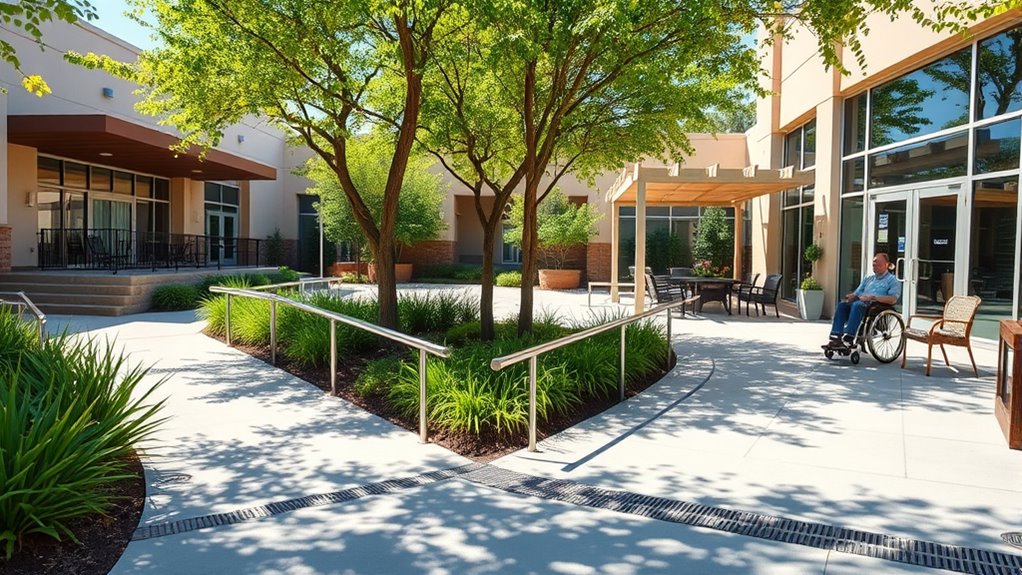

When choosing a retreat venue, prioritize locations with accessible features like ramps, wide doorways, elevators, and smooth pathways to accommodate mobility needs. Check for sensory-friendly spaces, adjustable lighting, and noise-reducing options for guests with sensory sensitivities. Clear signage and easy navigation also help guarantee everyone feels comfortable and supported. To make a truly inclusive experience, consider how the venue addresses diverse needs, and keep exploring to learn more about creating accessible retreats.
Key Takeaways
- Ensure venues have ramps, elevators, and wide doorways to accommodate mobility devices.
- Verify flooring is even, slip-resistant, and free of tripping hazards throughout the space.
- Provide quiet, sensory-friendly spaces with adjustable lighting and soundproofing options.
- Confirm all accessibility features and accommodations with venue management before booking.
- Choose venues that prioritize inclusivity with clear signage, sensory tools, and environment designed for all guests.
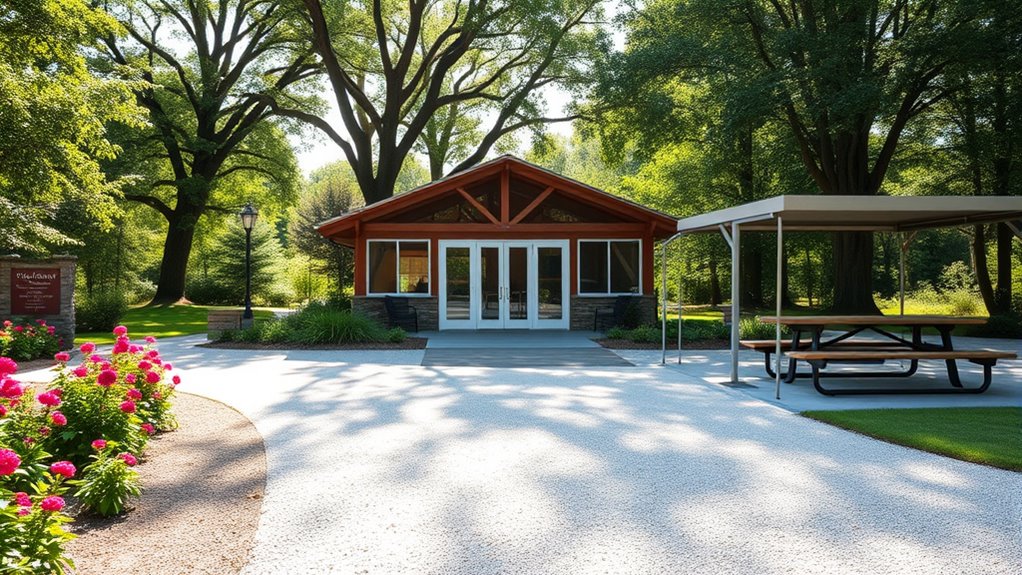
Planning a retreat means guaranteeing everyone feels welcome and comfortable, which starts with choosing an accessible venue. You want all your guests to participate fully, regardless of mobility or sensory needs. To do this, prioritize venues with excellent wheelchair accessibility. Look for places with ramps at entrances, wide doorways, and elevators if there are multiple floors. Smooth, level pathways inside and outside help prevent trips and falls, making navigation easier for those using wheelchairs or walkers. Parking should include designated accessible spots near entrances, so guests don’t have to navigate long distances on foot. When touring potential venues, verify that the flooring is even and slip-resistant, reducing hazards for everyone. Accessibility isn’t just about physical features; sensory accommodations are equally essential. Some attendees may experience sensory overload or have conditions like autism or PTSD, which require a calmer environment. Choose venues that offer quiet, low-stimulation spaces where guests can retreat if needed. These spaces should be separate from busy common areas and equipped with comfortable seating, soft lighting, and minimal noise. Consider venues that can provide noise-canceling headphones or other sensory tools if requested. When planning activities, ensure the layout fosters easy movement and includes options for individuals with diverse needs. For example, avoid overly crowded areas that can overwhelm sensory-sensitive participants. Clear signage with simple, universal symbols helps everyone navigate the space confidently, especially those with sensory or cognitive challenges. Additionally, confirm that the venue’s facilities support sensory accommodations, such as adjustable lighting, soundproof rooms, or designated quiet zones. It’s also helpful to communicate with the venue management beforehand about your accessibility requirements, so they can assist in making necessary adjustments or recommendations. This proactive approach guarantees that any potential barriers are addressed early. Furthermore, considering credit card security measures can help protect sensitive information during transactions at the venue. Remember, accessibility is about creating an environment where all guests feel valued and included. It’s worth investing time in researching and visiting venues that prioritize these features. Not only will it make your retreat more enjoyable for everyone, but it’ll also demonstrate your commitment to inclusivity. When your guests see that you’ve thoughtfully considered their needs—from wheelchair access to sensory accommodations—they’ll feel more comfortable and appreciated. Ultimately, choosing an accessible venue sets the tone for a successful, inclusive retreat where all participants can engage fully and comfortably.
wheelchair accessible ramp
As an affiliate, we earn on qualifying purchases.
As an affiliate, we earn on qualifying purchases.
Frequently Asked Questions
How Do Venues Accommodate Guests With Sensory Processing Disorders?
You can accommodate guests with sensory processing disorders by creating sensory-friendly environments and offering calming activity options. Provide quiet spaces with soft lighting and minimal noise, so guests can retreat when needed. Incorporate calming activities like gentle yoga or mindfulness exercises to help manage sensory overload. By proactively addressing these needs, you guarantee a comfortable, inclusive experience, making your retreat welcoming and accessible for everyone.
Are There Specific Guidelines for Accessible Outdoor Retreat Spaces?
Think of your outdoor retreat space as a welcoming garden that everyone can enjoy. You should follow specific guidelines by ensuring outdoor pathways are wide, smooth, and obstacle-free, allowing easy navigation for all guests. Clear signage with high contrast and simple symbols helps visitors find their way effortlessly. By designing with these principles, you create an inclusive environment where every guest feels safe, comfortable, and truly part of the retreat experience.
How Can Venues Ensure Accurate Communication for Guests With Hearing Impairments?
You can guarantee accurate communication for guests with hearing impairments by providing sign language interpretation and assistive listening devices. Arrange for qualified interpreters to be available during key activities and events. Install assistive listening systems in venues to amplify sound clearly. Clearly communicate these options beforehand, and have staff trained to assist guests in accessing these services. This approach creates an inclusive environment where all guests feel comfortable and engaged.
What Training Do Staff Receive on Disability Awareness and Accessibility?
Think of your staff as the guiding stars of your retreat. They receive extensive staff training that covers disability awareness, ensuring they understand various needs and how to assist respectfully. This training includes practical scenarios, communication techniques, and inclusive practices, making sure everyone feels welcomed and supported. By investing in disability awareness, you empower your team to create a truly accessible environment, where all guests can enjoy the retreat experience to the fullest.
Are There Customizable Accessibility Features for Different Types of Disabilities?
Yes, many retreat venues offer customizable accessibility features tailored to different disabilities. You can request adaptive technologies like hearing loops or visual aids and personalized accommodations to meet your specific needs. These venues often work with you to guarantee your comfort and independence, making your experience more inclusive. By planning ahead and communicating your requirements, you can enjoy a smooth, accessible retreat experience that truly caters to your unique abilities.
sensory-friendly retreat room
As an affiliate, we earn on qualifying purchases.
As an affiliate, we earn on qualifying purchases.
Conclusion
So, while you might think your retreat venue is perfect, overlooking accessibility can turn a peaceful escape into a maze of obstacles. Ironically, the very space meant for relaxation could leave some feeling more stranded than serene. Don’t let overlooked details create silent barriers—embrace inclusive design now. After all, true retreat is about everyone feeling welcome, not wading through unnecessary hurdles in what should be a haven of peace.
adjustable lighting for sensory needs
As an affiliate, we earn on qualifying purchases.
As an affiliate, we earn on qualifying purchases.
noise-canceling headphones for sensory sensitivities
As an affiliate, we earn on qualifying purchases.
As an affiliate, we earn on qualifying purchases.