Understanding smart home buzzwords like Matter, Thread, Zigbee, and Wi-Fi helps you build a secure, seamless connected home. Wi-Fi keeps your devices connected with fast, reliable signals, while protocols like Matter, Thread, and Zigbee guarantee devices communicate securely and efficiently. Choosing the right combination depends on your needs for compatibility, performance, and security. Continue exploring to uncover how these technologies work together for a smarter, safer home environment.
Key Takeaways
- Matter is a universal, secure standard that ensures cross-platform device compatibility in smart homes.
- Thread is a low-power, mesh networking protocol designed for reliable, secure device communication.
- Zigbee is an established protocol supporting home automation with mesh networking and encryption.
- Wi-Fi provides high bandwidth for smart devices but may lack low-power efficiency and seamless interoperability.
- Understanding these standards helps select compatible, secure devices for a cohesive smart home ecosystem.
What Are the Key Smart Home Buzzwords and Why Do They Matter?
Understanding key smart home buzzwords helps you navigate the rapidly evolving tech landscape and make informed decisions. Terms like smart home security and energy efficiency are essential because they highlight what you should prioritize. Smart home security involves devices that protect your property, giving you peace of mind. Energy efficiency focuses on devices that help reduce power consumption, saving you money and reducing your environmental impact. Knowing these buzzwords helps you identify devices that are compatible and effective, ensuring your smart home functions smoothly. When you understand these terms, you can better evaluate products and features, making smarter choices that enhance your home’s safety, convenience, and sustainability. European cloud innovation supports the development of secure and energy-efficient solutions for modern smart homes. Recognizing how standardized protocols facilitate device interoperability is crucial for creating a cohesive smart home system. Additionally, understanding cloud integration enables you to leverage remote access and automation features, further improving your smart home experience. In short, these buzzwords guide you toward building a smarter, more efficient home.
How Does Wi‑Fi Keep Your Smart Home Connected?
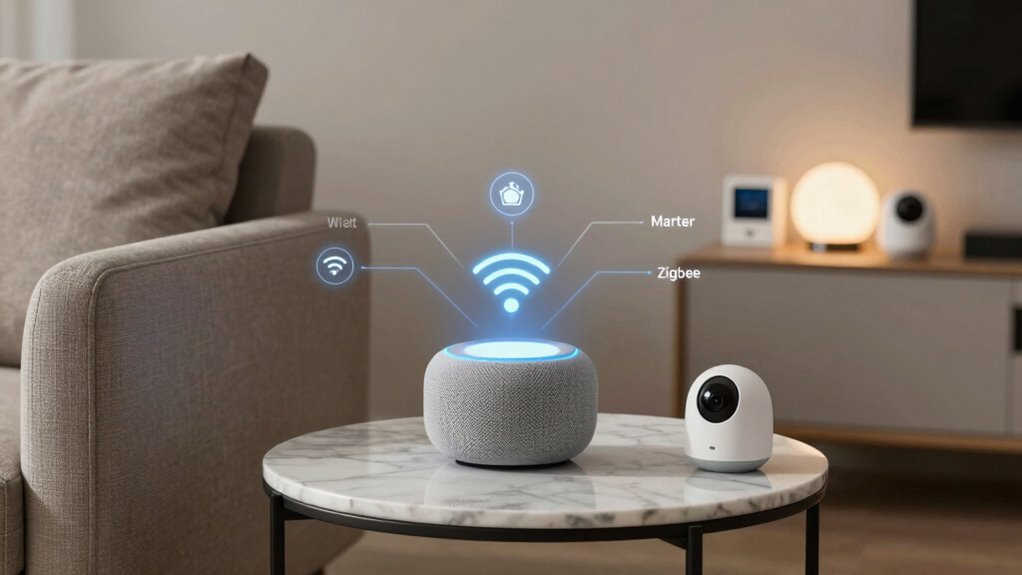
Wi-Fi keeps your smart home connected by maintaining a strong wireless signal within your space. It manages network bandwidth to guarantee devices run smoothly without lag or interruption. Compatibility standards also make sure your devices work seamlessly together, creating a reliable smart home experience.
Wireless Signal Range
Ever wonder how your smart home stays connected across every room? Wi-Fi’s signal range is key, but it’s influenced by factors like signal interference from walls, appliances, and other networks. These obstacles can weaken your connection, causing lag or dropped devices. To ensure consistent coverage, Wi-Fi routers often use multiple antennas or mesh systems to extend range. Keep in mind, stronger signals help preserve device longevity by reducing strain on your gadgets. Here’s a quick look at how various elements impact your Wi-Fi:
| Obstacle | Effect on Signal | Mitigation Strategy |
|---|---|---|
| Thick walls | Blocks signal | Mesh networks |
| Other networks | Causes interference | Change channels |
| Large distances | Weakens signal | Reposition router |
| Appliances (microwave, cordless phones) | Signal interference | Keep away from devices |
| Device placement | Affects coverage | Central location |
Network Bandwidth Allocation
As your smart home adds more devices, the way bandwidth is allocated becomes increasingly important to keep everything running smoothly. Smart home bandwidth needs careful management to prevent slowdowns or disconnects, especially when multiple devices stream, control, or transmit data simultaneously. Wi-Fi routers implement network prioritization, which assigns higher priority to critical devices or activities, like security cameras or voice assistants. This ensures essential functions stay responsive even during heavy usage. Modern routers also use Quality of Service (QoS) settings to dynamically allocate bandwidth based on real-time needs. By managing network prioritization effectively, your smart home maintains a stable connection, allowing all devices to operate seamlessly without interruption or lag. Keeping this balance is essential for a smooth, connected smart home experience.
Device Compatibility Standards
To keep your smart home connected, devices must comply with universal compatibility standards that guarantee seamless communication. Device standardization plays a crucial role, ensuring different brands and protocols can work together smoothly. These standards promote smart home interoperability, allowing your devices—lights, thermostats, security cameras—to communicate without issues. These standards also facilitate technology integration, making it easier to add new devices as your needs evolve. Wi‑Fi, for instance, is widely adopted because it’s a familiar, standardized protocol that supports high data transfer speeds and broad device compatibility. When devices adhere to common standards, you avoid compatibility headaches and can expand your smart home easily. Manufacturers increasingly follow these standards to enhance user experience, making your smart home more reliable, flexible, and simple to manage. This uniformity is essential for building a cohesive, interconnected smart home ecosystem. Additionally, device interoperability ensures that new devices can be integrated seamlessly without requiring complex configurations or proprietary solutions. Moreover, understanding standardization helps consumers make informed choices about compatible products and future-proof their smart homes.
What Are Matter, Thread, and Zigbee, and Why Are They Important?

What exactly are Matter, Thread, and Zigbee, and why do they matter in the smart home ecosystem? These technologies are interoperability standards that enable seamless communication between various smart devices, regardless of brand or protocol. Matter, backed by major industry players, simplifies device compatibility and enhances user experience. Thread is a low-power, mesh networking protocol that creates reliable, secure connections among devices. Zigbee has been a longstanding standard for home automation, offering a robust network for smart devices. All three prioritize security protocols to protect your data and prevent unauthorized access. Understanding these standards is crucial for interoperability in smart homes and building a smarter, more interoperable home that’s easier to expand and safer to use.
Which Smart Home Protocol Is Best for Your Setup?

Choosing the right smart home protocol depends on your specific needs, device compatibility, and future expansion plans. If you prioritize smart home security, look for protocols that support encrypted communication and reliable connectivity, like Zigbee or Z-Wave. For seamless voice control integration, ensure your devices work well with popular voice assistants such as Alexa or Google Assistant. Wi-Fi is convenient for high-bandwidth applications but may lack the low-power efficiency of protocols like Thread or Zigbee, which are better suited for battery-powered sensors and devices. Consider whether you want a centralized hub or a more distributed system. Ultimately, the best protocol balances security, ease of use, and compatibility with your existing devices, helping you create a secure, voice-controlled smart home tailored to your needs. Additionally, understanding AI Ethicist Jobs can be helpful if you’re interested in how emerging technologies like AI influence smart home security and automation systems.
How Do These Technologies Work Together in Your Smart Home?

Smart home technologies work together seamlessly by communicating through a variety of protocols and hubs that coordinate device actions. However, interoperability challenges can arise when devices use different standards like Zigbee, Thread, or Wi‑Fi, making integration complex. To address this, hubs or smart home controllers act as bridges, enabling devices to work harmoniously. Security considerations are essential; each protocol has its vulnerabilities, so choosing secure devices and networks protects your data.
| Protocol | Compatibility | Security Focus |
|---|---|---|
| Zigbee | Widely used, requires hubs | Mesh security features |
| Thread | Low power, device-to-device | End-to-end encryption |
| Wi‑Fi | Common, high bandwidth | Network encryption |
Summing Up: Making Sense of Smart Home Protocols and Connections

Understanding how different smart home protocols work together is key to creating a seamless and secure connected environment. While protocols like Matter, Thread, Zigbee, and Wi‑Fi enable your devices to communicate efficiently, security vulnerabilities can still pose risks. Ensuring your network is protected helps prevent unauthorized access and safeguards user privacy. Each protocol has strengths and weaknesses, so choosing compatible, secure options is essential. Regular firmware updates, strong passwords, and network segmentation reduce vulnerabilities. By understanding these connections and potential threats, you make smarter choices about device compatibility and security measures. Ultimately, a well-informed approach helps you maintain privacy, prevent hacking, and enjoy a truly integrated smart home experience.
Frequently Asked Questions
How Do Smart Home Protocols Impact Device Security and Privacy?
You should know that smart home protocols directly impact your device security and privacy. They use encryption standards to protect data during transmission, making it harder for hackers to access your information. Additionally, understanding privacy policies helps you know how your data is stored and shared. Choosing devices with strong, updated protocols guarantees your smart home remains secure and your personal information stays private.
Can Different Smart Home Protocols Be Integrated Seamlessly?
You can seamlessly integrate different smart home protocols, but it’s not always straightforward. Imagine a well-orchestrated symphony where devices communicate smoothly—this hinges on overcoming interoperability challenges. Protocol standardization like Matter aims to unify diverse systems, making integration easier. While some devices work well together, others may require hubs or bridges, so knowing which protocols are compatible helps you create a cohesive smart home environment effortlessly.
What Are the Future Trends in Smart Home Connectivity Technologies?
You’ll see future smart home connectivity focus on overcoming interoperability challenges, making devices work seamlessly together. Expect innovations that enhance energy efficiency, like smarter power management and low-power protocols. These trends will simplify your setup, reduce energy costs, and improve device coordination. As technology advances, you’ll enjoy a more integrated, responsive smart home experience, where devices effortlessly communicate and adapt to your needs without hassle or compatibility issues.
How Do Protocol Differences Affect Device Compatibility and User Experience?
Protocol differences create cross compatibility challenges that can frustrate your smart home experience. When devices use different protocols like Zigbee, Thread, or Wi‑Fi, they may not work seamlessly together. However, protocol standardization efforts, such as Matter, aim to unify these standards, making device integration easier and your user experience smoother. Staying informed about these developments helps you choose devices that work well together.
Are There Cost Differences Between Implementing Various Smart Home Protocols?
A penny saved is a penny earned, and the cost differences between protocols matter. You’ll find that licensing fees for protocols like Zigbee or Thread can increase hardware manufacturing expenses, raising overall costs. Wi‑Fi, often more straightforward to implement, might have higher initial setup costs but lower licensing fees. Your choice impacts both your budget and device compatibility, so weigh these factors carefully to make smart investments.
Conclusion
Guiding the world of smart home tech can feel like decoding a secret language, but understanding these buzzwords clears the fog. Like a symphony where each instrument plays in harmony, these protocols and connections work together to create a seamless, intelligent home. By knowing what matters most, you empower yourself to build a space that’s not just smart, but perfectly tuned to your life’s rhythm—making your home truly feel alive.