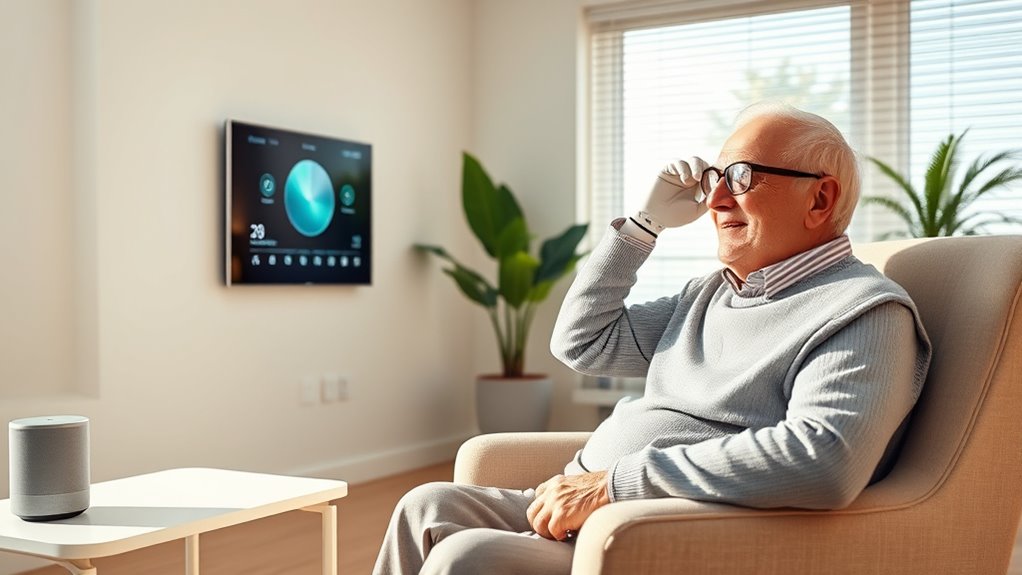

Automations for aging in place use smart home tech to boost your safety, independence, and convenience. You can set motion sensors to detect falls or inactivity, while door and window alarms notify you of unauthorized access. Voice commands make controlling lights, thermostats, and locks easy, and remote alerts keep you connected with loved ones or caregivers. These features help you stay autonomous while feeling secure at home. Keep going to discover how these innovations can transform your living experience.
Key Takeaways
- Smart home systems integrate sensors and alarms to monitor safety and detect emergencies automatically.
- Voice-activated devices and smart locks simplify control, enhancing accessibility for older adults.
- Automated lighting and environment controls help prevent accidents and improve daily convenience.
- Remote monitoring and alerts enable caregivers to oversee safety and respond promptly when needed.
- Customizable automations support independence, allowing older adults to maintain control over their routines comfortably.
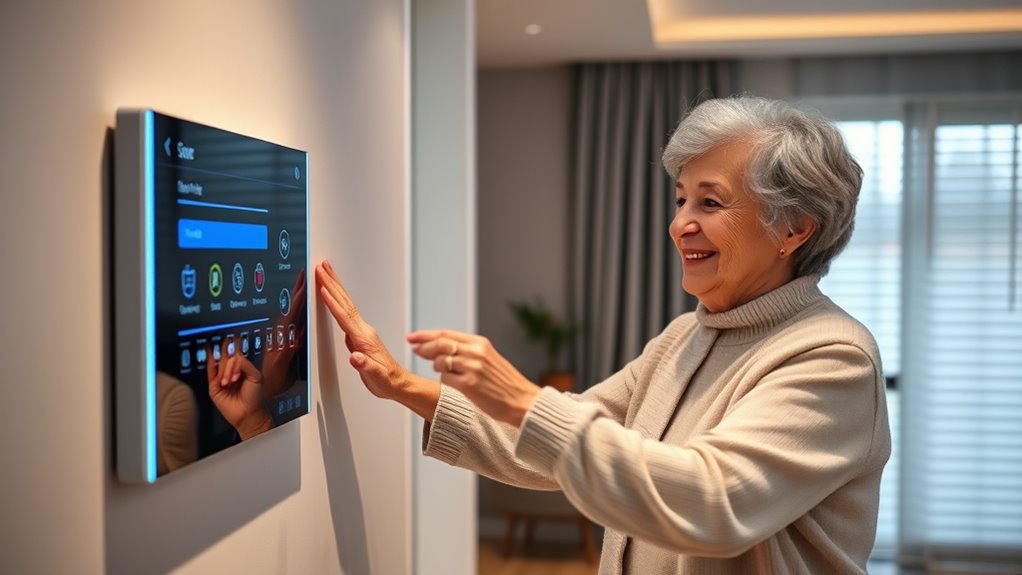
As technology advances, automations are making it easier for older adults to live independently and safely in their own homes. One of the most effective ways to achieve this is through smart home systems designed specifically for safety monitoring. These systems integrate various devices and sensors that work together to create a safer environment, giving you peace of mind while maintaining your independence.
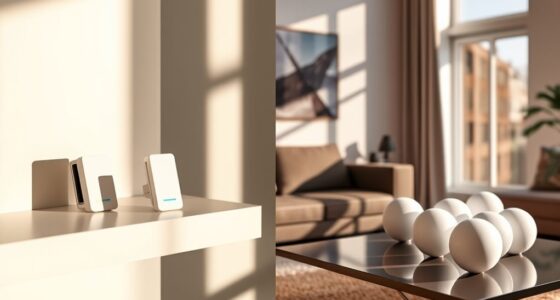
A smart home for aging in place typically includes features like motion sensors, door and window alarms, and emergency response systems. These tools constantly monitor your daily routines and environment, alerting you if anything unusual occurs. For example, motion sensors can detect if you’ve fallen or haven’t moved for an extended period, prompting an alert to caregivers or emergency services. Door sensors can notify someone if a door has been left open or if there’s unauthorized access, which is especially useful if you live alone. These safety monitoring features help prevent accidents and ensure help is available when needed without invading your privacy.
Smart sensors monitor your environment, alerting caregivers to unusual activity and enhancing safety while respecting privacy.
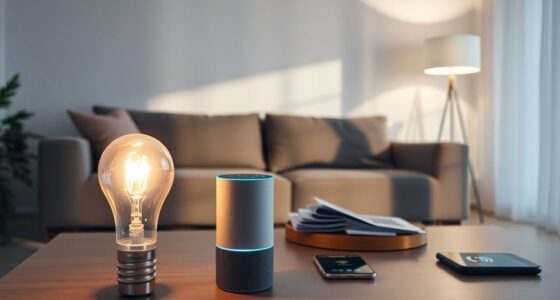
You can also customize your smart home to include voice-activated assistants that respond to commands, making it easier to control lights, thermostats, or call for assistance. Imagine being able to turn on lights or adjust the temperature without leaving your chair, simply by speaking. These small conveniences considerably enhance comfort and safety, especially for those with mobility issues or arthritis. Additionally, smart locks can be programmed to automatically lock doors at certain times or provide keyless entry, reducing the risk of losing keys or forgetting to lock up when you leave.
The safety monitoring aspect of smart homes is particularly crucial because it operates around the clock, providing continuous oversight. Many systems offer mobile apps that let you or your loved ones check in remotely, review activity logs, or receive alerts if something seems amiss. This constant monitoring creates a safety net, catching potential hazards before they become serious problems. It also encourages independence by reducing the need for constant supervision, as you know help is just a tap or a voice command away. Incorporating wall organization systems can help keep your living space clutter-free, making it easier to move around safely and access your devices quickly.
Investing in a smart home with advanced safety monitoring features can transform your living environment into a secure, convenient space. It empowers you to maintain control over your daily life while ensuring that assistance is always accessible. As these technologies become more affordable and easier to install, more older adults are choosing smart home automations to support their goal of aging in place comfortably, confidently, and safely.
Frequently Asked Questions
How Secure Are Home Automation Systems for Seniors?
Home automation systems for seniors are generally secure, but you should stay cautious about privacy concerns. Look for devices with strong encryption and regular updates to protect personal data. Device interoperability is key; ensure your system integrates well without creating vulnerabilities. While no system is foolproof, choosing reputable brands and configuring privacy settings carefully helps you keep your home safe and secure for aging in place.
Can Automations Be Customized for Specific Health Conditions?
Yes, automations can be customized for specific health conditions, ensuring personalized health support. Studies show that adaptive technology improves quality of life for seniors by 30%. You can tailor systems to monitor essential signs, medication schedules, or mobility needs, making daily routines safer and more efficient. This customization helps address unique health challenges, giving you peace of mind and empowering you to maintain independence longer.
What Is the Cost Range for Comprehensive Aging-In-Place Automations?
The cost of extensive aging-in-place automations varies widely, typically ranging from $5,000 to over $30,000. Your budget considerations depend on the level of automation and customization you want. Keep in mind that higher-end systems with advanced features will cost more, but they also offer greater convenience and safety. To find the best fit, compare different packages and prioritize features that address your specific needs.
How Easy Is It for Seniors to Learn and Operate These Systems?
Learning to operate these systems is like picking up a new hobby—you might face a gentle learning curve at first, but once you get the hang of it, it becomes second nature. Most systems are designed with user friendliness in mind, making them easier for seniors to understand and use. With clear instructions and intuitive interfaces, you’ll find that mastering these automations is achievable and rewarding.
Are There Any Privacy Concerns With Automation Devices Tracking Activity?
Yes, privacy concerns and data security are valid when using automation devices that track activity. You should be aware that these systems collect personal information, which could be vulnerable if not properly protected. It’s important to choose devices with strong security features, like encryption and user controls, so you can manage who accesses your data. Regularly update your devices and stay informed about their privacy policies to keep your information safe.
Conclusion
By embracing automation, you can enhance safety, independence, and peace of mind as you age in place. Did you know that smart home technology can reduce fall risks by 30%? Staying connected with these innovations not only simplifies daily tasks but also gives you confidence and security. So, explore these tools and take control of your future—your comfort and safety are worth it. Embrace automation today for a more independent tomorrow.