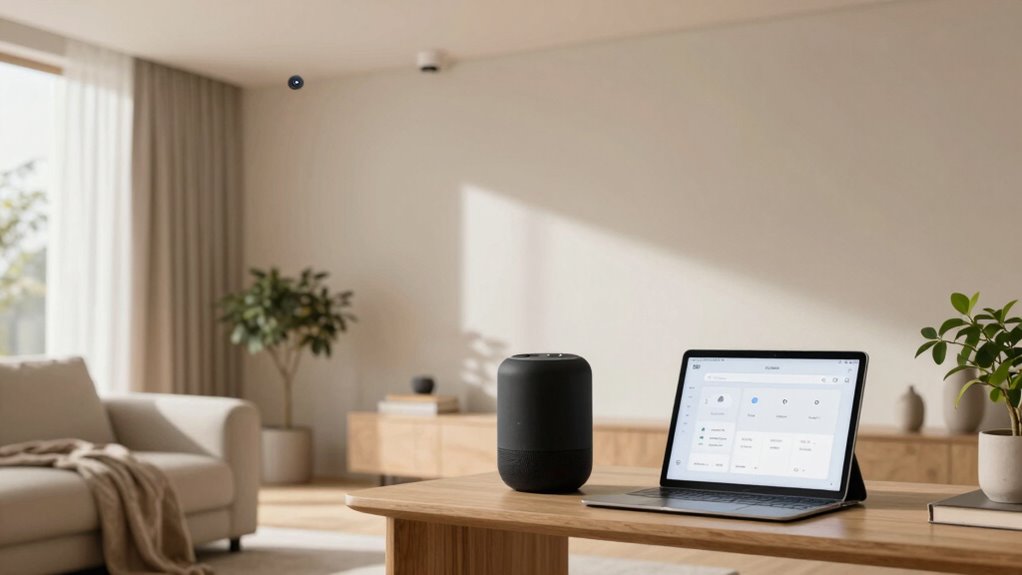

To plan a smart home without over-automating, focus on what truly benefits you, like energy efficiency, security, or convenience. Keep automations simple and purposeful—avoid trying to automate every aspect of life. Use voice control for quick commands and smart devices that work well together. Regularly review and adjust your system to prevent overload. Stay balanced by prioritizing routines that support your habits, and if you want tips for a smart, manageable home, there’s more to explore here.

Get furniture and decor delivered free with Prime
- Fast, free delivery on millions of items
- Prime Video, Amazon Music and more included
- Member-only deals all year
Key Takeaways
- Prioritize essential devices that improve daily life without overwhelming automation.
- Integrate voice control for key functions to simplify user interaction.
- Focus on energy-efficient solutions that save money and reduce waste.
- Set clear boundaries to automate only routines with tangible benefits.
- Regularly review and adjust automations to maintain a balanced, manageable system.
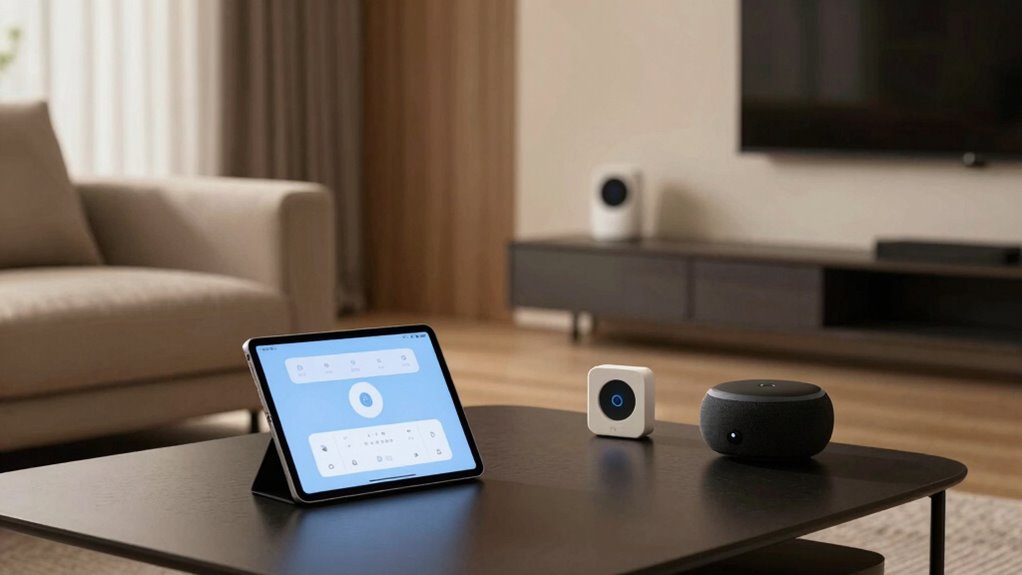
Creating a smart home begins with clear planning to guarantee your devices work seamlessly together and meet your needs. The goal isn’t to automate every aspect of your life but to enhance convenience, security, and efficiency without overwhelming yourself or complicating your daily routines. Start by identifying what truly matters most to you—whether it’s controlling lighting, managing security, or optimizing energy use. This focus helps prevent over-automating and ensures your smart home remains functional and user-friendly.
Smart home planning focuses on enhancing convenience and security without overcomplicating routines.
When considering voice control, think about how you want to interact with your devices. Voice commands are a popular way to manage your smart home easily, but they work best when integrated thoughtfully. Choose a central voice assistant, like Amazon Alexa or Google Assistant, and make certain all compatible devices can connect smoothly. This way, you can control lights, thermostats, and even appliances with simple commands, saving time and effort. Avoid overloading your system with too many devices; instead, select a few key ones that make your daily life easier. Remember, voice control should enhance your experience, not complicate it.
Energy efficiency is another critical aspect of planning your smart home. Instead of automating every appliance, focus on smart solutions that genuinely cut down on waste and save you money. For example, install smart thermostats that learn your schedule and adjust heating or cooling accordingly. Use smart lighting that can be scheduled or turned off remotely when not needed. These small but impactful changes contribute to lower energy bills and a smaller carbon footprint. Keep in mind that automation isn’t about eliminating manual control completely but about making energy management more intuitive and responsive to your lifestyle. Incorporating smart home technology can also help you better understand and manage your system’s capabilities, making automation more effective and tailored to your needs.
To avoid over-automating, set clear boundaries for what automation should do. Think about routines that truly benefit you—like turning off unnecessary lights at night or adjusting the thermostat when you leave the house. Use automation as a tool to support your habits, not replace them entirely. It’s also helpful to keep a simple interface, so you don’t get lost in complex control panels or endless device settings. Regularly review and adjust your automations to match changes in your routines and preferences, ensuring your smart home remains practical rather than overwhelming. Developing a solid understanding of automation boundaries can prevent over-automation and keep your system manageable. Establishing a balanced automation strategy will help you maintain control while enjoying the benefits of smart technology.
smart thermostats with scheduling
As an affiliate, we earn on qualifying purchases.
As an affiliate, we earn on qualifying purchases.
Frequently Asked Questions
How Do I Ensure My Smart Home Remains Secure From Hacking?
To keep your smart home secure from hacking, you should implement strong cybersecurity protocols and use encryption techniques for all devices. Regularly update firmware and software to patch vulnerabilities, and change default passwords to unique, complex ones. Enable two-factor authentication where possible, and segment your network to isolate smart devices from your main network. These steps make it much harder for hackers to access your system and protect your home’s privacy.
What Is the Average Cost to Set up a Smart Home?
Setting up a smart home typically costs between $3,000 and $10,000, depending on your devices and system complexity. To maximize energy efficiency and protect user privacy, choose reputable brands with strong security features. Focus on essential automation, like smart thermostats and lighting, to avoid overspending and over-automating. This approach helps you create a secure, energy-efficient smart home tailored to your needs without unnecessary costs.
How Do I Choose Compatible Smart Devices and Platforms?
You’ll want to prioritize device compatibility and platform integration to avoid tech headaches. Check each device’s compatibility with your chosen ecosystem—like Apple, Google, or Amazon—and verify they support common protocols such as Zigbee or Z-Wave. Don’t assume everything plays nicely; read reviews and product specs carefully. By choosing devices that seamlessly integrate, you save yourself from future frustrations and create a cohesive, smart home experience that works effortlessly.
Can I Upgrade My Smart Home System Later Easily?
Yes, you can upgrade your smart home system later easily, especially if you choose devices with voice control and focus on energy efficiency. Opt for platforms that support future expansions and updates. Keep your existing setup compatible with new devices, and regularly check for firmware updates. This way, you’ll enjoy seamless upgrades, improved automation, and better energy management without overhauling your entire system.
What Are the Best Practices for Maintaining Smart Home Devices?
A stitch in time saves nine, so staying on top of your smart home devices is wise. To maintain them well, regularly update firmware and software for the best device integration and security. Keep user customization in mind by adjusting settings to suit your needs without over-complicating your system. Check connections, clean sensors, and troubleshoot issues promptly. This proactive approach ensures your smart home remains reliable, efficient, and tailored to your lifestyle.
Conclusion
Remember, planning a smart home isn’t about turning your space into a sci-fi movie set. It’s about finding the perfect balance—like a master chef seasoning a dish just right. Avoid over-automating to keep things simple, intuitive, and enjoyable. When you strike this balance, your home won’t just be smart—it’ll feel like a cozy, effortlessly controlled sanctuary that makes your life easier without turning into a tech overload. Keep it smart, keep it simple!
Fall Picks
fall essentials
As an affiliate, we earn on qualifying purchases.