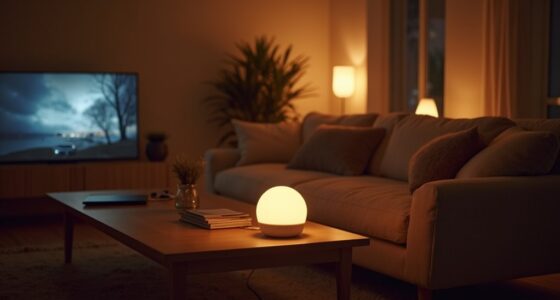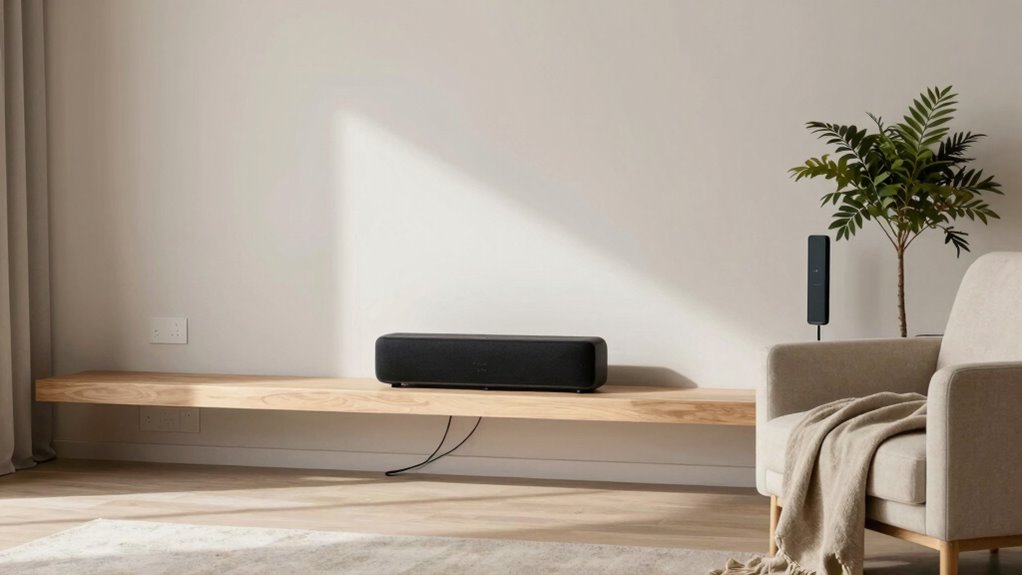

To keep smart home tech from dominating your space, choose sleek, discreet devices that blend with your decor and hide controllers within furniture. Opt for integrated, compact options and hide wiring for a clean look. Regularly update settings and remove outdated equipment to maintain a clutter-free environment. Using automation routines can simplify control and guarantee your devices operate seamlessly without overwhelming the room. Want tips on blending tech seamlessly? Keep exploring for more ideas.

Get furniture and decor delivered free with Prime
- Fast, free delivery on millions of items
- Prime Video, Amazon Music and more included
- Member-only deals all year
Key Takeaways
- Choose sleek, neutral-colored devices that blend seamlessly with your decor.
- Hide controllers and hubs within furniture or behind panels for a discreet look.
- Opt for integrated, compact devices that can be embedded into walls or furniture.
- Use automation routines to control multiple devices effortlessly, reducing visual clutter.
- Regularly review and update device placements to maintain a clean, balanced aesthetic.
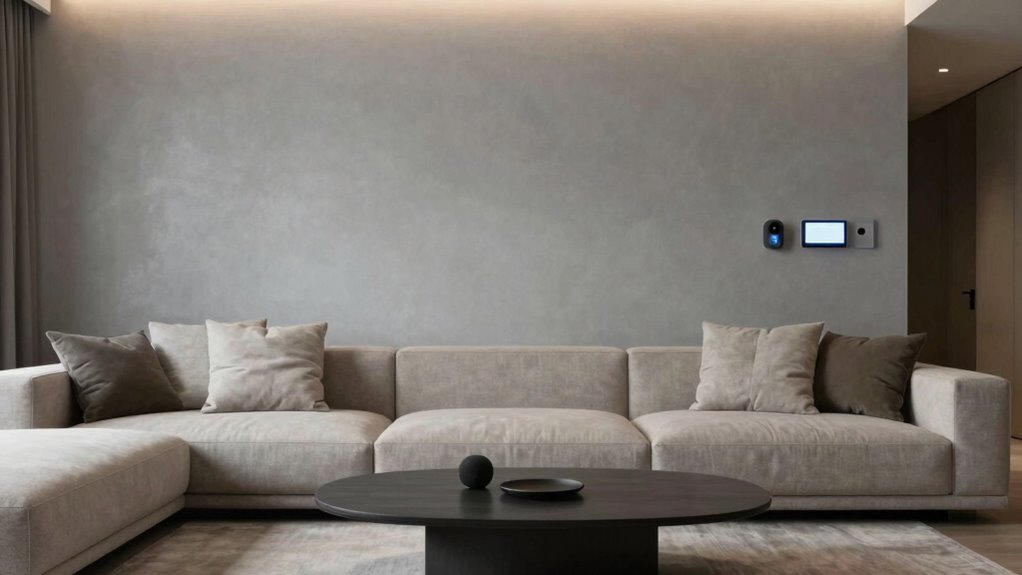
Smart home technology can make your life more convenient, but if you’re not careful, it can also overwhelm a room’s aesthetic. When devices start to pile up or stand out too much, they can turn your carefully curated space into a cluttered, chaotic environment. To keep your smart tech from dominating, you need to think about both design and function. One key aspect is user customization—tailoring devices so they blend seamlessly into your space rather than calling attention to themselves. Many smart devices offer customizable screens, colors, or discreet mounting options, allowing you to match them with your decor. For example, choosing smart speakers with sleek, neutral finishes or hiding controllers in furniture can make a big difference.
Smart tech should blend seamlessly into your decor with customizable finishes and discreet mounting options.
But aesthetics aren’t the only concern. Privacy concerns often come with smart home tech, especially when devices are visible or constantly connected. You want to feel secure that your data isn’t vulnerable or being misused. This means selecting devices with robust security features and being deliberate about where they’re placed. Keep sensitive equipment out of high-traffic areas or spaces where guests gather. When possible, opt for devices that allow you to control what data they collect and share, giving you peace of mind and reducing visual clutter that can come with oversized or conspicuous installations. Additionally, understanding device security helps ensure your privacy is protected, preventing potential breaches that could compromise your personal information.
You also want your smart devices to enhance rather than detract from your space. Smaller, integrated devices tend to work best. For example, instead of large, standalone hubs, opt for compact smart hubs that can be tucked away or integrated into existing furniture. Discreet sensors and hidden wiring help maintain a clean look. Moreover, choosing modular design options allows your system to adapt more easily to your evolving needs without adding unnecessary clutter. Additionally, consider how your devices are activated—voice commands, app controls, or automation routines—so you’re not constantly reaching for multiple remotes or screens. When devices are unobtrusive and easy to control, they seamlessly fit into your lifestyle without taking center stage. Incorporating smart home design principles can further help in achieving a cohesive and clutter-free environment.
Lastly, don’t forget the importance of routine maintenance and updates. Regularly review your device settings to ensure they still match your needs and aesthetic preferences. Remove or replace outdated or bulky equipment that no longer serves your style or function. Staying on top of software updates ensures your devices operate smoothly and securely, reducing vulnerabilities and unnecessary clutter. Keeping your system up-to-date ensures optimal security and performance, preventing unnecessary clutter or vulnerabilities. By carefully selecting, customizing, and managing your smart home tech, you create a space that’s both modern and harmonious, where technology enhances your environment without overwhelming it.
As an affiliate, we earn on qualifying purchases.
Frequently Asked Questions
Can Smart Devices Be Hidden to Maintain Aesthetics?
Yes, smart devices can be hidden to maintain aesthetics through concealed installation techniques. You can hide smart speakers behind panels, use in-wall or in-ceiling mounts, or integrate devices into furniture for seamless aesthetic integration. These strategies help your technology blend into the room’s design, reducing visual clutter while keeping smart features accessible. With clever concealment, your smart home remains functional without compromising style or creating a cluttered look.
How Does Smart Tech Affect Room Temperature and Airflow?
Smart tech can influence room temperature and airflow more than you might think, with improper thermostat placement causing up to a 15% energy loss. To optimize airflow, hide devices or position vents strategically. Focus on airflow optimization by placing thermostats away from drafts or heat sources, ensuring even temperature distribution. Smart sensors can help fine-tune these settings, creating a comfortable environment without the tech dominating your space.
Are There Privacy Concerns With Hidden Smart Home Devices?
Yes, hidden smart home devices can raise privacy concerns. You should guarantee they use strong data encryption to protect your information and require proper device authorization to prevent unauthorized access. Regularly update device firmware and review privacy settings. Being cautious about where you place these devices and understanding their data collection practices helps you maintain control over your privacy and reduces potential risks.
What Are the Best Ways to Organize Smart Home Cables?
Did you know that poorly managed cables can add up to 30% clutter in a room? To keep your smart home tech organized, focus on wire management and cable concealment. Use cable clips, sleeves, or boxes to hide cords, and run wires along edges or behind furniture. Labeling cables helps identify them quickly, reducing mess and improving the sleek look of your smart space.
Can Smart Home Devices Be Integrated Seamlessly With Existing Decor?
Yes, you can seamlessly integrate smart home devices with your existing decor. Use voice control to operate devices discreetly, avoiding clutter. Choose sleek, minimalist designs that blend with your room’s aesthetic, and hide cables behind furniture or within walls. Smart lighting and thermostats can enhance energy savings while maintaining style. With thoughtful placement and modern designs, your smart tech will complement your decor without dominating the space.
Conclusion
By thoughtfully integrating your smart home tech, you can strike a balance where innovation enhances rather than overwhelms your space. Think of your room as a garden; with careful pruning and placement, the gadgets become the blossoms rather than the weeds. Keep the clutter in check, choose sleek designs, and hide cords to let your space breathe. When done right, your smart home becomes a symphony of technology and tranquility, not a cacophony of chaos.
Evergreen bestsellers Picks
bestsellers
As an affiliate, we earn on qualifying purchases.