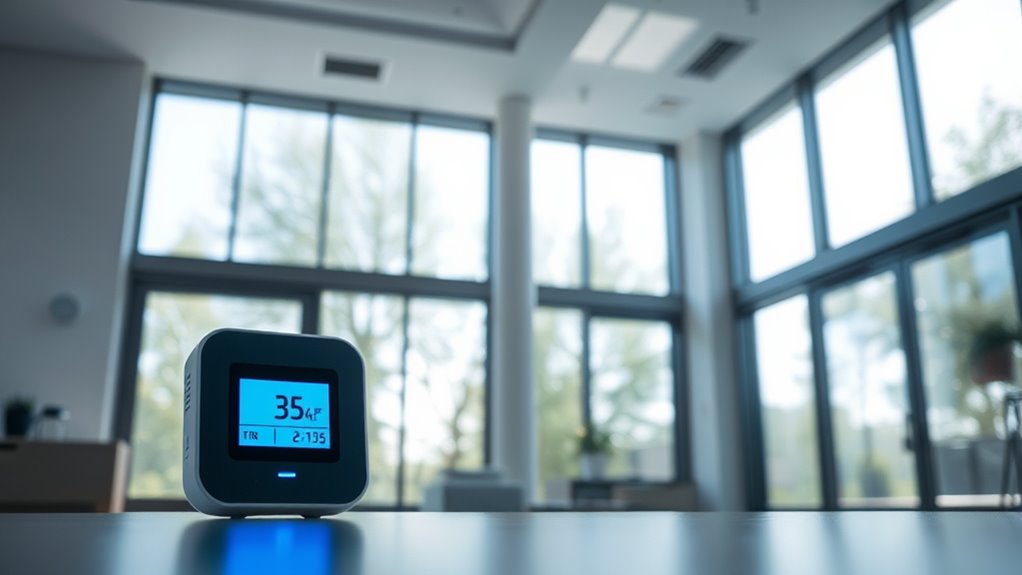

To maintain healthy indoor air, you should track pollutants like VOCs, CO2, particulate matter, humidity, and temperature. Monitoring these factors helps you identify potential problems early and make informed decisions about ventilation and purification. Regular calibration and proper sensor placement ensure accurate data. Understanding your sensor‘s capabilities is essential for effective monitoring. Stay attentive to these key indicators, and you’ll find out more ways to improve your indoor environment as you continue exploring.
Key Takeaways
- Monitor pollutants like VOCs, particulate matter, CO2, humidity, and temperature to assess indoor air quality effectively.
- Regularly calibrate sensors to ensure accurate and reliable data over time.
- Place sensors in high-traffic, representative areas away from pollution sources for meaningful readings.
- Understand sensor limitations to correctly interpret data and avoid misjudging air quality conditions.
- Use data trends to identify pollution sources and implement targeted mitigation strategies.
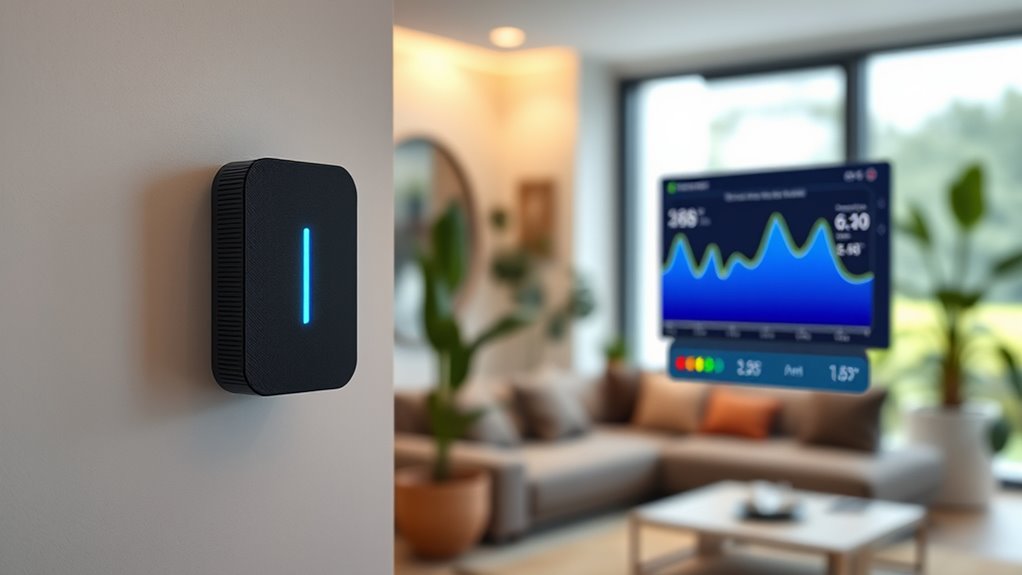
Indoor air quality sensors have become essential tools for monitoring the environment inside your home or workspace. They help you stay aware of the air you breathe and identify potential issues before they become serious health concerns. When you set up these sensors, understanding what to track is crucial for maintaining a healthy environment. One of the primary aspects to focus on is air quality monitoring, which involves checking for pollutants, gases, and other airborne particles that could impact your well-being. These sensors measure pollutants like volatile organic compounds (VOCs), carbon dioxide (CO2), particulate matter (PM), and sometimes even humidity and temperature levels. By continuously collecting data, you can spot trends, identify sources of pollution, and take action to improve your indoor air quality.
However, for air quality monitoring to be accurate and reliable, proper sensor calibration is essential. Sensor calibration involves adjusting the sensor’s readings to match a known standard, ensuring the data reflects real-world conditions. Over time, sensors can drift or become less accurate due to environmental factors or aging components. When that happens, your readings might not be dependable, leading to misguided decisions about ventilation, air purifiers, or other mitigation strategies. Regular calibration helps prevent this issue, keeping your sensor data precise and trustworthy. Many sensors come with calibration instructions, but some may require professional calibration or the use of calibration gases for the most accurate results. Investing time in calibration routines ensures your air quality monitoring system remains effective, providing you with clear, actionable insights. Additionally, understanding the sensor’s specifications and limitations can help you interpret the readings more accurately, ensuring you make well-informed decisions about your indoor environment.
Beyond calibration, it’s also important to consider the placement of your sensors. Position them in areas where you spend most of your time, away from direct sources of pollution like cooking stations or cleaning supplies, which can temporarily skew readings. Accurate air quality monitoring depends on consistent, representative data, so proper placement and maintenance are key. Additionally, staying informed about the sensor’s specifications and limitations can help you interpret the readings better. Not all sensors detect the same pollutants with equal accuracy, so understanding what your device can and cannot measure helps you make smarter decisions about your indoor environment.

16 in 1 Air Quality Monitor Indoor 7" Wildfire CO2 Monitor, 9 AQI+7 Alerts
- 16-in-1 Air Quality Monitoring: Detects 9 key air parameters and 7 AQI alerts
- Large 7-inch LED Display: Clear, instant air quality readings with adjustable brightness
- High-Precision External Sensors: Accurate to 0.001 units for reliable detection
As an affiliate, we earn on qualifying purchases.
As an affiliate, we earn on qualifying purchases.
Frequently Asked Questions
How Often Should Indoor Air Quality Sensors Be Calibrated?
You should calibrate your indoor air quality sensors at least once every six months to maintain sensor accuracy. Regular calibration ensures the sensors provide reliable data, which is vital for making informed decisions about your indoor environment. Keep an eye on manufacturer recommendations too, as some sensors may require more frequent calibration depending on usage and environmental conditions. Consistent calibration helps you track air quality effectively and keeps your sensors functioning at their best.
What Is the Average Lifespan of an Indoor Air Quality Sensor?
You can expect an indoor air quality sensor to last around 3 to 5 years, depending on its sensor durability and usage conditions. Regular maintenance and proper calibration help prolong its lifespan. Keep in mind that replacement frequency varies; sensors may need replacing sooner if they show signs of malfunction or reduced accuracy. Monitoring performance regularly ensures you maintain accurate indoor air quality data over time.
Can Sensors Detect All Types of Indoor Pollutants?
You might think indoor air quality sensors can detect every pollutant out there, but that’s an exaggeration. They excel at pollutant detection for common issues like VOCs, CO2, and particulate matter, yet sensor limitations mean some pollutants, like certain gases or biological agents, slip through undetected. So, while they’re powerful tools, don’t rely solely on sensors — combine them with other methods for all-encompassing indoor air monitoring.
Are Indoor Air Quality Sensors Safe to Install DIY?
Yes, indoor air quality sensors are safe to install DIY if you follow proper sensor installation procedures. Make sure to read the manufacturer’s instructions carefully and handle components with care. Use appropriate tools and wear safety gear if needed. Staying cautious during DIY safety guarantees you avoid damage or injury. If you’re unsure, consult a professional for guidance. With proper precautions, sensor installation can be a straightforward and safe process.
How Do Sensor Readings Correlate With Health Risks?
Think of sensor readings like a health report for your home, revealing air quality measurements that directly impact your well-being. When levels of pollutants or allergens spike, it signals increased health risks, prompting you to improve ventilation or clean more often. By monitoring these readings regularly, you can assess health risks effectively, making informed decisions to create a safer, healthier indoor environment for you and your loved ones.
Conclusion
By monitoring key indoor air quality factors with sensors, you can create a healthier living space. For example, imagine installing sensors that detect high carbon dioxide levels during work-from-home hours, prompting you to open a window. This simple step can boost your focus and well-being. Staying aware of indoor air quality helps you make informed decisions, ensuring your home remains a safe and comfortable environment for you and your loved ones.