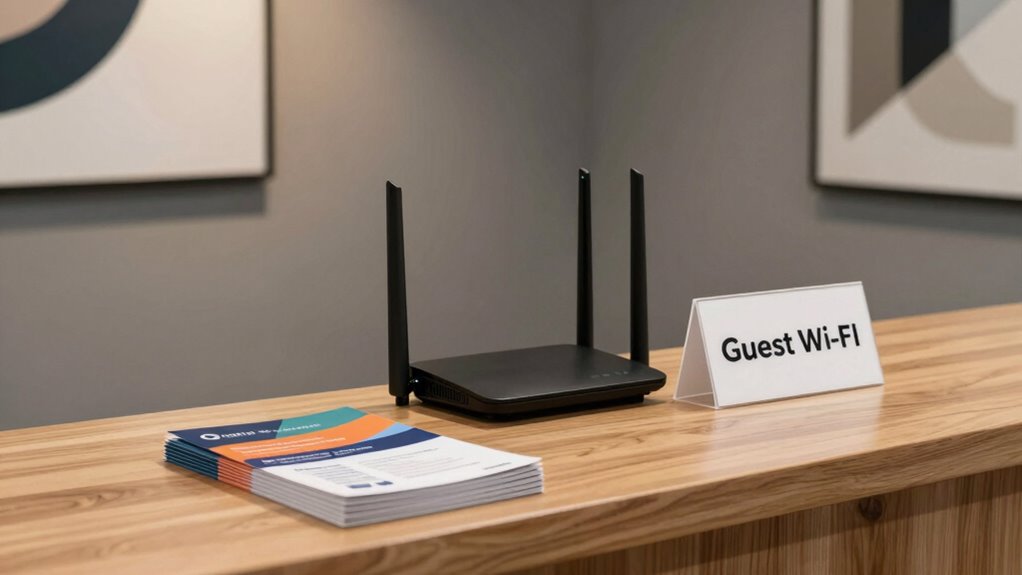

To keep visitors separate without confusion, set up a dedicated guest Wi-Fi network with its own SSID and strong security, like WPA3. Use a different password from your main network and enable features like network segmentation and VLANs if possible. Limit bandwidth and access to your main devices. Regularly update your router firmware to patch vulnerabilities. For simple and secure management, continue exploring key steps to create a safe and welcoming guest network.
Key Takeaways
- Create a separate guest Wi-Fi network (SSID) with unique credentials to isolate visitor traffic.
- Enable network segmentation or VLANs to keep guest devices separate from your main network.
- Use strong, distinct passwords and WPA3 encryption for the guest network to enhance security.
- Limit bandwidth and access permissions for guest users to prevent network congestion and security risks.
- Regularly update router firmware and monitor guest activity to maintain a secure, seamless separation.
Why You Should Set Up a Separate Guest Wi-Fi Network
Setting up a separate guest Wi-Fi network is essential for protecting your main network and devices. Proper network naming helps you easily identify your guest network, making management straightforward. When you assign a clear, distinct name, it prevents confusion and ensures visitors access the right network. Offering guest access separately means your personal data, smart home devices, and sensitive information stay secure. By isolating guest traffic, you reduce the risk of malicious activity or accidental interference with your primary network. This setup not only enhances security but also improves performance for both you and your guests. Remember, a well-named, dedicated guest Wi-Fi network is a simple yet effective way to maintain privacy and control over your home network environment. User consent management is also important to ensure your visitors agree to the terms of use and understand your privacy policies. Incorporating features like Vetted – Perfect Fit Living can help optimize your network setup for ease and security. Additionally, understanding network segmentation can further strengthen your overall network security and streamline management, especially when implementing European Cloud Servers for secure hosting solutions. Being aware of security best practices can further safeguard your network from potential threats.
How to Choose the Right Hardware for Guest Wi-Fi

Choosing the right hardware is essential to guarantee your guest Wi-Fi network is reliable, secure, and performs well. Start by considering wireless standards like 802.11ac or 802.11ax, which ensure fast speeds and better coverage. Your router or access point must also be compatible with your existing network hardware, avoiding compatibility issues that could disrupt service. Look for devices that support multiple SSIDs to easily create a separate guest network. Prioritize hardware with strong security features, such as WPA3 encryption, to keep your main network protected. Additionally, select equipment that offers manageable bandwidth controls and scalability, so you can handle guest traffic without sacrificing your primary connection. Investing in compatible, up-to-date hardware ensures your guest Wi-Fi is both seamless and secure. Network security can also be improved with hardware that supports the latest encryption standards, providing an additional layer of protection. To ensure consistent performance, consider hardware that supports network infrastructure standards and quality components for durability. In addition, choosing reliable and durable hardware helps maintain a steady connection even during high usage periods. Proper network design also involves understanding signal coverage to prevent dead zones and ensure all visitors have access to strong, stable connectivity.
Setting Up Your Guest Wi-Fi Network Step-by-Step
Now that you’ve selected the right hardware, it’s time to set up your guest Wi-Fi network. You’ll need to choose a suitable router and configure your network settings to keep your guests connected securely. Follow these steps carefully to guarantee a smooth and safe setup process. Additionally, understanding network security practices can help you better protect your personal information while offering guest access. Remember, implementing simple security measures can prevent potential vulnerabilities and ensure your main network remains protected. For optimal performance, it’s also helpful to consider Rhythm Failure‘s approach to creating positive environments, as a well-managed network can foster a more welcoming experience for your visitors. Ensuring your network uses secure encryption protocols is crucial to maintaining data privacy for both you and your guests. Regularly updating your firmware is another key security practice that can help safeguard your network from emerging threats.
Choose a Suitable Router
Selecting the right router is essential for creating a reliable guest Wi-Fi network. Your router selection impacts speed, security, and how well your network handles multiple visitors. Focus on hardware compatibility with your internet service provider and existing devices to guarantee smooth setup. Look for routers with dual-band or tri-band capabilities to separate guest traffic from your main network effectively. Consider features like guest network support, security protocols, and ease of management. A router with updated firmware and good reviews can prevent connectivity issues and improve performance. Avoid choosing a model solely based on price; investing in a quality router ensures your guest network remains stable and secure. With the right hardware, you set a solid foundation for a seamless and safe guest Wi-Fi experience.
Configure Network Settings
To set up your guest Wi-Fi network, start by accessing your router’s admin dashboard through a web browser. Once logged in, you’ll need to configure network settings to keep your guests isolated. Focus on network segmentation to create a separate network for visitors, preventing access to your main devices. Adjust IP addressing to assign a distinct IP range for the guest network, ensuring smooth operation. Here’s what to do:
- Enable a separate SSID dedicated to guests
- Set a unique IP range for the guest network
- Activate network segmentation to isolate guest traffic
- Understanding network segmentation helps clarify how this setup enhances security and performance.
This setup enhances security and performance, keeping your primary network safe while providing visitors with reliable internet access. Proper configuration guarantees your guest Wi-Fi remains separate, simple, and effective.
Creating Easy and Secure Guest Logins

Ever wondered how to provide your guests with quick, hassle-free Wi-Fi access without compromising security? The key is creating simple yet secure guest logins. Start with guest authentication, which verifies visitors without giving them full access to your main network. Use a separate guest network or VLAN to keep their activity isolated, ensuring your private data stays protected. Choose a straightforward login method, like a temporary password or a shared code, that’s easy for guests to use but hard for outsiders to guess. Automate the process where possible, so new visitors can connect instantly without needing your help. Incorporating network segmentation helps prevent potential threats from spreading and enhances overall security. Additionally, implementing secure guest access protocols can further safeguard your network while providing a seamless experience for guests. Employing Wi-Fi encryption standards adds an extra layer of protection, keeping your network safe from unauthorized access. Using encryption protocols further enhances security by protecting data transmitted over the network.
Setting Access Limits and Restrictions for Guests

Implementing access limits and restrictions for your guest Wi-Fi guarantees they can browse comfortably without risking your network’s security. By using network segmentation, you separate guest traffic from your main network, reducing potential vulnerabilities. Access control settings let you set boundaries on what guests can do online, such as blocking access to certain sites or limiting bandwidth. To manage these effectively, consider:
- Creating separate SSIDs for guests to isolate their devices
- Setting bandwidth limits to prevent network congestion
- Restricting access to specific IP addresses or services
- Network segmentation plays a crucial role in maintaining your primary network’s security while providing a seamless guest experience. Incorporating secure Wi-Fi protocols further enhances your network’s safety by encrypting guest data and preventing unauthorized access. Additionally, employing access control ensures that guest users have appropriate permissions and cannot access sensitive resources. Utilizing encryption standards is vital in safeguarding guest data during transmission. These steps ensure your guests enjoy reliable internet without compromising your network’s integrity. Proper access control and segmentation keep your primary network safe while offering a seamless guest experience, especially when combined with regular security updates.
Protecting Your Main Network With Best Security Practices
To keep your main network secure, start by creating strong, unique passwords that are hard to guess. Make sure to enable network encryption and update your router’s firmware regularly to patch vulnerabilities. These simple steps help protect your data and prevent unauthorized access. Additionally, understanding the importance of family photoshoot fails highlights how unexpected issues can arise, emphasizing the need for thorough security measures to safeguard your network from potential intrusions.
Strong Password Policies
Strong password policies are essential for safeguarding your main Wi-Fi network against unauthorized access. A strong guest password adds a layer of security, preventing outsiders from exploiting your network. To guarantee your password is effective, focus on password complexity by including a mix of uppercase, lowercase, numbers, and symbols. Avoid using simple or repetitive passwords that are easy to guess. Instead, regularly update your guest password and keep it unique from your main network credentials. Consider these tips:
- Use a complex and unique guest password
- Change passwords periodically
- Avoid sharing passwords broadly
Implementing these practices helps protect your network’s integrity and ensures visitors can access Wi-Fi securely without compromising your primary network. Strong password policies are a simple yet powerful way to enhance your overall security posture.
Enable Network Encryption
Enabling network encryption is a vital step in protecting your main Wi-Fi network from unauthorized access and eavesdropping. Wireless encryption secures data transmitted over your network, making it difficult for outsiders to intercept sensitive information. To maximize security, choose a strong encryption method like WPA3 or WPA2. Additionally, ensure your Wi-Fi password has high complexity, combining uppercase and lowercase letters, numbers, and symbols. Avoid simple or common passwords that can be easily guessed or cracked. By enabling robust wireless encryption and using complex passwords, you create a secure environment that deters intruders and keeps your network safe. Remember, encryption acts as the first line of defense against unauthorized access, so don’t overlook this essential security measure.
Regular Firmware Updates
Regular firmware updates are essential for maintaining the security and performance of your main Wi-Fi network. Keeping your router’s firmware current helps patch vulnerabilities, improve stability, and support your guest network securely. When you update firmware, you reduce the risk that attackers can exploit known flaws, especially if you have a guest Wi-Fi setup. Regularly check for firmware updates from your router manufacturer and apply them promptly. This proactive approach guards against threats and ensures your guest network remains isolated and safe. To make it easier, consider:
- Scheduling automatic firmware updates
- Visiting your router’s admin page periodically
- Enabling notifications for firmware releases
Staying on top of firmware updates is a simple yet powerful step to protect your main network while supporting a secure guest Wi-Fi setup.
Troubleshooting Common Guest Wi-Fi Setup Problems
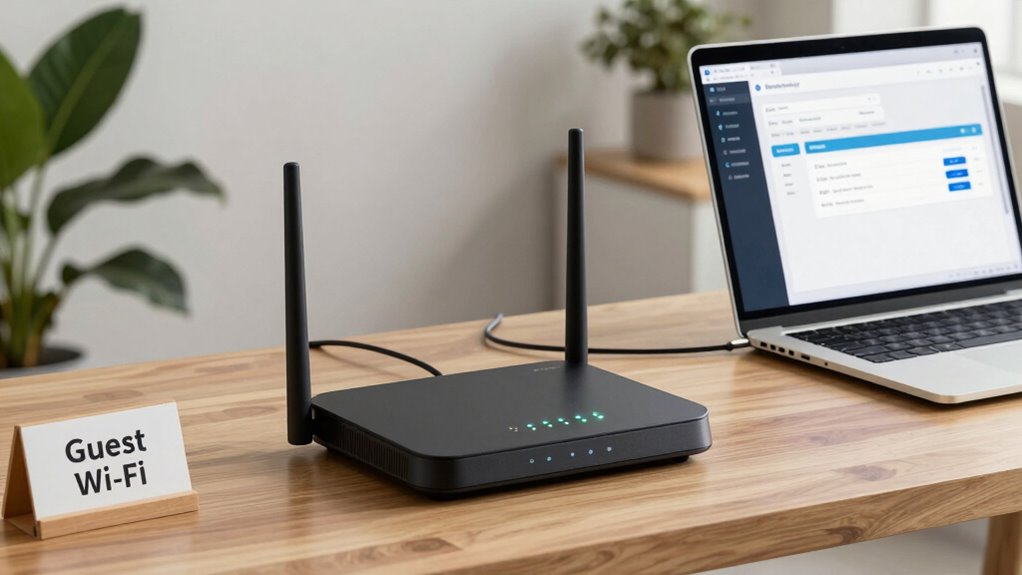
When setting up guest Wi-Fi, problems can arise that prevent devices from connecting properly. A common issue is the guest network not appearing or being hidden. First, double-check that you’ve enabled the guest Wi-Fi feature in your router settings. Ensure the network name (SSID) is broadcasted and not hidden. If devices still can’t connect, try troubleshooting tips like restarting your router or updating its firmware. Sometimes, security settings like WPA2 or WPA3 can interfere; verify they’re compatible with guest devices. Also, confirm the guest network isn’t isolated or restricted from internet access. If issues persist, resetting the router to factory defaults and reconfiguring the guest network often solves connectivity problems. Following these troubleshooting tips helps keep your guest Wi-Fi accessible and secure.
Tips to Help Guests Use Wi-Fi Safely and Responsibly

To guarantee your guests use your Wi-Fi safely and responsibly, it’s important to set clear boundaries and provide guidance on acceptable use. Start by enabling guest access that is isolated from your main network through network segmentation. This keeps your private data secure while allowing visitors to browse freely. To promote responsible use, consider sharing simple guidelines:
- Avoid downloading large files or streaming high-bandwidth content.
- Refrain from accessing sensitive accounts or sharing personal information.
- Report any suspicious activity or connectivity issues immediately.
Using VPNs and VLANs for Advanced Network Security
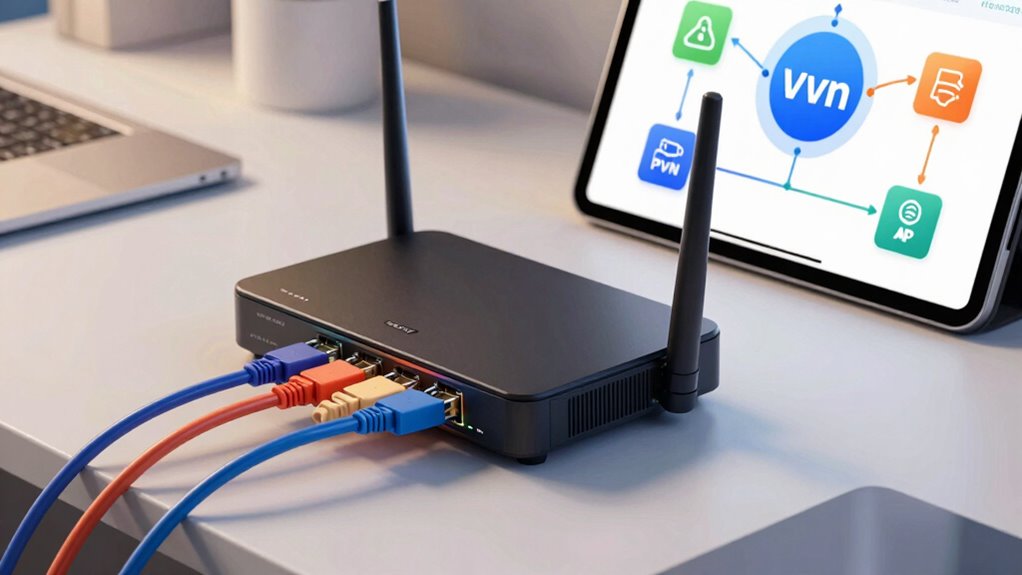
Implementing VPNs and VLANs adds an essential layer of security to your guest network by isolating traffic and encrypting data. VPN tunneling creates a secure, encrypted connection between your device and the VPN server, safeguarding sensitive information from prying eyes. VLAN segmentation divides your network into separate virtual segments, preventing guest devices from accessing your main network and sensitive resources. This setup ensures that even if a guest device is compromised, it can’t affect your core systems. Both techniques work together to enhance security without complicating user access. By deploying VPNs and VLANs, you provide your guests with reliable internet while maintaining control over your network’s integrity and privacy. It’s a smart way to keep your network safe and your guests confident.
Frequently Asked Questions
How Often Should I Update My Guest Wi-Fi Credentials?
You should update your guest Wi-Fi credentials every few months to maintain network security. Regular password management helps prevent unauthorized access and keeps your network safe. Consider changing the password after hosting large events or if you suspect it’s been compromised. By staying proactive with updates, you guarantee your visitors have secure access while protecting your main network from potential threats. Consistent updates make a noticeable difference in safeguarding your digital space.
Can I Limit Bandwidth for Guest Users?
Yes, you can limit bandwidth for guest users through bandwidth throttling. This helps make certain your main network stays fast and secure. By enabling guest isolation, you prevent guests from accessing your private files or devices. Combining bandwidth throttling with guest isolation creates a controlled environment where visitors get enough access without overloading your network or risking security. It’s a simple, effective way to manage guest Wi-Fi performance and safety simultaneously.
What Should I Do if Guests Can’t Access the Wi-Fi?
If guests can’t access your Wi-Fi, first check your network security settings and verify the guest network is enabled. Confirm they’re connected to the correct network name and password. Enable device isolation on your guest network to prevent visitors from accessing your main devices, which enhances security. Restart your router if issues persist. These steps help keep your network secure while allowing guests to connect smoothly.
Is It Necessary to Change Passwords Regularly?
Yes, you should change passwords regularly to keep your network security tight—think of it as locking your digital front door! Regular updates prevent hackers from gaining easy access and help maintain your network segmentation, ensuring guest Wi-Fi stays separate from your main network. If you don’t, you risk exposing sensitive info or letting cyber villains waltz in like they own the place. Stay vigilant, change passwords, and keep your digital fortress secure!
How Can I Monitor Guest Activity Without Invading Privacy?
You can monitor guest activity by using visitor analytics tools that track network usage without accessing personal data, ensuring privacy protection. Set up a separate guest Wi-Fi network to keep tabs on connection times, device types, and data usage while respecting visitors’ privacy. These tools give you insights into network performance and visitor behavior without invading their personal space, helping you manage your network effectively and ethically.
Conclusion
By setting up a separate guest Wi-Fi, you’re like the guardian of a modern-day castle, protecting your treasures while welcoming visitors. With careful planning and security measures, you guarantee your network remains safe and accessible. Remember, a well-designed guest network is your shield against digital chaos, much like the walls that safeguard a kingdom. Stay vigilant, and your digital domain will flourish peacefully, inviting trust and ease for all who visit.