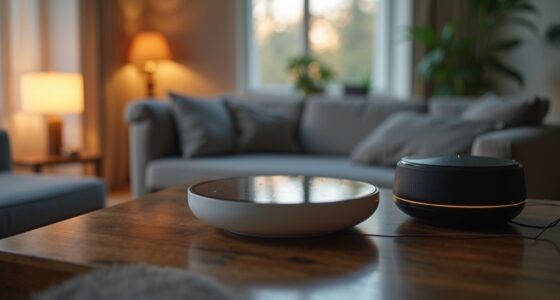
To build a simple home theater system, start by placing your front left and right speakers slightly above ear level and angle them toward your seating area. Position the center speaker directly above or below your TV for clear dialogue. Place surround speakers slightly behind and to the sides, at ear level or higher, for immersive sound. Experiment with subwoofer placement near walls or corners for deep bass. Proper speaker placement and room acoustics greatly enhance your cinematic experience—keep exploring for more tips.
Key Takeaways
- Select a suitable TV or projector and ensure proper speaker placement for immersive sound.
- Use front, center, and surround speakers positioned at ear level and angled toward the seating area.
- Place the subwoofer near walls or corners to enhance bass without muddiness.
- Optimize room acoustics with soft furnishings and sound-absorbing panels to reduce echo.
- Arrange and calibrate speakers for balanced audio and clear dialogue to create a cinematic experience.

A home theater system transforms your living space into a cinematic experience, bringing movies, TV shows, and games to life with stunning visuals and immersive sound. To achieve this, one of the most critical aspects is speaker placement. Proper positioning ensures that sound reaches you from the right directions and at the right times, creating a realistic audio environment. Start by placing your front left and right speakers slightly above ear level, angled towards your seating area. The center channel speaker should be directly above or below your TV, aligned with the screen’s center, so dialogue feels natural and clear. Surround speakers should be positioned slightly behind and to the sides of your seating, at ear level or slightly above, to envelop you in sound without overwhelming the space. Subwoofers, responsible for deep bass, are flexible but should be placed near walls or corners for maximum impact. Experiment with their placement until you find a spot that delivers balanced bass without muddying other sounds. Additionally, considering interior acoustics can significantly enhance overall sound quality by reducing echo and sound distortion. Acoustic treatments like soft furnishings and sound-absorbing panels can help optimize your room for the best cinematic experience.
Frequently Asked Questions
What Is the Ideal Room Size for a Home Theater?
You should aim for a room size of about 12×20 feet for an ideal home theater. This space allows you to optimize screen placement, ensuring the screen isn’t too close or too far, and creates a comfortable seating arrangement for viewers. A proper size prevents sound and image distortion and provides enough room for speakers and furniture, making your viewing experience immersive without feeling cramped.
How Much Should I Budget for a Basic System?
You should budget around $500 to $1,000 for a basic home theater system. This allows for quality speakers, a reliable receiver, and necessary accessories. Focus on speaker calibration to optimize sound and arrange seating for the best experience. Prioritize good audio and comfortable seating, and consider upgrading components later to enhance your setup without overspending initially.
Can I Upgrade My System Later Easily?
Yes, you can upgrade your system easily later. Look for modular components that allow for future upgrades, like a receiver with multiple HDMI inputs or speakers designed to pair with new tech. This way, you can add or replace parts without overhauling your entire setup. Planning for future upgrades guarantees your system stays current, saving you money and effort down the line.
What Are the Best Brands for Affordable Equipment?
Are you wondering which brands offer reliable, budget-friendly speakers? You’ll find that brands like Sony, Yamaha, and Vizio provide affordable options that don’t compromise on quality. These reliable brands deliver great sound without breaking the bank, making them perfect for your home theater setup. Isn’t it satisfying to get the best value for your money? With these brands, you’ll enjoy clear audio and long-lasting equipment without overspending.
How Do I Improve Sound Quality Without a Big Budget?
To improve sound quality on a budget, try DIY speaker upgrades like adding foam or fabric covers to reduce vibrations and improve clarity. You can also explore affordable acoustic treatment options, such as placing rugs, curtains, or foam panels to minimize echo and enhance sound clarity. These simple tweaks make a noticeable difference without costing much, helping you enjoy better audio in your home theater setup.
Conclusion
Now that you’ve built your home theater system, you’ve opened the door to a world where movies come alive, and every sound feels like a whisper in your ear. It’s like creating your own personal cinema, where comfort meets excitement. With just a few simple steps, you’ve crafted a cozy haven, transforming your space into a magic lantern. Get ready to sit back, press play, and let your home theater become your new favorite escape.