Choosing a ceramic space heater for a bedroom comes down to how you plan to use it. A basic compact heater is built for quick, occasional warmth at a lower cost; a feature-rich model adds a thermostat, timer, and often quieter or more flexible settings for longer sessions. Both use a ceramic heating element and fan, so neither should be treated as silent or as a replacement for safe room heating. The practical decision is whether the added control is worth paying more for. Choose the compact option for short periods in a small room, and favor the feature-rich option if you want to manage temperature and shutoff times more closely.

Get furniture and decor delivered free with Prime
- Fast, free delivery on millions of items
- Prime Video, Amazon Music and more included
- Member-only deals all year

DREO Portable PTC Ceramic Space Heater with Thermostat
- ✔ Heating power: 1500 watts
- ✔ Heating element: PTC ceramic
- ✔ Coverage: Up to 200 sq. ft.

WINHL 1500W PTC Ceramic Portable Space Heater with Oscillation
- ✔ Heating power: 1500 watts
- ✔ Heating element: PTC ceramic
- ✔ Oscillation: 70°
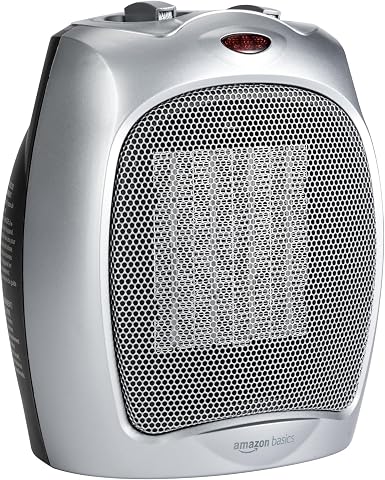
Amazon Basics 1500W Ceramic Space Heater
- ✔ Heating settings: High (1500W), low (900W), fan only
- ✔ Coverage: 161.4 sq. ft.
- ✔ Noise level: 43 dB reported
At a Glance
| Criteria | Basic compact ceramic space heater | Feature-rich ceramic space heater with thermostat and timer | Winner |
|---|---|---|---|
| Purchase cost and value | Usually lower cost; good value for occasional, short use. | Costs more; value improves with regular use of its added controls. | A |
| Temperature control | Often basic heat settings; room temperature may need manual adjustment. | Thermostat can help maintain a selected room temperature, though accuracy varies by model and placement. | B |
| Overnight scheduling | May lack a timer or offer only a simple shutoff timer. | A timer or scheduled shutoff can limit operation to a chosen period. | B |
| Noise and bedroom comfort | Fan noise can be noticeable, especially in a quiet bedroom. | May offer low-power or quieter modes, but fan-based heating still makes some sound. | Depends |
| Safety features | Features vary; check for tip-over and overheat protection, and follow placement guidance. | Often includes multiple safeguards, but features vary and do not remove the need for safe use. | Depends |
| Portability and footprint | Typically compact and easy to move between rooms. | May be larger or heavier due to added controls, though many remain portable. | A |
DREO Portable PTC Ceramic Space Heater with Thermostat
The DREO earns our top position by combining the details that matter most for bedroom use: a stated 34 dB noise level, an adjustable thermostat, remote control, and a 12-hour timer. Its 1500-watt PTC ceramic element and forced-air design are specified for spaces up to 200 sq. ft., giving it the broadest stated coverage in this lineup. That figure is a guide to intended use, not a promise of uniform warmth in every room.Compared with the compact Amazon Basics model, DREO offers finer temperature adjustment and more ways to manage operation without reaching the unit. Compared with WINHL, it lists a lower noise figure and a child lock, while WINHL adds 70° oscillation. DREO is the better fit when we value quiet operation and bedroom controls over a moving airflow pattern.Its tradeoff is complexity: multiple modes and controls may be more than we need for a small bedside spot. The stated coverage tops out at 200 sq. ft., so larger or poorly insulated rooms may need another heating plan. It is designed for indoor use; the listing does not make it appropriate for humid rooms. The safety features are useful, but they do not remove the need for a stable, clear placement away from bedding and other combustibles.
Pros:
- 34 dB listed noise level is the lowest stated in this comparison.
- Thermostat adjusts in 1°F increments, with a remote and 12-hour timer.
- Lists coverage up to 200 sq. ft. and three operating modes.
- Includes tip-over and overheat protection, flame-resistant materials, safety plug, and child lock.
Cons:
- Coverage is limited to spaces up to 200 sq. ft. according to the product details.
- Does not list oscillation, unlike WINHL.
- Its multiple controls may be unnecessary for buyers who want only basic heat settings.
Best for: Bedroom users who want a quiet-rated heater with a thermostat, remote, timer, and listed coverage for rooms up to 200 sq. ft.
Not ideal for: People looking for oscillation, outdoor use, or a heater intended to replace whole-home heating.
Bottom line: For a bedroom where quiet-rated operation and convenient temperature control lead the decision, DREO is the most balanced choice in this group.
“For a bedroom where quiet-rated operation and convenient temperature control lead the decision, DREO is the most balanced choice in this group.”
WINHL 1500W PTC Ceramic Portable Space Heater with Oscillation
WINHL’s defining bedroom advantage is its 70° oscillation. Rather than directing warmth from one fixed angle, it sweeps airflow across a small area, which can suit a bedside or desk position shared with another person. A remote, thermostat, ECO mode, five speeds, and a 12-hour timer make it more adjustable than the basic Amazon Basics heater.Against DREO, WINHL gives up a stated room-coverage figure and the lower listed noise level, but adds an explicit oscillation range. That makes its role narrower: it is a compelling personal-space option, not the best-supported choice for warming a larger bedroom. Its 1500-watt PTC ceramic element and maximum temperature of 95°F are specified, but the supplied details do not provide a decibel rating.WINHL also has a practical setup condition that deserves attention: the product description says to plug it directly into a suitable 15A wall outlet and not to use an extension cord or power strip. Remote batteries are not included. Buyers who want a simple, fixed-direction heater may prefer Amazon Basics; those prioritizing stated coverage and quieter operation have stronger reasons to choose DREO. WINHL makes most sense when oscillation is the feature that solves the room’s particular layout.
Pros:
- 70° oscillation spreads airflow across a personal area.
- Remote, thermostat, ECO mode, five speeds, and 12-hour timer provide control options.
- 1500W PTC ceramic element with overheat protection and tip-over shutoff.
- Listed as ETL certified.
Cons:
- Described for small personal spaces rather than whole-room or whole-house heating.
- Remote requires two AAA batteries, which are not included.
- Must connect directly to a suitable 15A wall outlet; extension cords and power strips should not be used.
Best for: Someone who wants a compact heater to sweep warmth across a small bedroom or home-office area and values remote and timer controls.
Not ideal for: Buyers who need a stated whole-room coverage figure, a listed noise rating, or flexible placement far from a wall outlet.
Bottom line: Choose WINHL when oscillation is more useful than DREO’s stated coverage and lower noise figure.
“Choose WINHL when oscillation is more useful than DREO’s stated coverage and lower noise figure.”
Amazon Basics 1500W Ceramic Space Heater
Amazon Basics is the least complicated choice in this roundup. Its high, low, and fan-only settings cover the basics, while a weight of 2.8 pounds and a roughly 9.45-inch height make it easy to move between a desk and a bedside table. The listed coverage is 161.4 sq. ft., below DREO’s 200 sq. ft. figure, and the heater does not oscillate.That simplicity is a useful contrast with both feature-rich alternatives. DREO adds a thermostat, remote, timer, and quieter listed operation; WINHL adds oscillation and a timer. Amazon Basics instead suits buyers who want a few clear settings and fan-only airflow without navigating an extensive mode list. Its reported 43 dB noise level is higher than DREO’s 34 dB, so light sleepers comparing the stated figures may lean toward DREO.The main limitation is what the product details do not include: no oscillation and no adjustable thermostat are listed. It is also explicitly unsuitable for bathrooms and other humid environments. Overheat and tip-over protection are specified, but placement still matters, especially around bedding. We would choose it for portable, basic supplemental warmth in a dry indoor room, not for spreading heat evenly across a larger space or fine-tuning a sleep temperature.
Pros:
- Three straightforward settings: high, low, and fan only.
- Lightweight at 2.8 pounds for moving between personal-use locations.
- Lists overheat and tip-over protection.
- Coverage is specified as 161.4 sq. ft.
Cons:
- Does not oscillate.
- 43 dB listed noise level is higher than DREO’s stated 34 dB.
- Not recommended for bathrooms or other high-moisture areas.
Best for: Buyers who want a lightweight, straightforward heater with high, low, and fan-only settings for a dry indoor bedroom.
Not ideal for: Light sleepers prioritizing the lowest listed noise, users wanting oscillation or remote thermostat control, and anyone heating a humid room.
Bottom line: Amazon Basics is a practical basic option when portability and simple settings matter more than oscillation or fine thermostat control.
“Amazon Basics is a practical basic option when portability and simple settings matter more than oscillation or fine thermostat control.”
As an Amazon Associate we earn from qualifying purchases.
Key Differences
The main difference is control. A basic heater can warm a small bedroom, but it may keep running at its chosen setting until someone adjusts or switches it off. A model with a thermostat and timer gives you more ways to manage warmth over a longer session. That matters most when you use the heater regularly or want it to stop after you fall asleep. The extra controls do not guarantee lower energy use: savings depend on the heater’s power, the room, the temperature setting, and how long it runs.
Bedroom comfort also depends on noise and safe placement. Both types usually use a fan to move warm air, and the sound can be more noticeable at night. A low setting may help, but check model-specific noise information if you are sensitive to it. Safety features vary across both categories, so compare the actual specifications rather than assuming a more expensive model is safer. Keep the heater on a stable surface, away from bedding and other materials, and follow the manufacturer’s instructions.
For occasional warmth in a small room, the compact heater is often the better value because its simpler design meets the need without paying for features you may not use. For frequent bedroom use, temperature control and timed shutoff can justify the higher price. Pay more for those controls only if they solve a real problem for your routine.
Detailed Comparison
Purchase cost and value (Basic compact ceramic space heater wins — moderate)
The basic compact heater usually wins on upfront cost, a minor-to-moderate advantage depending on the price gap. It makes more sense for occasional use, where a thermostat or schedule may go unused. The feature-rich model can be better value over time if you regularly rely on those controls, but a higher price alone does not mean it will use less electricity.
Temperature control (Feature-rich ceramic space heater with thermostat and timer wins — moderate)
The feature-rich heater wins, with a moderate practical advantage when you want a room to stay near a chosen temperature. A thermostat can reduce the need for repeated manual adjustments, though performance depends on sensor placement and the heater’s control design. The basic model is adequate if you are comfortable choosing a heat level and switching it off yourself.
Overnight scheduling (Feature-rich ceramic space heater with thermostat and timer wins — moderate)
The feature-rich model wins by a moderate margin if it has a timer or schedule that fits your routine. Timed shutoff lets you set a limit on operation, while a basic heater without a timer requires you to turn it off manually. A timer is a convenience and control feature; it is not a reason to leave a heater near bedding or unattended contrary to its instructions.
Noise and bedroom comfort (moderate difference)
This is a model-dependent comparison, so neither category wins by default. Both commonly use a fan, which can be audible in a quiet room. Some feature-rich heaters include a lower or quieter mode, but extra features do not guarantee quieter operation. Check measured noise information or reviews that describe the exact model if sound is a deciding factor.
Safety features (major difference)
Neither option wins as a category: basic and feature-rich heaters can include tip-over and overheat protection, and availability varies by model. The difference is minor until you compare the specific product labels and instructions. Choose a unit with clearly described safeguards, then use it on a stable surface with clear space around it. Controls do not replace careful placement.
Portability and footprint (Basic compact ceramic space heater wins — minor)
The basic compact heater usually wins by a minor margin because a smaller, simpler unit is easier to move or store. Some feature-rich models are similarly compact, so compare dimensions and weight rather than relying on category labels. If the heater will stay in one bedroom, portability may have little bearing on the decision.
Basic compact ceramic space heater: Pros and Cons
Pros:
- Usually lower purchase cost.
- Simple controls suit short, occasional heating sessions.
- Compact models are often easy to move and store.
Cons:
- May require manual temperature adjustments.
- May not offer a timer or scheduled shutoff.
- Fan noise and safety features depend on the particular model.
Feature-rich ceramic space heater with thermostat and timer: Pros and Cons
Pros:
- Thermostat can help maintain a chosen temperature.
- Timer or scheduling can make shutoff easier to manage.
- May offer more heat settings or a low-power mode.
Cons:
- Higher upfront cost.
- Added controls do not guarantee lower energy use or quieter operation.
- Some models take up more space than a basic compact heater.
Who Should Choose What
Choose Basic compact ceramic space heater if:
- You need occasional warmth for a small bedroom or desk area.
- Low upfront cost and simple operation matter more than scheduling.
- You are comfortable adjusting the heat and turning the unit off yourself.
Choose Feature-rich ceramic space heater with thermostat and timer if:
- You use a heater regularly and want a thermostat to manage room temperature.
- A timer or scheduled shutoff would make your routine easier.
- You are willing to pay more for control features you will use often.
Skip both if: Skip both if you need whole-room or whole-home heating, require near-silent overnight warmth, or cannot place a portable heater with the clearance its manufacturer requires.
Value for Money
Paying more is worthwhile when the thermostat and timer solve a recurring bedroom-use problem. Those controls can make a long session easier to manage, but they do not guarantee lower running costs: ceramic heaters draw electricity while producing heat, and consumption depends on wattage and operating time. For occasional use, the basic compact heater is usually the stronger value. For frequent use, a well-specified feature-rich model may be worth the premium for its convenience. Compare the actual safety features, noise information, dimensions, and controls before paying extra.
Final Verdict
Choose the basic compact ceramic heater if you want affordable, occasional warmth in a small bedroom and do not mind manual control. Choose the feature-rich model if you use a heater often and will benefit from thermostat control or timed shutoff. The biggest deciding factor is how regularly you need to manage the heat: if the added controls will be used week after week, paying more can make sense; if not, keep the money and choose a simple model with clearly stated safety features. Neither type is a good fit if you need silent overnight heating or whole-room heating without a portable unit.
Frequently Asked Questions
Are ceramic space heaters suitable for bedrooms?
They can provide supplemental heat in a bedroom when used according to the manufacturer’s instructions. Keep the heater on a stable surface with clear space around it, especially away from bedding, curtains, and clothing.
Is a thermostat worth paying extra for?
It can be worthwhile if you use the heater regularly and want it to manage a chosen temperature. For brief sessions where you control the heater manually, the added cost may not pay off in convenience.
Can I leave a ceramic heater on while I sleep?
Follow the specific heater’s instructions and safety guidance; do not assume that a timer or thermostat makes overnight operation appropriate. Keep the unit well clear of bedding and use it only in the way its manufacturer permits.
Are ceramic space heaters quiet enough for sleeping?
Many models use a fan, which can be audible in a quiet room. Noise varies by model and setting, so check the manufacturer’s noise information and look for a low or quiet mode if sound matters to you.