
You can use evergreens to create year-round structure by planting them strategically to define borders, block views, or add privacy. Select species suited to your climate, place them at appropriate distances, and maintain them with regular pruning and watering. Mulch around their base to protect roots and promote healthy growth. With proper care, evergreens will stay handsome throughout every season. Keep exploring these tips to develop a resilient, attractive landscape that lasts all year.
Key Takeaways
- Plant evergreens strategically to create permanent borders or privacy screens for year-round enclosure.
- Choose species suitable for your climate to ensure consistent foliage and structure throughout all seasons.
- Maintain regular pruning to preserve shape, density, and overall landscape structure year-round.
- Incorporate evergreens into focal points or landscape features for continuous visual interest.
- Use proper planting techniques and seasonal care to promote healthy, durable evergreens that provide lasting structure.
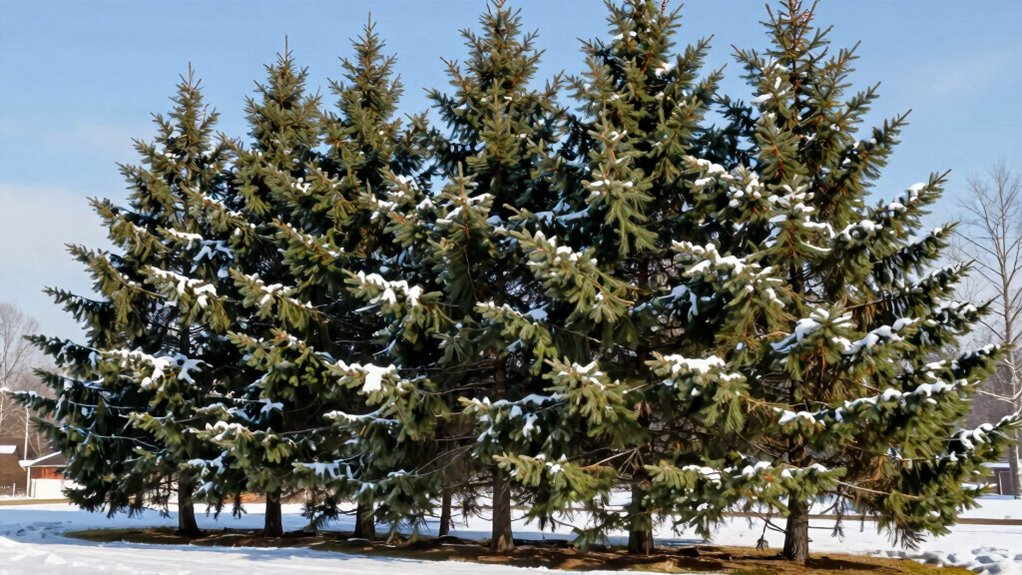
Evergreens are a versatile choice for creating durable, year-round structure in your landscape or garden. Their dense foliage provides constant visual interest, making them ideal for defining borders, creating privacy screens, or serving as focal points. To guarantee these plants thrive through all seasons, you need to pay attention to seasonal maintenance. This includes regular watering, especially during dry periods, and mulching to retain soil moisture and regulate temperature. Pruning is also essential, as it helps maintain the desired shape and encourages healthy growth. In winter, removing any damaged or dead branches keeps the evergreen looking tidy and prevents disease. Fertilizing in early spring with a balanced, slow-release formula supports vigorous growth and vibrant color. Proper planting techniques are crucial for establishing long-lasting, healthy evergreen plants.
Getting evergreen plants established begins with proper planting techniques. You want to choose the right species for your climate and soil conditions, considering factors like sunlight exposure and drainage. When planting, dig a hole twice as wide as the root ball to loosen compacted soil and allow roots to spread easily. Gently tease out any circling roots if you encounter a root-bound plant, and position the shrub so that the top of the root ball is level with the surrounding soil. Backfill with a mix of native soil and compost to provide nutrients and improve drainage. Water thoroughly after planting to settle the soil and eliminate air pockets. Applying mulch around the base helps insulate roots and suppress weeds, but keep it a few inches away from the trunk to prevent rot. Proper planting techniques and ongoing care are essential for healthy, resilient evergreens. Additionally, understanding plant hardiness zones can help you select evergreen varieties best suited for your climate. Knowing your climate conditions ensures you choose plants that will thrive naturally in your environment.
Incorporating evergreen hedges or clusters into your landscape design requires strategic placement and thoughtful planting techniques. Space plants appropriately to allow for growth, and consider their mature size when designing your layout. This foresight prevents overcrowding and makes future maintenance easier. As your evergreens grow, prune selectively to shape them and remove any crossing or damaged branches. Seasonal maintenance is vital here; trimming during the right time of year encourages healthy growth and maintains the aesthetic appeal. To further support their resilience, you can also consider soil health practices, which enhance the overall vitality of your landscape. Remember, proper planting techniques and ongoing care will guarantee your evergreens remain sturdy and attractive throughout the year, providing structure and greenery regardless of the season. By investing time in initial planting and routine upkeep, you’ll create a resilient landscape feature that enhances your garden’s beauty and privacy for years to come.
As an affiliate, we earn on qualifying purchases.
Frequently Asked Questions
What Are the Best Evergreen Species for Different Climates?
You should choose evergreen species based on your climate to guarantee healthy conifer diversity and easier evergreen maintenance. In colder regions, consider spruces, firs, and pines that tolerate frost. For warmer climates, select Mediterranean cypresses or southern magnolias. Always match the species to your local conditions, as this helps your landscape stay vibrant year-round, minimizes care needs, and optimizes conifer diversity, creating a resilient and attractive yard.
How Often Should I Prune Evergreens for Shape and Health?
You should prune evergreens regularly to keep them healthy and looking sharp, but don’t cut corners. For ideal shape and health, follow a seasonal trimming schedule—usually once or twice a year. Pruning frequency depends on the species, but generally, prune in late winter or early spring before new growth starts. Avoid over-pruning, as it can harm the plant; instead, focus on removing dead or diseased branches.
Can Evergreens Be Used for Privacy Screens in Small Yards?
Yes, you can use evergreens for privacy screens in small yards. Consider evergreen groundcovers like creeping junipers or dwarf conifers to maximize space and create a natural barrier. Privacy hedge options include dense, fast-growing varieties like boxwood or arborvitae, which provide year-round coverage. These evergreens not only block views but also add beauty, ensuring your yard feels more secluded and private throughout all seasons.
How Do I Prevent Pests and Diseases in Evergreen Plants?
To prevent pests and diseases in your evergreens, you need to become a vigilant superhero! Regular pest control and disease prevention are your secret weapons. Keep your plants healthy with proper watering, mulching, and pruning, and inspect them weekly for signs of trouble. Use organic or chemical treatments at the first hint of pests or disease. Staying proactive helps your evergreens stay lush, vibrant, and pest-free all year round!
What Are Creative Ways to Incorporate Evergreens Into Landscaping?
You can creatively incorporate evergreens into your landscaping by using them as focal points or natural borders, adding seasonal color with colorful ornaments or lights during holidays, and planting them near flower beds for contrast. They also serve as excellent wildlife habitats, attracting birds and small animals. By combining varied evergreen species, you create year-round visual interest, providing structure and supporting local wildlife, making your landscape both beautiful and ecologically beneficial.
Conclusion
As you’ve seen, evergreens aren’t just for winter—they surprise you year-round with their versatility and charm. It’s almost like they’re whispering a secret you stumble upon, revealing how seamlessly they can shape your landscape. With a little planning, you’ll find yourself enjoying their beauty in every season, almost as if nature conspired to make your outdoor space perfect. So, embrace these hardy plants—you might just discover a little coincidence of beauty and function in your own backyard.