To repair a leaning fence post, start by checking for soil erosion or damage around the base. Remove loose dirt and dig around the post to expose the concrete footing. Fill the hole with gravel or compacted soil, then pour fresh concrete around the base to secure it. Use braces or stakes to hold the post upright while it cures. For more long-term stability, consider adding drainage and monitoring the area regularly to keep your fence sturdy.
Key Takeaways
- Remove loose soil and debris around the post base to assess stability.
- Dig around the post to expose the concrete footing or bottom of the post.
- Reinforce the post by filling with gravel or soil, then pour fresh concrete for support.
- Use braces or stakes to hold the post vertical during concrete curing.
- Ensure proper drainage and monitor the post regularly to prevent future leaning.
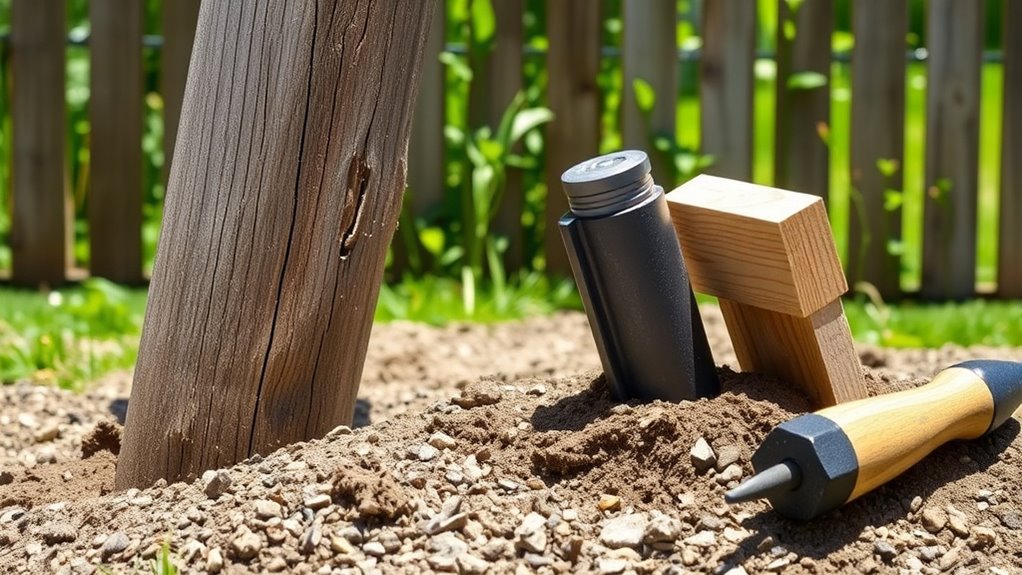
A leaning fence post not only looks unsightly but can also compromise the stability of your entire fence. When a post starts to lean, it’s usually a sign that the ground around it has shifted or that the post itself has lost its foundation. To fix this, you need to focus on post stabilization, which involves reinforcing the post’s position in the ground. Soil erosion is often the culprit, as water runoff gradually washes away the earth surrounding the post, making it loose and unstable. Addressing soil erosion is vital to guaranteeing your repair lasts and that your fence remains sturdy.
Start by inspecting the post and the surrounding soil. If you notice significant erosion or loose soil, you’ll want to remove any debris or loose dirt around the base. Dig around the post to expose the concrete footing or the bottom of the post itself. This process allows you to see how much of the post is still embedded and whether the soil has been washed away. If the soil has eroded substantially, you’ll need to re-stabilize the post by adding fresh fill or replacing the concrete base if necessary. When doing this, guarantee the post is perfectly vertical before filling the hole. Use a level to check and adjust as needed. Proper post stabilization involves filling the hole with gravel or compacted soil, which helps prevent future soil erosion and provides a solid foundation. Incorporating a drainage system can also help divert water away from the base of the post, reducing the risk of soil erosion and ensuring long-term stability.
Inspect soil and expose the post base; add fill or replace concrete to ensure vertical stability.
To further stabilize the post, consider installing a concrete footing if it’s not already set in concrete. Pouring fresh concrete around the base of the post can provide added support, especially if the original footing has cracked or crumbled. Before pouring, make sure the post is aligned correctly and held in place with braces or stakes until the concrete cures. If you’re dealing with persistent soil erosion issues, think about adding a barrier or drainage system around the post to divert water away from the base. This small step can greatly improve post stabilization and prevent future leaning caused by water damage.
Finally, after the concrete has set and the post is firmly in place, reattach any fencing panels that were removed. Keep an eye on the post over the next few weeks to guarantee it remains upright and stable. Regular maintenance, like checking for signs of soil erosion or water pooling, can help you catch problems early and extend the lifespan of your fence. By taking these steps, you’ll restore your fence’s integrity, improve its appearance, and prevent future leaning issues caused by unstable soil and erosion.
Frequently Asked Questions
How Long Does It Take to Repair a Leaning Fence Post?
It typically takes a few hours to repair a leaning fence post, depending on soil assessment and post stabilization needs. First, you evaluate the soil to determine if it’s loose or compacted. Then, you remove the damaged post, stabilize the ground, and set the new or repaired post firmly in place. Allow some time for the concrete or gravel to set properly for lasting stability.
Can I Repair the Post Without Removing It?
Ever wonder if you can fix a leaning fence post without removing it? You can, with some post stabilization techniques. First, carefully excavate soil around the base, then add gravel or concrete for support. No need to pull out the post entirely—just guarantee it’s properly stabilized and aligned. This approach saves time and effort, making your fence sturdy again without the hassle of complete removal.
What Tools Are Needed for Fence Post Repair?
You’ll need a tools overview to repair your fence post effectively. Grab a post driver or sledgehammer to remove or adjust the post, a shovel for digging around the base, and a level to guarantee proper alignment. Safety precautions include wearing gloves and eye protection to prevent injuries. A crowbar helps loosen the post if needed. With these tools, you can confidently stabilize and repair your leaning fence post, ensuring it stays upright.
How Do I Prevent Future Fence Leaning?
A stitch in time saves nine, so you should prioritize preventative maintenance to keep your fence upright. To prevent future leaning, focus on post stabilization by ensuring proper drainage around the posts, using concrete for added support, and installing braces if needed. Regularly inspect your fence for signs of weakness or rot, and address issues early. Consistent upkeep helps your fence stay sturdy and straight for years to come.
Is Professional Help Necessary for This Repair?
You don’t always need professional help for fixing a leaning fence post. With DIY tips, you can often handle the repair yourself, saving money compared to hiring a pro. However, if the post is severely damaged or the fence is large, professional assistance might be worth the cost comparison. Evaluate the extent of the damage and your comfort level to decide if a DIY fix or expert help is best for your situation.
Conclusion
With a little care, you can turn a leaning fence post back into a sturdy pillar standing tall. Think of it as guiding a wayward sailor back to steady ground, anchoring your fence against the winds of time. Just follow these simple steps, and watch your fence regain its strength and purpose. Before you know it, your fence will stand proud and straight, a silent guardian holding its ground, solid and unwavering in the dance of the seasons.