
To naturally reduce weeds in your garden paths, start by applying a 2-3 inch layer of organic mulch like straw or wood chips to block weed seed germination and retain moisture. Plant native wildflowers along the edges and gaps to create dense ground cover that outcompetes weeds and attracts beneficial insects. Keep paths tidy and well-maintained to prevent weed invasion. If you want to discover more effective strategies, you’ll find helpful tips that can transform your garden’s health.
Key Takeaways
- Apply a 2-3 inch layer of organic mulch along garden paths to block weed seed germination and retain soil moisture.
- Plant native wildflowers around paths to create dense ground cover that suppresses weed growth.
- Maintain even mulch coverage without piling against stems to ensure effective weed barrier and soil protection.
- Use native plants in gaps and borders to outcompete weeds and enhance biodiversity.
- Regularly monitor and add mulch or plantings to keep pathways weed-free and eco-friendly.
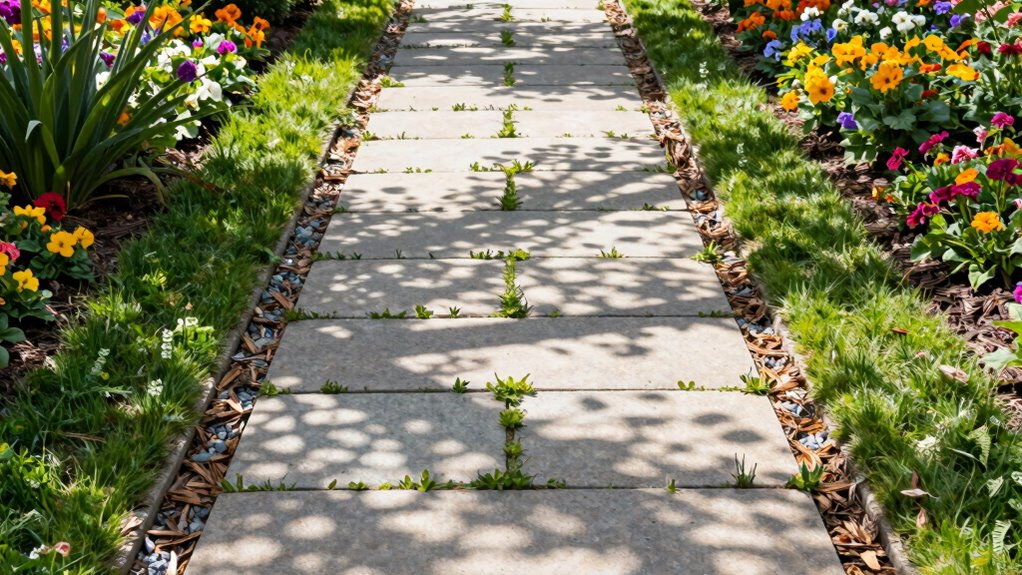
Are weeds taking over your garden paths? If so, you’re not alone, but there are natural ways to combat them without relying on harsh chemicals. One effective method is to focus on improving the health of your garden through wildflower planting and mulching techniques. These strategies work together to create an environment less inviting to weeds while enhancing the beauty of your outdoor space.
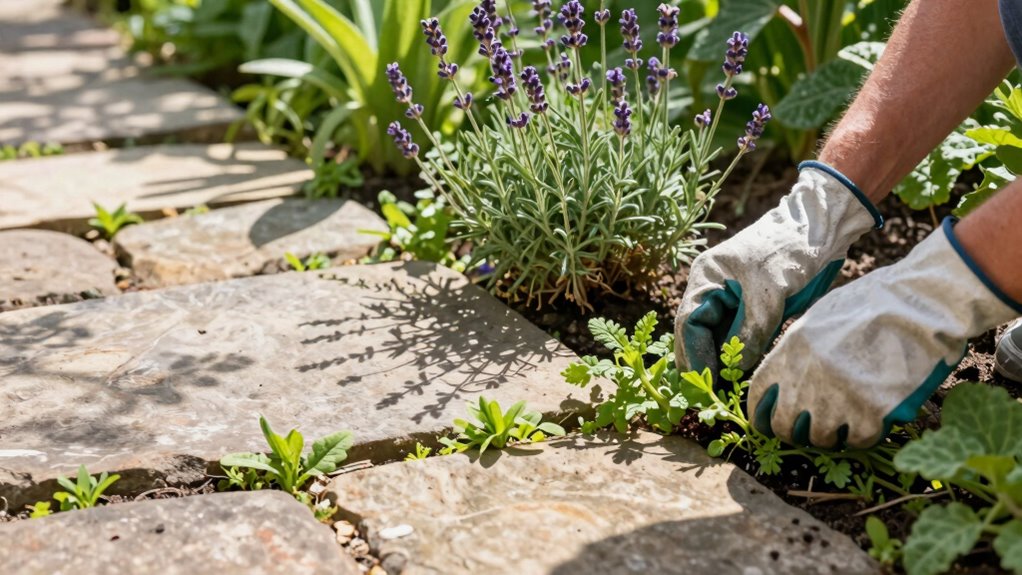
Wildflower planting is a great way to fill in gaps in your garden paths and surrounding areas. When you introduce native wildflowers, you provide thick, competitive ground cover that suppresses weed growth. Wildflowers grow densely and establish strong roots, leaving little room for invasive weeds to take hold. Plus, they attract pollinators and beneficial insects, enriching your garden’s ecosystem. By choosing native species suited to your climate, you’ll ensure they thrive and outcompete weeds naturally.
Mulching techniques also play a crucial role in weed control. Applying a thick layer of organic mulch, such as straw, wood chips, or shredded leaves, blocks sunlight from reaching weed seeds. Without sunlight, these seeds struggle to germinate and grow. Mulch also helps retain soil moisture, reducing the need for frequent watering, and improves the overall health of nearby plants. When applying mulch, spread it evenly to a depth of around two to three inches, ensuring it covers all exposed soil without piling against plant stems or tree trunks. This barrier not only prevents weeds from establishing but also keeps your garden paths looking tidy and well-maintained.
Combining wildflower planting with proper mulching techniques creates a natural, sustainable approach to weed control. As the wildflowers fill in bare spots, they shade the soil and compete with weeds for resources. Meanwhile, mulch acts as a physical barrier, preventing weed seeds from sprouting and reducing their spread. Over time, you’ll notice fewer weeds invading your paths, and your garden will become more vibrant and inviting. This approach also minimizes the need for manual weeding or chemical interventions, making your garden healthier and safer for children and pets.
As an affiliate, we earn on qualifying purchases.
Frequently Asked Questions
Are Chemical Weed Killers Necessary for Garden Paths?
Chemical weed killers aren’t necessary for garden paths. You can rely on organic alternatives like mulch, vinegar, or boiling water to control weeds effectively. Proper soil preparation also helps prevent weed growth by improving soil health and reducing seed germination. These natural methods are safer for your environment and garden, and with consistent maintenance, you’ll keep your paths weed-free without the need for harsh chemicals.
How Often Should I Manually Remove Weeds?
You’ll want to manually remove weeds regularly—think weekly, not yearly. Ironically, ignoring this task invites chaos, so consistent weed prevention is key. Use manual removal techniques like pulling weeds by hand or hoeing while they’re small. This proactive approach keeps your garden paths tidy and prevents weeds from spreading. The more often you remove them, the less work you’ll face later, turning a chore into a simple routine.
Can Certain Plants Prevent Weed Growth Naturally?
Yes, certain plants can naturally prevent weed growth. Native plants and ground covers, like creeping thyme or clover, create dense mats that block sunlight and reduce space for weeds to establish. You should plant these in your garden paths to outcompete weeds and maintain a natural, eco-friendly look. Regular maintenance helps, but choosing the right ground covers makes weed prevention much easier and more sustainable over time.
What Is the Best Time of Year to Weed?
You should weed in early spring or late fall when the soil is moist and weeds are just beginning to emerge. Imagine the garden waking up or preparing for winter, making weed removal easier. This seasonal planting time helps prevent weeds from taking hold, reducing future growth. Consistently weeding during these periods is key for effective weed prevention, keeping your garden paths tidy and healthy all year round.
Do Mulch or Gravel Help Control Weeds Long-Term?
Mulch benefits include suppressing weeds effectively and maintaining soil moisture, making it a great long-term weed control solution. Gravel advantages are similar; it creates a durable, permeable surface that discourages weed growth. Both options work well over time, but mulch decomposes and needs replacing periodically, while gravel remains stable longer. Using either or combining both can give you the best results for controlling weeds naturally in garden paths.
Conclusion
By tending your garden paths with patience and nature’s touch, you weave a shield against unwelcome weeds. Like a gentle gardener’s whisper, natural methods nurture the soil’s harmony, keeping pesky intruders at bay. With consistent care, your paths will become a lush, weed-free haven—an inviting trail through your blooming sanctuary. Embrace these simple, eco-friendly tricks, and watch your garden flourish in a dance of balance and beauty, free from the chaos of unwanted weeds.