Setting up your rain barrel is simple: place it on a stable, level surface near a downspout, preferably elevated for gravity flow, and connect it with a diverter or flexible hose. Use a screen on top to keep out debris and insects. Regularly check for leaks, clean your screen, and empty the barrel annually to prevent algae. Proper winter care involves draining and storing components indoors. Continue to explore for more tips on keeping your system efficient year-round.
Key Takeaways
- Position the barrel on a stable, level surface near a downspout, elevated slightly for gravity flow.
- Connect the downspout to the barrel using a diverter or flexible hose for a secure fit.
- Install a screen or mesh on top to block debris, insects, and prevent clogs.
- Regularly inspect for leaks, clean the screen, and scrub the barrel annually to prevent algae buildup.
- Drain and store components indoors during winter to prevent freezing and extend system lifespan.
Rain barrels are an easy and effective way to collect and reuse rainwater from your roof. By doing so, you support water conservation efforts, reduce your dependence on municipal water systems, and save money on your utility bills. Setting up a rain barrel system is straightforward, but paying attention to the materials of your barrel and proper maintenance guarantees it works efficiently and lasts longer.
Rain barrels promote water conservation, save money, and are simple to set up and maintain.
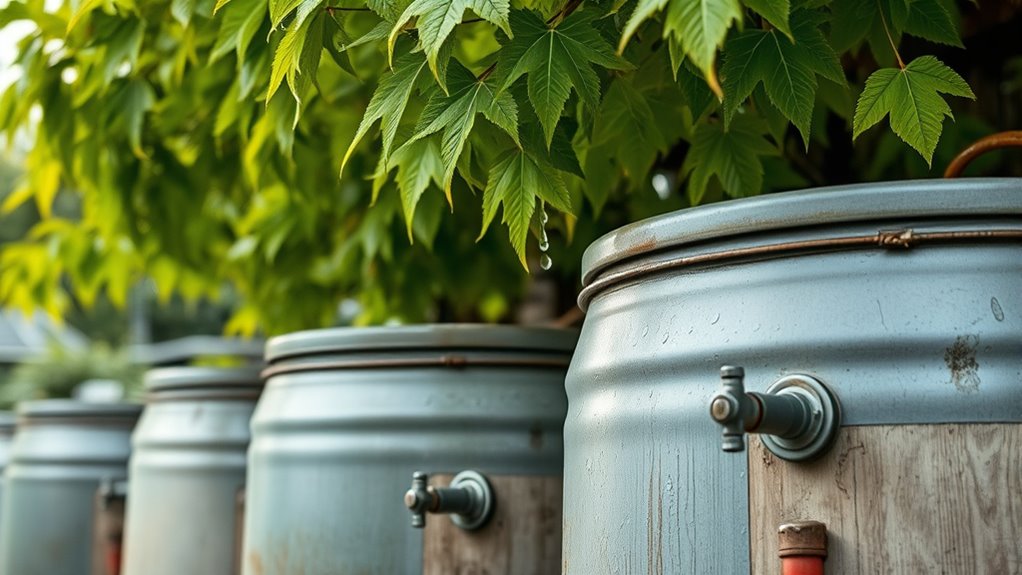
When choosing a rain barrel, consider the materials it’s made from. Most barrels are crafted from either plastic or metal, with plastic being the most common. Recycled food-grade plastic barrels are popular because they’re lightweight, durable, and resistant to rust or corrosion. They’re also easier to find and more affordable. Metal barrels, typically made from galvanized steel or aluminum, add a rustic aesthetic and are more resistant to pests, but they can be heavier and may require additional treatment to prevent rust over time. Whatever material you choose, guarantee the barrel is food-grade to avoid contamination of your collected water, especially if you plan to use it for watering edible plants.
Installing your rain barrel is simple. Position it on a stable, level surface near your downspout, ideally elevated on cinder blocks or a sturdy platform. Elevation creates gravity, which helps water flow more efficiently from the barrel to your hoses or watering cans. Connect the downspout to the barrel using an appropriate diverter or a flexible hose, ensuring a tight fit to prevent leaks. You might want to add a screen or mesh on top of the barrel opening to keep out leaves, twigs, and insects, which can clog your system or breed mosquitoes.
Maintaining your rain barrel is vital for safe and effective water collection. Regularly inspect the barrel for cracks or leaks, and clean the screen or mesh to prevent blockages. Empty and scrub the barrel at least once a year to prevent algae buildup, especially if it’s exposed to sunlight. When cleaning, use a mild soap solution and rinse thoroughly. You should also check that the spigot or hose connections are secure to prevent leaks. During the winter, if you live in a cold climate, drain the barrel completely and store the components indoors to prevent freezing and cracking.
Frequently Asked Questions
How Do I Prevent Mosquito Breeding in My Rain Barrel?
To prevent mosquito breeding in your rain barrel, make sure you use a tight-fitting rain barrel cover to block their access. Regularly empty and clean the barrel to remove standing water, which mosquitoes need to lay eggs. Consider adding mosquito dunks or larvicides approved for rain barrels. Also, guarantee all openings are sealed properly. These steps will help you effectively prevent mosquito prevention and keep your rain barrel mosquito-free.
What Is the Ideal Height for Installing a Rain Barrel?
You should install your rain barrel at a height of about 3 to 4 feet for ideal barrel placement and easy access. This installation height allows gravity to help water flow smoothly into your garden or watering can. Make sure the barrel is stable and on a level surface to prevent tipping. Proper placement also makes maintenance easier and improves overall efficiency, ensuring you can quickly collect and use rainwater.
Can Rain Barrels Be Used for Drinking Water?
You shouldn’t use rain barrels for drinking water because rainwater filtration isn’t enough to guarantee potable water safety. Even if you add filters, contaminants like bacteria, chemicals, and debris can still pose health risks. Imagine a clear stream, but hidden pollutants lurk beneath. To stay safe, always treat or filter rainwater thoroughly before considering it for drinking, or better yet, use certified drinking water sources instead.
How Often Should I Clean My Rain Barrel?
You should clean your rain barrel at least once a year to prevent algae, debris, and mosquito breeding. During your rain barrel cleaning, remove any dirt or sludge and scrub the interior with a brush. Establish a maintenance schedule to regularly check for clogs or contamination, especially after heavy storms. Proper maintenance keeps your rain barrel functioning well and guarantees water quality, making it a reliable resource for your garden.
Are There Any Safety Concerns With Children Around Rain Barrels?
While rain barrels are practical, child safety is vital. Children might find the water enticing or try to climb the barrel, risking falls or drowning. To prevent accidents, always use sturdy barrel covers that hide the water and keep kids out. Supervise children around rain barrels and make sure they’re securely closed. These precautions help create a safer environment, allowing you to enjoy rainwater harvesting without worry.
Conclusion
Now that you know how to set up and care for your rain barrel, you’re like a modern-day Noah, harnessing nature’s gift to sustain your garden. With a little effort, you’ll enjoy eco-friendly watering and reduce runoff, making a difference just as small ripples can create waves. Keep your barrel maintained, and it’ll serve as a reliable, silent partner in your garden’s growth—turning everyday rain into a wellspring of life, right at your fingertips.