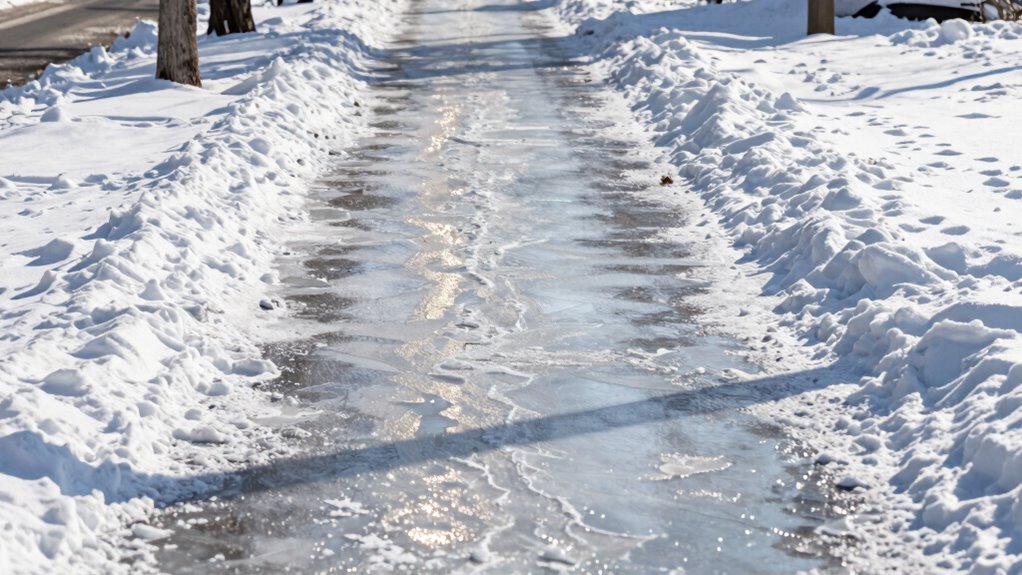

To keep walkways slip-free during winter, regularly clear snow early using a shovel and spread salt or sand for traction. Wear footwear with good grip and consider installing handrails for added support. Use eco-friendly de-icing products alongside traction aids like kitty litter or rubber mats. Keep walkways well-lit and free of ice buildup by checking weather reports and maintaining lighting. Continuing with these tips will help you stay safe all season long.
Key Takeaways
- Regularly shovel and clear walkways early, then spread salt or sand to prevent ice formation.
- Use footwear with good traction and install sturdy handrails for added stability.
- Apply environmentally friendly de-icers and traction aids like sand or rubber mats for better grip.
- Keep walkways well-lit with motion-activated or solar-powered lights for visibility at night.
- Take small, deliberate steps, keep hands free, and stay alert to maintain balance on icy surfaces.

Hivone 40X32 LED Bathroom Mirror with Lights, Anti-Fog, Dimmable, Backlit + Front Lit, Smart Bathroom Vanity Mirror, Memory Function, Shatterproof, Tempered Glass (Horizontal/Vertical)
[Double Lighting Sources,Super Bright]: Hivone LED bathroom mirror built-in double light LED strips with backlit and front light...
As an affiliate, we earn on qualifying purchases.
How Can I Safely Remove Snow and Ice From Walkways?
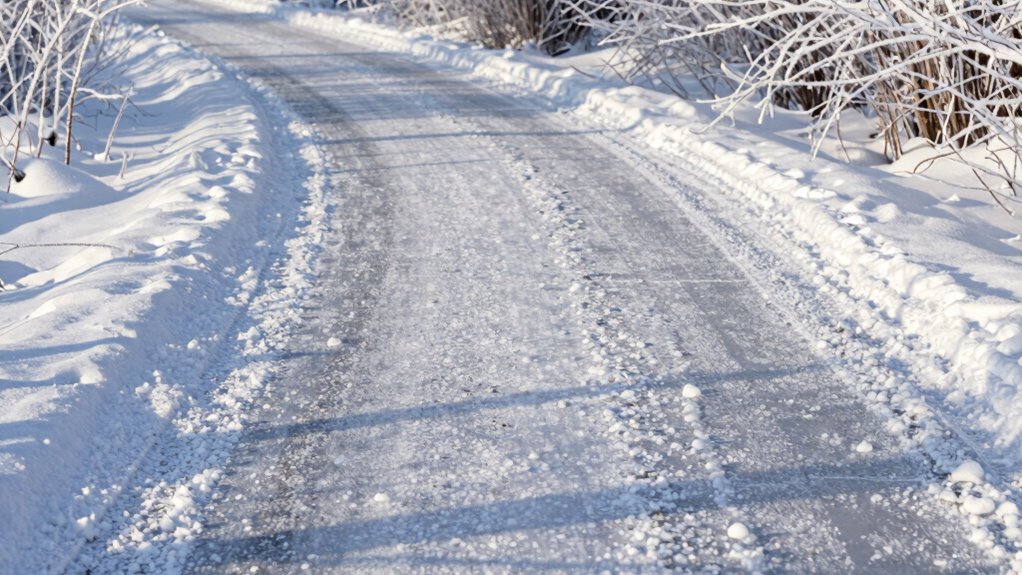
Removing snow and ice from walkways safely starts with planning ahead. First, gather the right snow removal tools, such as a sturdy snow shovel, ice scraper, and salt or sand. When shoveling, use proper techniques: bend your knees, keep your back straight, and push the snow rather than lift it to avoid strain. Clear the walkways early and frequently to prevent snow from compacting or turning into ice. Always start from the center and work outward, creating a safety path. Be cautious of hidden ice patches beneath snow, and utilize salt or sand to improve traction after clearing. Using the right cleaning appliances and techniques makes snow removal more effective and less hazardous. This approach minimizes injury risk and ensures walkways stay safe for foot traffic. Proper tools and shoveling techniques, along with paying attention to surface conditions, and considering weather forecasts, can help you plan effective snow removal strategies and stay safe during winter storms. Additionally, understanding the effects of ice on surfaces can guide you in choosing the most suitable de-icing methods. Recognizing auditory cues that warn of icy conditions can also enhance safety during snow removal.

LOAAO 60X36 LED Bathroom Mirror with Lights, Anti-Fog, Dimmable, Backlit + Front Lit, Lighted Bathroom Vanity Mirror for Wall, Memory Function, Tempered Glass, ETL Listed
【Backlit+Front-lit, Double Lighting Sources】: loaao led bathroom mirror is designed with both backlight and front light; Double lighting...
As an affiliate, we earn on qualifying purchases.
What Are the Best Ways to Prevent Slippery Surfaces?

To prevent slippery surfaces during icy conditions, proactive measures are essential. Wearing wear resistant footwear with good traction helps you stay stable. Installing sturdy hand railing support along walkways provides extra balance and reduces falls. Regularly check for ice buildup and remove it promptly to keep surfaces safe. Use mats or textured surfaces in high-traffic areas to improve grip. Additionally, understanding ergonomics principles can help you recognize the importance of proper footwear and support tools in maintaining safety. Incorporating power backup options such as portable generators can ensure that lighting and safety equipment remain operational during winter storms, further enhancing walkway safety. Upgrading lighting with ceiling fans designed for better airflow can also improve visibility and reduce condensation-related slipperiness. Proper surface maintenance, including the use of salt or sand, can further prevent ice formation and enhance overall safety during winter months. Employing non-slip coatings on walkways can provide an extra layer of grip, especially in consistently icy conditions.

Aluminum Attic Ladder - Retractable Loft Stairs, Folding Pull-Down Design, Manual Lifting for 7'8"-10'3" Ceiling Height, 22.5" x 54", 375 lbs Capacity
【Installation & Use】With a retractable and folding design, the loft stairs can be easily pulled down and opened....
As an affiliate, we earn on qualifying purchases.
Which De-Icing and Traction Products Work Best?

Choosing effective de-icing and traction products can make a significant difference in maintaining safety on icy surfaces. Salt alternatives like calcium magnesium acetate or potassium chloride work well, especially if you’re concerned about environmental impact or concrete damage. These options melt ice effectively without the corrosive effects of traditional salt. Additionally, environmentally friendly options can help reduce ecological harm while maintaining effectiveness. Traction aids, such as sand, kitty litter, or rubber mats, provide immediate grip and prevent slips. They’re especially useful on steeper slopes or heavily trafficked walkways. Combining chemical de-icers with traction aids offers the best protection, ensuring surfaces are both melted and grippy. Using professional snow and ice management services can also ensure that walkways are maintained safely and efficiently during winter conditions. Incorporating reliable safety equipment in your winter preparedness plan can further reduce slip risks and enhance overall safety. Implementing modern smart home technology like smart sensors can help monitor icy conditions more precisely, enabling timely interventions. Always choose products suited for your specific conditions. Avoid over-reliance on one method; a mix of salt alternatives and traction aids keeps walkways safer and reduces the risk of slips and falls. Incorporating sustainable cloud solutions into your planning can also help monitor and manage winter safety measures more efficiently.

12.5FT Telescoping Ladder, 330lb Capacity Aluminum Heavy-Duty Extension Ladder with Anti-Slip Steps for Secure Attic Access, Roof, and Home Renovation Projects
New design:All black cool color matching . Add additional triangle stabilizers on the telescopic ladder, this new design...
As an affiliate, we earn on qualifying purchases.
How Do I Keep Walkways Clear and Well-Lit All Winter?

During winter, keeping walkways clear and well-lit is essential for safety, especially when icy conditions and darkness increase the risk of slips and falls. To combat winter weather, regularly shovel snow and spread salt or sand to prevent ice buildup. Use effective lighting solutions like motion-activated or LED lights along pathways to guarantee visibility during early mornings and evenings. Keep fixtures clean and free of snow to maintain brightness. Consider solar-powered lights for an eco-friendly option that automatically illuminates at dusk. Proper lighting not only helps you see potential hazards but also deters intruders. Maintaining water chemistry and ensuring surfaces are slip-resistant further reduce accident risks. By maintaining clear walkways and making sure they’re well-lit, you create a safer environment for everyone maneuvering your property during the winter months.
Tips for Staying Safe on Icy Walkways Throughout the Season
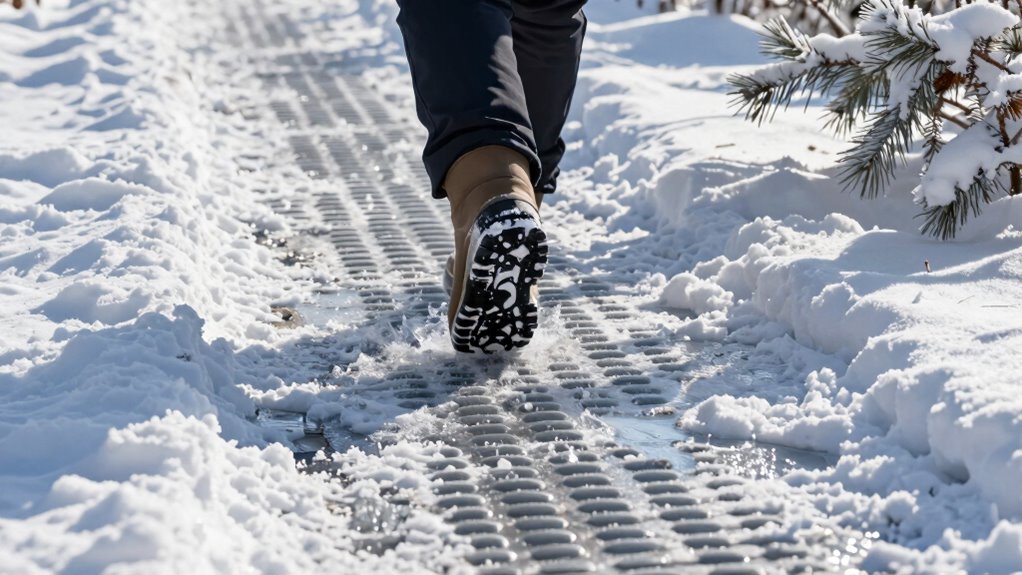
Icy walkways pose significant hazards, but you can reduce the risk by taking proactive steps throughout the season. Wear sturdy winter footwear with good traction to prevent slips. Keep your hands free or use hand salves to protect your skin from the cold and cracking. Stay alert and take small, deliberate steps to maintain balance. Consider using traction devices or sand on icy patches for extra grip. Regularly check weather reports to plan your outings and avoid the worst conditions. Keep walkways clear of snow and ice, and always have a plan if you do slip—use your arms to break the fall. Staying prepared and cautious can make winter walks safer and more comfortable. Using air purifiers indoors can help improve air quality and reduce the impact of winter pollutants. Additionally, modern heating systems can help prevent ice formation on walkways by maintaining warmer outdoor temperatures when properly managed, especially if they incorporate smart controls for optimal efficiency. Proper de-icing techniques are essential for maintaining safe walkways throughout the winter. Incorporating ice-melting products can further enhance safety, provided they are used appropriately to avoid damage to surfaces and the environment.
Frequently Asked Questions
How Often Should I Re-Apply De-Icing Products During a Snowstorm?
You should re-apply de-icing products as often as needed, typically every 2 to 4 hours, depending on snow accumulation rates and de-icer longevity. Keep an eye on the weather; if snow keeps falling or if temperatures remain below freezing, re-apply more frequently. Regular applications make certain your walkways stay clear and safe, preventing slips, especially during ongoing storms with heavy snow accumulation.
Are There Eco-Friendly Options for Ice and Snow Removal?
Think of eco-friendly snow melt as a gentle rain washing away the hazards. You can choose biodegradable de-icers or eco-friendly snow melt products, which break down naturally without harming the environment. These options are safe for plants, pets, and waterways, making them ideal for responsible snow removal. By opting for these alternatives, you protect nature while keeping your walkways safe and slip-free during winter storms.
How Can I Identify Hidden Hazards Under Snow or Ice?
You can identify hidden hazards under snow or ice by carefully inspecting the area before walking. Look for uneven surfaces, cracks, or debris that snow concealment might hide. Gently probe the snow with a stick or tool to feel for hidden obstacles. Always clear a small section if possible, and walk slowly to avoid slipping on unseen hazards. Staying vigilant helps prevent accidents caused by hidden hazards under snow or ice.
What Footwear Provides the Best Grip on Icy Surfaces?
Imagine slipping on icy steps; slip-resistant shoes with excellent traction footwear can prevent that fall. For icy surfaces, choose footwear with rubber soles and deep tread patterns designed for maximum grip. Look for slip-resistant shoes specifically engineered for winter conditions. These shoes enhance your stability and reduce the risk of slipping, keeping you safe during icy walks. Always prioritize traction footwear to stay secure on slippery surfaces.
Can Heated Mats Effectively Prevent Ice Buildup on Walkways?
Heated mats effectively prevent ice buildup on walkways by providing consistent warmth that melts snow and ice as it forms. You should use them to reduce slip hazards and maintain safe, ice-free surfaces during winter. Simply lay heated mats across your walkways, ensuring they are plugged in and properly insulated. This method offers a reliable way for ice prevention, keeping your pathways safe without the need for chemical deicers or manual shoveling.
Conclusion
Think of your walkway as a trusted bridge over winter’s icy river. With careful maintenance and the right tools, you’re the steady captain guiding your path safely across. Keep it clear, well-lit, and free of slip hazards, and your journey through winter becomes a smooth sail, not a treacherous crossing. By staying vigilant and prepared, you guarantee every step is safe—turning a hazardous season into a safe passage for all who walk your way.