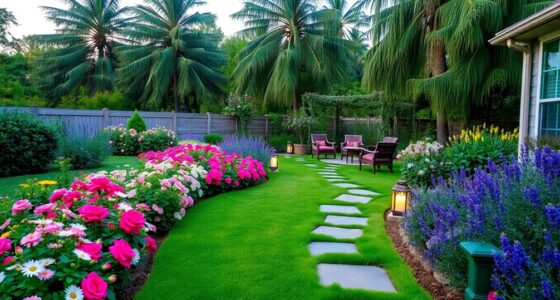
To plan a low-maintenance front yard, focus on native plants suited to your climate and soil, which need less water, fertilizers, and pest control. Group plants with similar sunlight and watering needs, and use mulch to retain moisture, suppress weeds, and regulate soil temperature. Incorporate hardscaping to reduce lawn areas and simplify your layout. This approach helps create an attractive yard that’s easy to care for—stick around to discover more tips to perfect your design.

Get furniture and decor delivered free with Prime
- Fast, free delivery on millions of items
- Prime Video, Amazon Music and more included
- Member-only deals all year
Key Takeaways
- Select native plants suited to your climate, soil, and sun exposure for low water and minimal care needs.
- Use mulch around plants to conserve moisture, suppress weeds, and reduce maintenance efforts.
- Design with simple layouts, grouping plants with similar care requirements to streamline upkeep.
- Incorporate hardscaping elements like gravel paths and stone borders to limit lawn and reduce mowing.
- Choose low-maintenance, pest-resistant plants that thrive naturally, reducing pruning and pest control.
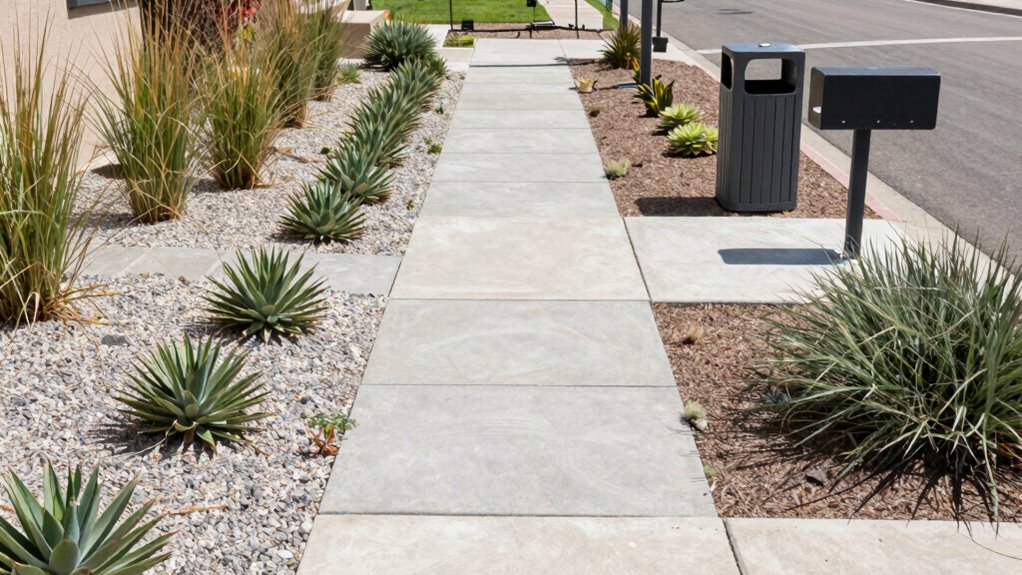
Creating a low-maintenance front yard is a smart way to save time and effort while still enhancing your home’s curb appeal. The key is to choose the right plants and landscaping techniques that thrive with minimal care. Native plants should be your top priority because they’re well-adapted to your local climate and soil conditions. These plants typically require less water, fewer fertilizers, and are more resistant to pests, which cuts down on ongoing maintenance. When selecting native species, consider your yard’s sun exposure, soil type, and the overall look you want to achieve. Incorporating a variety of native grasses, flowering perennials, and low-growing shrubs can provide year-round interest with minimal intervention. Selecting plants that are native and well-suited to your environment ensures they will require less care over time.
Create a low-maintenance yard with native plants that thrive in your climate and require minimal care.
Mulching techniques play an essential role in creating a low-maintenance yard. Applying a thick layer of mulch around your native plants helps retain soil moisture, suppress weeds, and regulate soil temperature. Organic mulches like bark, wood chips, or straw break down over time, enriching the soil and reducing the need for fertilizers. When mulching, spread a layer about 2-3 inches deep, making sure not to pile it against plant stems or tree trunks, which can cause rot. Mulching not only conserves water but also minimizes the need for frequent watering and weeding, saving you time and effort. Replenish the mulch every year or two to keep its benefits effective and to maintain a tidy appearance. Using proper mulching techniques** can significantly boost your yard’s health and reduce maintenance needs. Incorporating native plants and mulching** practices can further enhance your yard’s resilience and reduce upkeep.
Design your yard with simplicity in mind. Stick to a limited palette of native plants that complement each other and require similar care. Grouping plants with similar watering and sunlight needs makes maintenance easier and reduces the risk of over- or under-watering. Use mulch as a unifying element across planting beds to create a cohesive look and further reduce weed growth. Avoid high-maintenance ornamental grasses or exotic plants that may demand special care or frequent pruning. Instead, opt for hardy native varieties that naturally thrive and require little intervention.
Lastly, consider incorporating hardscaping elements like gravel pathways, stone borders, or mulch-covered beds to minimize lawn area, which often demands the most upkeep. With thoughtful plant selection and proper mulching techniques, you’ll create a front yard that’s both attractive and easy to care for. This approach allows you to enjoy your outdoor space without the constant work, making your home’s first impression effortless to maintain.
native plants for low maintenance front yard
As an affiliate, we earn on qualifying purchases.
As an affiliate, we earn on qualifying purchases.
Frequently Asked Questions
What’s the Best Type of Soil for Low-Maintenance Lawns?
You should choose well-draining soil with a balanced pH for a low-maintenance lawn. Start with soil testing to identify nutrient levels and pH balance, then add organic amendments like compost to improve soil health. This creates a fertile, resilient foundation that requires less watering and fertilizing. By optimizing your soil, you’ll establish a durable lawn that stays healthy with minimal effort, making your front yard low-maintenance and attractive.
How Can I Deter Pests Naturally in My Front Yard?
Think of your yard as a peaceful garden like in “The Secret Garden.” To deter pests naturally, use natural pest control methods and attract beneficial insects like ladybugs and bees. Plant native flowers, herbs, and aromatic plants to create a welcoming environment for helpful insects, which can keep harmful pests in check. Avoid chemical pesticides, and your front yard will thrive in harmony with nature, maintaining its beauty effortlessly.
Are There Eco-Friendly Mulch Options for Low-Maintenance Landscaping?
You can choose eco-friendly mulch options like organic mulches, which break down naturally and improve soil health, or recycled materials such as shredded bark or compost. These options require minimal maintenance and are environmentally sustainable. Organic mulches, like wood chips or straw, help retain moisture and suppress weeds, while recycled mulches reduce waste and offer a cost-effective, eco-conscious way to keep your front yard low-maintenance and attractive.
How Do I Choose Drought-Tolerant Plants for My Climate?
You should select native species and drought-resistant varieties suited to your climate. Research plants that naturally thrive in your area, as they require less water and care. Visit local nurseries or speak with horticulturists to identify these options. Prioritize plants that are adapted to drought conditions, ensuring your front yard stays vibrant with minimal effort. This strategy promotes sustainability and keeps your landscape low-maintenance.
What Tools Are Essential for Maintaining a Low-Maintenance Yard?
You’ll need essential tools like a garden bed trowel and pruning shears for maintaining your yard. A watering system, such as drip irrigation, makes watering efficient and less time-consuming. A hose with a spray nozzle helps with quick cleanup or watering, while a manual rake keeps your garden bed tidy. Invest in these tools to guarantee your low-maintenance yard stays healthy and attractive with minimal effort.
Conclusion
So there you have it—your foolproof plan to turn your front yard into a low-maintenance paradise. Say goodbye to endless weeding, watering, and mowing, and hello to your new life of leisure and envy-inducing curb appeal. Just remember, a low-maintenance yard is only as good as your commitment to minimal effort—so don’t get too ambitious and turn it into a jungle overnight. Happy gardening, or rather, happy not gardening!
Fall Picks
fall essentials
As an affiliate, we earn on qualifying purchases.