Overwatering often harms plants more than underwatering, but the real issue is understanding each plant’s specific water needs and ensuring proper soil drainage. Frequent watering without checking soil moisture can lead to root rot and other problems. Focus on using well-draining soil, containers with drainage holes, and adjusting your watering schedule based on your plant’s signals. Keep exploring to discover how you can truly help your plants thrive instead of unintentionally harming them.
Key Takeaways
- Overwatering causes root rot and suffocation; ensure proper drainage to prevent waterlogged soil.
- Check soil moisture before watering; wait until the top inch is dry to avoid excess watering.
- Use containers with drainage holes and add coarse materials like perlite for better water flow.
- Adjust watering frequency based on plant type, environment, and soil condition, not a fixed schedule.
- Regularly monitor plant health and soil conditions to catch issues early and prevent overwatering damage.
How to Tell if You’re Overwatering Your Plants

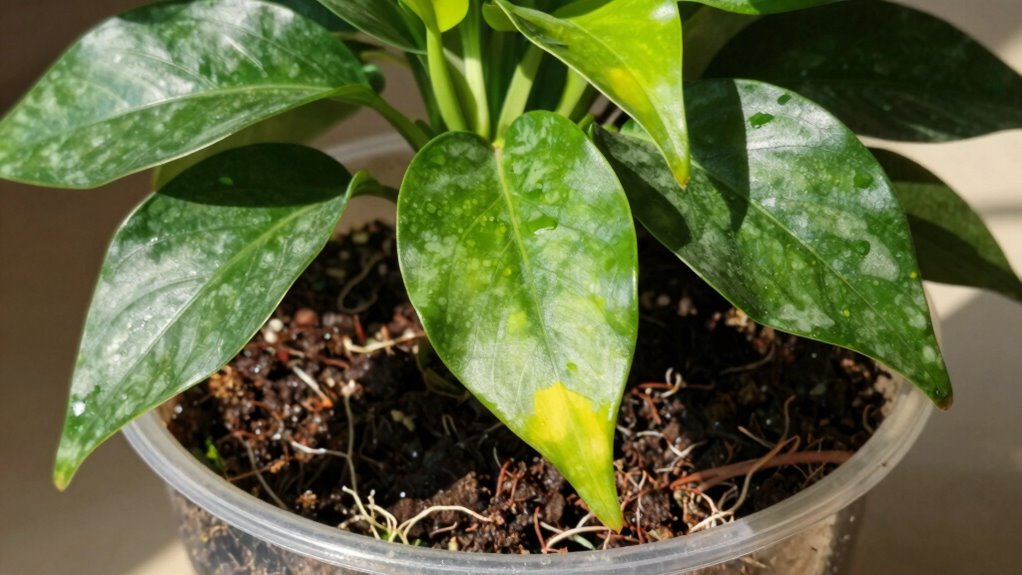
Wondering if you’re overwatering your plants? Your watering habits can secretly harm your greenery. Signs of overwatering include soggy soil that stays wet long after watering, which prevents proper plant hydration. Check the soil’s moisture level by feeling about an inch down—if it’s consistently damp, you’re likely giving too much water. Yellowing leaves, especially on the lower parts of the plant, can also indicate overwatering, as roots suffocate and rot. Additionally, mold or a musty smell near the soil surface points to excess moisture. Remember, healthy plants prefer consistent but moderate watering—allow the top inch of soil to dry out between drinks. Incorporating connected equipment like moisture sensors can help you maintain optimal watering schedules and prevent overwatering. Understanding the importance of soil drainage can further improve your watering effectiveness and plant health. Proper watering techniques are essential for sustainable plant care and avoiding overwatering issues. Recognizing the role of watering frequency can help you develop a better watering routine that supports plant vitality.
Common Causes of Plant Decline: Pests, Soil, and Watering Issues
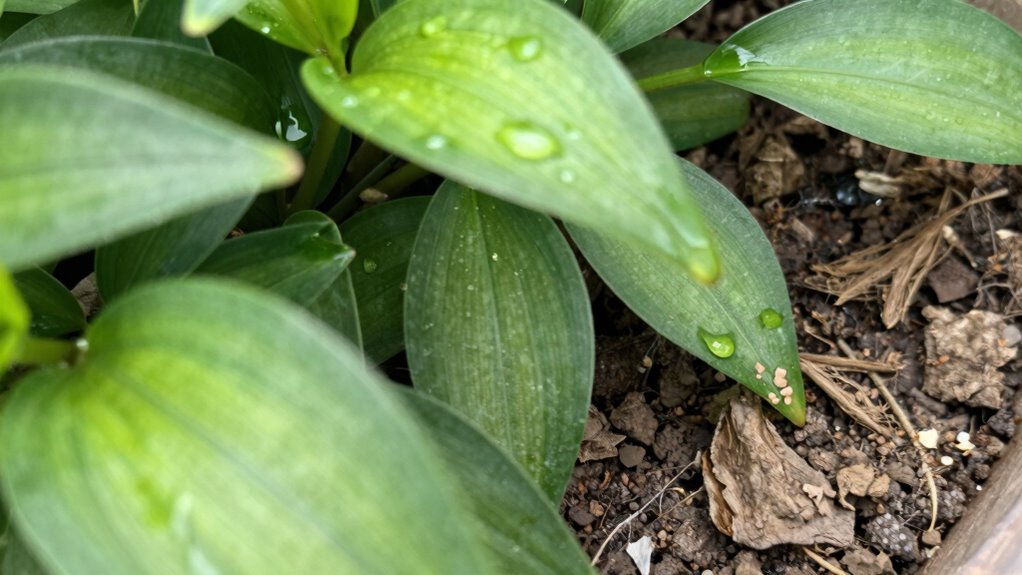
Plants can decline for several reasons beyond overwatering, including pest infestations, soil problems, and improper watering habits. You should look for signs like discolored leaves or holes to identify pests, and understand how soil composition affects root health. Using correct watering techniques helps prevent issues and keeps your plants healthy. Proper firewood stacking can also improve air circulation around your plants, reducing humidity that fosters pests and disease. Additionally, understanding plant health signs can help you catch problems early and address them effectively, such as recognizing early soil deficiencies that impact plant vitality. Recognizing the plant’s natural defenses can also aid in maintaining overall resilience against environmental stressors. Being aware of odor cues like abnormal smells can sometimes help identify underlying issues affecting plant health.
Pest Infestation Signs
How can you tell if pests are attacking your plants? Look for pest signs such as holes, chewed leaves, or sticky residue on your plant’s surface. Insect damage often appears as ragged edges or faint webbing, indicating the presence of spider mites or other pests. You might notice tiny insects crawling on the leaves or stems, or see discolored, wilted foliage that doesn’t respond to watering. Keep an eye out for unusual spots or mold, which can also be signs of pest activity. Regular inspection is key—early detection allows you to address pest problems before they cause severe damage. Recognizing insect damage and pest signs helps you act quickly, protecting your plants from decline and ensuring they stay healthy. Understanding plant health indicators can further improve your ability to diagnose issues early and maintain vibrant, thriving greenery. Additionally, being aware of watering issues such as overwatering or underwatering can help prevent further plant stress and decline. Proper maintenance practices can also minimize pest infestations and keep your plants robust.
Soil Composition Effects
Soil composition plays a essential role in your plant’s health, and poor or imbalanced soil can lead to decline just as much as pests or watering issues. Soil texture affects drainage and aeration—clay, silt, or sand each influence how water moves through the soil. If your soil retains too much moisture because of fine textures, roots can rot, even if you’re not overwatering. Additionally, nutrient balance is imperative; soil lacking essential elements like nitrogen, phosphorus, or potassium hampers growth and weakens your plant’s defenses. Over time, poor soil structure or depleted nutrients cause stress, making plants more vulnerable to disease and pests. Regular soil testing and amendments help maintain proper soil texture and nutrient levels, supporting healthy, resilient plants.
Proper Watering Techniques
Improper watering is a common cause of plant decline, often exacerbating issues caused by pests or poor soil conditions. To guarantee proper plant hydration, focus on adjusting your watering frequency to match your plant’s needs. Overwatering can drown roots, while underwatering leads to dehydration. Check the soil moisture before watering—if the top inch feels dry, it’s time to water; if it’s still moist, wait. Use containers with drainage holes to prevent water buildup. Soil health plays a significant role in how well your plants absorb water and nutrients, making it essential to maintain proper soil conditions. Consistency is key: establish a routine that suits your plant’s environment and growth stage. Remember, plants need steady, appropriate moisture levels to thrive. By mastering proper watering techniques, you reduce stress on your plants, helping them resist pests and recover from soil deficiencies. Incorporating indoor air quality principles can also promote a healthier environment for your plants and yourself.
Signs Your Plants Are Overwatered or Underwatered
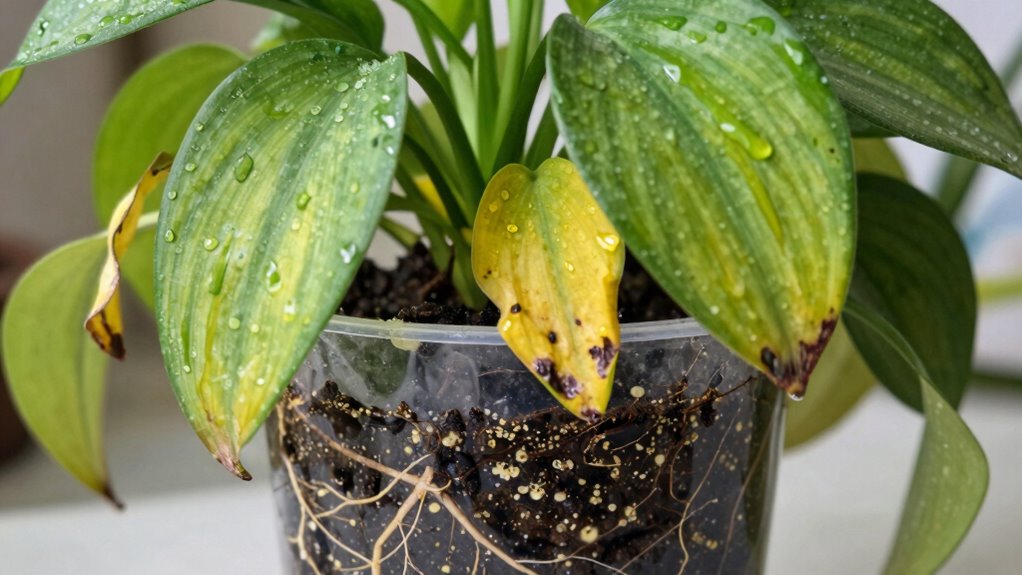
Recognizing whether your plants are overwatered or underwatered is essential for keeping them healthy. One key sign is changes in watering frequency; if you’re watering too often, the soil stays soggy, which can damage root health and cause Yellowing leaves or root rot. On the other hand, underwatered plants will show wilted, dry, or crispy leaves, and the soil may feel dry to the touch. Overwatered plants often have soft, limp stems, and their roots may be brown and mushy when checked. Underwatered plants display stressed, drooping foliage, and their soil remains dry for too long. Paying close attention to these signs helps you adjust your watering habits and maintain the right balance for your plants’ well-being. Additionally, understanding watering needs specific to each plant species can prevent over- or under-watering issues. Proper watering techniques contribute significantly to maintaining healthy roots and overall plant vitality, especially when using appropriate watering schedules tailored to your plant type. Developing a consistent watering routine can also help mitigate common problems caused by improper watering practices.
How to Improve Your Watering Habits and Create a Consistent Schedule

Establishing a consistent watering schedule is key to keeping your plants healthy and thriving. To do this effectively, focus on moisture monitoring and adjust your routine accordingly. Here are four tips:
- Check soil moisture regularly with your finger or a moisture meter.
- Water only when the top inch of soil feels dry.
- Stick to a schedule, whether daily, weekly, or biweekly, based on your plant’s needs.
- Keep notes of watering days to develop consistency and track patterns.
- Using air purifiers in your indoor spaces can help reduce airborne pollutants that may affect plant health.
- Remember that overwatering can lead to root rot and other issues, so understanding your plant’s watering needs is essential for proper care. Additionally, being aware of Gold IRA market trends can help you make better financial decisions to secure your future.
- Educating yourself about plant care can further improve your watering habits and overall plant health.
Choosing Soil and Potting Mixes That Promote Drainage and Healthy Roots
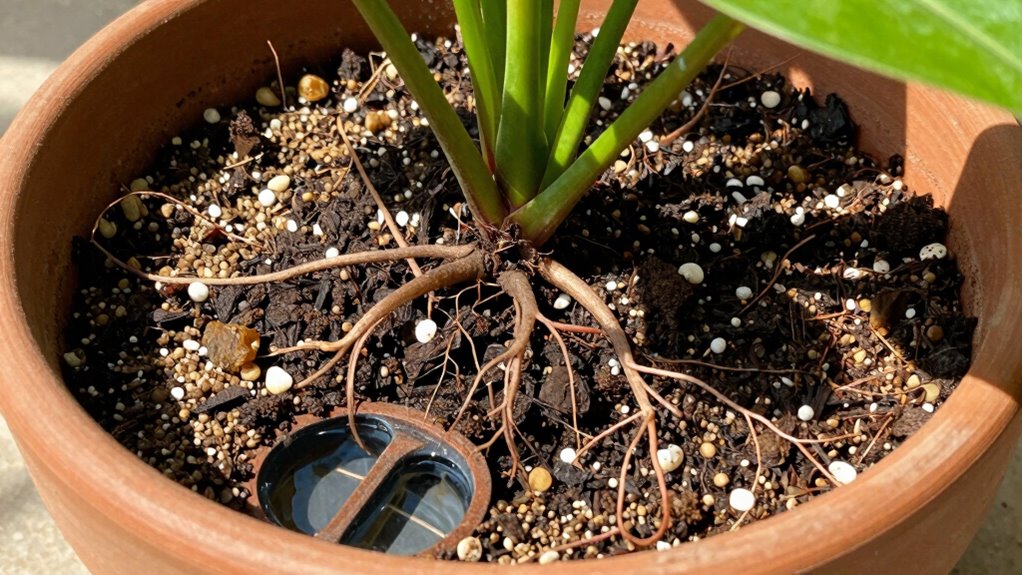
Choosing the right soil or potting mix is essential for ensuring your plants develop strong, healthy roots and avoid issues caused by overwatering. A well-draining potting mix helps prevent water from pooling around roots, reducing the risk of root rot and other problems. Look for mixes labeled for good soil drainage, which typically contain components like perlite, pumice, or coarse sand that improve aeration and drainage. Avoid heavy, dense soils that retain too much moisture. Instead, select a potting mix designed for your specific plant type, whether it’s succulents, orchids, or houseplants. Proper soil drainage encourages healthy root growth while providing enough moisture without drowning the roots, creating a balanced environment that supports your plant’s overall health. Incorporating filtration and aeration features into your soil mix can further optimize moisture levels and promote healthier plant growth. Additionally, understanding watering practices can help prevent overwatering and maintain optimal soil conditions for your plants.
Tips for Improving Drainage and Preventing Waterlogged Soil
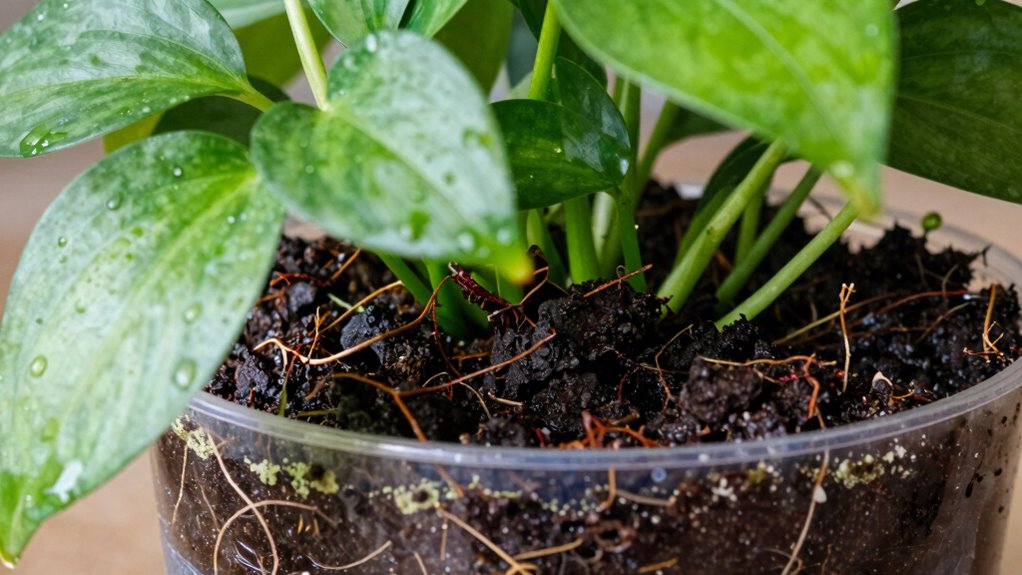
To prevent your soil from becoming waterlogged, it’s important to improve drainage around your plants. Start by applying effective drainage solutions such as installing drainage pipes or creating raised beds to elevate roots above excess water. Next, incorporate soil amendments like coarse sand, perlite, or compost to enhance aeration and reduce compaction. Here are some tips:
- Use a well-draining potting mix tailored for your plant’s needs.
- Ensure containers have drainage holes and use gravel at the bottom.
- Regularly mix in organic matter to improve soil structure.
- Avoid overwatering by checking soil moisture before watering again.
Implementing these strategies assures water drains properly, preventing waterlogged soil and protecting your plants from root rot.
When to Troubleshoot or Seek Expert Help for Plant Problems

Knowing when to troubleshoot or seek expert help is essential for keeping your plants healthy, especially when problems persist despite your efforts. If your plant shows signs of plant disease, such as discolored or wilting leaves, it’s time to investigate further. Also, if adjusting watering habits and improving drainage haven’t resolved issues, consider consulting a professional. Sometimes, nutrient deficiencies or improper fertilizer needs cause symptoms that mimic overwatering problems. If your plant’s condition worsens or shows no improvement despite your care, seeking expert advice can prevent further damage. Recognizing these signs helps you address underlying issues promptly, whether adjusting fertilization, diagnosing plant disease, or implementing targeted treatments. Don’t ignore persistent problems—early intervention saves your plant’s health.
Frequently Asked Questions
Can Overwatering Cause Specific Plant Diseases?
Yes, overwatering can cause specific plant diseases by creating watering damage that fosters fungal and bacterial growth. When you water excessively, you leave the soil too moist, which weakens roots and makes plants more vulnerable. This watering damage can lead to diseases like root rot and leaf spots. To prevent this, guarantee proper watering practices, letting soil dry out between watering sessions and avoiding over-saturation.
How Does Watering Frequency Vary by Plant Type?
Imagine your plants as dancers, each with unique moves and rhythms. Watering habits vary by plant specific needs—succulents crave infrequent, deep drinks, while ferns flourish with consistent moisture. Observe their leaves and soil to guide your watering schedule. By tuning into each plant’s natural rhythm, you prevent overwatering and promote healthy growth, ensuring they thrive happily in your care.
Are There Natural Signs of Root Rot I Should Look For?
You should watch for root rot symptoms like wilting, yellowing leaves, and a foul smell from the soil, which indicate compromised plant health cues. Check the roots if possible; brown, mushy, or slimy roots are clear signs of root rot. Recognizing these signs early helps you take action, such as adjusting watering habits or improving drainage, to save your plant and prevent further damage.
What Are Eco-Friendly Ways to Improve Soil Drainage?
Improve soil drainage naturally by using eco-friendly organic soil amendments like compost and coconut coir. Incorporate composting techniques to boost soil structure, creating a porous, well-draining foundation. You can also add organic matter such as leaf mold or aged manure to enhance aeration. These sustainable solutions help prevent overwatering woes, promote healthy roots, and keep your plants thriving without harmful chemicals or synthetic additives.
How Can I Tell if My Watering Schedule Is Causing Stress?
You can tell if your watering schedule causes stress by checking soil moisture levels regularly. If the soil feels consistently waterlogged or stays soggy, you’re likely overwatering, which adds watering stress to your plants. Conversely, if it’s dry for extended periods, underwatering might be the issue. Use a moisture meter or finger test to monitor soil moisture and adjust your watering routine to keep it balanced.
Conclusion
Remember, overwatering is a common mistake, but it’s often preventable with proper care. Did you know that around 60% of houseplant failures are due to overwatering? By paying attention to your plant’s signs and adjusting your watering habits, you can keep your green friends healthy and thriving. Stay consistent, choose well-draining soil, and don’t hesitate to seek help if needed—your plants will thank you with vibrant growth and lush leaves.