When designing your outdoor kitchen, organize it into functional zones like cooking, prep, and dining to keep everything flowing smoothly and safely. Place heavy appliances like grills away from walkways and seating areas to prevent accidents. Guarantee clear pathways and sufficient lighting so you can move around confidently at night. Incorporate barriers or landscaping to separate cooking zones from relaxing spaces. Understanding how to optimize zones and safety features will help you create an inviting, secure outdoor kitchen setup.
Key Takeaways
- Define distinct zones for cooking, prep, dining, and storage to ensure efficient workflow and safety.
- Position seating away from heat sources to prevent accidents and maintain comfort.
- Incorporate adequate lighting over all zones for visibility and safety during evening use.
- Maintain clear pathways between zones to facilitate movement and reduce tripping hazards.
- Use weather-resistant fixtures and materials to ensure durability and safety in outdoor conditions.
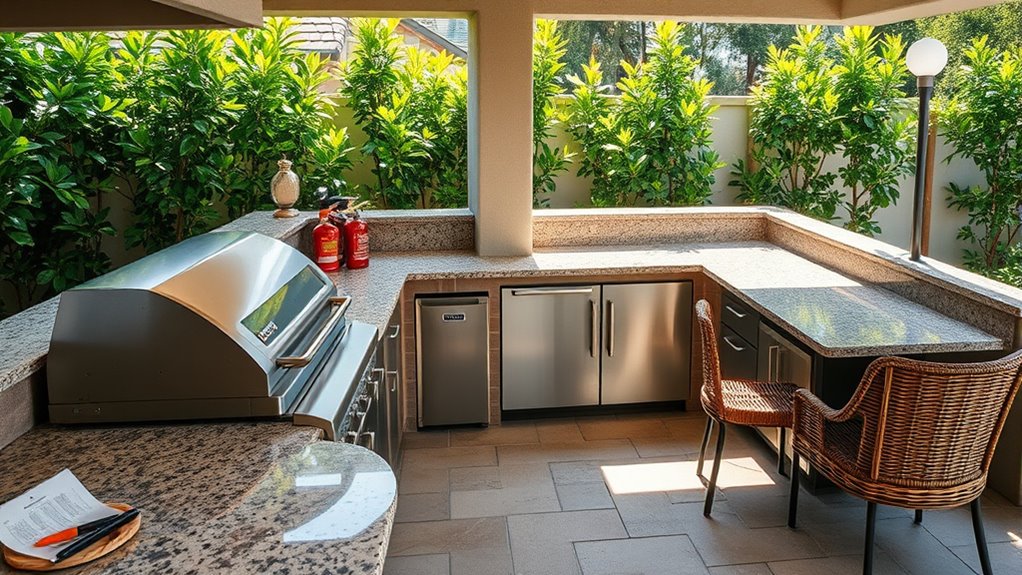
Designing the perfect outdoor kitchen starts with choosing a layout that fits your space and cooking style. One of the key elements to contemplate is how you’ll arrange seating, as this influences both functionality and comfort. Think about your typical gatherings: do you prefer a casual setup with bar stools around a counter, or a more relaxed arrangement with a built-in dining table? The goal is to create a flow that encourages socializing without crowding your cooking zone. For smaller spaces, built-in benches or a few lounge chairs might suffice, while larger areas can accommodate multiple seating zones for different activities. Keep in mind that your seating arrangement should be positioned to face the main cooking or prep area, allowing guests to interact with you while you work. This fosters a welcoming atmosphere and keeps everyone engaged. Additionally, considering the emotional support aspect of outdoor living can enhance your space by making it more inviting and stress-relieving. Lighting designs are equally essential when planning your outdoor kitchen layout. Proper lighting extends usability into the evening hours and enhances safety. You’ll want a combination of ambient, task, and accent lighting to create a balanced atmosphere. Ambient lighting, such as string lights or recessed fixtures, sets a warm, inviting tone across the entire space. For task lighting, install focused lights over prep counters, grills, and sinks to ensure you can cook safely and efficiently after dark. Accent lighting can highlight architectural features or landscaping, adding depth and visual interest to your outdoor area. When planning your lighting, consider the placement of switches and dimmers for easy control, and opt for weather-resistant fixtures designed for outdoor use. Also, think about the natural light sources, like nearby trees or structures, and how they might influence your lighting design. Positioning lights strategically around seating areas ensures your guests can see comfortably, whether they’re chatting, eating, or relaxing. Incorporating thoughtful seating arrangements and effective lighting designs into your outdoor kitchen layout creates a space that’s both functional and inviting. These elements work together to enhance safety, promote social interaction, and extend your outdoor living season. As you plan, prioritize flexibility — select seating that can be easily moved or reconfigured, and choose lighting that can be adjusted to suit different occasions. Remember, a well-designed layout isn’t just about aesthetics; it’s about creating an environment where you feel comfortable, safe, and inspired to cook and entertain. By paying attention to how your seating and lighting come together, you’ll craft an outdoor kitchen that’s perfect for both everyday meals and lively gatherings.

Black Flush Mount Ceiling Light Fixtures, 2-Light Ceiling Mount for Farmhouse with Seeded Glass Lampshade, Industrial Flush Mount Light Fixture Farmhouse for Hallway, Kitchen, Entryway and Foyer
Flush Mount Design & Farmhouse Style: Black ceiling light features durable metal base and seeded glass shade. Frameless…
As an affiliate, we earn on qualifying purchases.
As an affiliate, we earn on qualifying purchases.
Frequently Asked Questions
How Do I Choose the Best Material for Outdoor Countertops?
When choosing the best material for outdoor countertops, focus on material selection and countertop durability. You should opt for materials like granite, concrete, or quartz, which withstand weather and heavy use. Consider your climate and how the surface will be used daily. Durable materials resist stains, heat, and moisture, ensuring your outdoor kitchen stays functional and attractive over time. Prioritize quality to make a lasting investment.
What Are the Latest Trends in Outdoor Kitchen Lighting?
Imagine transforming your outdoor space with the latest lighting trends. You’ll love how LED fixtures create a sleek, energy-efficient glow, perfect for ambiance and safety. Smart lighting takes it further, allowing you to control brightness and color from your phone or voice commands. This trend not only enhances your outdoor kitchen’s style but also offers convenience and security, making your outdoor cooking experience more luxurious and effortless than ever before.
How Can I Incorporate Storage Solutions Into My Outdoor Kitchen?
To incorporate storage solutions into your outdoor kitchen, start with clever storage ideas like weatherproof cabinets, under-counter drawers, and wall-mounted shelves. Use organization tips such as labeled containers and hooks for utensils to maintain everything tidy and accessible. Consider built-in options that maximize space without cluttering your area. This approach ensures your outdoor kitchen stays functional, organized, and ready for your next cookout.
What Are Common Mistakes to Avoid in Outdoor Kitchen Design?
Did you know that 60% of outdoor kitchens fail because of poor design choices? To avoid this, steer clear of cluttered layouts and neglecting landscape integration. Prioritize privacy considerations, so your space feels intimate and secure. Don’t overlook proper zoning, which ensures safety and functionality. Keep pathways clear, and choose weather-resistant materials. By avoiding these mistakes, your outdoor kitchen will be both beautiful and practical, providing years of enjoyment.
How Do I Maintain Safety Around Outdoor Cooking Appliances?
To keep safe around outdoor cooking appliances, always have a fire extinguisher nearby in an accessible spot, and guarantee it’s rated for grease fires. Follow electrical safety tips by keeping outlets and wiring away from water and moisture, and use weatherproof covers. Also, maintain clear zones around appliances, avoid clutter, and regularly check for gas leaks or damaged cords to prevent accidents.

VEVOR Outdoor Kitchen Doors, 30W x 21H Inch, 304 Stainless Steel Double Doors with Vents, BBQ Access Door with 2 Detachable Handles and 6 Hooks, for BBQ Island
Precision Opening: Overall dimensions: 762x533x46 mm / 30x21x2 inches, installation size: 27x18inch/677x448mm, it is recommended to reserve an…
As an affiliate, we earn on qualifying purchases.
As an affiliate, we earn on qualifying purchases.
Conclusion
Designing your outdoor kitchen blends the beauty of nature with the practicality of a culinary space. While you enjoy the open air and scenic views, safety and efficient zones keep your cooking smooth and stress-free. Remember, the elegance of your setup shouldn’t overshadow safety measures. By balancing style with function, you create a space that’s both inviting and secure—where unforgettable meals and memories unfold beneath the sky’s vast embrace.
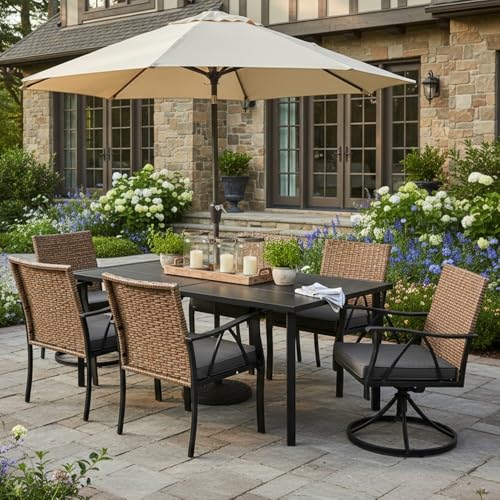
Andehomy 7-Piece Patio Dining Set for 6, Outdoor Dining Set with Wicker Swivel Patio Dining Chairs with Cushions & Black Rectangular Woodgrain Dining Table with 1.75”Umbrella Hole, Black & Brown
[STYLISH DINING SET]: This 7-piece set for 6 includes 1 spacious dining table, 2 swivel chairs, 4 comfortable…
As an affiliate, we earn on qualifying purchases.
As an affiliate, we earn on qualifying purchases.

Retractable Baby Gates for Doorways, Mesh Dog Gate for Stairs, Pet Gate Indoor, Extends to 55" Wide 33" Tall, Safety Toddlers Gates for Hallways, Indoor & Outdoor Use, Black
【Ideal for Babies and Pets】Our retractable baby gates extend up to 55” wide and stands 33” tall. Fits…
As an affiliate, we earn on qualifying purchases.
As an affiliate, we earn on qualifying purchases.