
To create better flow between indoor and outdoor spaces, focus on maximizing natural light with large windows and glass doors that open fully. Use consistent materials and textures, like stone or wood, to visually unite the areas. Arrange furniture to face inward or toward outdoor views, and incorporate similar decor and lighting fixtures on both sides. Plant along boundary areas to soften boundaries and reinforce harmony. For more practical tips, you’ll discover how these elements come together to craft a seamless connection.
Key Takeaways
- Incorporate large windows, glass doors, and skylights to maximize natural light and create visual openness.
- Use consistent flooring materials and color palettes to seamlessly connect indoor and outdoor areas.
- Arrange furniture to face both spaces, ensuring clear sightlines and inviting transitions.
- Plant along transition zones to soften boundaries and enhance visual harmony.
- Match lighting fixtures and decor elements inside and outside for cohesive, inviting ambiance.
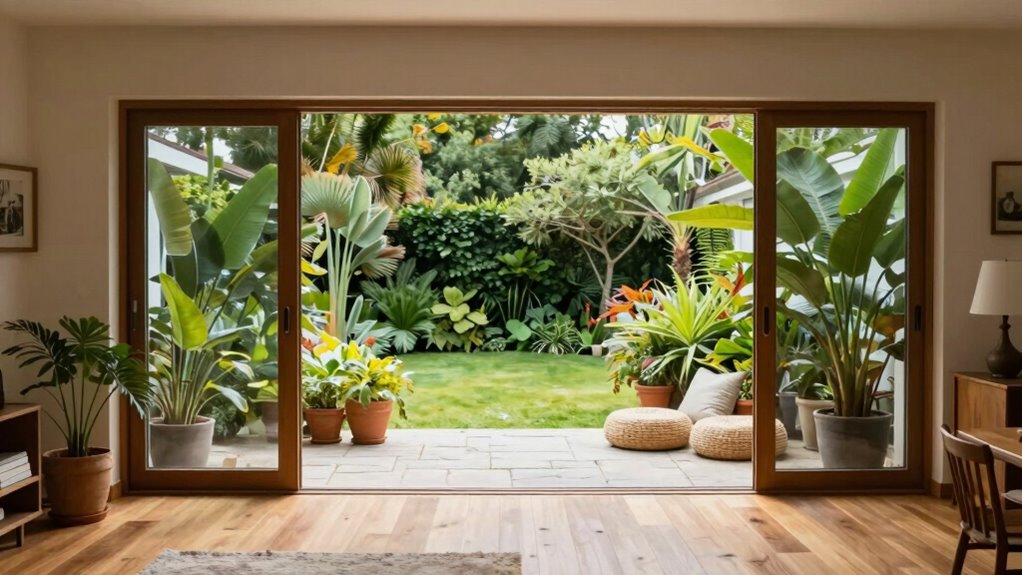
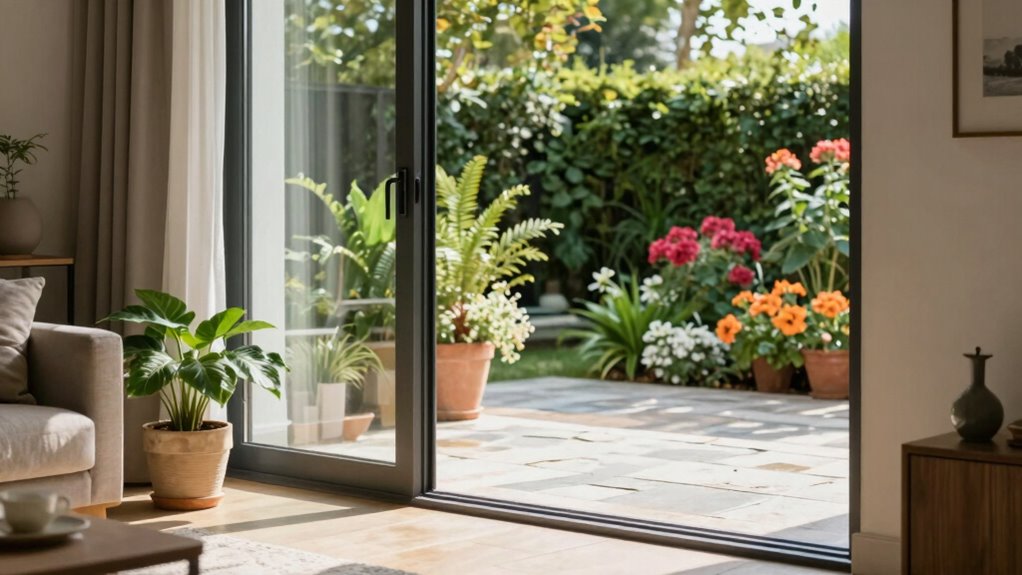
Bridging the gap between your indoor and outdoor spaces can transform your home into a seamless retreat. To achieve this, focus on creating smooth progressions that invite the outdoors in while maintaining a cohesive look. One of the most effective ways to do this is by maximizing natural lighting. Large windows, glass doors, and skylights flood your interiors with sunlight, reducing barriers between inside and out. When you let in more natural light, the boundary between your indoor rooms and outdoor areas becomes less stark, making the entire space feel more open and inviting. Consider installing sliding or folding glass doors that can fully open, blurring the lines between the two spaces and allowing sunlight to pour through effortlessly.
Maximize natural light with large windows and glass doors to seamlessly blend indoor comfort with outdoor openness.
Material progressions play a vital role in creating harmony between indoor and outdoor zones. Choose flooring materials that flow naturally from inside to outside, such as extending your living room tiles onto a patio or using similar stone or wood textures. This consistency helps your eye move smoothly from one space to the next, avoiding jarring shifts that can disrupt the flow. Whether you opt for a seamless concrete slab, warm wood decking, or stone pavers, maintaining a continuous material palette guarantees your progression feels intentional rather than segmented. Additionally, using matching or complementary colors and finishes further unifies the look, so that the outdoor area feels like an extension of your indoor living space. Incorporating natural lighting elements can also enhance the overall ambiance and connection to the outdoors. Creating a cohesive design that links indoor and outdoor areas can significantly improve the sense of harmony. Employing design principles such as balance and flow further supports this integration, making the transition feel natural and effortless. A well-thought-out layout that considers sightlines and sight angles can also help emphasize the unity between spaces.
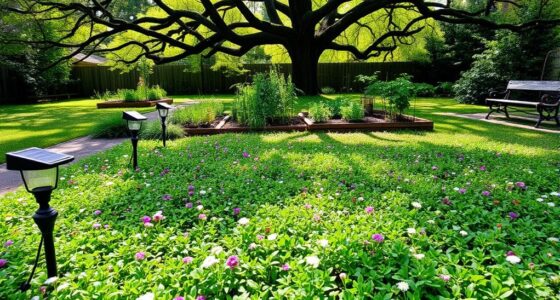
Another key element is the alignment of furniture and decor. Position outdoor seating to face inward or toward your indoor area, creating visual connections that encourage movement between spaces. Keep the design style consistent across both zones—use similar cushions, textiles, and accessories—so everything looks cohesive. Planting strategies also matter; selecting plants that suit both environments and arranging them along transitional zones help soften the change from indoors to outdoors. You might consider creating a built-in bench with storage along an indoor-outdoor corridor or a covered patio that offers shelter while maintaining openness. Incorporating Planting strategies that blend seamlessly into both areas can further enhance the feeling of continuity.
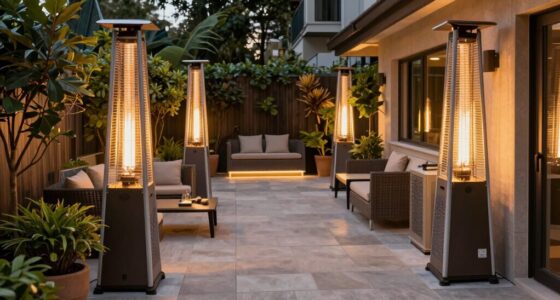
Finally, pay attention to the details that tie everything together. Use lighting fixtures that complement each other inside and outside, like matching sconces or string lights. Incorporate similar color schemes and decorative accents to reinforce the unity. When you thoughtfully combine natural lighting, material progressions, furniture placement, and cohesive decor, you create a fluid space that feels natural and inviting. Your indoor and outdoor areas become one harmonious environment, encouraging you to spend more time connecting with nature without feeling like you’re stepping into a different world.
As an affiliate, we earn on qualifying purchases.
Frequently Asked Questions
How Can I Improve Natural Light Transition Between Spaces?
To improve natural light shift between spaces, focus on strategic window placement to maximize sunlight flow. Use larger or more windows, especially on walls facing the sun, to increase natural light. Consider adding glass doors or skylights where possible, and avoid heavy curtains that block light. Keep interior layouts open to allow light to travel freely, creating a seamless and bright flow that blends indoor and outdoor areas effortlessly.
What Materials Work Best for Seamless Flooring Across Indoors and Outdoors?
You should choose materials like porcelain tiles, natural stone, or stamped concrete for seamless indoor-outdoor flooring. These options offer excellent material durability and maintain aesthetic consistency, ensuring a smooth visual shift. Many believe matching flooring materials create better flow, and it’s true—these durable, attractive options withstand weather and foot traffic while keeping a cohesive look between your indoor and outdoor spaces.
How Do I Manage Privacy While Maintaining Flow?
To manage privacy while maintaining flow, you can incorporate privacy screens strategically, such as along property boundaries or near seating areas, without disrupting the visual connection. Use sound barriers like planting dense hedges or installing outdoor curtains to block noise and create intimate zones. Combining these elements preserves the seamless indoor-outdoor flow while offering privacy, making your space both inviting and functional without feeling enclosed.
What Are Cost-Effective Ways to Enhance Indoor-Outdoor Connection?
You can enhance indoor-outdoor connection cost-effectively by focusing on landscaping integration and color coordination. Plant native shrubs and flowers that blend seamlessly with your indoor decor, creating a natural flow. Use matching or complementary colors in outdoor furniture and accessories to link spaces visually. Simple elements like outdoor rugs, potted plants, or garden lighting also boost connection without breaking the bank, making your shift inviting and cohesive.
How Can Furniture Placement Support Better Flow?
You can support better flow through strategic furniture arrangement, ensuring pieces are positioned to create clear pathways and avoid clutter. Choose low-profile furniture that doesn’t block sightlines, promoting spatial harmony between indoor and outdoor areas. Arrange seating to face both spaces, encouraging interaction and movement. Consistent style and color help unify the spaces visually, while flexible furniture options allow you to adapt the layout for ideal flow and functionality.
Conclusion
By blending indoor and outdoor spaces seamlessly, you turn your home into a living, breathing canvas—where sunlight dances inside and fresh air whispers through open doors. Think of your home as a symphony, with each space harmonizing effortlessly. When you create this flow, it’s like opening a window to endless possibilities, inviting nature’s beauty to become part of your everyday rhythm. So, embrace the shift, and let your home breathe free and wild.