When choosing between gravel and mulch for your backyard pathway, consider the look and maintenance you prefer. Gravel offers a clean, modern feel, provides excellent drainage, and highlights lighting, but may require edging to keep it contained. Mulch provides a softer, natural appearance that blends with garden beds and is great for shaded areas. Each option has benefits; explore further to find the perfect pathway style for your outdoor space.
Key Takeaways
- Gravel pathways offer a structured, modern look with excellent drainage, while mulch provides a softer, natural aesthetic.
- Gravel is easy to install and adjust, suitable for defined, clean-cut pathways; mulch blends seamlessly into garden beds.
- Gravel enhances lighting reflections and offers more durability, whereas mulch helps retain moisture and suppress weeds in shaded areas.
- Edging and lighting can be added to both for better definition, but gravel pathways generally require more maintenance to keep neat.
- The choice depends on desired style, maintenance level, and outdoor function—modern and structured with gravel, relaxed and natural with mulch.
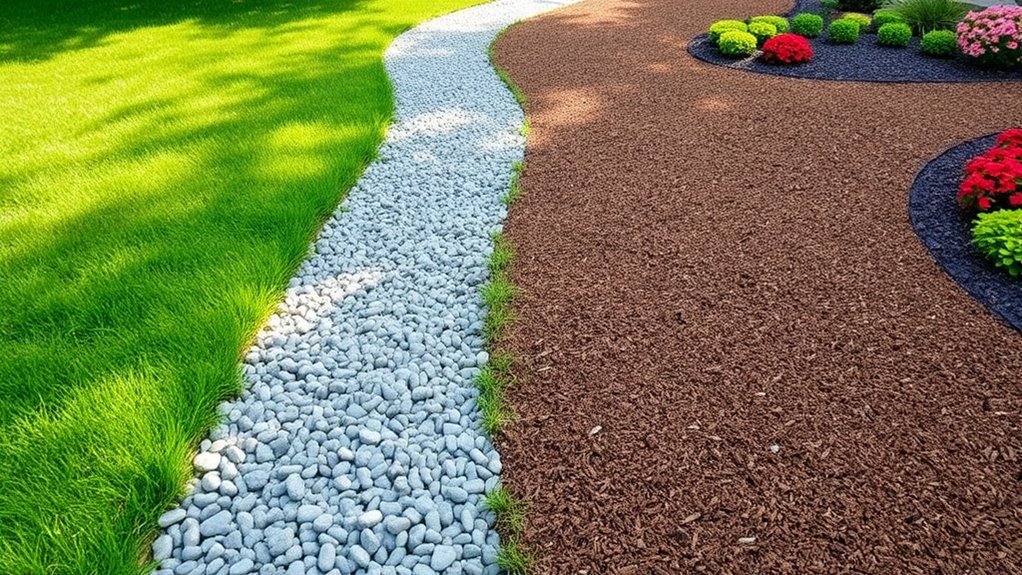
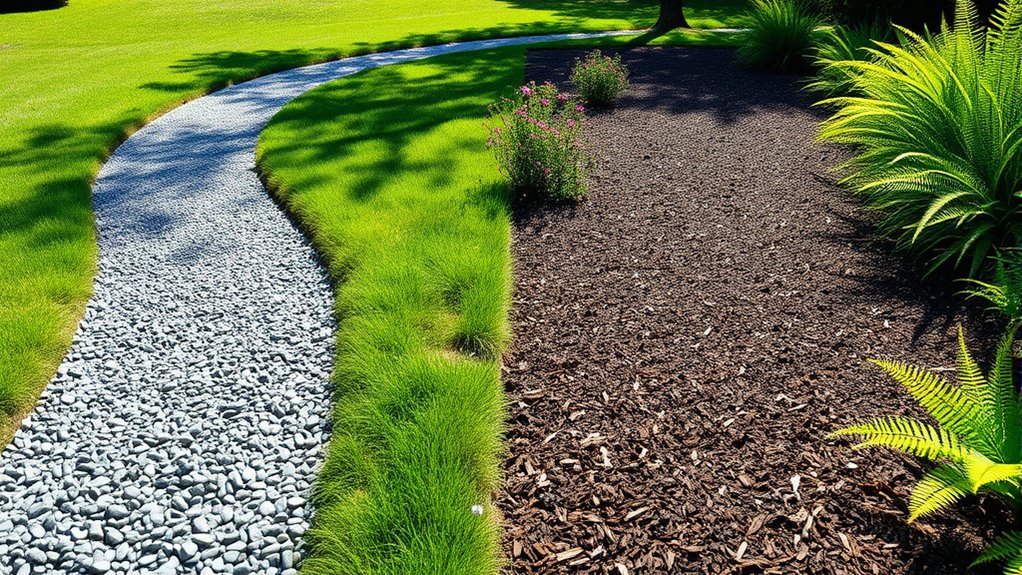
Creating a backyard pathway transforms your outdoor space into a functional and inviting area. It guides your movement through the yard, connects different zones, and adds visual interest. When choosing between gravel and mulch, consider how each option complements your landscape, especially when it comes to garden lighting and pathway edging. These details can make a significant difference in the overall look and usability of your pathway. Incorporating natural materials enhances the authentic farmhouse feel and ensures your pathway blends seamlessly with the surrounding garden. Gravel is a popular choice because it provides excellent drainage and a crisp, clean appearance. It’s easy to lay down and can be adjusted to suit various widths and shapes. You can incorporate garden lighting along a gravel path by installing low-voltage lights or solar stake lights, which highlight the route during evening hours. The reflective quality of gravel enhances the glow of these lights, creating a charming ambiance. Additionally, pathway edging with stones, bricks, or metal strips helps contain the gravel and maintains a tidy, defined look. Edging also prevents gravel from spilling into adjacent flower beds or lawn areas, making maintenance simpler and keeping your pathway neat.
Mulch, on the other hand, offers a softer, more natural aesthetic. It’s an excellent option if you want a more organic feel, blending seamlessly with garden beds and plantings. Mulch is especially suited for pathways that meander through shaded or woodland areas, where it helps retain moisture and suppress weeds. When it comes to lighting, mulch can be spot-lit with small, well-placed path lights or uplights that cast gentle illumination on the surface. To keep your mulch pathway looking polished, use a defined pathway edging—such as plastic or rubber borders—that keeps mulch contained and prevents it from spreading into unwanted areas. This edging also makes it easier to replenish or refresh the mulch as needed, maintaining a tidy appearance. Both gravel and mulch can be enhanced with thoughtful garden lighting, which not only boosts safety but also adds a magical touch to your backyard in the evening. Well-placed lighting along your pathway can highlight the edging, showcase your favorite plants, and create a welcoming glow. The choice between gravel and mulch ultimately depends on your aesthetic preferences, maintenance willingness, and how you envision your outdoor space functioning. Gravel pathways tend to look more structured and modern, while mulch offers a more relaxed, natural vibe. Whichever material you select, incorporating quality pathway edging and strategic garden lighting helps create a cohesive, attractive, and practical backyard pathway that invites you to enjoy your outdoor space day and night.
Frequently Asked Questions
Which Pathway Material Is More Eco-Friendly?
You’ll find mulch more eco-friendly because of its sustainability benefits, like improving soil health and reducing waste. It decomposes naturally, enriching the environment, and requires less manufacturing energy. Gravel, while durable, has a higher environmental impact during mining and transportation. Choosing mulch helps you support a greener landscape by minimizing your carbon footprint and promoting healthier soil, making it the better option for environmentally conscious projects.
How Do I Maintain the Pathway Materials?
Maintaining your pathway is like tending to a garden—consistent care keeps it beautiful. For gravel, regularly rake to smooth uneven spots, add new stones as needed, and control weeds with a weed barrier or spot treatments. Mulch needs periodic replenishment to keep weeds out and maintain its aesthetic options. Keep the surface tidy by removing debris and revitalizing the mulch or gravel to preserve its appearance and functionality.
Can I Combine Gravel and Mulch in One Pathway?
Yes, you can combine gravel and mulch in one pathway for a mixed aesthetic that adds texture and visual interest. This approach allows you to customize your DIY installation, blending the natural look of mulch with the stability of gravel. Just make certain proper edging and layering to prevent materials from mixing excessively. This combo can create a charming, functional pathway that suits your style and needs.
What Is the Cost Difference Between Gravel and Mulch?
Think of gravel as a sturdy, investment-grade car, while mulch is like a cozy, eco-friendly bike. Gravel typically costs more upfront due to installation costs, but it’s durable and may save you money long term. Mulch is cheaper initially but might need frequent replacement, increasing long term expenses. Your choice depends on your budget and how much upkeep you’re willing to handle over time.
Which Material Is Better for High-Traffic Areas?
For high-traffic areas, gravel is your best choice because it offers superior pathway durability, handling frequent use without quickly deteriorating. It also maintains its aesthetic appeal, providing a clean, natural look that complements your landscape. Mulch, while attractive initially, tends to break down faster under constant foot traffic, requiring more frequent replenishment. So, if you want longevity and consistent appeal, gravel is the smarter option for busy pathways.
Conclusion
Choosing between gravel and mulch for your backyard pathway is like selecting a brush for your canvas—each offers unique charm and practicality. Gravel’s durability echoes the steadfastness of ancient Roman roads, while mulch’s natural look reminds us of a forest’s quiet embrace. Ultimately, your choice shapes your oasis. Remember, like the timeless stories etched into stone and soil, your pathway reflects your style and spirit—lasting, beautiful, and uniquely yours.