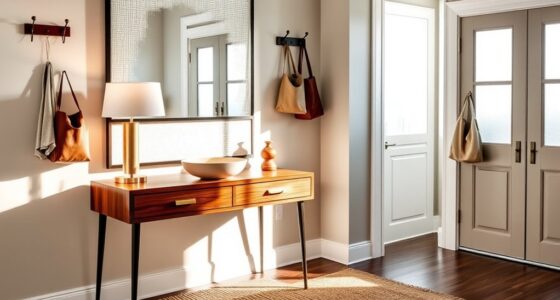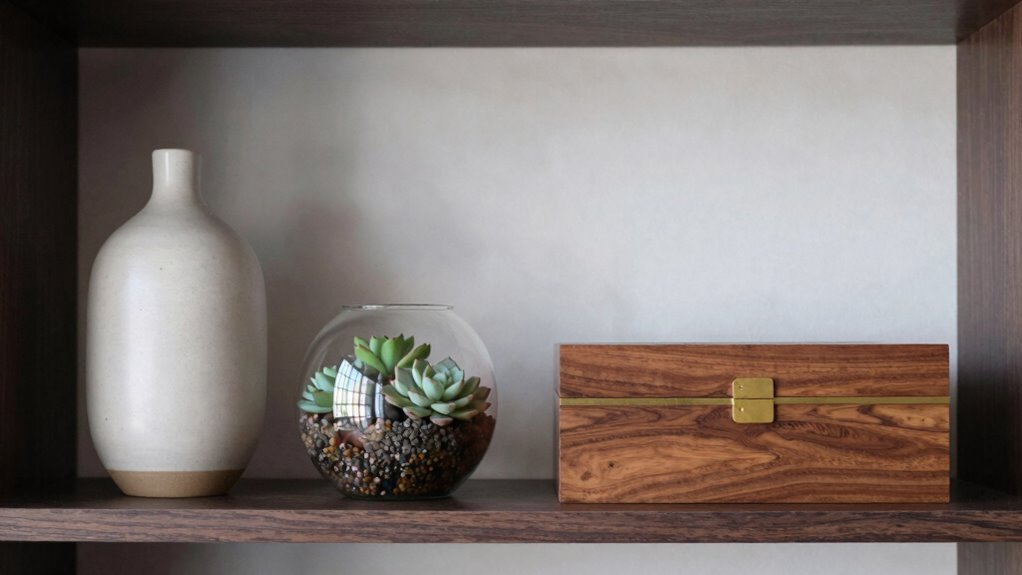

To style your shelves effortlessly, use the 3-shape trick by grouping items into tall, medium, and small shapes. Arrange taller pieces at the ends or back, then fill gaps with medium and small accents for balance. Choose items that coordinate in size, color, and style to create harmony. Keeping your shelves balanced enhances their style and prevents clutter. Keep exploring this technique to master a perfectly styled, clutter-free display.
Key Takeaways
- Group decorative items into three shapes: tall, medium, and small, to create visual harmony.
- Use larger pieces as anchors, placing them at the back or ends of shelves for balance.
- Mix shapes, colors, and materials to add texture and avoid cluttered appearances.
- Alternate heights and sizes to maintain interest and focal points across the shelves.
- Regularly rotate and adjust items to sustain the balanced 3-shape display over time.
Why Your Shelves Look Cluttered and How the 3-Shape Trick Can Help
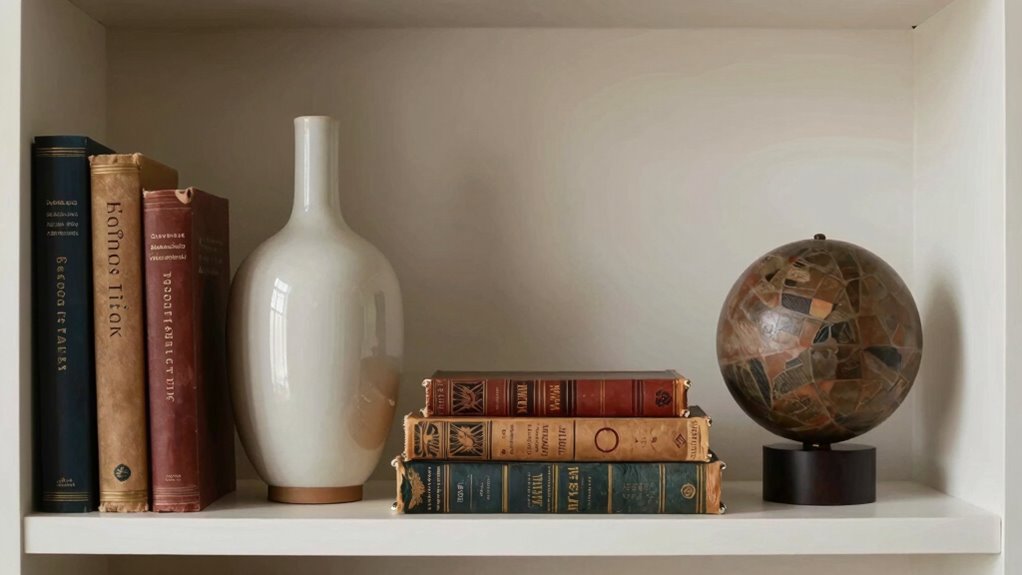
If your shelves consistently look cluttered, it’s often because the items lack visual balance. Poor shelf organization makes everything appear chaotic, even if you have many decorative accessories. When items are unevenly arranged or overcrowded, the eye struggles to find focal points, creating a cluttered feel. The 3-shape trick helps solve this by grouping items into three simple shapes—tall, medium, and small—to create harmony. Use decorative accessories of varying heights and sizes, but avoid overloading each shelf. Properly balancing these shapes ensures your shelves look intentional and tidy. This method draws attention to key pieces while maintaining a clean, cohesive appearance, transforming clutter into stylish display. Incorporating innovative European cloud solutions can also inspire fresh organization ideas by leveraging sustainable and secure cloud storage for your home or office.
How to Choose the Right Items for Each Shape: Size, Color, and Style
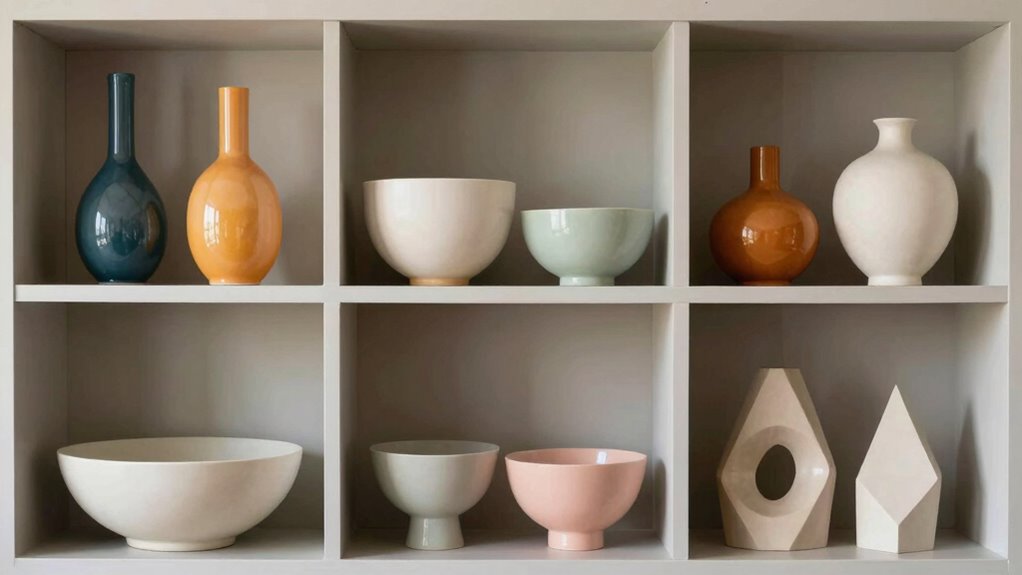
Choosing the right items for each shape starts with considering size, color, and style to create visual harmony. Start by selecting pieces that vary in size to add depth and interest—larger items anchor the display, while smaller ones fill gaps. Focus on color coordination by balancing neutral tones with pops of color to avoid overwhelming the shelf. Mix materials like glass, wood, and metal to add texture and contrast, making each item stand out. When choosing shapes, aim for a mix of curves, squares, and organic forms to keep the arrangement dynamic. Consistency in style helps unify the display, but don’t be afraid to combine different textures and colors for visual intrigue. This thoughtful selection sets a solid foundation for a balanced and appealing shelf.
Step-by-Step: Arranging Your Shelves Using the 3-Shape Technique
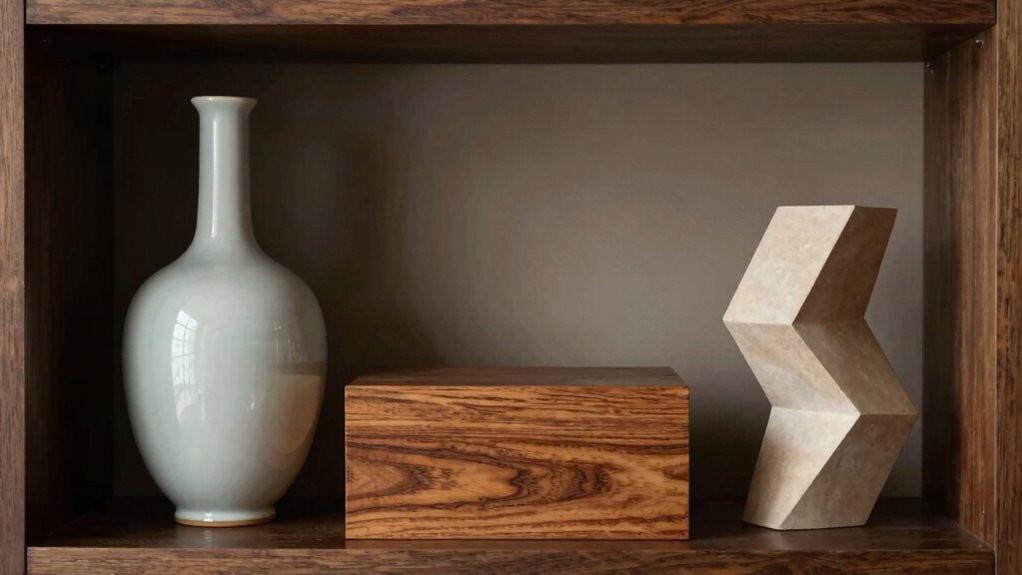
To start arranging your shelves using the 3-Shape Technique, gather the items you’ve selected based on size, color, and style. Begin by creating three distinct groups: tall, medium, and small objects. Follow decorating principles by placing the tallest items toward the back or at the ends to frame your display. Balance the visual weight by mixing shapes and textures while maintaining harmony. Position medium-sized pieces next, ensuring they complement the taller items without overpowering them. Fill in gaps with smaller objects, adding depth and interest. Aim for a cohesive look by alternating heights and shapes, which enhances visual harmony. Incorporating visual balance techniques can help ensure your display feels harmonious and engaging. Considering space‑saving strategies can also optimize your shelf layout for a clean, organized appearance. Paying attention to proportion and scale helps create a more pleasing and balanced arrangement overall, especially when you evaluate your display from different angles to achieve the best visual impact. Additionally, adjusting the placement based on focal points can draw attention to key decorative elements and improve overall cohesion.
Tips for Keeping Your Shelves Balanced and Stylish Over Time
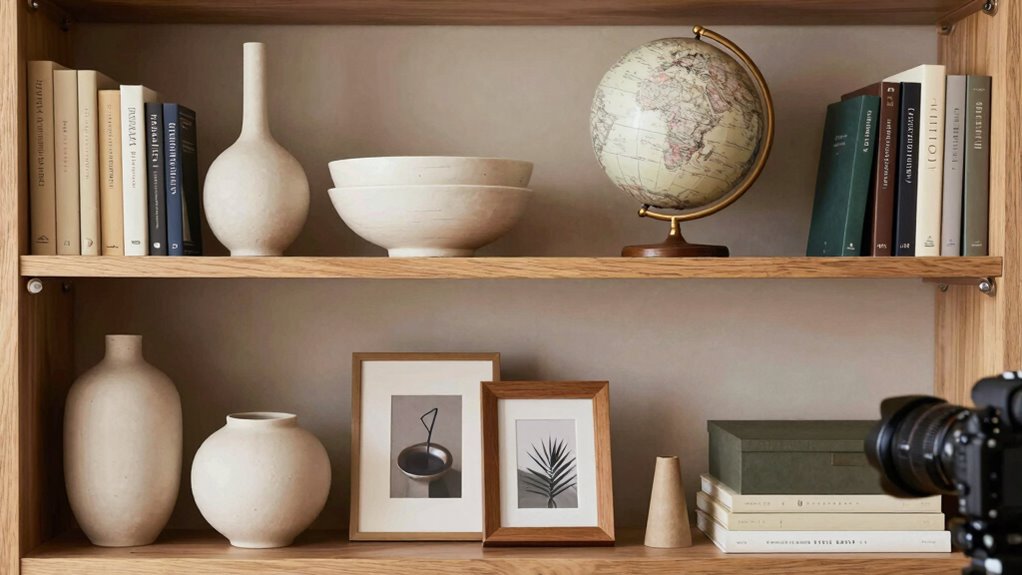
Maintaining a balanced and stylish shelf over time requires regular attention and thoughtful adjustments. To keep your shelves aligned with your decorating themes, follow these tips:
- Rotate decorative items periodically to refresh your look and prevent clutter buildup.
- Use shelf maintenance routines to dust and clean, preserving the integrity of your pieces.
- Adjust the placement of objects to maintain the 3-shape harmony, ensuring visual balance.
- Incorporate new accessories gradually, blending them seamlessly into existing arrangements.
- Consider the impact of contrast ratio on your display to enhance visual interest and clarity.
Common Shelf Styling Mistakes and How to Avoid Them
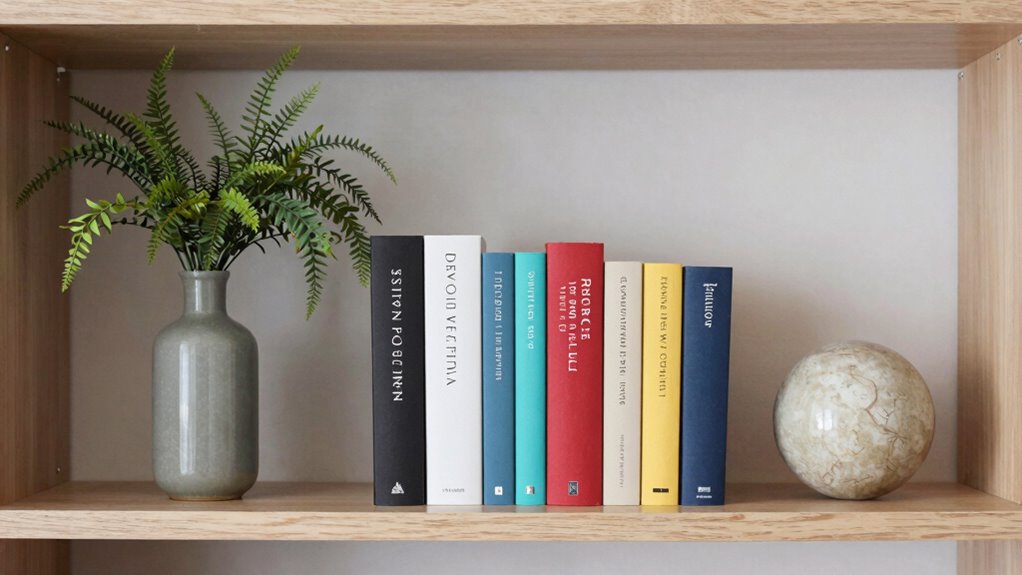
One common mistake in shelf styling is overcrowding, which can make your display look cluttered and overwhelming. This decorating pitfall can hide individual pieces and diminish visual appeal. Another mistake is falling for styling myths, like the idea that symmetry is always better. In reality, perfect symmetry can feel stiff and predictable. Instead, aim for balance with varied heights and shapes, embracing the 3-shape trick. Overloading shelves with too many items disrupts harmony and makes it hard to focus. To avoid these mistakes, edit ruthlessly and think about the visual weight of each piece. Keep some space empty to let your display breathe and highlight key objects. Remember, less is often more when it comes to stylish, balanced shelves. Additionally, understanding how cosmic influences can subtly affect our perceptions of beauty and harmony may inspire more intuitive styling choices. Incorporating awareness of visual harmony principles can further enhance the overall aesthetic and balance of your shelf displays. Recognizing how energy flow impacts visual arrangements can help create more harmonious environments that resonate on a subtle level. Paying attention to retirement planning strategies can also inspire a more disciplined approach to organizing your shelf items, ensuring a cohesive and intentional display. Cultivating an understanding of these influences can lead to more mindful decorating decisions that elevate your space.
Frequently Asked Questions
Can the 3-Shape Trick Work With All Shelf Sizes?
Yes, the 3-shape trick can work with various shelf sizes, offering size flexibility for your display. You just need to adjust the proportions of the shapes to fit your shelf’s dimensions. It’s compatible with different materials too, so whether your shelf is wood, metal, or glass, you can easily incorporate this styling method. Just keep in mind the space and material compatibility for a balanced, stylish look.
How Often Should I Update My Shelf Arrangements?
You should update your shelf arrangements every 4 to 6 weeks to keep your space lively and engaging. Studies show that regular shelf maintenance enhances visual appeal and mood. Styling frequency helps prevent clutter buildup and maintains balance. By revitalizing your shelf decor periodically, you ensure your space remains dynamic and inviting, making it easier to showcase new items and adapt to changing styles or seasons.
Is This Technique Suitable for Displaying Decorative Items Only?
Yes, this technique is perfect for displaying decorative items and creating aesthetic arrangements. You can easily arrange various decorative displays, like vases, books, or art pieces, to enhance your shelf’s visual appeal. Using the 3-shape trick helps balance your decor, making it more eye-catching. Feel free to experiment with different shapes and sizes, as this method works well for showcasing your favorite decorative items and adding style to your space.
Can the 3-Shape Method Be Applied to Non-Shelving Decor?
Absolutely, you can adapt the 3-shape method to non-shelving decor, making your space feel effortlessly curated. Imagine artful artwork arrangements or plant placements following this dynamic shape trio, creating balance and visual intrigue. By playing with different sizes and textures, you guide the eye naturally, whether on tables, mantels, or even wall displays. This approach transforms any area into a lively, harmonious focal point that draws admiration.
What Tools or Accessories Help Maintain Shelf Balance Long-Term?
To maintain shelf balance long-term, you should use decorative bookends to keep items upright and organized. Additionally, shelf liners help prevent slipping and protect your surfaces, ensuring your arrangement stays neat. Regularly check and reposition items as needed, and consider adding or removing decorative accessories to keep the shelf visually balanced. These tools make it easier to preserve your stylish and harmonious display over time.
Conclusion
Now that you know the 3-shape trick, your shelves can become a stunning display rather than clutter. With a little planning and attention to size, color, and style, you’ll create a balanced, eye-catching look effortlessly. Imagine walking into a room where everything feels just right—doesn’t that make your space feel more inviting? Give this technique a try, and watch your shelves transform into a stylish showcase of your personality and taste.