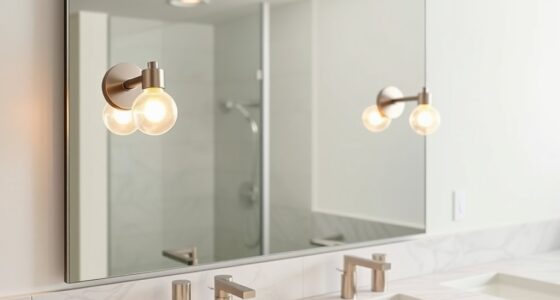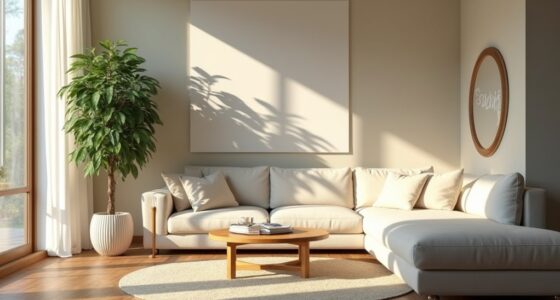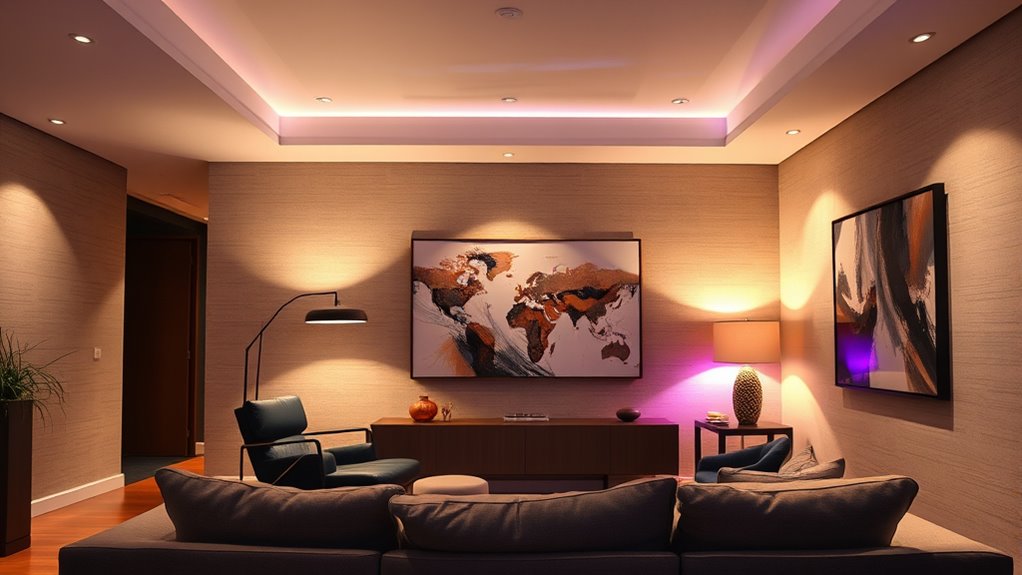

Layered lighting involves combining ambient, task, and accent light layers to create a balanced, functional, and inviting space. Ambient lighting provides overall illumination, while task lighting focuses on specific activities like reading or cooking. Accent lighting highlights features and adds depth, making your room more dynamic. By thoughtfully layering these types of lighting, you can set the perfect mood and enhance your home’s design. Keep exploring to discover how to master this versatile lighting approach.
Key Takeaways
- Layered lighting combines ambient, task, and accent lights to create a balanced and functional home environment.
- Ambient lighting provides overall illumination and sets the mood with fixtures like ceiling lights or wall sconces.
- Task lighting supports specific activities such as reading or cooking, ensuring adequate brightness without glare.
- Accent lighting highlights design features, artwork, or architectural details to add visual interest and depth.
- Thoughtful layering of these lighting types enhances ambiance, functionality, and aesthetic appeal in any space.

Have you ever wondered how to create a space that’s both functional and inviting? The secret lies in smart lighting design. Layered lighting is a powerful technique that combines different types of lighting to craft the perfect environment. By thoughtfully blending ambient, task, and accent lighting, you can transform any room into a welcoming haven that balances practicality with mood. Achieving this balance enhances your home ambiance, making your space feel cozy, lively, or relaxing, depending on your mood or needs.
Start with ambient lighting, which provides the overall illumination for your room. It’s the foundation of your lighting design, ensuring you have enough light to move comfortably and see clearly. Options like ceiling-mounted fixtures, recessed lights, or soft wall sconces work well here. They distribute light evenly, eliminating harsh shadows and creating a warm, inviting glow. When you choose your ambient lighting, think about the color temperature—warm tones tend to foster a cozy, intimate atmosphere, while cooler tones make a space feel more energetic and modern. By layering this type of lighting, you set the stage for a home ambiance that feels balanced and welcoming.
Start with ambient lighting to create a warm, inviting glow and set a balanced, welcoming atmosphere in your space.
Next, incorporate task lighting to support specific activities. Whether you’re reading, cooking, or working at a desk, task lighting ensures you have enough light where it’s needed most. Think of desk lamps, under-cabinet lights in the kitchen, or focused pendant lights over a workspace. These lights should be bright enough to prevent eye strain but not so intense that they overpower the room’s overall glow. Placing task lighting thoughtfully helps you avoid cluttered or overly bright areas, maintaining a harmonious environment. This layer of lighting adds functionality without compromising style, allowing you to perform daily tasks comfortably while keeping the ambiance cozy.
Finally, add accent lighting to highlight design features, artwork, or architectural details. Accent lighting creates visual interest and depth, drawing your eye to specific points in the room. Use adjustable spotlights, picture lights, or LED strip lights to emphasize your favorite decor pieces. This layer also adds a touch of sophistication and personality to your space. When executed well, accent lighting enhances the home ambiance by creating focal points and adding dimension. It’s the finishing touch that transforms a well-lit room into a carefully curated environment, making your home feel more dynamic and inviting.
Incorporating layered lighting isn’t just about illumination; it’s about shaping how your space feels. When you combine ambient, task, and accent lighting thoughtfully, you craft an environment that’s both functional and aesthetically pleasing. This approach allows you to adapt your home’s ambiance to suit any occasion or mood, making your space truly feel like your own sanctuary. Additionally, understanding self watering plant pots can inspire you to create greener, more sustainable indoor environments that benefit from well-planned lighting setups.
Frequently Asked Questions
How Do I Balance All Three Lighting Layers Effectively?
To balance all three lighting layers effectively, you should establish a clear lighting hierarchy by prioritizing ambient light for general illumination, then add task lighting for specific activities, and finally incorporate accent lighting to highlight features. Use dimmers to adjust brightness levels for design consistency and guarantee each layer complements the others without overpowering. This approach creates a harmonious, functional space that feels well-designed and inviting.
What Are the Best Bulbs for Layered Lighting?
You should choose bulbs that are compatible with your fixtures and provide versatile color temperature options. For ambient lighting, opt for warm white bulbs around 2700K to create a cozy feel. Task lighting benefits from brighter, cooler bulbs around 3000K to improve visibility. Accent lighting can use dimmable bulbs with adjustable color temperatures, allowing you to highlight features effectively. Always check bulb compatibility with your fixtures to guarantee safe, peak performance.
Can Layered Lighting Save Energy Costs?
Layered lighting can save you energy costs by allowing you to use only what you need, reducing overall power consumption. By combining ambient, task, and accent lighting, you optimize energy efficiency and avoid unnecessary lighting. You can also incorporate dimmers and smart controls, further enhancing cost savings. This adaptable approach guarantees you use less energy while maintaining a well-lit, functional space, ultimately lowering your utility bills.
How Does Layered Lighting Impact Room Ambiance?
Layered lighting greatly enhances your room’s ambiance by combining decorative fixtures, which add style, with adjustable color temperature to create the desired mood. You can brighten a space for lively gatherings or soften it for relaxation. By mixing ambient, task, and accent lighting, you control how warm or cool the atmosphere feels, making your room feel inviting, cozy, and perfectly tailored to your mood or activity.
Are There Specific Design Tips for Small Spaces?
Ever wondered how to make a small space feel bigger and brighter? You should use space-saving fixtures and multi-functional lamps to maximize your lighting. These smart choices help you save space while providing versatile lighting options. Position task lights near work areas and add accent lights to highlight decor. Isn’t it great when your lighting combines style and practicality? With thoughtful layered lighting, your small space can feel open, cozy, and functional.
Conclusion
By layering your lighting with ambient, task, and accent, you create a space that’s both functional and inviting. But did you know that proper lighting can also influence your mood and productivity? It’s true—research shows that well-designed lighting setups can boost your well-being. So, don’t just light your space—design it intentionally. When you understand the science behind layered lighting, you reveal the secret to a more comfortable, inspiring environment.