
To layer decor around big pieces without overcrowding, focus on select, well-chosen accessories that add interest without clutter. Use varying heights and sizes to create depth and keep negative space in mind for a balanced look. Incorporate seasonal accents and subtle patterns to bring personality without overwhelming the main furniture. Prioritize simplicity and thoughtful placement, ensuring each piece complements the overall design. Keep exploring to discover more tips for achieving a harmonious, inviting space.

Get furniture and decor delivered free with Prime
- Fast, free delivery on millions of items
- Prime Video, Amazon Music and more included
- Member-only deals all year
Key Takeaways
- Use seasonal accents and decorative trays to add personality without cluttering around larger furniture pieces.
- Coordinate colors and patterns to create visual interest while maintaining harmony with big purchases.
- Incorporate varying heights and depths with small accessories to add dimension without overcrowding.
- Focus on a few carefully chosen decor items, leaving negative space for a balanced look.
- Maintain simplicity and scale to ensure decor enhances, not overwhelms, larger furniture pieces.
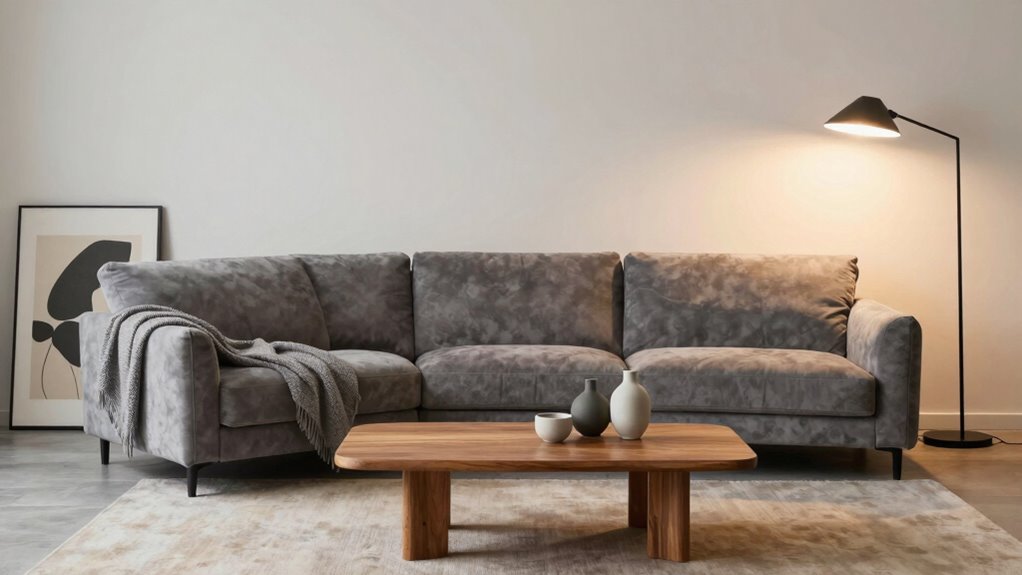
When you make a big purchase for your home, such as a new sofa or an elegant dining table, it’s easy to focus solely on the item itself. But to create a balanced and inviting space, you need to think about how to layer decor around that piece without overcrowding the room. The trick is to strike a harmony between the statement piece and the surrounding accents, guaranteeing each element complements the other. Start by considering seasonal accents—those decorative touches that reflect the time of year, like cozy throws in winter or fresh floral arrangements in summer. These accents add personality and warmth without overwhelming the main furniture, helping you create a layered look that feels lively and seasonally appropriate.
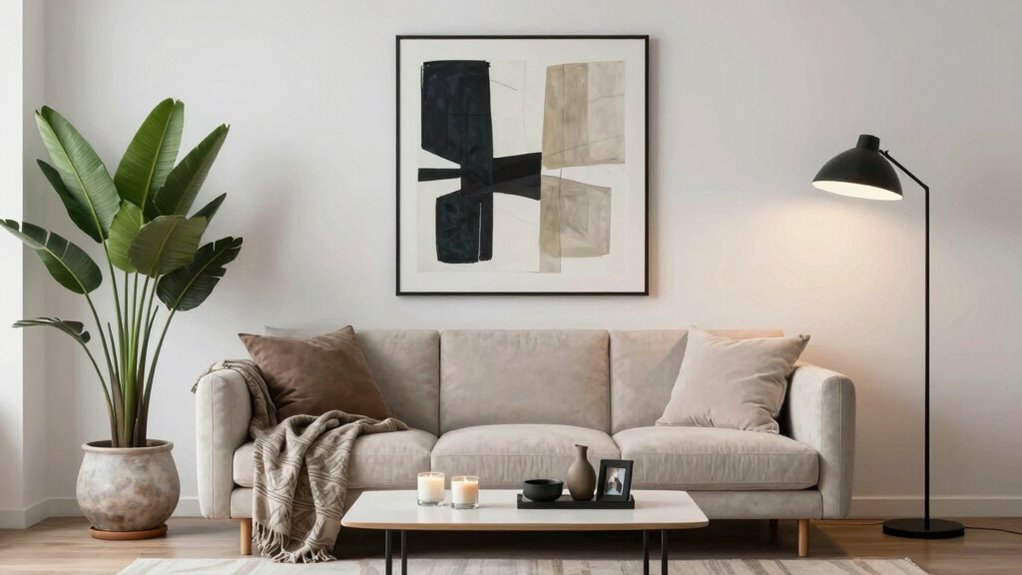
Color coordination plays an essential role in this process. Instead of scattering decor randomly, pick a color palette that ties everything together. For example, if your sofa is a neutral tone, introduce pillows, rugs, or curtains in shades that enhance or contrast nicely with it. This approach keeps your space cohesive and visually appealing. When layering, don’t be afraid to play with different textures and patterns; just make sure the colors are harmonious. This subtle coordination ensures your decor enhances your big purchase rather than competing with it. Additionally, incorporating visual balance helps maintain an inviting and well-organized aesthetic.
Incorporating varying heights and depths with your decor adds visual interest and helps avoid a flat, cluttered look. Next, think about scale and placement. You want your decor to add depth, not clutter. Use smaller accessories like vases, books, or candles to create interest at different heights and depths around your main piece. For instance, a tall floor lamp next to your sofa can draw the eye upward, while a low coffee table with curated decor keeps the space grounded. When adding seasonal accents, opt for lightweight items that can be swapped out easily—think seasonal pillows or decorative trays—so your decor remains fresh and relevant without overcrowding. Also, paying attention to decor layering principles can help you achieve a balanced and harmonious space that feels thoughtfully curated. Furthermore, understanding the impact of proportion can help you select accessories that complement the size and scale of your furniture, enhancing overall harmony.
Finally, remember that less is often more. Layering decor around a big purchase requires restraint. Focus on a few well-chosen pieces rather than filling every inch of space. Use empty or negative space intentionally to give your room breathing room. This way, your main furniture remains the focal point, with seasonal accents and color-coordinated decor enhancing rather than overpowering the overall aesthetic. Incorporating strategic furniture placement can further elevate the overall look and function of your space. When you understand the importance of balanced design, your room will feel both thoughtfully styled and comfortable. By thoughtfully combining these elements, you’ll create a beautifully layered space that feels curated, cozy, and perfectly balanced.
decorative trays for coffee table
As an affiliate, we earn on qualifying purchases.
As an affiliate, we earn on qualifying purchases.
Frequently Asked Questions
How Do I Choose Decor That Complements Large Furniture Pieces?
To choose decor that complements large furniture, focus on balancing scale and creating texture contrast. Select smaller accessories that don’t overpower the big pieces but add visual interest. Incorporate varied textures—like soft throws, smooth ceramics, or rough wood—to create depth. Keep colors cohesive so your decor enhances rather than competes with the furniture. This approach maintains harmony and prevents overcrowding, making your space feel inviting and thoughtfully designed.
What Are Some Color Schemes That Work Well With Big Purchases?
For big purchases, opt for color schemes that create harmony and balance. Neutral tones like beige, gray, or soft whites work well, providing a calming backdrop. Incorporate accent palettes with bold or muted pops of color to add interest without overwhelming the space. Use contrasting or analogous colors to enhance your decor’s depth, ensuring your large pieces blend seamlessly while allowing smaller accents to shine.
How Can I Incorporate Personal Items Into Layered Decor?
You can incorporate personal items into layered decor by displaying personal mementos and sentimental accents thoughtfully. Place a cherished photo on a shelf, complement it with artwork or decorative objects that reflect your personality. Mix different textures and heights to create visual interest without overcrowding. Keep some items in frames or shadow boxes for a clean look and let meaningful items serve as focal points, adding warmth and personality to your space.
What Lighting Options Enhance Layered Decor Around Large Items?
You’ll love how ambient lighting and accent fixtures transform your layered decor. Use soft, warm ambient lights to create a cozy atmosphere around large pieces, making them feel part of the space without overpowering. Add accent fixtures like picture lights or small spotlights to highlight specific details or personal items, drawing attention without clutter. Ironically, the right lighting makes your big purchases feel less dominant and more like a curated, inviting vignette.
How Often Should I Update Decor Around Big Purchases?
You should update decor around big purchases every 6 to 12 months to maintain decor balance and freshen your space. Regular updates help you manage space effectively, preventing overcrowding while keeping the room interesting. If you notice clutter or your style evolving, consider more frequent changes. Use versatile decor pieces that can be easily swapped to guarantee your space remains balanced and inviting without overwhelming your larger investments.
Conclusion
As you step back, envision your space as a harmonious dance, each piece flowing seamlessly into the next. The larger purchase anchors your decor, like a steady heartbeat, while layered accents ripple outward like gentle waves. With mindful placement, your room becomes a balanced symphony—calm yet vibrant, spacious yet cozy. When you strike the perfect rhythm, your decor breathes effortlessly, inviting warmth and personality without feeling crowded. It’s your space, alive with curated harmony.
Fall Picks
fall essentials
As an affiliate, we earn on qualifying purchases.