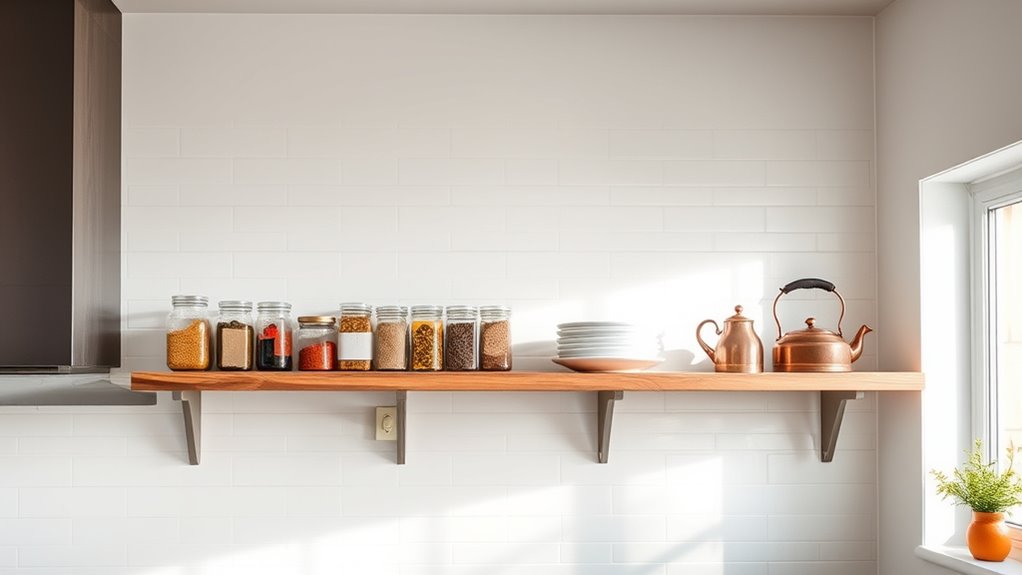

Open shelving in your kitchen can boost your space’s style and accessibility by showcasing dishware and adding a modern touch. It makes it easy to grab items quickly and creates an open, airy feel. However, it requires regular cleaning to prevent dust buildup and careful organization to avoid clutter. While it’s great for display and functionality, you need to contemplate maintenance and potential risks. Keep exploring to discover how to make open shelving work best for you.
Key Takeaways
- Open shelving enhances modern kitchen aesthetics and creates a feeling of spaciousness.
- It offers easy access to dishware and allows for stylish display of decorative items.
- Regular cleaning and organization are essential to prevent dust buildup and clutter.
- Items are exposed, increasing the risk of damage or breakage if not carefully handled.
- Proper planning balances display appeal with functionality to avoid clutter and maintain order.

Open shelving in the kitchen offers a modern, accessible way to display dishware and accessories, creating a sense of openness and ease of use. It also requires careful planning to ensure proper care & maintenance and organization to prevent clutter and dust accumulation.
Frequently Asked Questions
How Do I Prevent Open Shelving From Looking Cluttered?
To prevent your open shelving from looking cluttered, use decorating ideas like pairing items in odd numbers and mixing textures. Implement shelf styling tips such as keeping frequently used items at eye level and adding decorative pieces for balance. Regularly declutter and rotate your decor to maintain a clean look. Stick to a cohesive color scheme and avoid overloading shelves, creating a tidy, appealing display that showcases your style without feeling chaotic.
What Are the Best Materials for Open Shelves?
You should choose durable materials like wood, metal, or glass for your open shelves, ensuring they provide solid structural support. Opt for materials that complement your decorative accessories and overall kitchen style. Wood adds warmth, metal offers modern appeal, and glass creates a light, airy feel. Whichever you pick, make sure the material is sturdy enough to hold your items and keep your shelves looking clean and organized.
How Do I Clean and Maintain Open Shelving?
Think of your open shelves as a garden that needs regular tending. To keep them looking fresh, dust and wipe down with a damp cloth weekly. Use gentle cleaning tips to remove smudges or spills, and avoid harsh chemicals. When arranging decorative accessories, confirm they’re dust-free. This routine maintains their charm and prevents clutter, letting your beautiful kitchen shine and making upkeep feel like a breeze rather than a chore.
Can Open Shelving Work in Small Kitchens?
Yes, open shelving can work in small kitchens if you use clever decorating ideas and smart storage solutions. Keep shelves minimal to avoid clutter and choose lightweight, attractive items to create a sense of openness. You can display your favorite dishes or plants to add personality without overwhelming the space. Properly organized open shelves can make your small kitchen feel more spacious, stylish, and functional.
How Do I Secure Open Shelves to Avoid Accidents?
To guarantee your open shelves stay put, prioritize secure mounting brackets and proper weight distribution. You might want to use heavy-duty brackets that anchor into wall studs, avoiding drywall alone. Be mindful of how much weight each shelf bears, spreading items evenly. Regularly check the brackets and screws for stability. This proactive approach keeps your shelves safe, preventing accidents while maintaining a sleek, organized look in your kitchen.
Conclusion
Open shelving in your kitchen is like a gust of fresh air—brightening the space and making everything feel accessible. While it offers style and convenience, it also requires regular organization and maintenance. Weigh the pros and cons carefully, and consider your lifestyle and needs. When done right, open shelving can transform your kitchen into a welcoming, functional hub—like a warm hug from an old friend. Ultimately, it’s about creating a space that feels just right for you.