
To create a focal point when you have none, start by identifying an area with good natural light or architectural features like a fireplace or textured wall. Then, choose a bold art piece, an eye-catching sculpture, or a statement piece of furniture to stand out. Use contrasting colors, size, and strategic placement to draw attention. Proper lighting can enhance your focal element. Keep experimenting until everything feels balanced—more tips for making it work are just a step away.

Get furniture and decor delivered free with Prime
- Fast, free delivery on millions of items
- Prime Video, Amazon Music and more included
- Member-only deals all year
Key Takeaways
- Identify natural architectural features or existing elements to highlight as a focal point.
- Introduce bold visuals, such as artwork or statement furniture, to draw attention.
- Use contrasting colors and larger sizes on specific items to create visual emphasis.
- Adjust lighting with accent or spotlights to spotlight a central feature or area.
- Arrange furniture and decor strategically to frame and guide focus toward the new focal point.
As an affiliate, we earn on qualifying purchases.
Why a Focal Point Is Essential for Your Room’s Balance
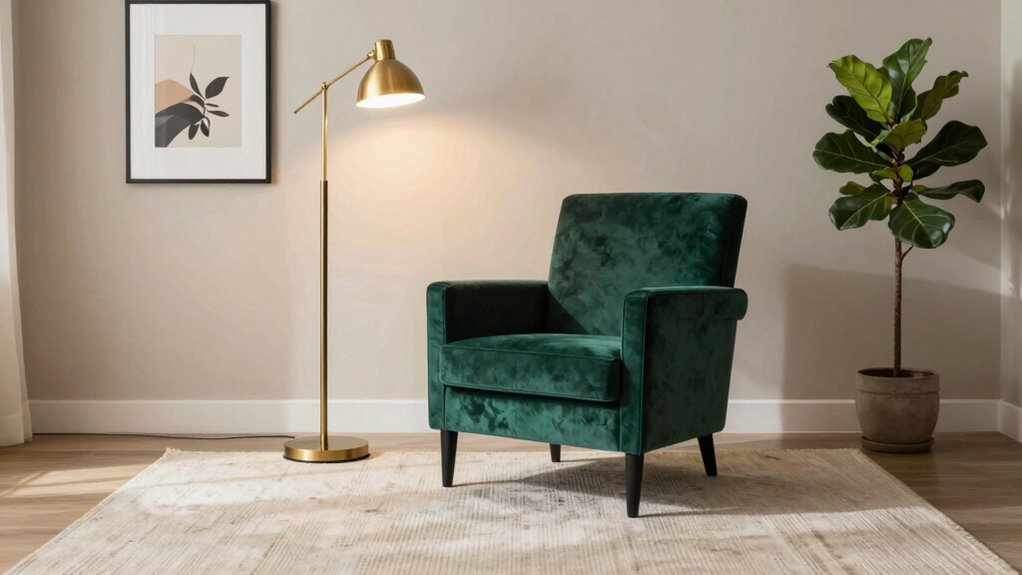
A focal point is essential because it anchors your entire room and guides the eye naturally toward a central feature. Without one, your space can feel unbalanced or chaotic. A well-chosen focal point creates visual balance, making the room feel cohesive and inviting. It establishes aesthetic harmony by providing a clear visual anchor that ties different elements together. When you have a standout feature—like a fireplace, artwork, or statement furniture—it directs attention and helps organize the room’s layout. This focus prevents your space from appearing cluttered or disjointed. Incorporating a central element can also highlight your personal style and add a unique character to the room. Additionally, selecting the right focal point can increase the perceived size and depth of your space, making it feel more expansive. Using indoor plants or decorative planters as focal points is an effective way to incorporate natural beauty and texture into your room’s design. Furthermore, understanding how contrast ratio influences visual perception can help you choose elements that enhance the focal point’s prominence. Ultimately, a strong focal point enhances the overall harmony, giving your room a sense of purpose and style that’s both inviting and visually satisfying.
Spotting the Best Areas for Visual Focus

Choosing the right spot for your focal point can dramatically influence how your room feels and functions. To identify these areas, consider these key factors:
- Natural light sources – Position your focal point where sunlight naturally hits to draw attention effortlessly. Utilizing lighting techniques can further enhance this effect by highlighting your chosen area, especially when considering how ventilation considerations can impact lighting and airflow in your space. Proper lighting can also help in accentuating architectural features, making your focal point more prominent. Incorporating natural elements such as plants or water features can also reinforce the natural aesthetic and draw the eye to your focal point.
- Color schemes – Use bold or contrasting colors in specific sections to make them stand out.
- Furniture placement – Arrange furniture to frame or highlight a particular area, guiding the eye naturally.
- Architectural features – Look for existing elements like fireplaces, large windows, or textured walls that can serve as visual anchors.
- Incorporating visual balance into your design can enhance the overall harmony and aesthetic appeal of the space.
Choosing the Perfect Element to Stand Out

To make your focal point irresistible, choose a bold visual that naturally draws attention. Incorporate contrasting colors to make the element pop against the background. By doing so, you guarantee your viewer’s eyes are guided directly to what matters most. Additionally, selecting a visual hierarchy ensures that your focal point stands out effectively within the overall design. Recognizing the symbolic significance of the element can further enhance its impact, making it resonate more deeply with viewers. Understanding design principles can help you craft arrangements that emphasize your focal point even more effectively, especially when considering composition techniques that lead the eye naturally toward the focal element.
Select Bold Visuals
Selecting bold visuals is essential when you want your focal point to grab immediate attention. The right bold imagery creates a strong visual emphasis that naturally draws the eye. To choose the perfect element, consider these options:
- Use a large, striking photograph that contrasts with the background.
- Incorporate an oversized or unique graphic that stands out.
- Select an item with intense colors that dominate the scene.
- Feature a bold, central sculpture or object that acts as a visual anchor.
- Remember that net worth and personal branding can influence the prominence of visual elements, making them more impactful. Additionally, understanding how sound vibrations can influence perception may inspire dynamic visual choices that resonate on a deeper level.
These elements instantly command attention and serve as powerful focal points. By emphasizing bold visuals, you ensure your audience’s eyes are directed exactly where you want them, establishing clarity and impact in your design.
Use Contrasting Colors
Contrasting colors make your focal point pop by creating a visual separation from the surrounding elements. This use of color contrast immediately draws the eye to your key element and enhances its visual impact. To choose the perfect contrasting colors, consider the color wheel: pairing complementary colors like blue and orange or red and green works well. Think about the mood you want to convey and how the contrast complements it. Below is a quick guide:
| Color Pairing | Effect |
|---|---|
| Blue & Orange | Energetic, vibrant |
| Red & Green | Bold, attention-grabbing |
| Yellow & Purple | Elegant, striking |
| Black & White | Timeless, high contrast |
Using color contrast techniques can also help you emphasize your focal point more effectively. Remember that visual hierarchy guides the viewer’s eye and helps prioritize elements within your workspace. Incorporating color psychology can further enhance the emotional response you want to evoke from your audience. Applying design principles such as balance and emphasis can make your visual strategy more impactful. Use these contrasts intentionally to make your focal point stand out effectively.
Using Color, Size, and Placement to Draw Attention

Bright colors immediately catch your eye and make elements stand out. Increasing the size of an item directs focus, while strategic placement naturally guides viewers’ attention. Combining these techniques helps you create a compelling focal point that draws and holds interest. Additionally, understanding the best anime movies can inspire creative choices in visual storytelling and design. Recognizing the importance of visual balance can further enhance how effectively your focal point captures attention and maintains harmony within your overall layout. Incorporating visual hierarchy into your design ensures that the most important elements stand out clearly and guide viewers smoothly through the composition. Paying attention to color contrast can also make your focal point even more striking and noticeable. Moreover, applying principles of spatial arrangement can help you achieve a well-organized and cohesive look that naturally directs the eye toward your focal point.
Bright Colors Stand Out
Vivid colors immediately capture attention and guide the viewer’s eye to your focal point. Using bright colors effectively leverages color psychology and enhances visual hierarchy. To maximize impact, consider these strategies:
- Choose high-contrast hues that stand out from the background.
- Use bold, saturated colors for key elements to draw focus.
- Place bright colors strategically where you want viewers to look first.
- Limit color variety to avoid visual clutter and maintain clarity.
- Incorporate visual hierarchy principles to organize your color use effectively.
Larger Elements Grab Eyes
Larger elements naturally draw the eye, especially when combined with strategic use of color and placement. By creating scale contrast, you emphasize size differences that instantly attract attention. A bigger object or area becomes the dominant feature, establishing a clear visual hierarchy. When you use size deliberately, you guide viewers’ focus toward what matters most. Bright or contrasting colors on larger elements further enhance their prominence. Positioning these elements thoughtfully within your layout ensures they stand out without overwhelming the entire design. Remember, the goal is to make the eye naturally gravitate toward the largest, most visually striking parts first. This approach helps you create an effective focal point, even when no single element initially commands attention.
Strategic Placement Guides Focus
Strategic placement is essential for guiding viewers’ focus effectively. By carefully considering color, size, and placement, you can create a natural visual balance that draws attention where you want it. Proper space utilization helps prevent clutter, making your focal point stand out. To enhance focus, consider these tips:
- Use contrasting colors to highlight key elements.
- Place important items near the visual center or along natural lines.
- Increase the size of focal elements to attract immediate attention.
- Balance the composition by distributing elements evenly, leaving strategic empty space to direct focus.
These techniques ensure your audience’s eyes follow your intended path, making your focal point clear and impactful. Mastering placement maximizes visual balance and creates a compelling, attention-grabbing design.
Lighting Tips to Highlight Your Focal Point
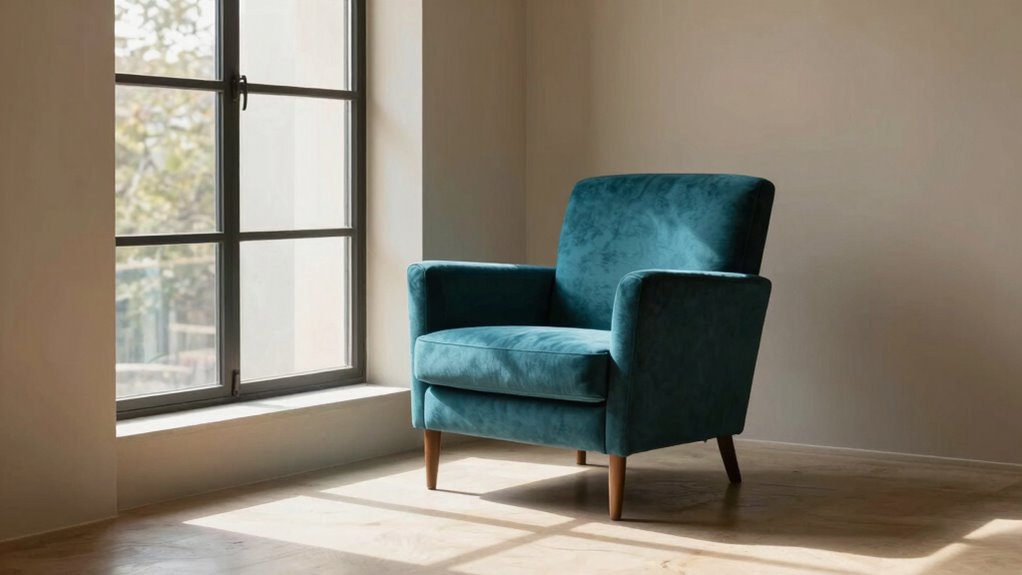
Effective lighting can make your focal point stand out and draw attention where you want it most. Use accent lighting to highlight the key features, creating a visual hierarchy that guides the eye. Position spotlights or directed lamps to illuminate your focal element directly, making it pop against the surroundings. Incorporate shadow play by adjusting the light’s angle and intensity; shadows add depth and dimension, enhancing the prominence of your focal point. Avoid overly bright or flat lighting that diminishes contrast. Instead, aim for a balanced setup that emphasizes your focal feature without overpowering the space. With intentional accent lighting and strategic shadow play, you’ll draw eyes naturally and create a compelling visual focus in any room.
Creating Visual Harmony Around Your Focal Point

Once you’ve highlighted your focal point with proper lighting, the next step is to guarantee it seamlessly integrates with the surrounding space. Achieving balance and harmony involves thoughtful design choices. Here are four ways to create visual harmony around your focal point:
To create harmony, blend colors, textures, scale, and furniture for a cohesive focal point.
- Use complementary colors that blend smoothly with nearby elements.
- Incorporate textures and patterns that echo those in the surrounding decor.
- Maintain proportional scale between your focal point and nearby objects.
- Arrange furniture and accessories to guide the eye naturally toward the focal point.
Trying Different Ideas to Find What Works Best

Trying different ideas is essential because what looks good in theory may not work perfectly in your space. Embrace creative experimentation and visual exploration to discover what truly captures attention. Don’t hesitate to test out various focal points—artwork, furniture arrangements, lighting, or color accents. Each adjustment provides insight into how your space feels and functions. By trying different ideas, you learn what enhances your room’s personality and draws the eye naturally. Remember, this process isn’t about finding a perfect solution immediately but exploring options to see what resonates best. Keep an open mind, and don’t be afraid to experiment repeatedly. Over time, these efforts help you identify the most effective focal point, creating a balanced and inviting space.
Common Mistakes to Avoid When Creating a Focal Point

Have you ever created a focal point that feels out of place or overwhelming? Avoid these common mistakes to improve your focal point importance and maintain visual balance:
- Overcrowding the space, making the focal point compete with other elements.
- Using overly bright or contrasting colors that dominate instead of complement.
- Ignoring scale and proportion, which can make the focal point seem disconnected.
- Placing the focal point in a location that disrupts natural flow or symmetry.
These errors can diminish the impact of your focal point and disrupt harmony. Keep your focal point well-integrated, balanced, and proportionate to ensure it enhances the overall design without overwhelming the space.
Maintaining and Refreshing Your Focal Point Over Time

To keep your focal point engaging and effective over time, you need to regularly assess and update it to reflect changes in your space and style. Focal point evolution is natural as your tastes and environment change, so stay attentive to what draws attention and what feels outdated. Focal point maintenance involves simple tweaks like changing artwork, rearranging accessories, or adjusting lighting to renew interest. Regular updates prevent your focal point from becoming dull or overlooked. Consider new textures, colors, or decor elements that complement your evolving style. By staying proactive, you ensure your focal point remains a dynamic centerpiece that enhances your space’s overall harmony and interest over the long term.
Frequently Asked Questions
How Can I Create a Focal Point in a Small or Cluttered Room?
You can create a focal point in a small or cluttered room by adding bold color accents like a vibrant throw or artwork. Use lighting techniques such as a statement lamp or spotlight to draw attention. These elements naturally guide the eye and add visual interest, making the space feel more intentional and less chaotic. Keep other areas simple to guarantee your focal point stands out effectively.
What if My Room Has Multiple Areas Competing for Attention?
If your room has multiple areas competing for attention, you can use decorative accessories to emphasize one space, like a bold artwork or a unique piece of furniture. Pair this with strategic lighting techniques, such as spotlights or accent lamps, to highlight that area. This approach directs focus naturally, creating a clear focal point amidst the visual competition and making your room feel more cohesive.
Can Furniture Arrangement Help Establish a Focal Point?
Yes, furniture placement can definitely help establish a focal point. Arrange your key pieces to draw attention, like positioning a sofa or armchair to face a blank wall or window. Add decorative accents, such as a bold artwork or a statement lamp, in the area to attract the eye. Keep the surrounding furniture simple to avoid competing for attention, making the focal point stand out naturally.
Are There Specific Design Styles That Make Creating a Focal Point Easier?
Think of minimalist design and natural materials as your allies in creating focal points effortlessly. These styles strip away clutter, making your key elements stand out like a lighthouse in a foggy night. Natural materials, such as wood or stone, add texture and warmth, guiding the eye naturally. With these styles, you find it easier to establish a clear, striking focal point that draws attention without overwhelming your space.
How Often Should I Update or Change My Focal Point?
You should update or change your focal point every few months to maintain visual consistency and keep your space fresh. Regular updates guarantee the focal point stays engaging and relevant, enhancing the overall aesthetic. Pay attention to focal point longevity; if it begins to feel outdated or less effective, it’s time for a change. This way, your design remains dynamic, inviting, and visually appealing over time.
Conclusion
Now that you know how to create a focal point from scratch, imagine the transformation your space could undergo. Will you choose a bold piece of art, dramatic lighting, or a striking piece of furniture? The choice is yours, and the possibilities are endless. But remember, the true magic happens when you let your personal style shine through. Are you ready to turn your room into a mesmerizing masterpiece? The next step is yours to take.
Halloween Picks
halloween
As an affiliate, we earn on qualifying purchases.