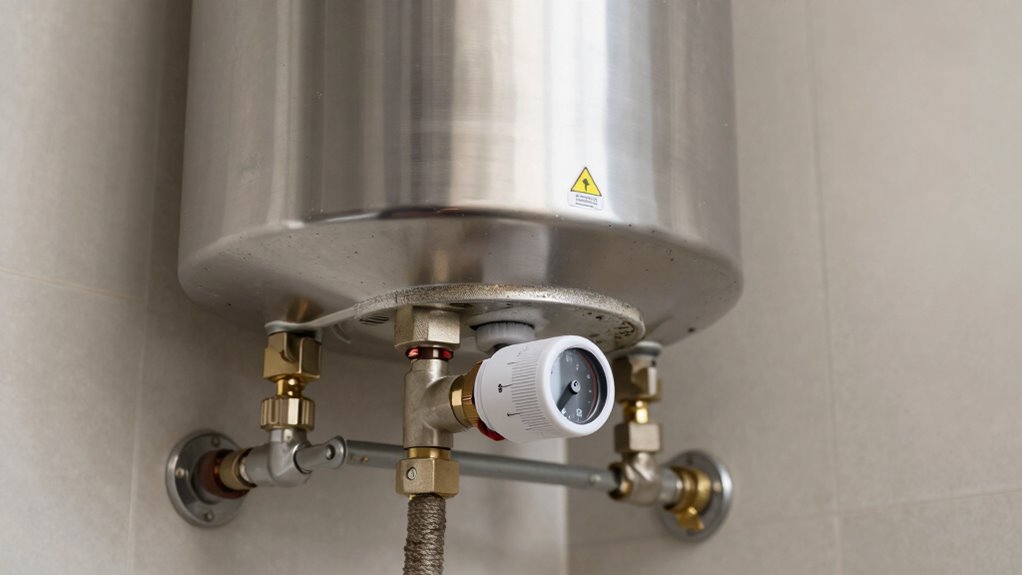
Understanding your water heater involves knowing how it heats water, manages temperature settings, and handles sediment buildup. Keeping the temperature around 120°F balances comfort and safety, reducing scalds and saving energy. Sediment from minerals can accumulate and harm the tank, so regular flushing is important. Safety features like thermostats and pressure relief valves protect against hazards. Learning these basics helps you maintain efficiency and identify issues early—if you want to explore further, this guide will walk you through each step.
Key Takeaways
- Set the water heater temperature around 120°F for safety, efficiency, and to prevent scalding risks.
- Sediment buildup from minerals like calcium and magnesium can impair heating and cause noise; flush the tank regularly.
- Regular inspections for leaks, corrosion, and unusual noises help maintain safety and extend the unit’s lifespan.
- Proper insulation and temperature settings improve energy efficiency and reduce heating costs.
- Signs of problems include rust-colored water, foul odors, leaks, and strange noises, indicating the need for maintenance or professional repair.
How Does a Water Heater Work? A Simple Explanation

Ever wonder how your water heater supplies hot water on demand? It all starts with tank operation. When you turn on the hot water tap, cold water enters the tank and triggers the heating process. Inside, a heating element or burner heats the water to your set temperature. As the water heats, it rises and stays at the top of the tank, ready for use. When you open the tap, hot water exits from the top of the tank, and cold water enters at the bottom to replace it. This cycle continues, maintaining a steady supply of hot water. The tank operation ensures your water heater can deliver hot water efficiently whenever you need it, thanks to the continuous heating process that keeps the water at the desired temperature. Proper tank operation improves energy efficiency and prolongs your water heater’s lifespan. Additionally, regular maintenance helps prevent issues caused by sediment buildup, which can reduce efficiency and damage the tank over time. Understanding how tank operation works can help you troubleshoot common problems and optimize your water heater’s performance. Being aware of temperature settings can also prevent potential safety hazards and energy waste.
Setting Your Water Heater Temperature for Comfort and Efficiency
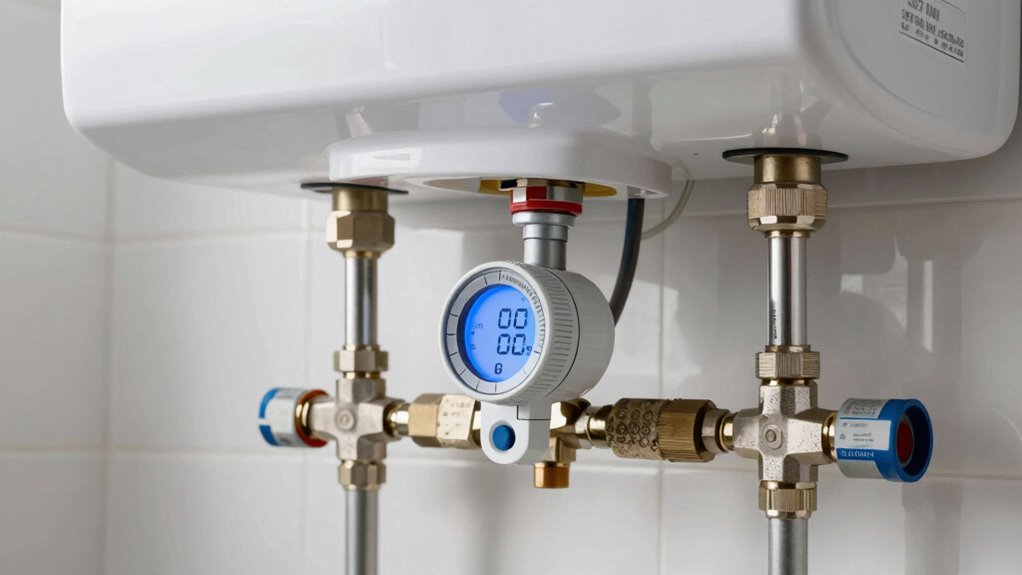
Setting your water heater to the right temperature can make a big difference in comfort and energy use. You’ll want to find a balance that provides enough hot water without wasting energy. We’ll explore ideal temperature settings and simple tips to save money on energy bills. Additionally, maintaining the correct water heater safety settings is essential to prevent scalding and other hazards. Proper temperature regulation can also extend the lifespan of your water heater and improve overall efficiency. Regularly checking temperature settings helps ensure your system operates safely and effectively. Incorporating filter maintenance practices from air purifier guidelines can also help keep components in good condition and prolong the unit’s lifespan. Being aware of free floating sediment issues that can affect performance is also beneficial for long-term upkeep.
Optimal Temperature Settings
Have you wondered how to balance comfort and energy savings when choosing your water heater’s temperature? Setting your thermostat to around 120°F typically offers a good mix of comfort and efficiency. Proper tank insulation helps maintain a stable temperature, reducing temperature fluctuation and keeping water hot longer without wasting energy. If your water heater isn’t well insulated, you might notice more temperature swings, which can lead to inconsistent hot water and higher energy use. Keep in mind that higher settings, like 140°F, can improve safety by reducing bacterial growth but increase energy consumption and risk of scalding. Adjusting your water heater to the right temperature involves understanding these factors to find what works best for your household’s comfort and efficiency. Tank insulation is a crucial element in maintaining consistent water temperature and minimizing energy waste. Additionally, temperature regulation plays a vital role in optimizing both safety and energy efficiency in your household. Regularly checking temperature settings ensures your water heater remains at the ideal balance of safety and efficiency. Understanding temperature fluctuations can help you troubleshoot issues related to inconsistent hot water and energy use. Being aware of power consumption patterns can further assist in managing your energy costs effectively.
Energy Savings Tips
Adjusting your water heater’s temperature can considerably cut energy costs without sacrificing comfort. Set your thermostat to around 120°F (49°C) to save energy and prevent scalding. Adding tank insulation helps retain heat, reducing the workload on your heater and lowering energy bills. If your water heater is oversized for your needs, it may cycle more often than necessary, wasting energy. Consider downsizing if appropriate, as a smaller tank heats less water and operates more efficiently. Insulation and proper sizing work together to maintain consistent water temperature while minimizing heat loss. Regularly checking and adjusting your temperature settings guarantees you’re not wasting energy while still enjoying adequate hot water for your household. These simple steps promote efficiency and comfort. Proper temperature settings are key to balancing safety and energy savings. Additionally, water heater maintenance can help ensure optimal performance and further reduce energy consumption. Maintaining your water heater’s temperature controls properly ensures efficient operation and extends its lifespan.
To further optimize your system, consider monitoring your water heater’s performance with energy-efficient devices that provide real-time feedback on energy use.
Why Sediment Buildup Happens and Its Impact on Your Heater
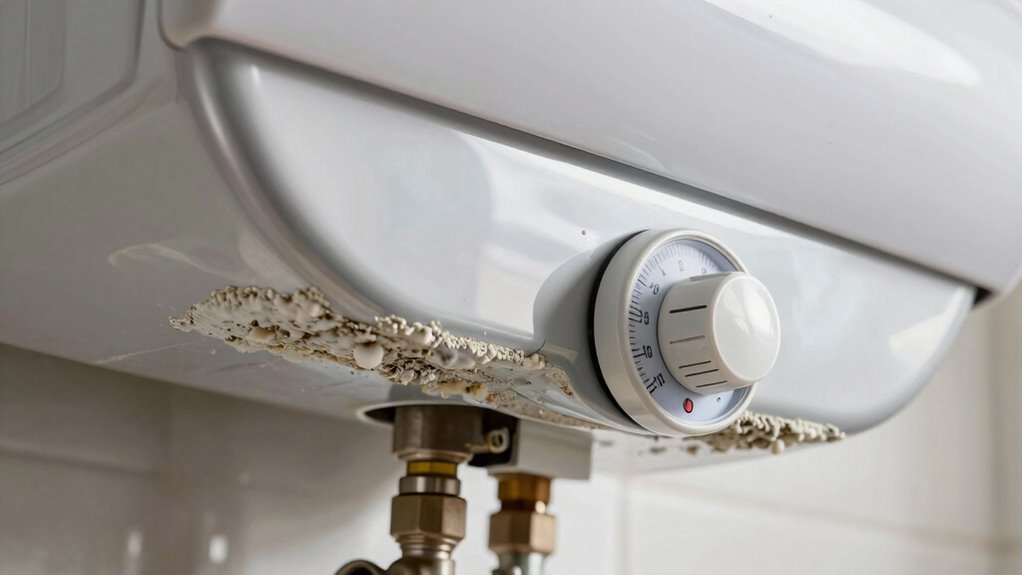
Sediment buildup occurs naturally over time as minerals like calcium and magnesium in your water settle at the bottom of your heater tank. These mineral deposits create a thick layer that insulates the water from the heating element, reducing efficiency and increasing energy costs. Over time, the accumulation can lead to corrosion effects, weakening the tank’s structure and risking leaks or failure. The sediment also causes the heater to work harder, which shortens its lifespan and can lead to noisy operation. Regularly flushing your water heater helps remove these deposits and prevents excessive buildup. Understanding sediment formation and its impact can help in recognizing signs of heater inefficiency early, as they are similar to how some individuals may struggle with processing sounds. By understanding why sediment forms and its impact, you can take proactive steps to maintain your heater’s performance and extend its service life, especially by paying attention to sediment accumulation signs that indicate the need for maintenance. Additionally, using a water softener can reduce mineral content and slow down sediment buildup over time.
How to Recognize When Your Water Heater Needs Maintenance
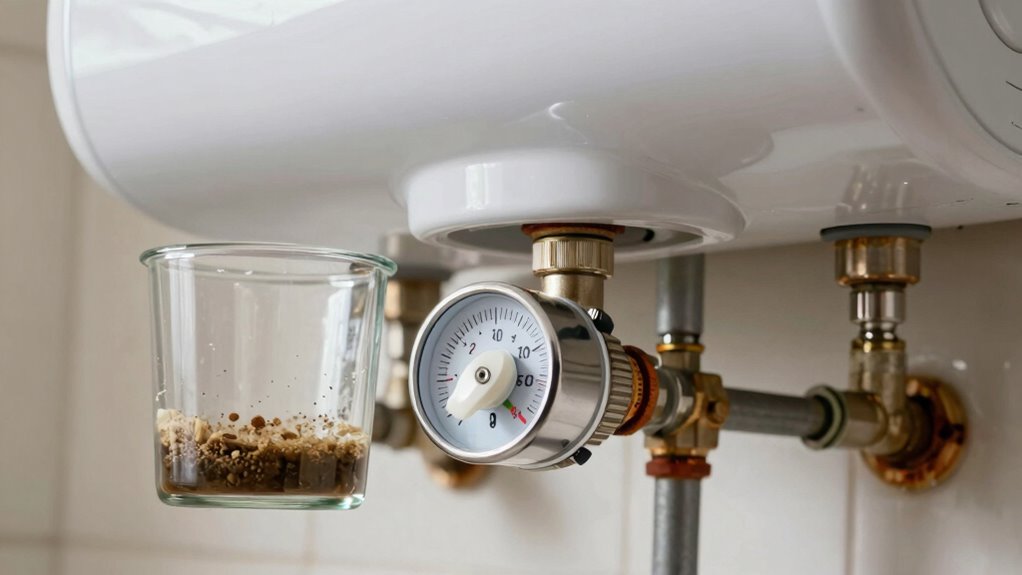
Knowing the signs that your water heater needs maintenance can save you from costly repairs and unexpected cold showers. If your heater is nearing the end of its water heater lifespan, you might notice inconsistent water temperature or reduced hot water supply. Strange noises, like banging or rumbling, often indicate sediment buildup that hampers efficiency. Rust-colored water or a metallic smell suggests corrosion, which accelerates wear and shortens your heater’s lifespan. Regularly inspecting for leaks or puddles around the unit helps catch issues early. Proper corrosion prevention measures, like anode rod replacement, can extend your heater’s life. Additionally, understanding Mad Tasting and how it can affect water quality can help you troubleshoot problems more effectively. Addressing these signs promptly ensures your water heater functions efficiently and safely, avoiding larger problems down the road.
Safety Tips to Prevent Scalds and Explosions
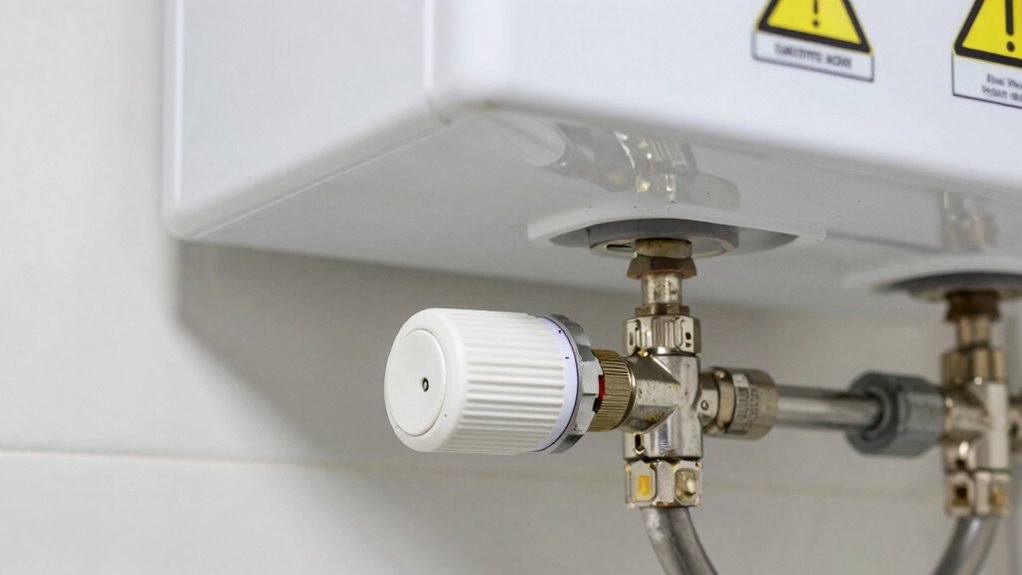
To stay safe, you should always set a maximum temperature limit on your water heater to prevent burns. Regular safety inspections can help catch potential issues before they become dangerous. Taking these steps keeps your home secure and avoids costly accidents.
Set Max Temperature Limits
Setting a maximum temperature limit on your water heater is a crucial safety step to prevent scalds and potential explosions. Proper temperature control ensures hot water stays within safe ranges and reduces pressure risks. To do this effectively, use the built-in safety mechanisms like thermostats or external limit controls. Here are key points to keep in mind:
- Set the thermostat to no higher than 120°F (49°C) for safety.
- Regularly check and adjust the temperature control to maintain safe limits.
- Use a thermometer to verify the actual water temperature.
- Replace or upgrade safety mechanisms if they become faulty or outdated.
Regular Safety Inspections
Regular safety inspections are essential for preventing scalds and explosions, as they help identify and address potential issues before they become dangerous. You should schedule annual inspections with a professional to check for leaks and verify all components function correctly. During these inspections, leak detection is critical; even small leaks can lead to water damage or pressure build-up, increasing risk. Inspect valves, pressure relief devices, and heating elements for wear or damage. If you notice corrosion, rust, or unusual noises, contact a professional immediately. Regularly testing the pressure relief valve also helps prevent pressure buildup. Staying vigilant with annual inspections and leak detection keeps your water heater safe, reliable, and reduces the risk of accidents or costly repairs.
How to Flush Sediment and Keep Your Water Heater Running Smoothly
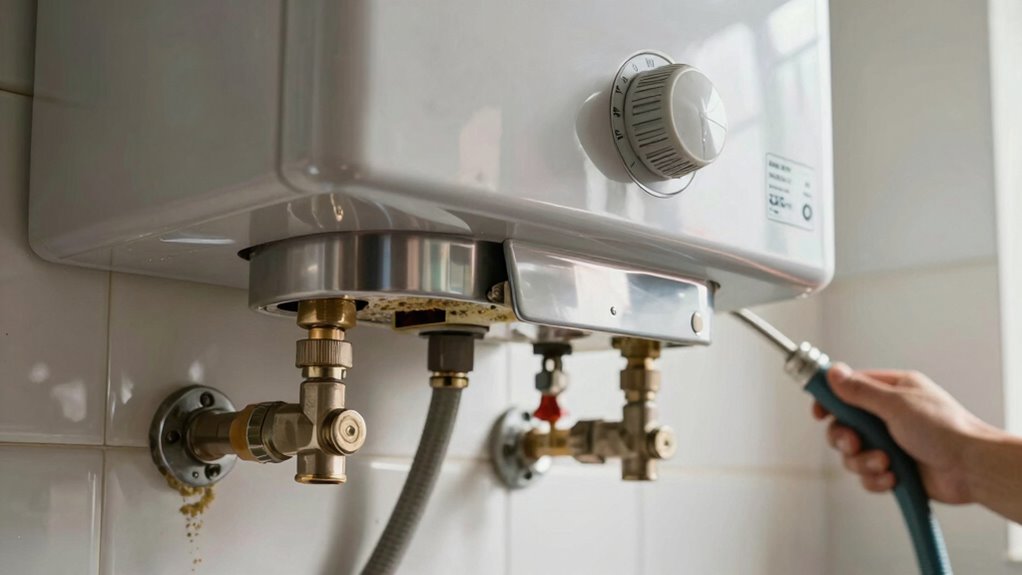
Sediment buildup in your water heater can reduce efficiency and shorten its lifespan, but flushing it out is a simple way to keep it running smoothly. Regular sediment removal prevents clogs and maintains proper temperature regulation. To flush your water heater:
- Turn off the power or gas supply.
- Attach a garden hose to the drain valve and open the valve.
- Drain the tank completely, then briefly turn on cold water to flush out remaining sediment.
- Close the valve, remove the hose, and restore power or gas.
This process helps eliminate sediment that can hinder heat transfer and cause uneven temperature regulation. By performing these steps periodically, you’ll extend your water heater’s life and keep hot water flowing efficiently.
Using Temperature Settings to Save Energy and Cut Costs
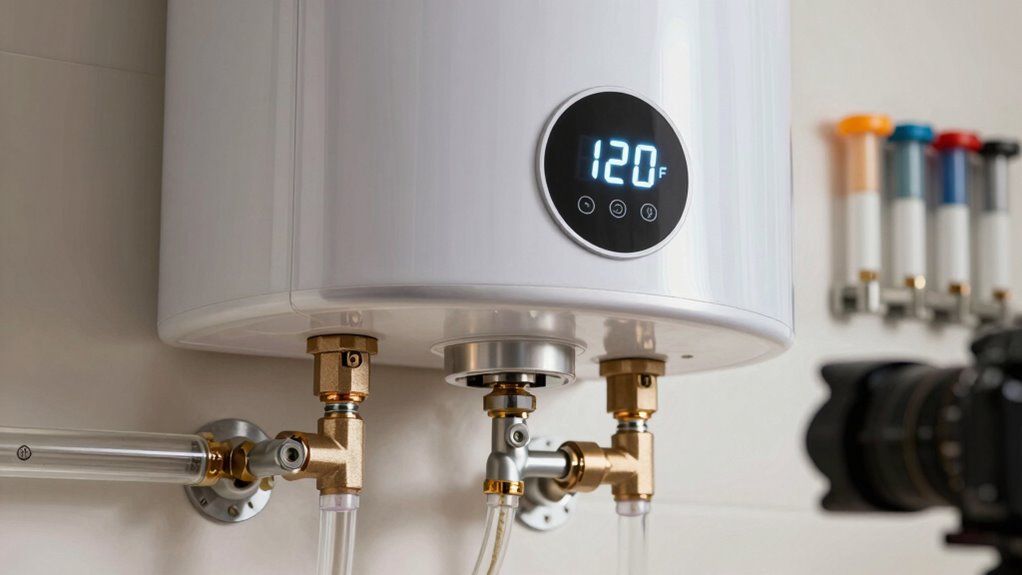
Adjusting the temperature on your water heater can substantially reduce energy consumption and lower your utility bills. Setting it to around 120°F is ideal for water conservation and safety. Lower temperatures save energy and delay sediment buildup, improving efficiency. If you use solar energy, a lower setting maximizes its effectiveness. Consider the table below for temperature options:
| Temperature Setting | Benefits | Considerations |
|---|---|---|
| 120°F | Saves energy, prevents scalding | Suitable for most homes |
| 140°F | Hotter water, faster use | Higher energy use, risk of burns |
| 100°F | Max water conservation | May be insufficient for daily needs |
Adjusting your thermostat helps cut costs and aligns with water conservation efforts while utilizing solar energy efficiently.
Common Water Heater Problems and How to Fix Them
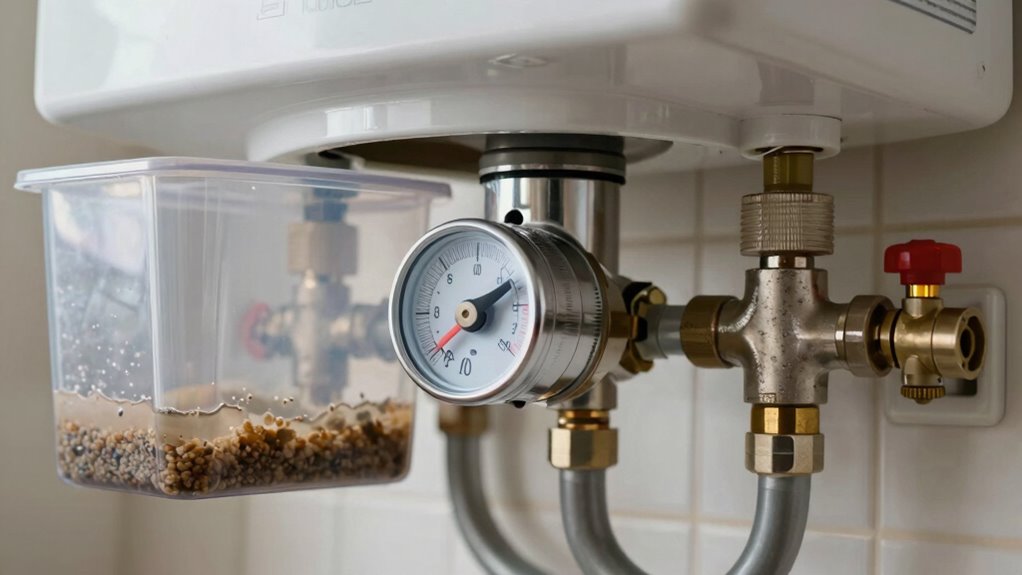
Many common water heater problems can disrupt your daily routine and lead to higher energy bills if left unaddressed. One frequent issue is tank corrosion, which can cause leaks and reduce efficiency. To prevent this, check your anode rod regularly, as it protects the tank from corrosion. If the anode rod is worn out, replacing it can extend your water heater’s lifespan. Other common problems include inconsistent water temperature, sediment buildup, and strange noises. Here’s what you can do:
Address common water heater issues like corrosion and sediment buildup to ensure efficient, reliable hot water.
- Inspect and replace the anode rod to prevent tank corrosion.
- Flush sediment buildup to improve heating efficiency.
- Adjust the thermostat for consistent water temperature.
- Tighten or replace heating element connections if you notice fluctuations.
Addressing these issues promptly keeps your water heater running smoothly.
When to Call a Professional for Water Heater Repairs

While addressing common water heater problems can often be manageable on your own, some issues clearly call for a professional repair. If your water heater is making strange noises, leaking, or not producing hot water at all, it’s time to seek expert help. Attempting to fix complex problems without proper knowledge can be dangerous and may cause more damage. You should also call for emergency service if you notice water pooling around the unit, a strong gas smell, or electrical sparks. A licensed technician has the skills to diagnose issues safely and efficiently. Knowing when to call a professional ensures your system is repaired correctly and safely, preventing further damage or safety hazards. Don’t hesitate to contact a professional when in doubt.
Frequently Asked Questions
How Long Does a Typical Water Heater Last?
A typical water heater lasts about 8 to 12 years, depending on usage and maintenance. You should monitor its tank lifespan and watch for signs like reduced hot water or leaks, which indicate it’s nearing the end of its replacement timeline. Regular maintenance can prolong its life, but plan for replacement around the 10-year mark to avoid sudden breakdowns and ensure reliable hot water.
Can a Water Heater Be Installed Outdoors Safely?
Think of your water heater as a brave explorer facing the elements; yes, it can be installed outdoors safely if you provide the right armor. Outdoor installation requires weather protection like insulated enclosures and a sturdy, weatherproof venting system. These safeguards shield it from rain, snow, and temperature swings, ensuring reliable hot water. Properly installed and protected, your outside water heater can serve you well without fear of the weather’s wrath.
What Are the Signs of a Leaking Tank?
You’ll notice a leaking tank if water pools around the base or drips from the tank’s seams. Rust or corrosion on the tank’s exterior often signals tank corrosion, which can lead to leaks. To prevent leakage, regularly inspect for signs of corrosion and address any issues promptly. Proper maintenance and timely repairs help with leakage prevention, extending your water heater’s lifespan and avoiding costly water damage.
How Does Water Hardness Affect Sediment Buildup?
Water hardness dramatically accelerates sediment buildup inside your tank. The more minerals like calcium and magnesium it contains, the faster scale formation and mineral deposits accumulate, clogging your water heater and reducing efficiency. This thick layer of deposits acts like an insurmountable barrier, forcing your heater to work harder and risking damage. To prevent this, consider installing a water softener or flushing your tank regularly to keep mineral deposits at bay.
Are There Eco-Friendly Water Heater Options Available?
Yes, eco-friendly water heater options are available. You can choose solar heating systems, which harness sunlight to warm water, reducing energy consumption. Heat pump water heaters are also eco-friendly; they use electricity to transfer heat from the air, making them energy-efficient and environmentally conscious. Both options help lower your carbon footprint while providing reliable hot water. Consider these sustainable choices to make your home greener and more energy-efficient.
Conclusion
By understanding how your water heater works, maintaining the right temperature, and staying vigilant for sediment buildup, you can keep your system running smoothly. Regular upkeep isn’t just recommended – it’s essential to avoid costly, time-consuming repairs. Think of your water heater as the beating heart of your home’s comfort; neglect it, and things could go haywire faster than you can say “hot water emergency.” Stay proactive, stay safe, and enjoy reliable hot water every day!