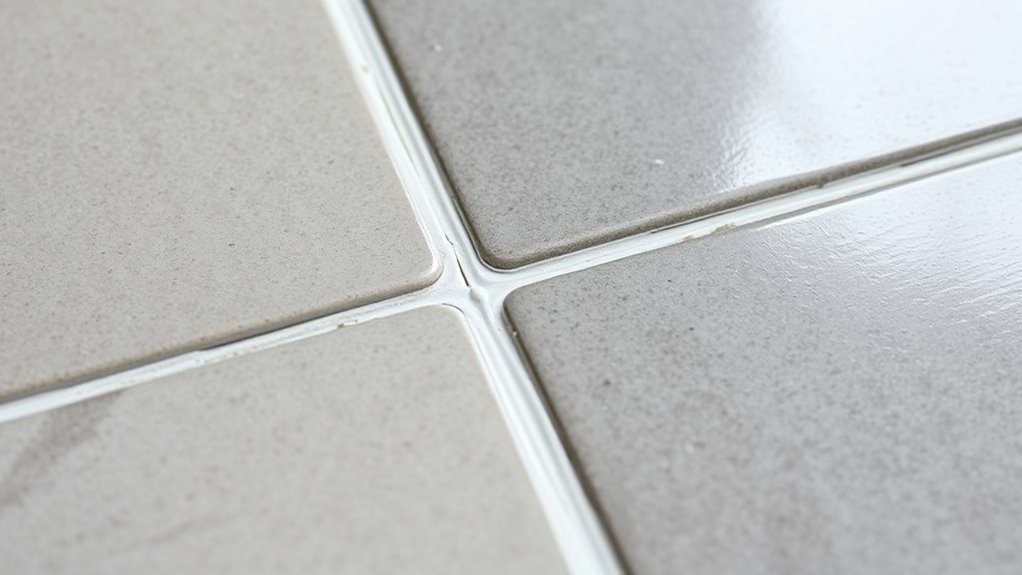

To repair and seal tile grout, start by matching the grout color closely to your existing one, either using a sample or custom tinting. After cleaning and drying the area, apply new grout or use a colorant for a seamless look. Once the grout is fully cured, seal it with a quality sealer to protect against stains, moisture, and dirt. Proper sealing and matching help keep your tiles looking fresh longer and prevent future repairs—learn more to perfect your technique.
Key Takeaways
- Match grout color accurately using samples, color charts, or custom tinting for a seamless repair.
- Remove and clean damaged grout thoroughly before applying new grout for optimal adhesion.
- Apply a quality grout sealer after repair to protect against moisture, stains, and deterioration.
- Use even, controlled sealing techniques with proper tools to ensure consistent coverage and prevent residue buildup.
- Maintain sealed grout with periodic reapplications and gentle cleaning to prolong durability and appearance.
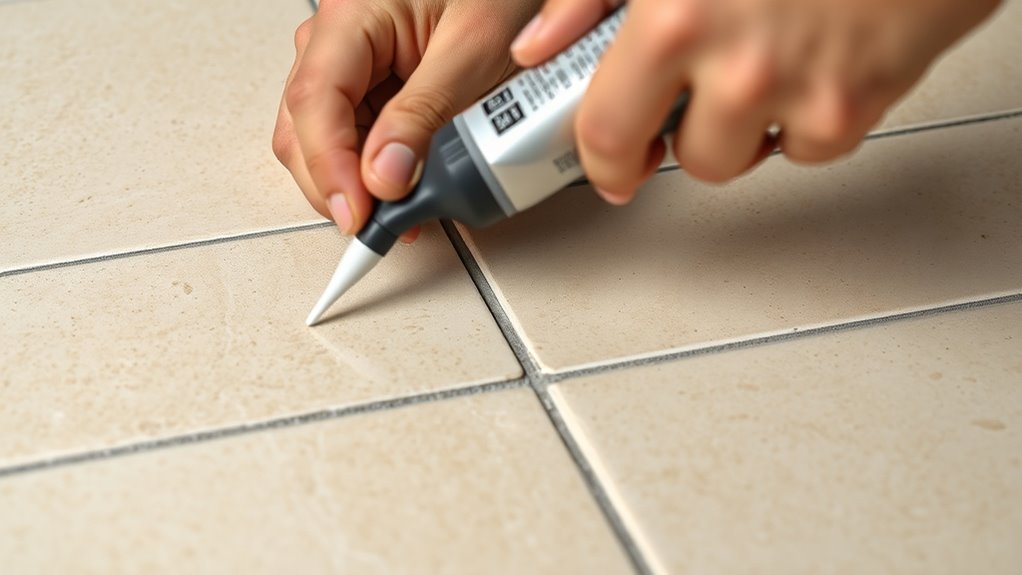
Are you tired of looking at cracked or stained grout ruining the appearance of your tiled surfaces? If so, it’s time to consider grout repair and sealing. One essential step is grout color matching, which helps restore the uniform look of your tiles without the need for complete removal and regrouting. When repairing grout, you want to choose a color that closely matches the existing grout line or the new grout you’re applying. This guarantees a seamless, professional appearance and prevents your repair from standing out like a sore thumb. Grout color matching is especially important if your tiles are in high-traffic areas or visible spots, as mismatched grout can detract from the overall aesthetic. To achieve the best results, you can take a sample of your existing grout to a hardware store or use a color chart to find the closest match. Some professionals also use custom tinting to fine-tune the grout color for perfect harmony.
Once your grout is repaired and color-matched, sealing techniques become essential to protect your work and prolong its lifespan. Sealing techniques involve applying a quality grout sealer that penetrates the porous material, creating a barrier against moisture, stains, and dirt. This step is necessary because grout is highly absorbent and susceptible to mold, discoloration, and deterioration over time. Proper sealing not only makes cleaning easier but also keeps your grout looking fresh and new longer. When applying a sealer, you should verify the grout lines are completely dry and free of debris, then use a brush or applicator to evenly coat the surface. Be cautious to avoid over-application, which can cause residue buildup or uneven sealing. Some sealers are designed for multiple uses, offering durability against water and stains, making them ideal for bathrooms, kitchens, or outdoor tiles.
In addition to initial sealing, periodic reapplication is needed to maintain protection. Over time, sealers can wear down or become less effective, especially in high-moisture areas. Regular maintenance, including gentle cleaning with pH-neutral solutions, will help preserve your grout’s integrity and appearance. Additionally, proper ventilation can reduce moisture buildup and help prevent mold growth on your grout lines. Remember, the combination of good grout color matching and proper sealing techniques guarantees your tiled surfaces stay beautiful and durable. Taking the time to match the grout color carefully and apply an appropriate sealer can save you money and effort in the long run, preventing future repairs and keeping your space looking its best. With these steps, you’ll enjoy beautifully restored, resilient grout that enhances your entire tiled area.
Frequently Asked Questions
How Often Should Grout Be Resealed?
You should reseal your grout every 1 to 2 years to maintain ideal grout maintenance and maximize sealing benefits. Regular resealing helps protect against stains, moisture, and deterioration, keeping your tiles looking fresh. Keep an eye on the grout’s appearance; if it starts to look dull or stained, it’s time to reseal. Consistent sealing ensures your grout stays durable and easy to clean, extending its lifespan.
Can Grout Repair Prevent Future Mold Growth?
Think of your grout like a fortress wall; repairing it strengthens your defenses against mold. When you fix damaged grout, you prevent water from seeping in, which is key for mold prevention. Regular grout cleaning removes mold spores and dirt that can hide in cracks. By keeping your grout in top shape, you make it much harder for mold to take hold, ensuring a healthier, fresher space.
Is Professional Sealing Necessary for Small Areas?
No, professional sealing isn’t always necessary for small areas, but it can be beneficial. If you follow DIY tips carefully, you can often handle small sealing jobs yourself, saving money. Just watch out for common mistakes like uneven application or incomplete coverage, which can reduce effectiveness. For best results, consider professional sealing if you’re unsure or want a long-lasting, flawless finish. It guarantees your grout stays protected from moisture and stains.
What Are the Best Eco-Friendly Grout Sealers?
You should choose eco-friendly solutions for grout sealing because they’re safer for your home and the environment. Look for environmentally safe products that contain natural or low-toxicity ingredients, such as those with plant-based or mineral-based formulas. These sealers provide effective protection without harmful chemicals, making them a smart choice for eco-conscious homeowners. Always check labels to ensure the product is truly eco-friendly and suitable for your specific grout needs.
How Long Does Grout Sealing Typically Last?
Sealing your grout typically lasts between 1 to 3 years, depending on your home’s humidity, foot traffic, and cleaning habits. You should consider regular resealing, especially if you’re matching grout color or trying to prevent stains. When planning, get sealing cost estimates to ensure you stay within your budget. Consistent maintenance helps protect your investment, keep your grout looking fresh, and extend the lifespan of your sealing job.
Conclusion
Now, with fresh grout sealed tight, imagine stepping onto your beautifully restored tiles, each joint gleaming like a tiny, protected fortress. No more worries about stains or cracks—just the smooth, polished surface under your feet, inviting you to enjoy a spotless, durable space. You’ve transformed your tile area into a pristine haven, where every step feels confident and flawless. Keep up with regular sealing, and your tiled sanctuary will stay radiant and resilient for years to come.