
To keep your basement dry, make certain your sump pump is properly installed in a low point with a stable basin and connected to a clear discharge pipe that slopes away from your home. Regularly test it by pouring water into the basin to make sure it activates and drains correctly. Check for clogs, ensure the float switch works, and confirm the power source. If you’d like to learn more about maintaining and troubleshooting your sump pump, keep exploring these tips.
Key Takeaways
- Select a proper location and install the sump pump levelly with secure discharge piping.
- Use a check valve and waterproof sealants to prevent leaks and backflow.
- Regularly test the pump by pouring water into the basin and observing operation.
- Check and clear float switches and discharge pipes during routine inspections.
- Maintain the system by cleaning debris, inspecting components, and scheduling periodic tests.

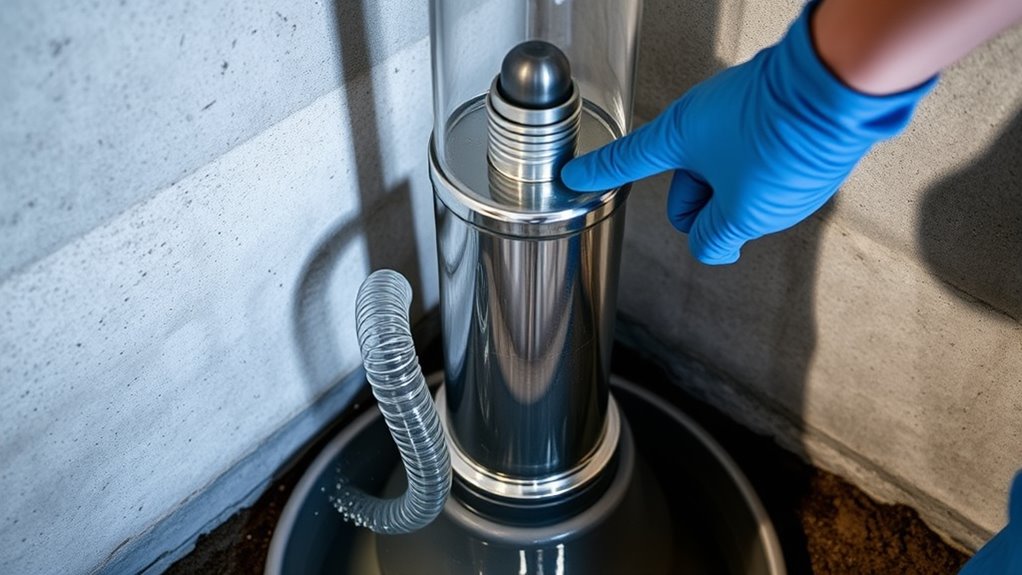
A sump pump is an indispensable device that helps protect your home from flooding and water damage. Proper installation is vital to guarantee it functions correctly when you need it most. When installing a sump pump, start by choosing a suitable location—typically in the basement’s lowest point. Make sure the area has proper drainage and isn’t prone to debris buildup. Dig a pit that’s deep enough to accommodate the pump, usually around 2 to 3 feet deep, and wide enough to allow the pump to sit comfortably without touching the sides. Before installing, check the manufacturer’s instructions carefully, as each model might have specific requirements.
During installation, guarantee the pump is level and stable within the sump basin. Attach the discharge pipe securely, making sure it slopes outward to prevent backflow. When connecting the piping, use durable fittings and waterproof sealants to avoid leaks. It’s also wise to install a check valve on the discharge line to prevent water from flowing back into the sump pit once the pump turns off. For installation tips, consider positioning the sump pump close to an electrical outlet, ideally with a backup power source, like a battery backup system, to keep it operational during power outages. Additionally, selecting a best modern toilet for your bathroom can help improve overall water efficiency and reduce strain on your plumbing system. Finally, test the system thoroughly before covering the basin to confirm everything works smoothly.
Troubleshooting methods come in handy when your sump pump isn’t functioning properly. If your pump isn’t turning on despite water in the sump, first check the power source—make sure it’s plugged in and the outlet has power. Inspect the float switch, which activates the pump; if it’s stuck or tangled, the pump won’t start. Clearing debris or repositioning the float can fix this issue. If the pump runs but doesn’t drain water, examine the discharge pipe for clogs or obstructions. Clearing blockages ensures proper water flow. In cases where the pump runs continuously, it might be due to a faulty float switch or a pump that’s oversized for your sump basin. Replacing the switch or consulting a professional for pump sizing can resolve these problems.
Regular testing is key to maintaining your sump pump’s reliability. Pour water into the sump basin to trigger the float switch and verify the pump activates and discharges water properly. If it doesn’t, double-check the troubleshooting methods above. Schedule routine inspections, especially before heavy rain seasons, to guarantee all components function correctly. A well-maintained sump pump can save you from significant water damage, so understanding installation tips and troubleshooting methods helps you keep it in peak condition. With proper setup and regular checks, you’ll have peace of mind knowing your home is protected against unexpected flooding and water issues.
Frequently Asked Questions
How Often Should I Replace My Sump Pump?
You should replace your sump pump every 7 to 10 years, though regular sump pump maintenance can prolong its lifespan. Keep an eye on its performance and listen for unusual noises or frequent cycling. During sump pump installation, guarantee proper setup to prevent early failure. If it’s over a decade old or showing signs of wear, consider replacing it to protect your basement from flooding and avoid costly repairs.
Can a Sump Pump Prevent Basement Flooding Completely?
A sump pump can’t guarantee complete prevention of basement flooding, but it substantially reduces the risk. To maximize its effectiveness, make sure you have a backup power source in case of outages. Regularly follow a maintenance checklist, including cleaning the pump and testing its operation, to keep it working efficiently. Proper upkeep and backup systems help protect your basement, but staying vigilant remains key to preventing floods.
What Is the Average Lifespan of a Sump Pump?
Your sump pump typically lasts between 8 to 10 years, but this depends on regular sump pump maintenance and troubleshooting. You might notice signs of aging, like strange noises or reduced performance, which could signal it’s nearing the end of its lifespan. Don’t wait for a failure—proactively inspect and maintain your pump to extend its life, and troubleshoot issues early to avoid unexpected basement flooding. Stay vigilant, and your pump can serve you well longer.
Are There Energy-Efficient Sump Pump Models Available?
Yes, there are energy-efficient models and eco-friendly options available for sump pumps. You can choose models with advanced motor technology that use less electricity while maintaining strong performance. Look for pumps with high-efficiency features like variable speed motors or ENERGY STAR certification. These options help reduce your energy bills and environmental impact while ensuring your sump pump operates effectively during heavy rains or flooding.
How Do I Determine the Right Size Sump Pump for My Home?
To determine the right size sump pump for your home, consider its sump pump capacity, which depends on your area’s rainfall and basement size. You’ll also want to factor in installation considerations like space and outlet access. A pump with a higher capacity handles more water, reducing flooding risk. It’s best to select a pump slightly above your estimated needs for added safety and to guarantee reliable operation during heavy storms.
Conclusion
Now that you know the ins and outs of your sump pump, it’s funny how something so essential is often overlooked until disaster strikes. You spend all this time testing and maintaining, only to forget it’s the one thing protecting your basement from flooding. So, next time you hear that quiet hum, remember: your sump pump’s the unsung hero—until, of course, it fails when you need it most. Better to be prepared than flooded.