
You can spot early signs of plumbing leaks by watching for unusual water bills or unexplained water usage, even when no fixtures are on. Look for damp spots, musty odors, or peeling paint, which suggest water seepage. Listen for gurgling, hissing, or banging sounds, and check for decreased water pressure. Regular inspection and staying alert to these signs can help you catch issues early—staying ahead of costly damage as you discover more.

Get furniture and decor delivered free with Prime
- Fast, free delivery on millions of items
- Prime Video, Amazon Music and more included
- Member-only deals all year
Key Takeaways
- Monitor water bills regularly for unexplained increases indicating potential leaks.
- Check water meters for usage when fixtures are off to detect hidden leaks.
- Look for damp spots, water stains, or peeling paint on walls and ceilings.
- Listen for gurgling, hissing, or banging sounds from pipes that may signal leaks.
- Inspect for corrosion, discoloration, or deposits around fixtures as early warning signs.
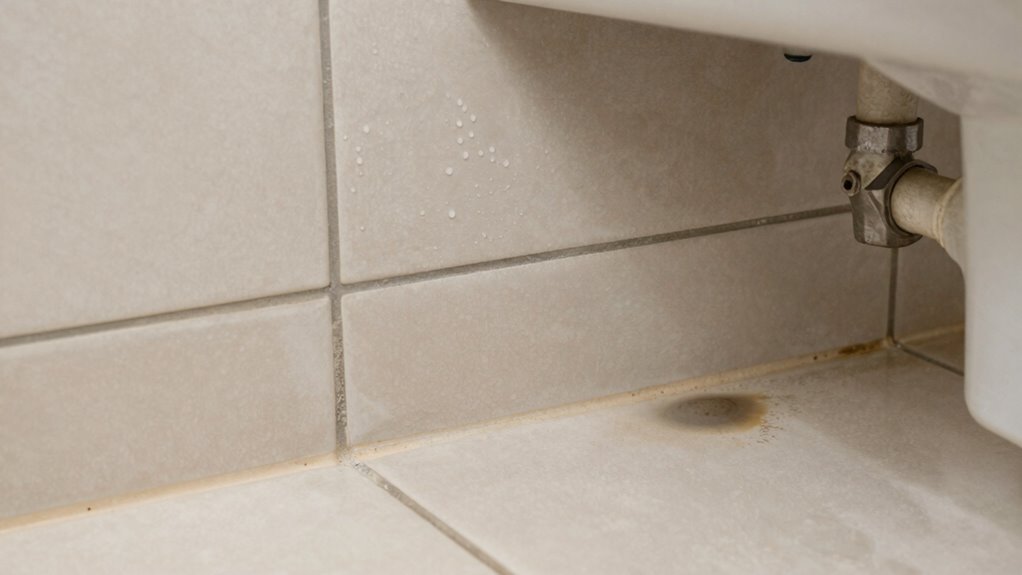
Detecting plumbing leaks early can save you from costly water damage and high utility bills. One of the first signs to watch for is unusual increases in your water bill, which often indicate hidden pipe damage somewhere in your plumbing system. Sometimes, leaks aren’t obvious because they happen behind walls or under floors, making it essential to be vigilant for other clues. Pay attention to any damp spots, musty odors, or peeling paint, as these could suggest water is seeping into your walls or floors.
Another common cause of hidden pipe damage is pipe corrosion. Over time, pipes—especially those made of metal—can corrode due to mineral buildup or exposure to corrosive substances in the water. You might notice a decrease in water pressure or find a metallic taste in your water, which are signs that your pipes could be deteriorating. Corrosion weakens the pipe walls, making them more susceptible to leaks that can develop gradually. If you notice reddish or greenish deposits around your fixtures or pipe joints, it might be a sign of corrosion and potential pipe failure. Addressing corrosion early can prevent sudden bursts or extensive water damage.
Keeping an eye out for visible signs of leaks is crucial, but you also need to be aware of less obvious issues like hidden pipe damage. For instance, if your water meter shows usage even when no appliances are running, it’s a strong indication that water is escaping somewhere in your system. Similarly, if you hear running water when no fixtures are in use, it’s time to investigate further. Sometimes, pipe damage occurs in less accessible areas, making it harder to detect without professional help. That’s why regular inspections are vital, especially if your home has older plumbing. Regular plumbing inspections can help identify issues before they become major problems, saving you money and stress in the long run. Additionally, understanding pipe deterioration signs can help homeowners recognize early warning indicators and take prompt action.
Furthermore, leak detection methods such as using specialized equipment can reveal hidden damages not immediately visible, allowing for timely repairs. Finally, be alert to changes in the sound of your plumbing. Gurgling noises, hissing sounds, or banging pipes can be early warning signs of pipe problems, including corrosion and hidden damage. These noises may indicate water isn’t flowing smoothly due to buildup or damage inside the pipes. Staying attentive to your plumbing’s condition and acting promptly can make all the difference in maintaining a safe, leak-free home. Regular inspections and early detection techniques are essential tools in preventing extensive water damage and costly repairs.
As an affiliate, we earn on qualifying purchases.
Frequently Asked Questions
Can Plumbing Leaks Occur in Hidden or Inaccessible Areas?
Yes, plumbing leaks can occur in hidden pipes or inaccessible areas, making them difficult to detect. You might not see the leak directly, but signs like unexplained water stains, mold, or a sudden increase in your water bill can indicate a problem in these concealed spots. Regular inspections and professional help can help identify leaks in hidden or hard-to-reach pipes before they cause significant damage.
Are There Specific Tools to Detect Hidden Leaks?
Yes, you can use specific tools like thermal imaging cameras and acoustic sensors to detect hidden leaks. Thermal imaging reveals temperature differences caused by leaking water, while acoustic sensors pick up the sound of water escaping. These tools act as your eyes and ears in inaccessible areas, helping you identify leaks early. Combining them offers a proactive approach, preventing costly damage and ensuring your plumbing system stays in top shape.
How Often Should I Inspect My Plumbing for Leaks?
You should inspect your plumbing at least once every six months to catch leaks early. Regular inspections help with leak prevention by identifying small issues before they become costly damage. Pay attention to hidden signs like unusual dampness or decreased water pressure. Consistent inspection frequency guarantees your plumbing stays in good shape, reducing the risk of major leaks and water damage, and keeping your home safe and efficient.
Do Plumbing Leaks Always Cause Water Bills to Rise?
Not always—some leaks sneak by unnoticed, yet they still threaten your water bills. If you ignore leak prevention, small leaks can quietly drain your wallet and waste water, even without noticeable increases in bills. Water conservation starts with early detection; don’t wait until your bill skyrockets. Regular inspections help catch leaks early, saving you money and protecting the environment. Stay vigilant—sneaky leaks can happen anytime.
Can Plumbing Leaks Lead to Mold Growth?
Yes, plumbing leaks can lead to mold growth if left unchecked. Leaks create moisture, which encourages mold development, especially in hidden areas. To prevent this, focus on mold prevention and moisture control by fixing leaks promptly and ensuring proper ventilation. Regular inspections help catch leaks early, reducing the risk of mold. Staying proactive keeps your home safe and mold-free, protecting your health and property.
Conclusion
Staying vigilant for signs of plumbing leaks now can save you from a future full of headaches and costly repairs. Remember, even the smallest drip could be a warning sign, much like the first crack in the Berlin Wall signaled bigger changes ahead. Don’t ignore these early signals—acting promptly keeps your home safe and your worries at bay. Stay attentive, and you’ll be able to catch leaks before they turn into a full-blown disaster.
Halloween Picks
halloween
As an affiliate, we earn on qualifying purchases.